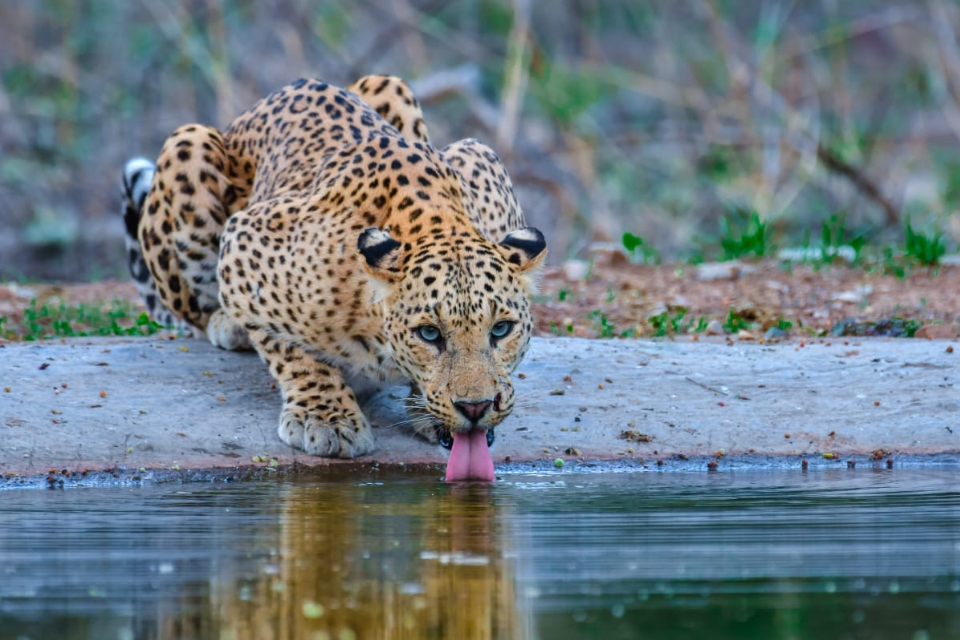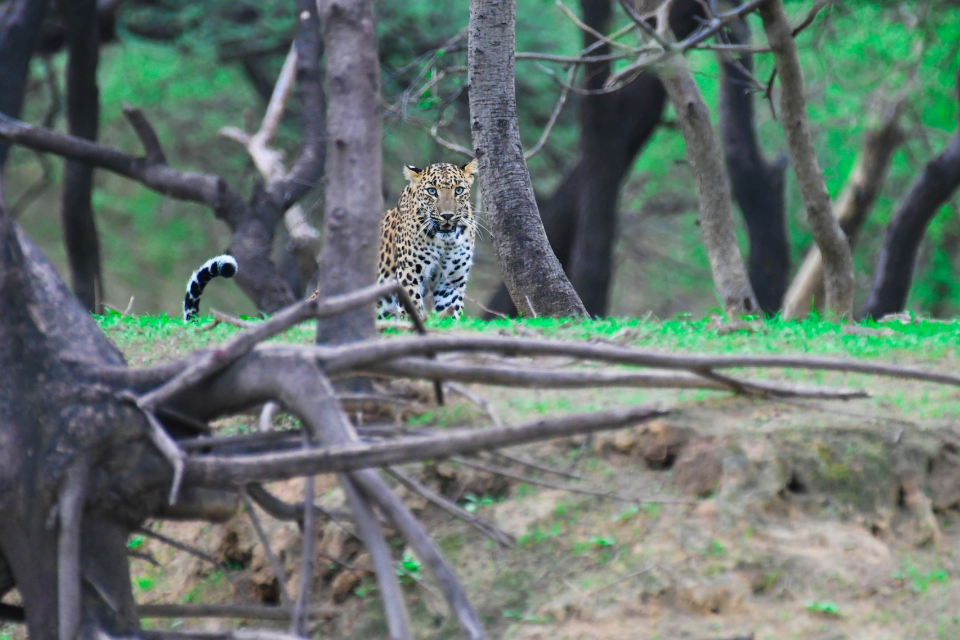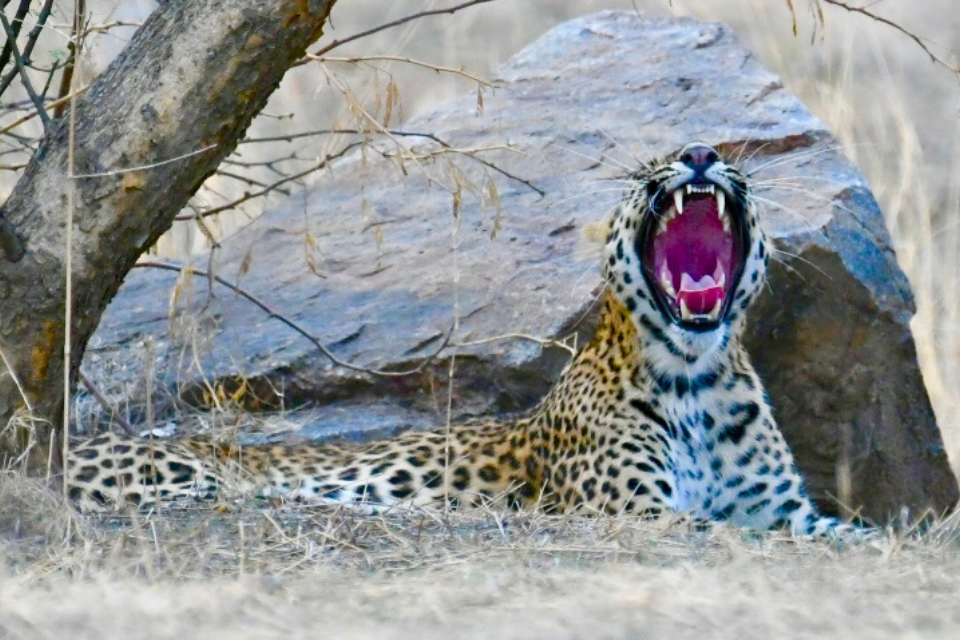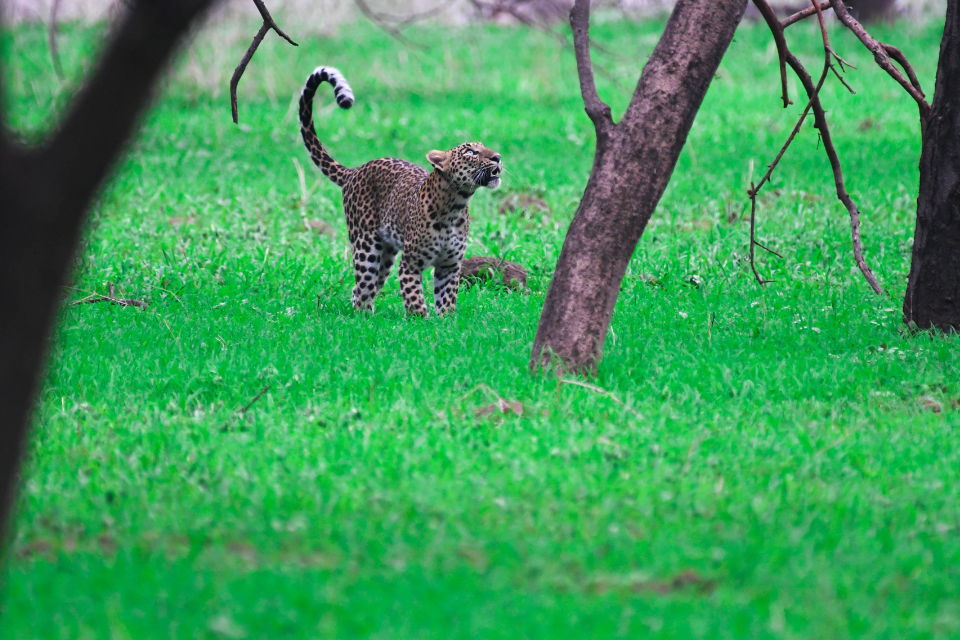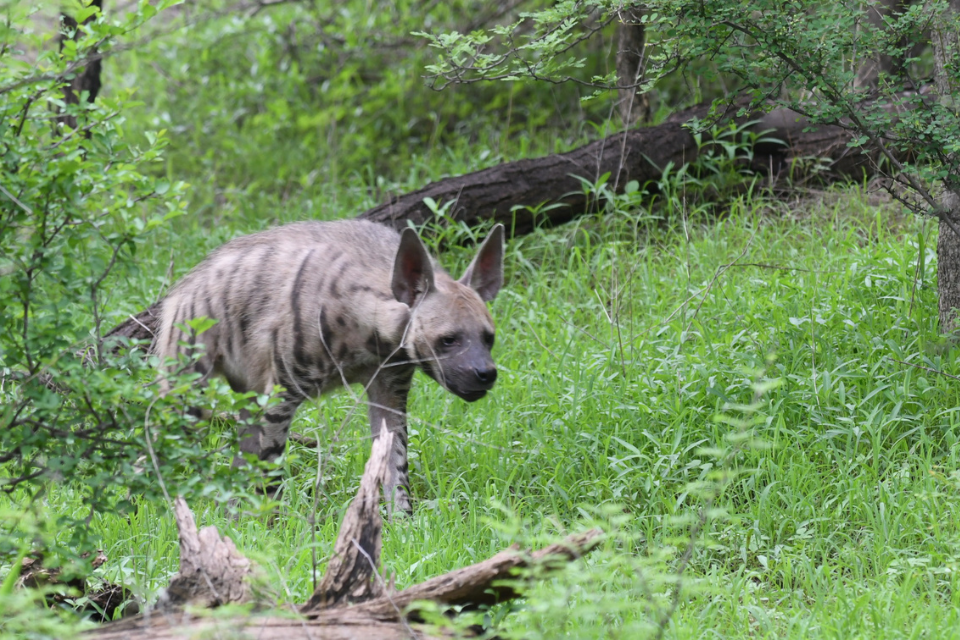
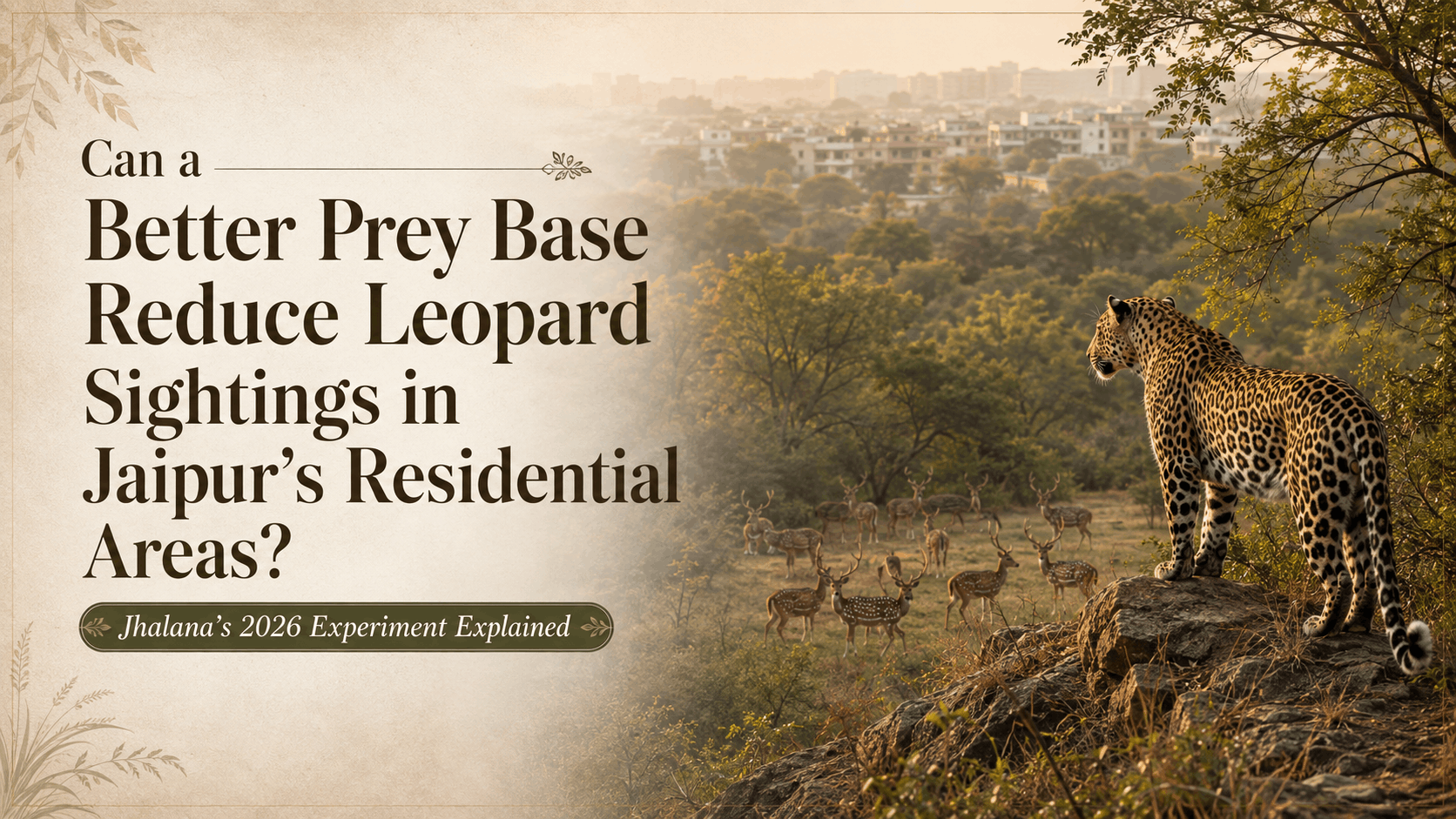
Jhalana has become one of India’s most discussed urban leopard landscapes because it combines a compact forest, a visible leopard population and the pressures of a major city. The topic of Jhalana human leopard conflict is especially relevant in 2026, when new wildlife estimates, management measures, research and policy developments are changing how people understand the reserve. This guide explains the issue in practical language, separates confirmed facts from interpretation, and connects the information to conservation and responsible safari planning.
Quick Answer
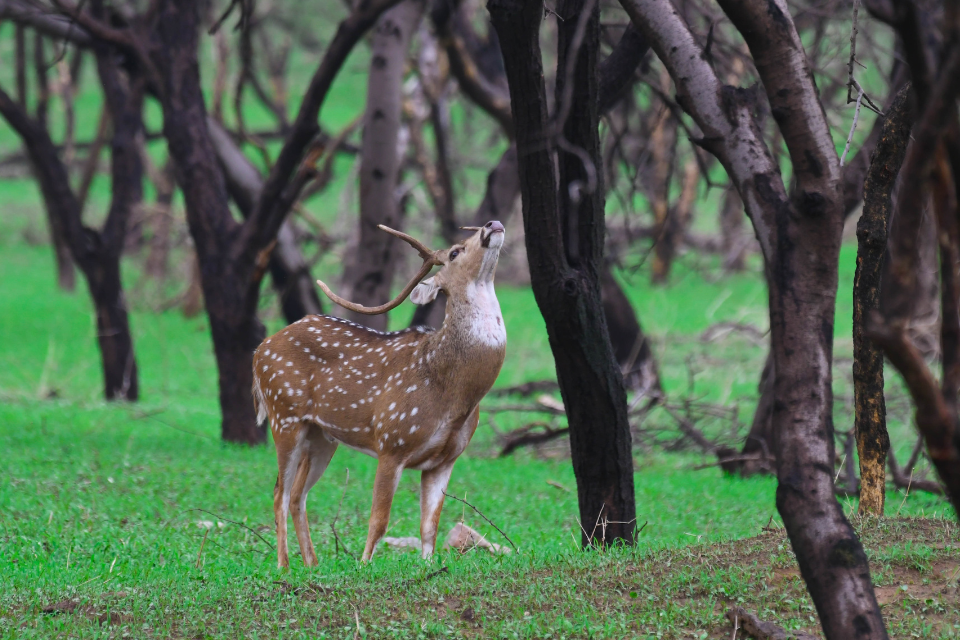
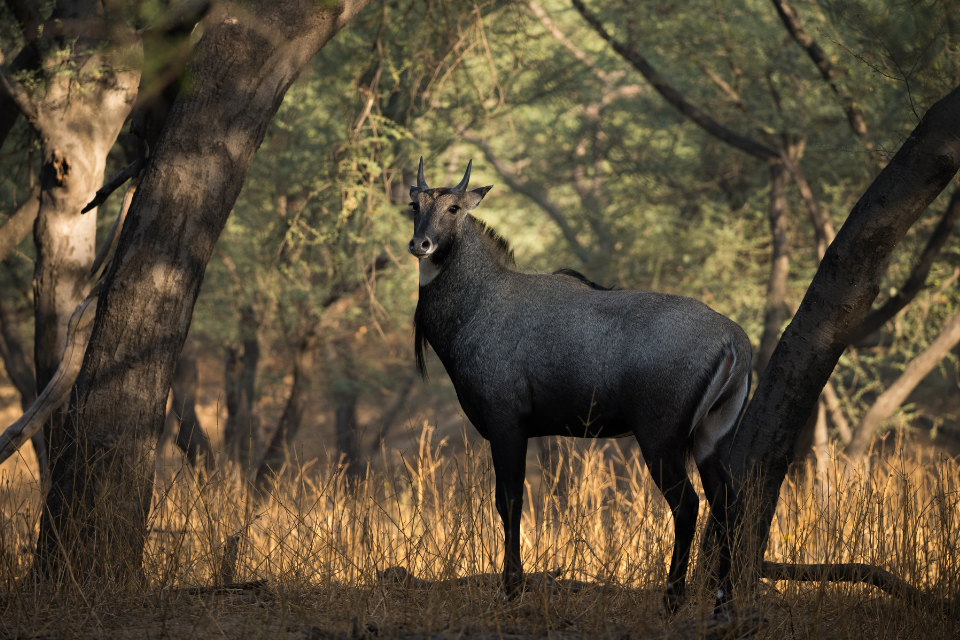
Improving Jhalana’s prey base can potentially reduce one reason for leopards to forage near human-dominated edges, but it cannot eliminate urban sightings by itself. In 2026, managers reported chital translocation, grassland work, new waterholes, camera traps and response teams. Young dispersing leopards, territorial pressure, habitat connectivity and rapid urban growth can still produce movement outside the reserve even when food availability improves.
Why food availability is part of the conflict equation
Predators respond to where prey is available, and a depleted or uneven wild prey base can make edge habitats and domestic animals more attractive. Research from Jhalana has shown that domestic animals, especially dogs, have historically contributed significantly to leopard diet in this urban landscape.
Strengthening wild prey therefore addresses a real ecological factor, but it must be evaluated over time with field data. Taken together, these details are more useful than a single headline because they show how field management, animal behavior and the surrounding city influence one another. For readers, the key is to distinguish what has been directly reported from what still needs longer-term monitoring before a firm conclusion can be made.
Why leopards may still leave a well-stocked reserve
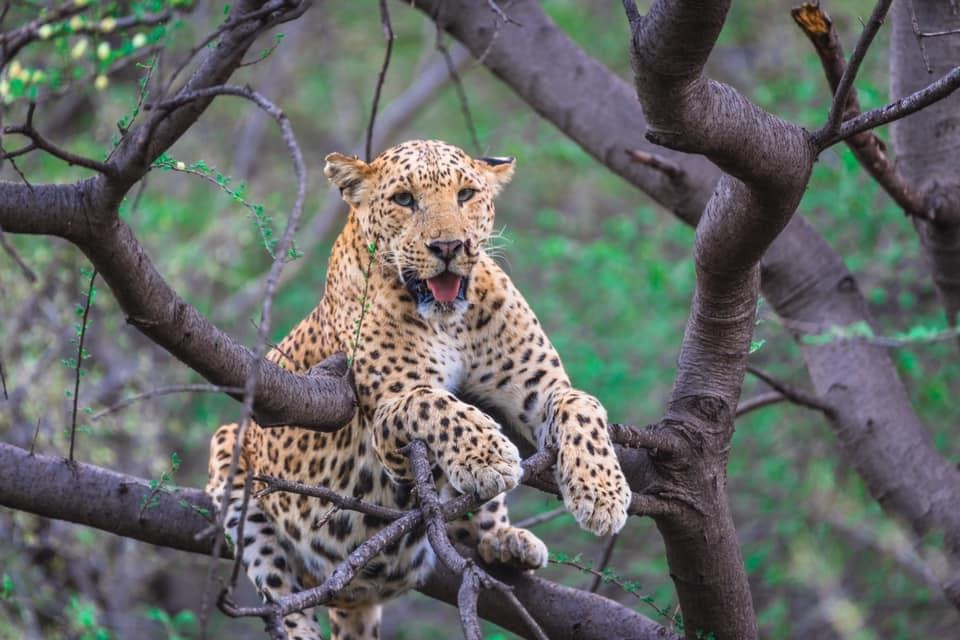
Subadult leopards often disperse as they mature and search for territory, while dominant adults can influence where younger animals move. Leopards also use drainage lines, vegetation strips, railway edges and other connected features that can extend beyond formal reserve boundaries.
Rain, disturbance, construction and human activity can temporarily alter movement patterns regardless of prey availability. Taken together, these details are more useful than a single headline because they show how field management, animal behavior and the surrounding city influence one another. For readers, the key is to distinguish what has been directly reported from what still needs longer-term monitoring before a firm conclusion can be made.
A better way to measure whether the plan works
The key indicators are fewer repeated conflict events, healthier prey numbers, stable habitat use and faster response when animals appear near settlements. Camera traps and, if eventually available, telemetry can help reveal whether movements change after habitat interventions.
Public reporting through official channels and calm crowd management are equally important because human behavior can intensify a wildlife incident. Taken together, these details are more useful than a single headline because they show how field management, animal behavior and the surrounding city influence one another. For readers, the key is to distinguish what has been directly reported from what still needs longer-term monitoring before a firm conclusion can be made.
Why one intervention is never the whole conservation solution
Leopard conservation in an urban-edge forest is a systems problem. Food, water, vegetation, territory, disease, corridors, roads, human behavior and tourism pressure all interact. A single intervention may improve one part of the system without solving every conflict. The practical value of habitat work comes from combining it with monitoring and adapting management when evidence changes. This is particularly important at Jhalana because the reserve sits beside a large, fast-growing city rather than inside a vast continuous wilderness.
What This Means for Visitors to Jhalana
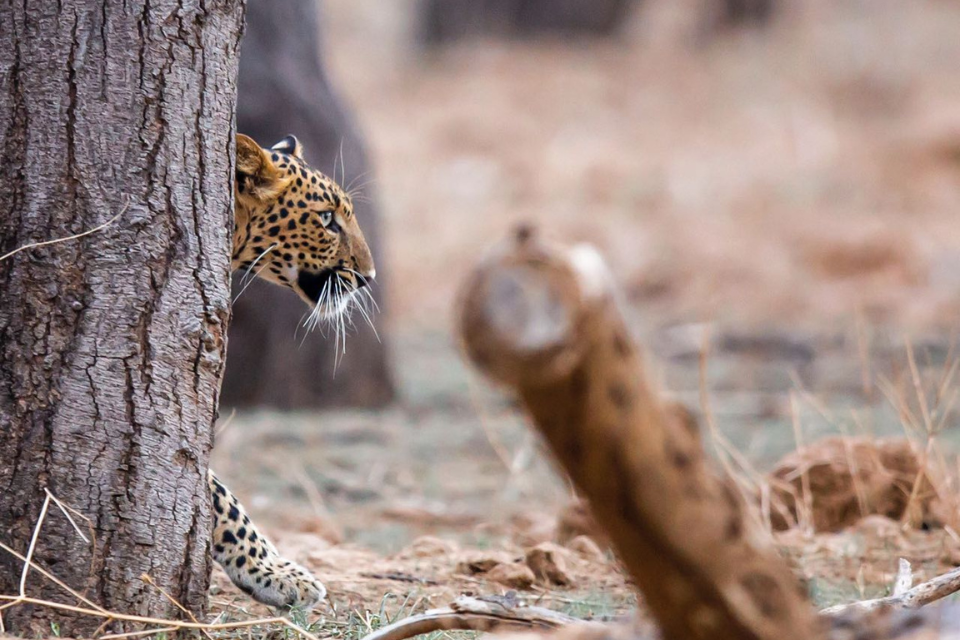
For safari visitors, Jhalana human leopard conflict should add context to the experience rather than create unrealistic expectations. Leopard behavior is naturally unpredictable, and conservation decisions are made for habitat and safety, not to manufacture sightings. A knowledgeable guide may use tracks, alarm calls, recent movement patterns and field experience, but no ethical operator can guarantee that a particular leopard will appear. Visitors get more value when they watch the whole ecosystem, remain quiet at sightings, avoid pressuring the driver to chase animals and respect every instruction given inside the reserve.
The same principle applies to photography. Long lenses, patience and a low-disturbance approach are better than close pursuit. Do not ask for off-route driving, baiting, flash use near sensitive animals, drone use or prolonged crowding around cubs and resting leopards. A photograph is successful only when it is obtained without changing the animal’s natural behavior. Responsible tourism protects future safari opportunities as well as the credibility of Jhalana as a conservation destination.
Practical Takeaways
- Use the focus keyword ‘Jhalana human leopard conflict’ naturally in the page title, opening paragraph, one subheading and image alt text rather than repeating it excessively.
- Date-stamp statistics and policy developments so readers can tell which information is current and which comes from earlier research.
- Treat leopard sightings as unpredictable wildlife encounters; never present a survey count or habitat intervention as a sighting guarantee.
- Check Rajasthan Forest Department information when permit rules, timings, legal directions or safety procedures are central to your travel decision.
- Support low-disturbance tourism: stay on permitted routes, keep noise down, follow the guide and avoid any attempt to manipulate animal movement.
Planning Your Jhalana Leopard Safari
Jhalana’s biggest travel advantage is its proximity to Jaipur, which makes a wildlife safari possible alongside the city’s forts, bazaars and cultural attractions. Even so, a safari should be planned as a timed wildlife activity rather than a casual drive. Permit availability can be limited, identity details may be required, and entry procedures can change. Booking ahead is particularly useful on weekends, holidays and peak travel dates. Morning and late-afternoon drives are popular because wildlife activity and light can be favorable, but every season has different visibility, temperature and vegetation conditions.
For booking assistance and trip planning, visit https://jhalanapanthersafari.in/. Before finalizing travel, confirm the current reporting time, permit details, pickup or meeting arrangement, cancellation conditions and what is included in the quoted price. Keep government-issued identification ready when required. Most importantly, arrive with the expectation of observing a functioning wild landscape rather than demanding a guaranteed leopard encounter.
Frequently Asked Questions
1. Can increasing wild prey reduce leopard conflict?
It can reduce pressure associated with food scarcity, but conflict is multi-causal and no single intervention can guarantee that leopards will remain inside reserve boundaries.
2. Why do young leopards enter city areas?
Young animals may disperse while searching for territory, particularly where habitat corridors connect forest edges with urban spaces.
3. Do leopards deliberately seek people as prey?
Urban leopard movement should not be interpreted as deliberate hunting of people. Animals may be moving through habitat links, following prey or trying to find safe cover.
4. Why are dogs relevant to this issue?
Jhalana diet research found domestic animals, especially dogs, were an important food resource, illustrating how urban food availability can shape leopard behavior.
5. What other measures are being used around Jhalana?
Recent reports mention camera traps, quick response teams, trackers, waterholes, prey-base work and a state human-leopard conflict SOP.
6. What should residents do during a sighting?
Avoid crowding or chasing the animal, keep a safe distance and report the sighting to the Forest Department or official wildlife helpline.
7. Is Jhalana human leopard conflict relevant to tourists as well as researchers?
Yes. The subject influences how visitors understand Jhalana, but tourism decisions should always follow current Forest Department rules and on-ground guidance rather than relying only on a blog article.
8. Is a leopard sighting guaranteed at Jhalana?
No. Jhalana is a natural habitat. Leopards are free-ranging animals, and sightings depend on movement, weather, vegetation, timing and chance.
9. What is the best way to support responsible leopard tourism?
Book authorized safari services, follow reserve rules, avoid crowding wildlife, keep noise low, do not litter and respect instructions from guides and Forest Department staff.
10. Should I rely on old leopard population numbers when planning?
No. Population figures can refer to different methods and dates. Use the year and source whenever you quote a number and check newer official information when available.
11. Where can I get help planning a Jhalana safari?
You can use https://jhalanapanthersafari.in/ for Jhalana safari information and booking assistance, while official Forest Department rules and permit conditions remain controlling.
Conclusion
The most useful way to understand Jhalana human leopard conflict is to see it as part of a wider Jaipur wildlife story. Jhalana’s leopards live in a landscape shaped by prey, water, territory, forest corridors, urban growth, monitoring, rescue systems and tourism. Current 2026 developments add important information, but responsible interpretation requires dates, sources and realistic limits. For travelers, that knowledge makes a safari more meaningful: the objective becomes observing and respecting a complex ecosystem, not simply collecting a leopard photograph.
If you are planning a Jaipur wildlife experience, you can check safari options and request booking assistance through https://jhalanapanthersafari.in/. Plan early, keep your travel details accurate and choose a low-disturbance approach that supports the long-term future of Jhalana’s wildlife.
Disclaimer
This article is for general travel, wildlife-awareness and educational purposes. Wildlife populations, safari routes, permit systems, prices, timings, court directions, rescue procedures and Forest Department rules can change. Leopard sightings are never guaranteed. For safety incidents, follow the latest instructions of the Rajasthan Forest Department and authorized emergency responders. For booking-related decisions, verify current permit requirements and availability before travel. JhalanaPantherSafari.in is a travel information/booking resource and should not be confused with the Government of Rajasthan or Rajasthan Forest Department website.