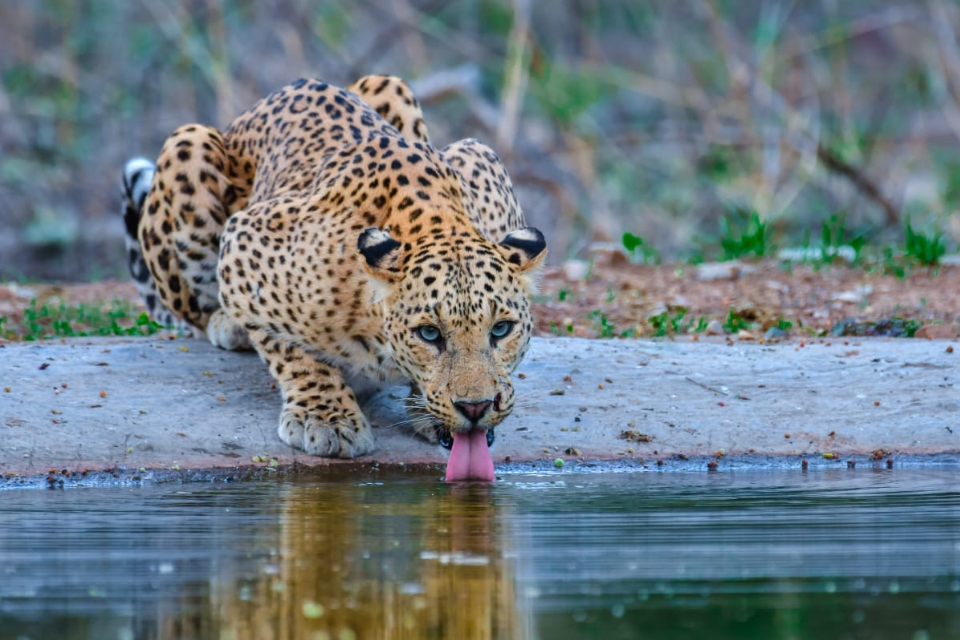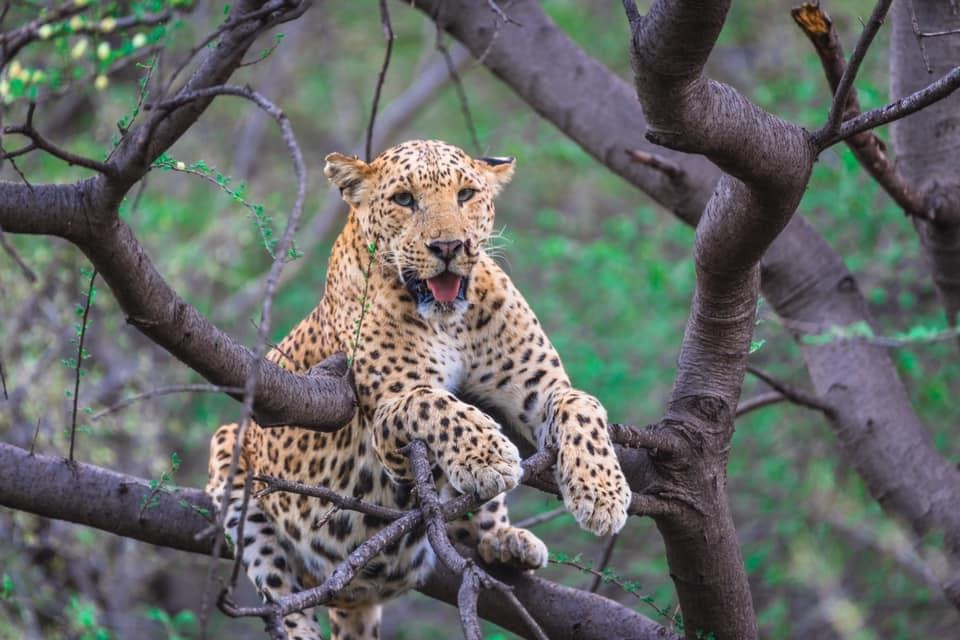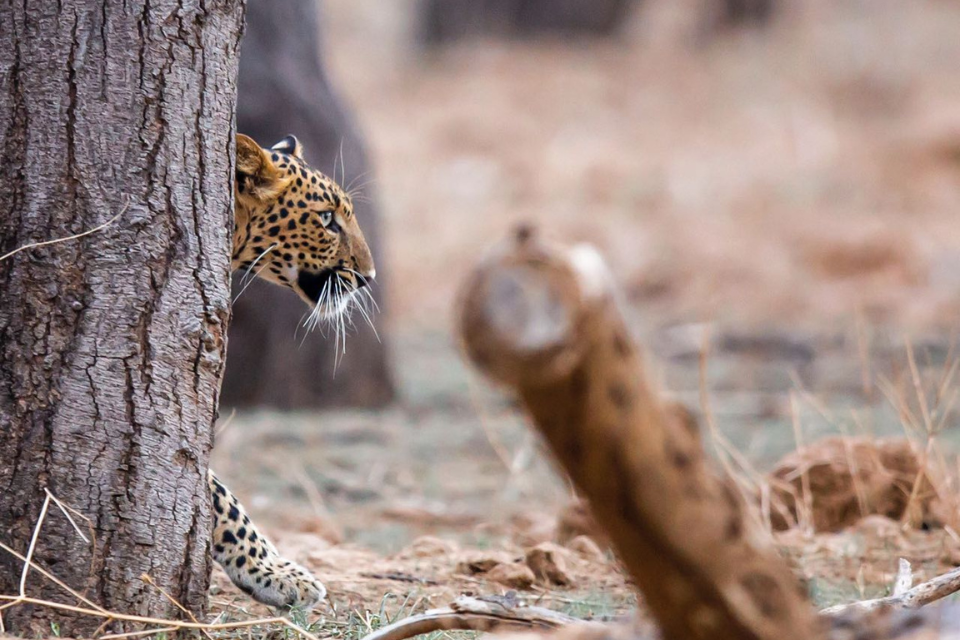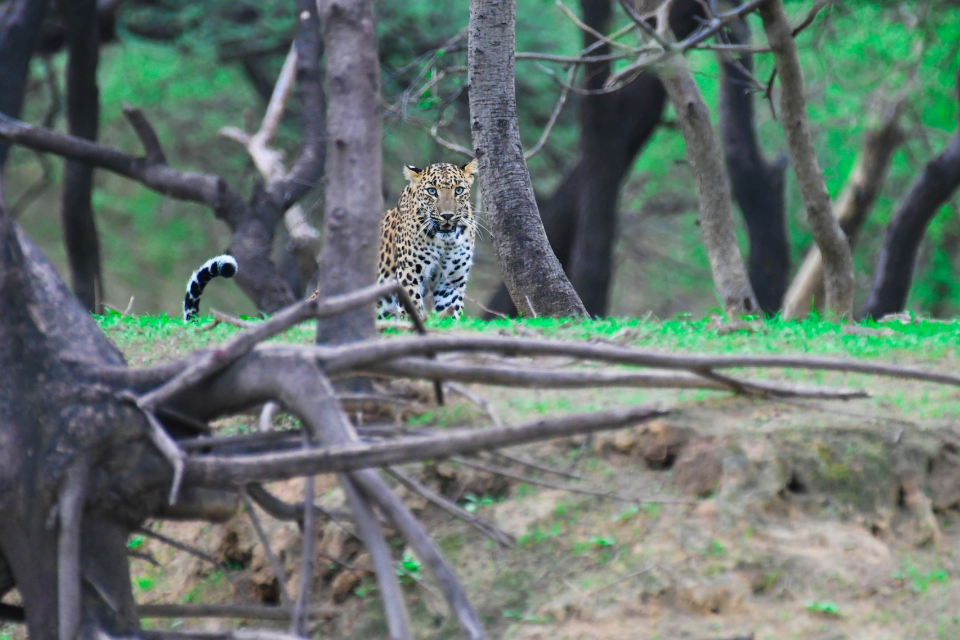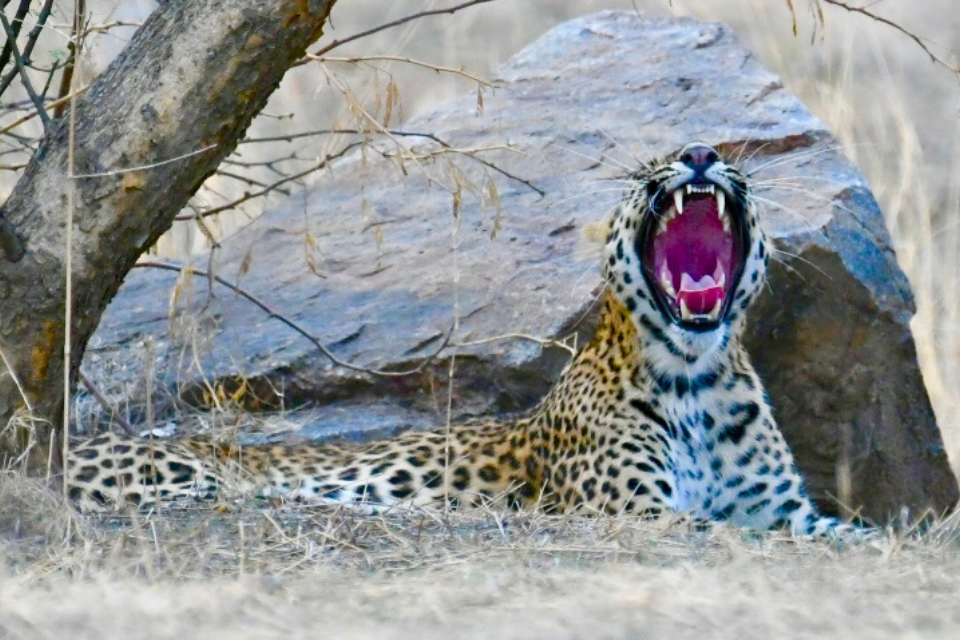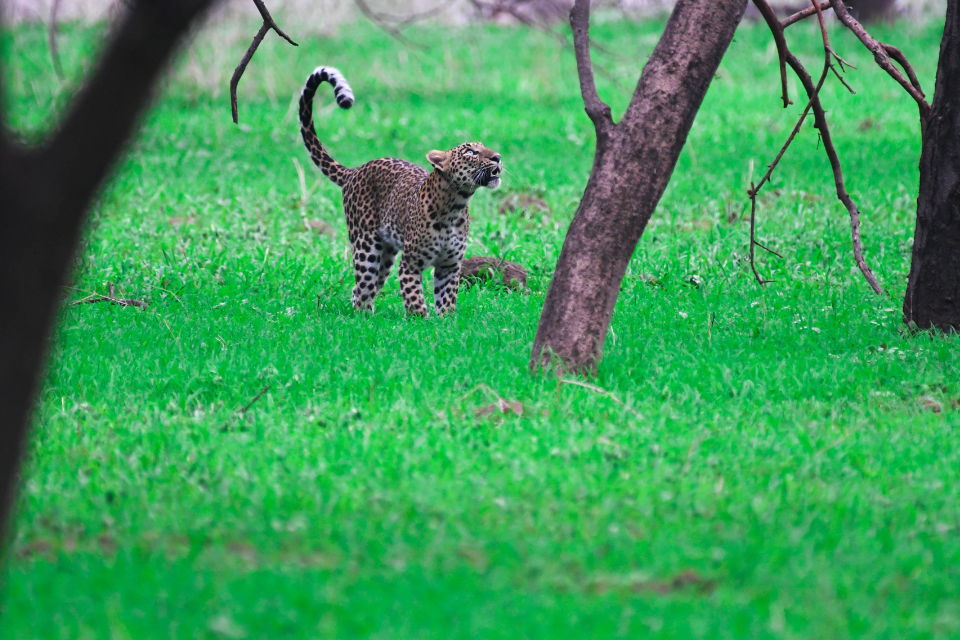
Jhalana has emerged to be one of India’s most talked-about leopard landscapes due to its combination of a small patch of forest, a clear presence of leopards, and the challenges of being close to a big city. The Jaipur leopard corridor question is highly relevant today in 2026 with new wildlife statistics, policies, studies, and management strategies affecting perceptions about the nature preserve. Here, the guide presents the question in simple language, separating the facts from the interpretations and relating the information to conservation and safari planning.
Quick Answer
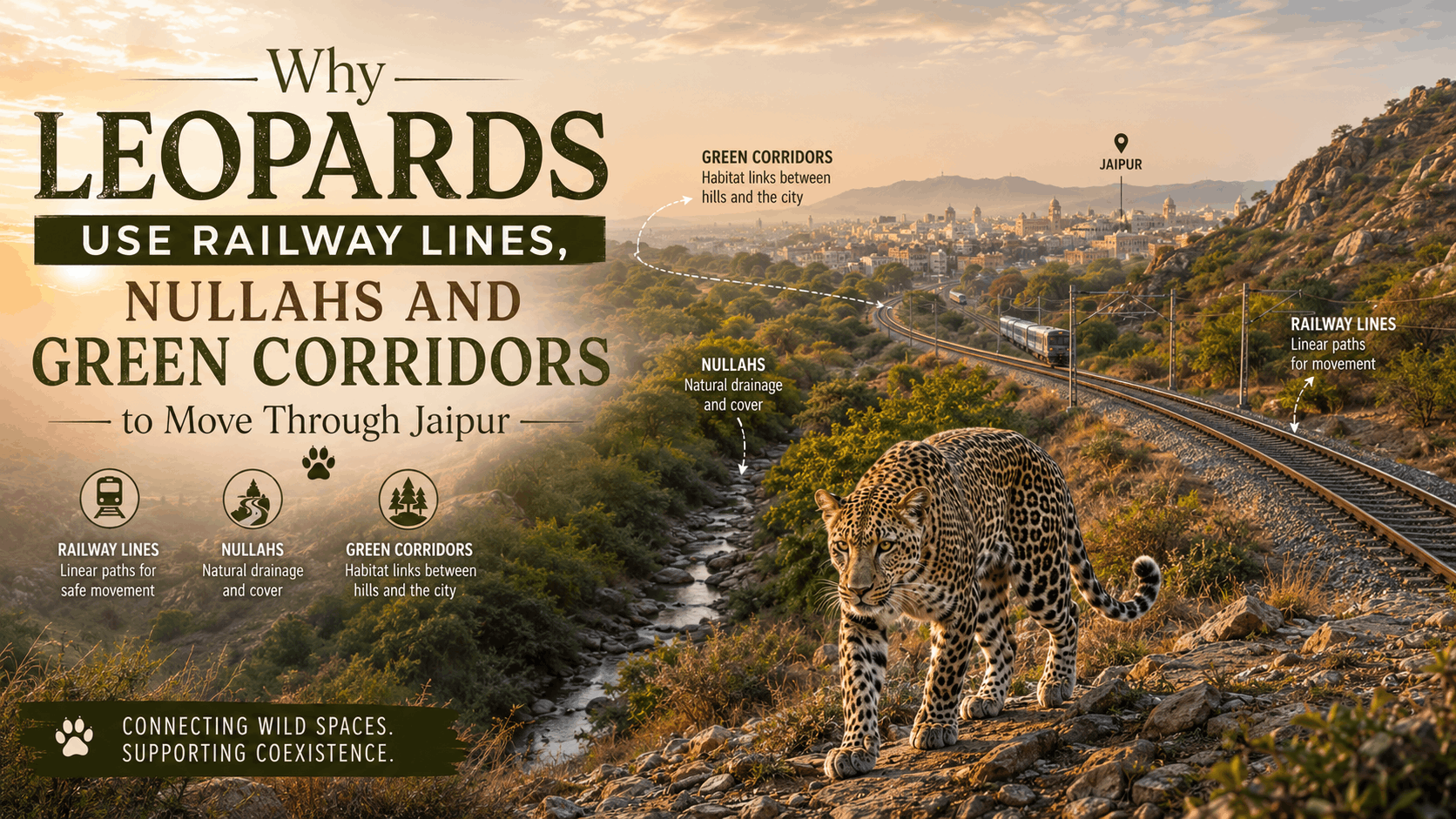
Leopards navigating cities usually tend to use cover and landscape corridors than walk openly among high human traffic. For Jaipur, forest department representatives noted that a two-year-old male leopard captured alive might have used the railway track to move from the forest to the Civil Lines area. Drainage channels, vegetation belts, rocky areas, and quiet forest edges can act as movement corridors between fragmented habitats.
How Linear Features Can Be Wildlife Pathways
Verges of railways, nullahs and green strips can offer contiguous cover through otherwise fragmented urban environments. They could also offer prey, water or quiet periods when there is less human activity, thus making navigation easier for a stealthy predator.
A corridor need not appear as a forest to humans; functional connectivity can be found in small or less visually appealing landscape components. Overall, these points are more informative than any headline as they highlight the interaction between field management, behavior of animals and the urban environment around it. The important part for the reader is to understand the difference between that which is being reported and that which will require further observation before concluding anything.
Lessons from the Jaipur experience
Following the Civil Lines rescue, a range officer stated that the young male animal must have traveled through a railway track before reaching the locality. The further accounts of leopard activity within the vicinity of Jaipur suggest the importance of understanding the connection between Jhalana, Amagarh, Nahargarh, and other green pockets.
Repeating accounts of the sightings will enable an analysis of whether the pattern of movement is occasional or repetitive in nature. In any case, these facts are more helpful than just reading the headlines, since they allow understanding the interrelation of field management, behavior of the animal and the surroundings. As for the readers, the most important thing is to separate the facts that have been reported from those that require additional research.
How the idea of corridor protection relates to safety as well
In case such connections between safe habitats are cut off, the animals will have to travel along busy roads, large colonies, and building sites. Corridor protection will help minimize dangerous movements of the animals and let them disperse normally and exchange genes among different habitat patches.
Issues related to urban planning, waste management, lighting, fencing, and roads all affect the question of how a corridor can become either an area of safety or one of conflict. All these factors combined provide more value than any headlines, as they demonstrate interaction among field management, animal behavior, and city life. For the reader, it is necessary to understand what has been proven already and what still requires further observation.
Wildlife research and how not to misinterpret it
Science answers particular questions with particular data at particular sites and times. An insight gained in Jhalana is extremely useful, but must be understood in the context of the scientific study. A study of diet is not a description of every leopard ever, and an estimate of survival is not a forecast for every cub. The way forward for wildlife communication is to explain what was found, what it means and the limitations of the finding.
Implications for Safari Goers in Jhalana
Jaipur leopard corridor has an important implication to make safaris goers understand that it is not all about making them believe that something unreal and perfect will happen. First of all, it is impossible to guarantee anything to safari guests regarding leopards, as they are unpredictable creatures and their behavior changes. Even if a good guide has the experience and information like tracks of animals, alarm calls, movement of the animal, there is still nothing to ensure that the particular leopard will be seen. The more a visitor gets the more he/she can see if he/she watches the whole ecosystem, listens, does not press the driver to show the animal, follows all instructions in the reserve.
It is also true for photography. Patience and long lenses are needed here, while it is better not to bother an animal in any way. No off-route driving, no baiting, no flashlights in order to take pictures of the animal, as it can change its natural behavior. No drones usage and crowding around leopards’ cubs or sleeping leopards.
Practical Tips
• Include the focus keyword ‘Jaipur leopard corridor’ naturally in the page title, first paragraph, one subheading and image alt tag without using it too much.
• Place the date stamps on statistics and policy changes so that the readers know which part of information is recent and which one comes from previous studies.
• Take leopard sightings as unpredictable animal sightings and do not take any kind of count or habitat intervention as the guarantee of sightings.
• Refer Rajasthan Forest Department for all permit-related information, timings and directions when it plays a major role in your travel plan.
• Encourage disturbance-free tourism by sticking to permitted routes, maintaining low noise, following the guide and avoiding all efforts to control animal movement.
Jhalana Wildlife Safari Planning
The greatest advantage of travel to Jhalana is its proximity to Jaipur, thus a wildlife safari experience alongside other forts, markets and cultural heritage of the city. However, it needs to be noted that a wildlife safari needs to be scheduled as a planned wildlife experience rather than just another casual drive. Permits may not always be available, identity documents may need to be provided and the entry process may vary at times. Pre-planning is especially helpful on weekends, holidays and high travel dates. Drives at morning and evening time are popular since wildlife activity and lighting may be favorable. However, each season presents unique visibility, temperatures and vegetation.
For assistance in booking and planning the safari, refer to https://jhalanapanthersafari.in/. While making the bookings, please verify the timings for reporting, permits, arrangements for pickup/meeting, terms for cancellation and what exactly is included in the quoted price. Please carry the government issued identification document wherever necessary. But above all, remember to come with the expectation of viewing a working wildlife habitat.
Frequently Asked Questions
1. What is a wildlife corridor?
A wildlife corridor is a link in the landscape that provides passage for animals from one habitat patch to another for the purposes of feeding, dispersal, breeding, or seasonal requirements.
2. Is a railway line a leopard corridor?
Vegetation along railway lines can occasionally function as a corridor. In Jaipur, it was speculated by authorities that a Civil Lines leopard might have followed a railway track.
3. Why are nullahs important?
Nullahs can have vegetation, shade, and uninterrupted stretches which animals could use as a travel path, especially when surroundings are developed.
4. Are all green strips wildlife corridors?
No, traffic, crowds, barriers, dogs, lighting, and construction activity can render an otherwise green stretch of road unsafe or impassable.
5. How do corridors benefit people?
Good connectivity can minimize unwanted travel through dense populations and assist wildlife authorities in anticipating the crossing points.
6. Are these corridors accessible to tourists?
Just because there are wildlife corridors does not mean that these are tourist places. One should only use official safari areas and routes.
7. Does Jaipur leopard corridor also pertain to tourists along with researchers?
Yes, but the topic affects the perception of the place by visitors and the decisions related to tourism should only be taken according to Forest Department guidelines and suggestions on-site and not only from a blog post.
8. Is there any guarantee of spotting leopards in Jhalana?
No, since Jhalana is a wild habitat, leopards can roam freely, and spotting depends on movement, weather conditions, availability of food and vegetation, timing and luck.
9. Can I base my plans on old data regarding the leopard population?
No. The population data may be based on different criteria and even dated. You should specify the year and the source of the number that you are citing.
10. From where can I seek help regarding Jhalana Safari plans?
https://jhalanapanthersafari.in/ is the website where I can plan my Jhalana safari.
Conclusion
A good way of understanding Jaipur leopard corridor is by taking into consideration the larger context of Jaipur wildlife story. The leopards of Jhalana exist in an environment defined by prey, water, territoriality, forest corridors, urban development, monitoring, rescue and tourism. The 2026 developments provide relevant information, but proper interpretation should include dating, sourcing and practical considerations. For a safari, the above-mentioned facts make the experience more interesting because the aim is the observation of an intricate ecosystem rather than a mere leopard picture.
For those interested in a Jaipur wildlife tour, there are several safari options and assistance in booking at http://jhalanapanthersafari.in/. It is recommended to plan in advance and provide accurate travel details.
Disclaimer
The article is for tourism purposes only. The populations of wildlife, safari trails, permits system, costs, timing, court orders, rescue operations, and policies of Forest Departments may undergo modifications. Leopard sighting is not guaranteed. In case of any emergency, kindly adhere to the most recent guidelines issued by the Rajasthan Forest Department and respective emergency services. In case of bookings, check the updated permit requirements and availability prior to your visit. JhalanaPantherSafari.in is a tourist information/booking site and not the official website of Government of Rajasthan /Rajasthan Forest Department.