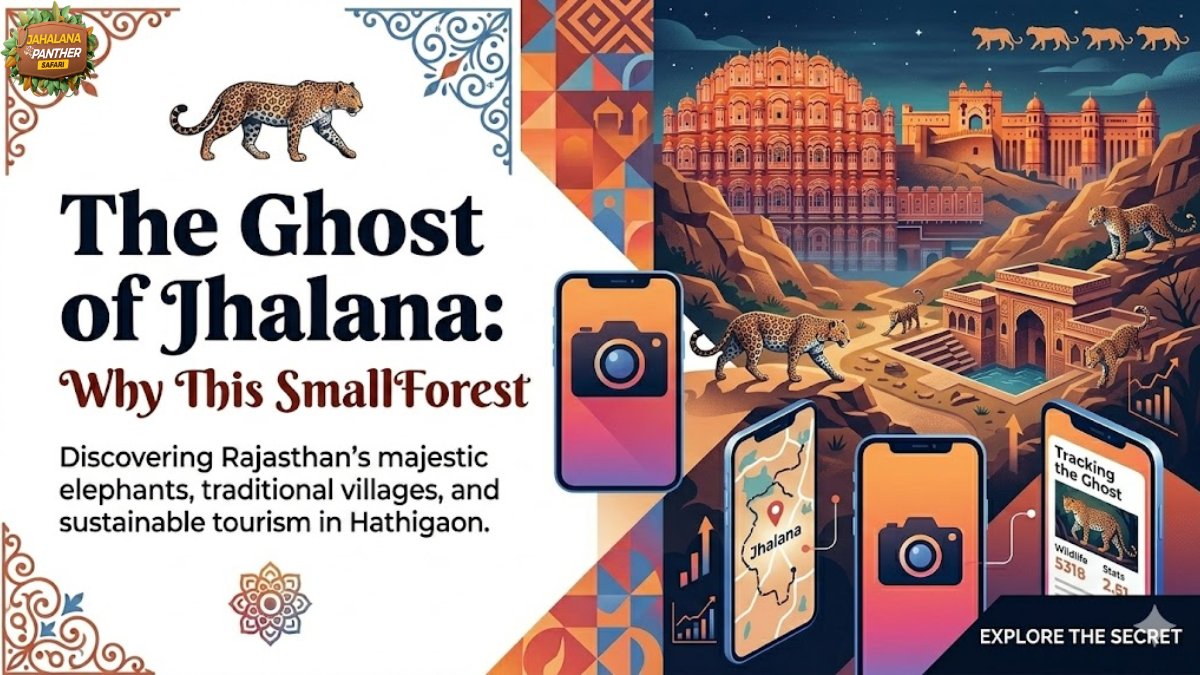
The Ghost of Jhalana: Why This Small Forest is India’s Best Kept Secret
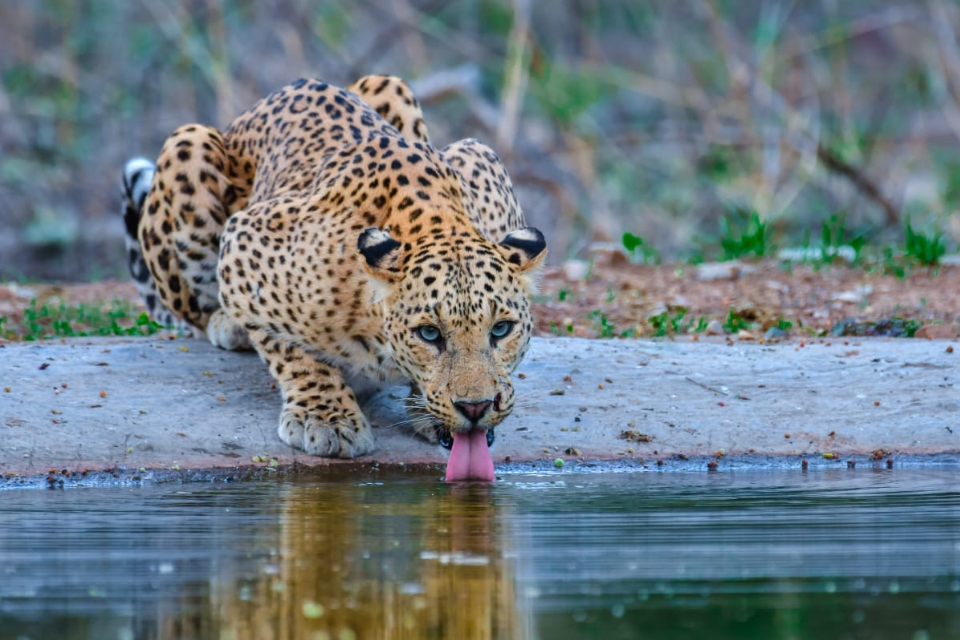
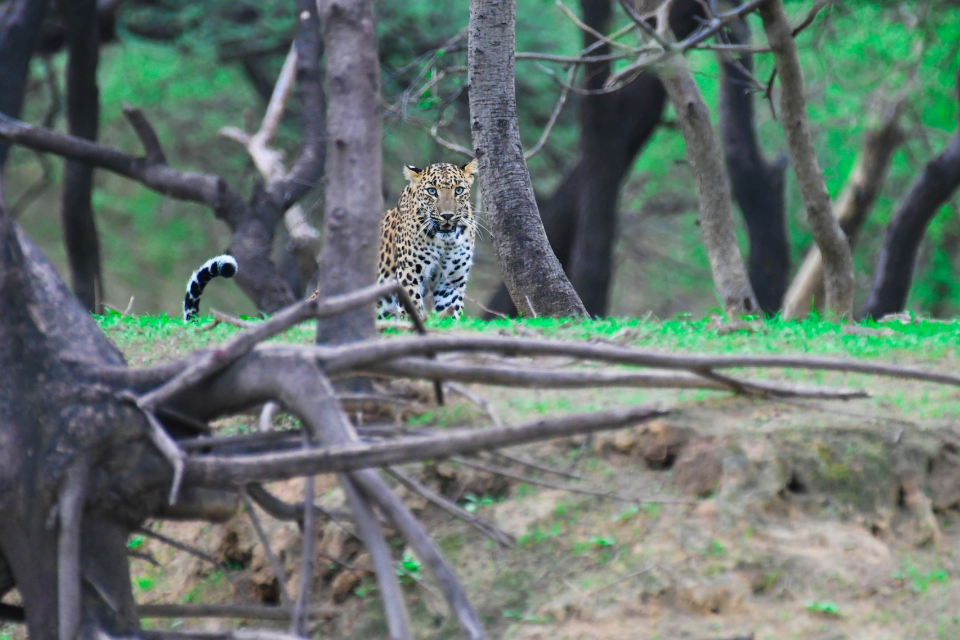
When tourists land in Jaipur, their itineraries are usually packed with the “Big Three”: Amer Fort, City Palace, and Hawa Mahal. But just a 15-minute drive from the international airport lies a wild, rocky sanctuary that most travelers drive right past without a second glance. This is Jhalana Leopard Reserve—a 20-square-kilometer scrub forest that holds one of the highest leopard densities on the planet.
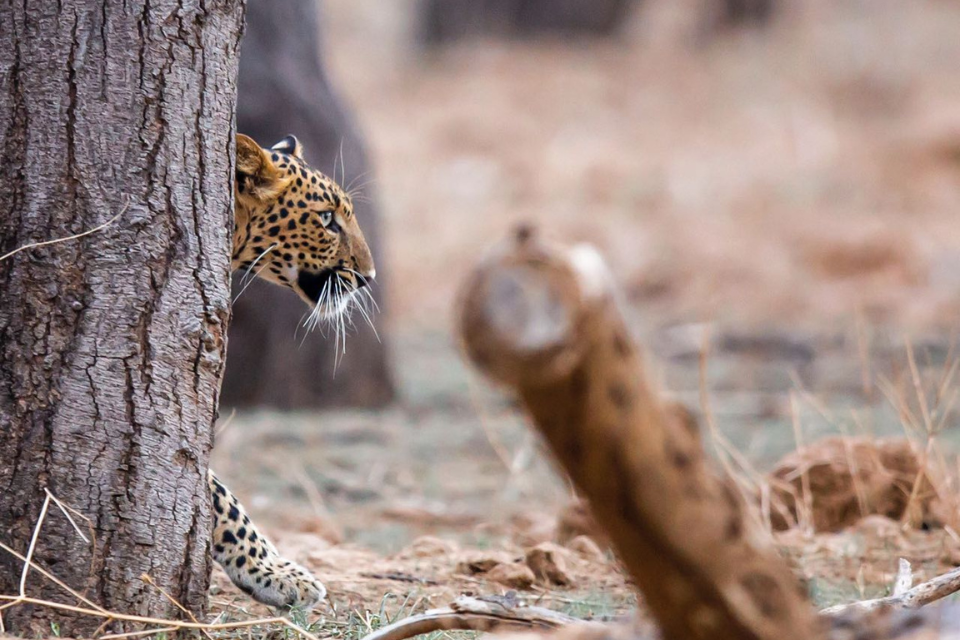
For decades, Jhalana was a royal hunting ground, then a neglected patch of urban forest. Today, it is the crown jewel of India’s leopard conservation, earning its reputation as the “Ghost of Jhalana.”
The Paradox of an Urban Jungle
Jhalana is not your typical national park. While places like Ranthambore or Jim Corbett require hours of travel into the deep countryside, Jhalana is hemmed in by Jaipur’s bustling residential colonies and industrial areas.
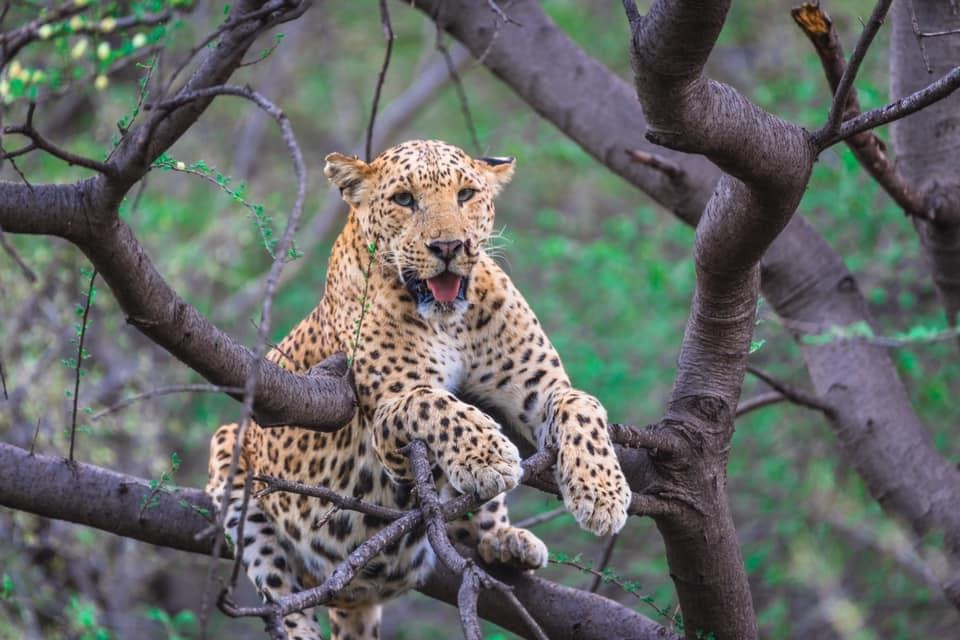
From the higher ridges of the Aravalli hills within the park, you can literally see the city’s skyline, hear the distant hum of traffic, and—if you’re lucky—see a 150-pound male leopard perched on a rock, completely unfazed by the civilization just meters away. This “urban-wild enmeshment” is what makes it a secret; most people can’t believe such a raw, predatory ecosystem exists inside a major metropolitan city.
Why Jhalana is the Leopard Sighting Capital
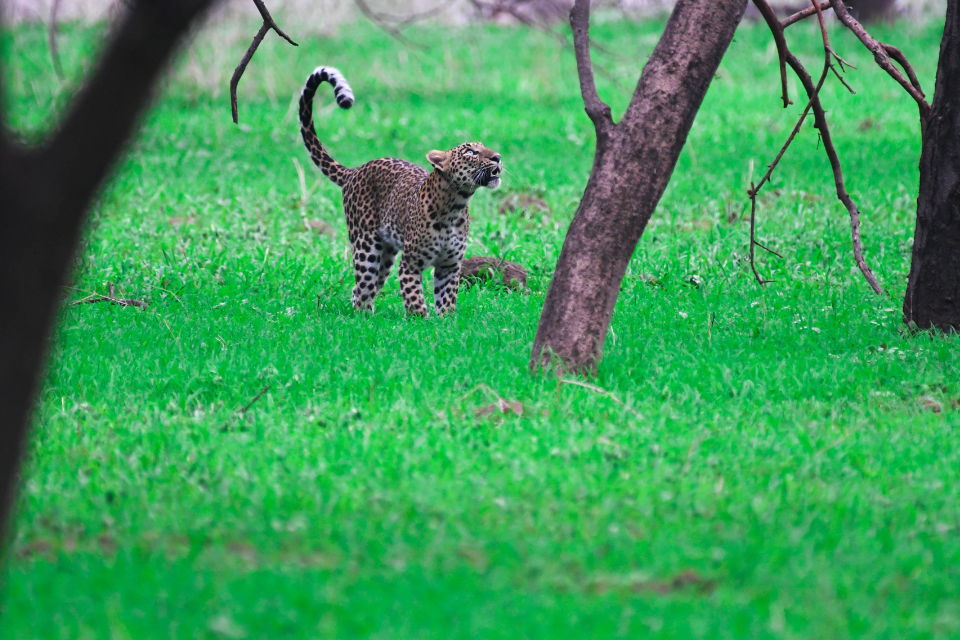
If you go to a tiger reserve, you might go three days without a sighting. At Jhalana, the story is different. With over 40 leopards inhabiting just 20 square kilometers, the sighting probability is staggering—often cited as high as 90%.
1. The “Ghost” is Diurnal Here
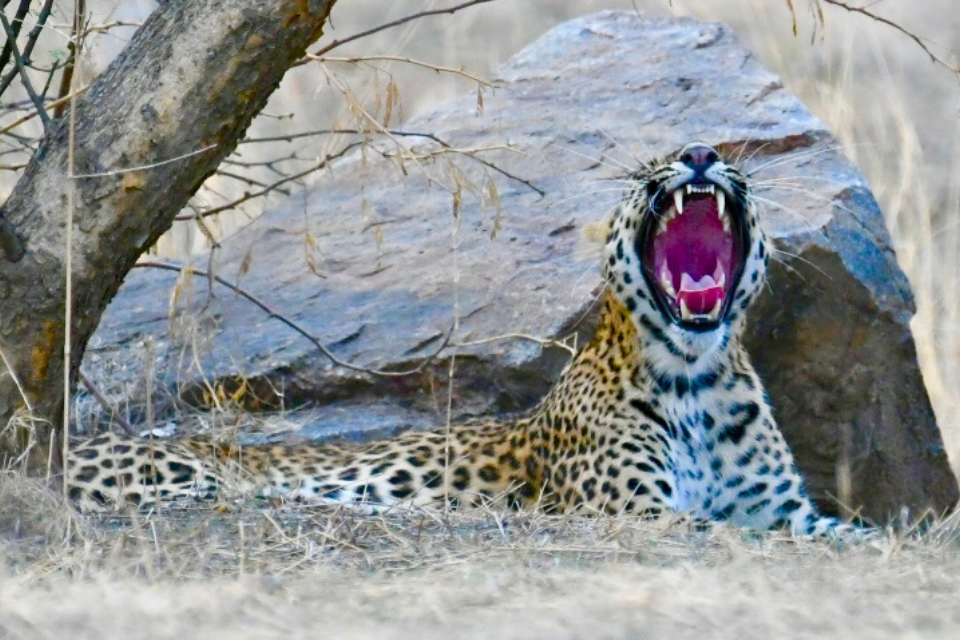
Leopards are famously nocturnal and shy. However, the leopards of Jhalana have adapted differently. Because they have grown up seeing safari gypsies since 2016, they are “habituated.” They don’t run away. You can find them basking on the stone walls of the old hunting lodges or walking down the middle of the safari track in broad daylight.
2. Lack of Larger Predators
In most Indian forests, leopards live in the shadow of tigers. To avoid being killed by a tiger, leopards stay hidden in thick canopies. In Jhalana, the leopard is the Apex Predator. There are no tigers here. This makes them confident, bold, and much easier to spot as they claim the forest floor as their own.
The Cast of Characters: More Than Just Panthers
While the “Panther” (the local term for leopard) is the protagonist, Jhalana’s biodiversity is surprisingly rich for its size.
-
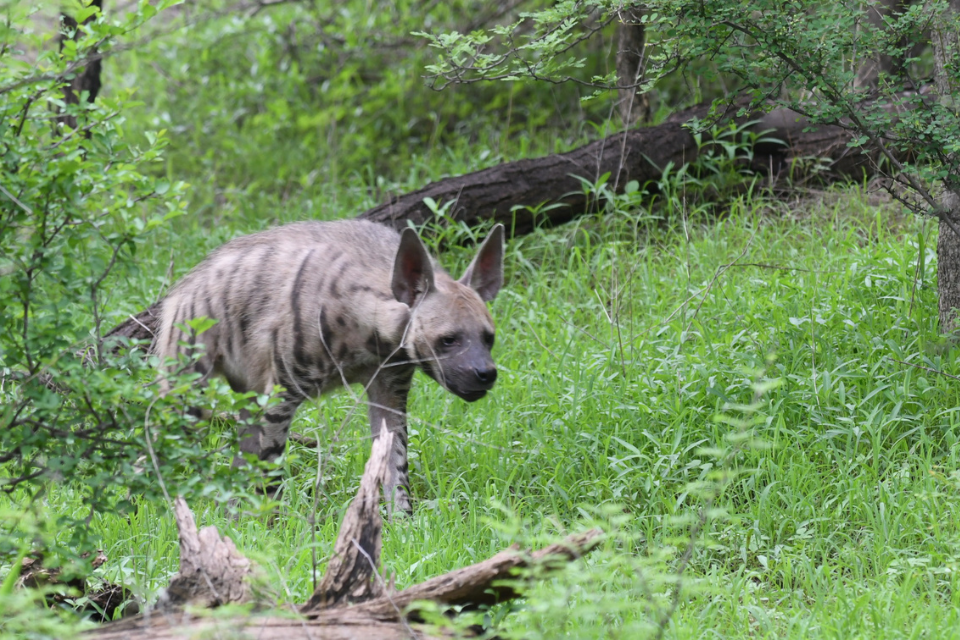
The Scavengers: Jhalana has a healthy population of Striped Hyenas. These nocturnal creatures are usually hard to find, but at Jhalana, they are frequently spotted near their dens in the rocky cliffs.
-
The Canines: Golden Jackals and Desert Foxes are common sights, often seen darting through the Juliflora bushes.
-
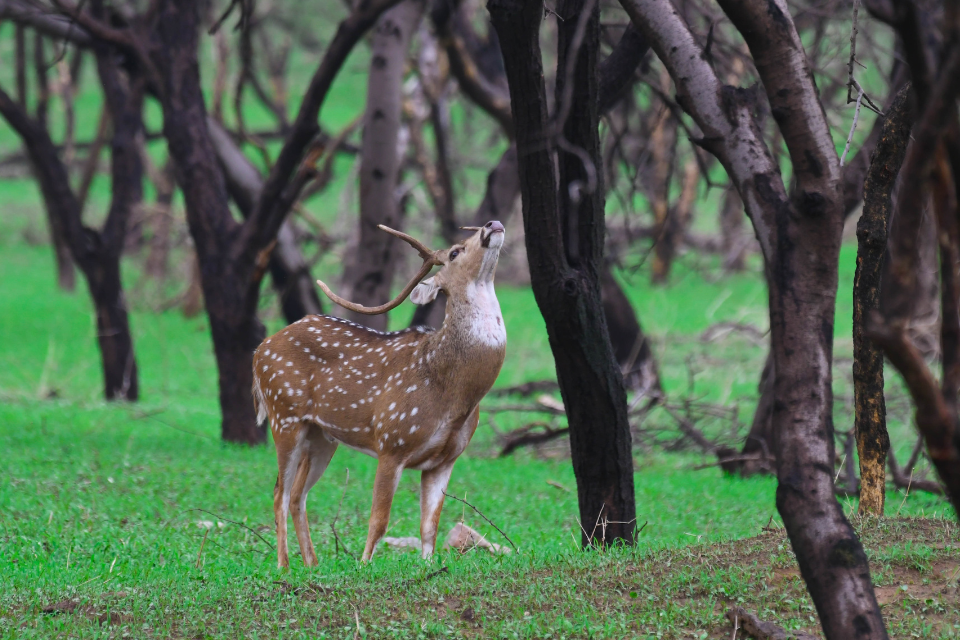
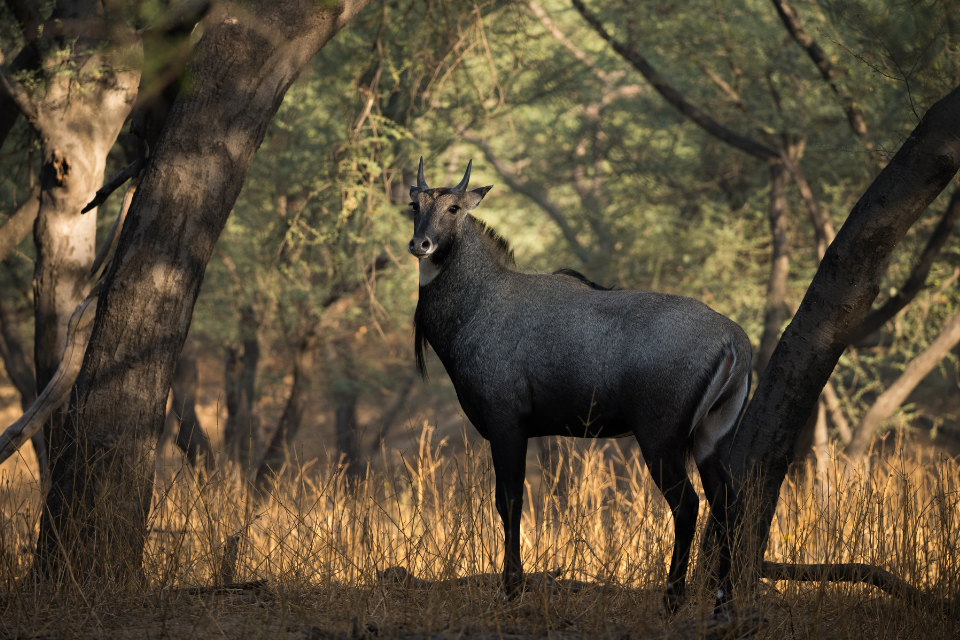
The Prey Base: For a leopard to survive, it needs food. The forest is teeming with Blue Bulls (Nilgai), Spotted Deer (Chital), and Hanuman Langurs.
-
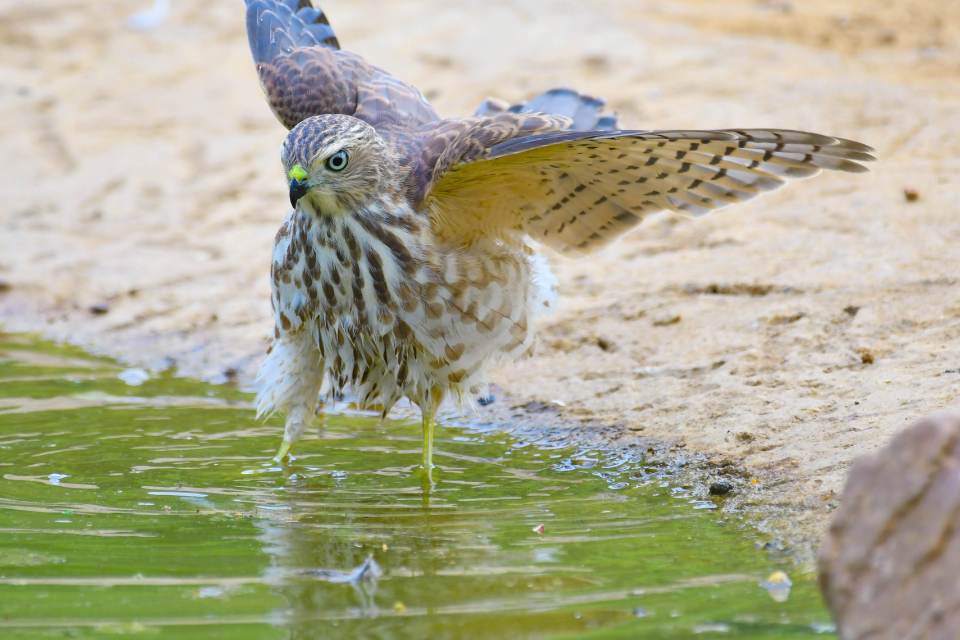
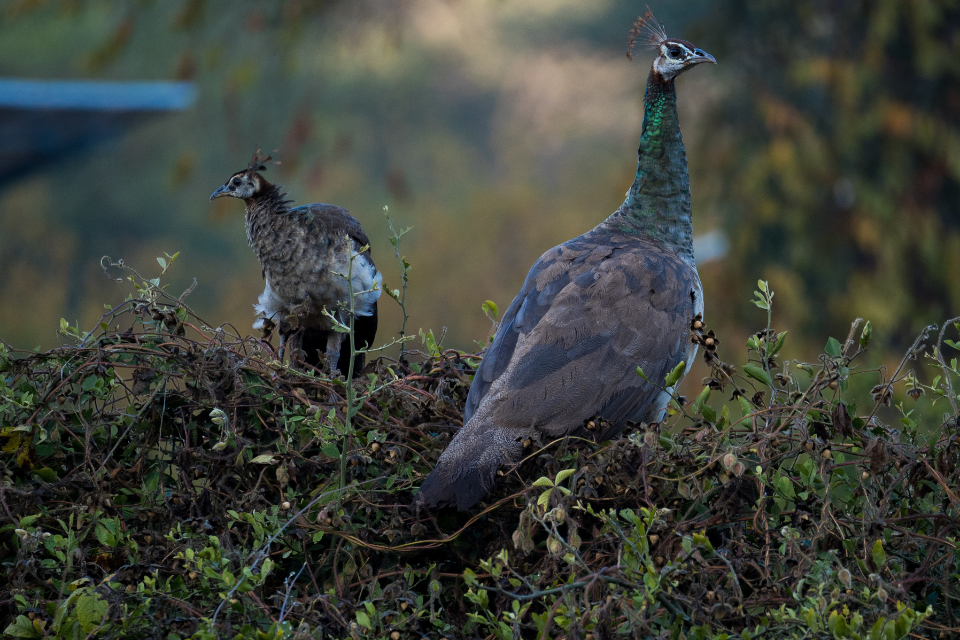
The Birdlife: Over 150 species of birds call Jhalana home. Look out for the Indian Pitta, the Dusky Eagle Owl, and the majestic Flamingos (during migratory seasons) in nearby water bodies.
Planning Your Expedition (2026 Updated Guide)
To keep the “secret” sustainable, the Forest Department limits the number of vehicles. Here is what you need to know for a 2026 visit:
Safari Timings
The park follows the sun. As the seasons change, so do the gate timings.
| Season | Morning Shift | Evening Shift |
| Summer (April – June) | 06:00 AM – 08:30 AM | 05:00 PM – 07:30 PM |
| Winter (Oct – March) | 06:30 AM – 09:00 AM | 03:15 PM – 05:45 PM |
| Monsoon (July – Sept) | 06:15 AM – 08:45 AM | 03:30 PM – 06:00 PM |
2026 Pricing (Approximate)
-
Indian Nationals: ₹1,350 per person (Sharing) | ₹6,500 (Full Gypsy)
-
Foreign Nationals: ₹2,750 per person (Sharing) | ₹10,500 (Full Gypsy)
-
Note: Always book through the official Rajasthan Forest Department portal to avoid overpaying.
The Two Faces of Jhalana: Zone 1 vs. Zone 2
The reserve is split into two main zones, and while both are productive, they offer different vibes:
-
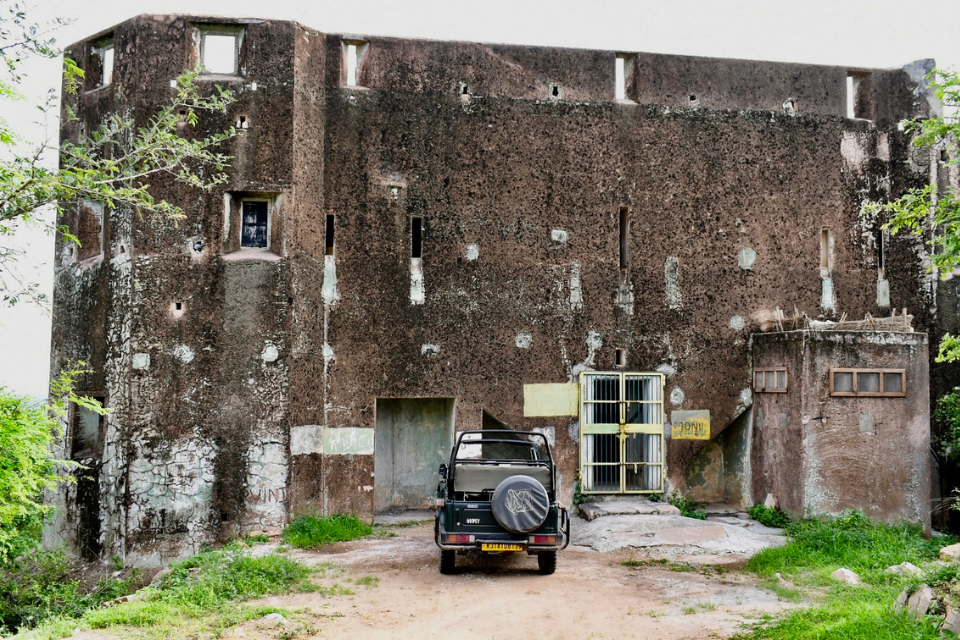
Zone 1: This is the “Heritage” zone. It contains the Shikaar Audhi (an old three-story hunting lodge). The terrain is hilly and rocky, making it the best place to see leopards against the backdrop of the Aravalli cliffs.
-
Zone 2: This zone is flatter and has more water holes. It’s excellent for seeing a variety of mammals and is often less crowded than Zone 1.
The Photographer’s Playbook: How to Capture the Ghost
Jhalana is a favorite for wildlife photographers because the animals are close. You don’t need an 800mm lens here.
-
Lens Choice: A 70-200mm or 100-400mm is perfect. The leopards often walk right past the gypsy, and a massive prime lens might actually be too much zoom.
-
The Eye-Level Shot: Since leopards are often on the rocks, try to position your camera to look them in the eye. It creates a powerful, intimate connection in the photograph.
-
High ISO for Night Safaris: In 2026, Jhalana’s evening safaris often stretch into the “blue hour.” Ensure your camera can handle ISO 3200 or 6400 to capture the leopard’s nocturnal activity without a flash (which is strictly banned).
-
Silence is Your Best Tool: The “Ghost” will disappear the moment it hears a loud shutter or a human voice. Use “Silent Shutter” mode if your camera has it.
Conservation Success or Urban Crisis?
The story of Jhalana isn’t just about tourism; it’s about survival. Because the forest is an “island” surrounded by the city, the leopard population is reaching its carrying capacity. In recent years, young males have been known to wander into nearby colonies in search of territory.
The Rajasthan Forest Department has implemented “Project Leopard” to manage this. They have improved the prey base and created “corridors” to the nearby Amagarh Reserve to give the panthers more room to roam. By visiting Jhalana, your permit fees go directly into the protection of this fragile urban ecosystem.
Pro-Tips for Your Jhalana Visit
-
Avoid Bright Clothes: Leopards have excellent vision. Wear khaki, olive, or grey. If you look like a bush, they will ignore you. If you wear neon orange, they will hide.
-
The “Double Safari” Strategy: Many pro-travelers book a morning safari and an evening safari on the same day. Since Jhalana is so close to the city, you can go back to your hotel for a nap and lunch in between.
-
Check the Sighting Board: Every morning, the forest guards update a board at the gate showing which leopards were seen and where. Check this before you head in!
-
Respect the Guide: The drivers and guides at Jhalana are some of the best in India. They can spot a leopard’s tail twitching in a thicket from 100 meters away. Trust their instincts.
Conclusion: Why You Must Go Now
Jhalana is India’s “Best Kept Secret” because it challenges everything we know about wildlife. It proves that nature doesn’t always need a remote corner of the world to thrive—it just needs a little bit of space and a lot of protection.
As Jaipur grows, the pressure on this forest increases. Seeing the Ghost of Jhalana in 2026 is a rare privilege. It is a reminder that even in our concrete-filled lives, the wild is never truly far away.
Ready to meet the King of the Aravallis? Pack your binoculars, book your permit, and prepare for an encounter you’ll never forget.
Quick Summary Table for Travelers
| Feature | Details |
| Location | Malviya Nagar, Jaipur (15 mins from Airport) |
| Primary Attraction | Indian Leopard (Panther) |
| Best Months | February to June (for sightings) |
| Required ID | Original Aadhar Card / Passport |
| Vehicle Type | 4×4 Open Jeep (Max 6 people) |
| Nearby Attractions | Amagarh Leopard Reserve, Patrika Gate |
H2: Frequently Asked Questions (FAQ)
Q1: What is the success rate of spotting a leopard at Jhalana Panther Safari?
Jhalana has one of the highest sighting densities in India. Most visitors report a 90% success rate, especially during the morning and evening shifts when leopards are most active.
Q2: Is the Jhalana Leopard Reserve open during the monsoon?
Unlike many national parks in India, the Jhalana Panther Safari remains open throughout the year, including the monsoon season (July to September), offering a lush green backdrop for photography.
Q3: How can I book a slot for the Jhalana Panther Safari?
Bookings can be made online through the official Rajasthan Forest Department website or via authorized safari operators in Jaipur. It is recommended to book at least 15 days in advance for weekends.
Q4: Which is better: Zone 1 or Zone 2 in Jhalana?
Zone 1 is famous for its rocky cliffs and the historic Shikaar Audhi (hunting lodge), ideal for leopard sightings. Zone 2 is flatter and great for spotting hyenas, desert foxes, and birdlife.
Q5: What are the safari timings for Jhalana?
The safari operates in two shifts. Generally, the morning shift starts around 6:30 AM and the evening shift around 3:30 PM, though timings vary slightly based on the season.
Q6: Are there any night safaris available in Jhalana?
While traditional “night” safaris aren’t allowed, the evening slots often extend into the twilight (Blue Hour), providing a thrilling experience of the forest as it transitions into the night.
Q7: Is Jhalana safe for families and children?
Yes, it is completely safe. You stay inside a secure 4×4 open gypsy with a trained driver and naturalist guide. Children find the experience very educational and exciting.
Q8: What should I carry for my Jhalana Panther Safari?
Always carry your original ID proof (Aadhar Card or Passport) used during booking. Also, bring binoculars, a high-zoom camera, water, and sun protection.
Q9: How far is Jhalana from Jaipur International Airport?
The reserve is incredibly accessible, located just 5-6 kilometers (about 15 minutes) away from the Jaipur International Airport, making it perfect for a quick wild escape.
Q10: What is the best season to visit for photography?
For the best leopard sightings, February to June is ideal as the dry vegetation makes it easier to spot the “Ghost.” However, for landscape photography, the post-monsoon months (October-November) are stunning.