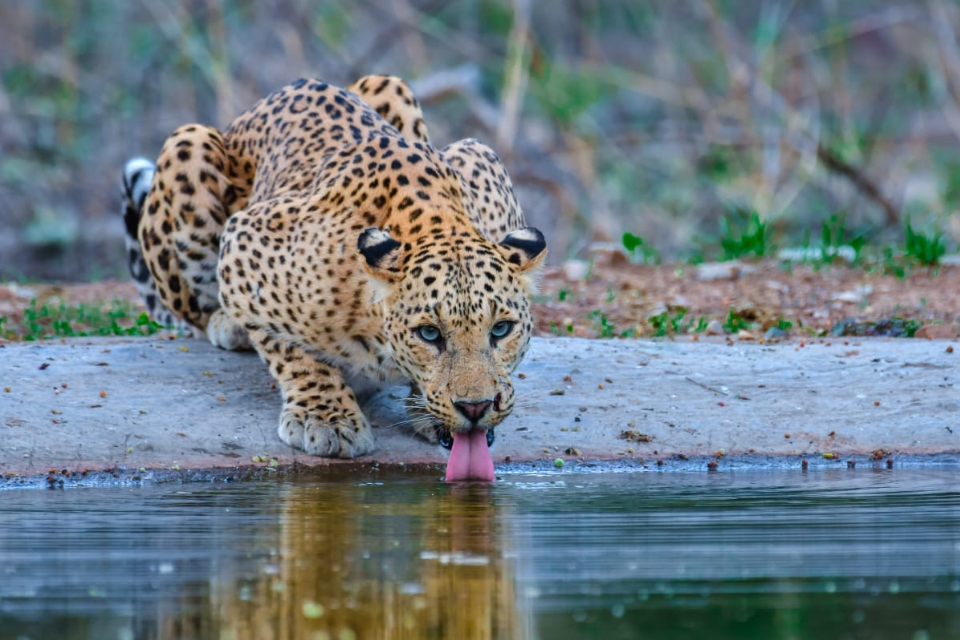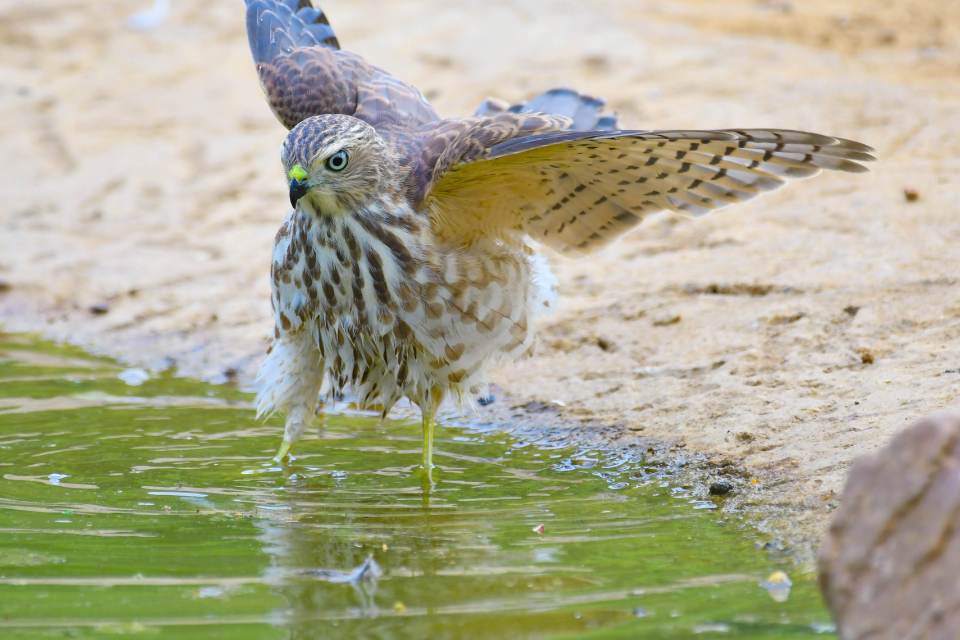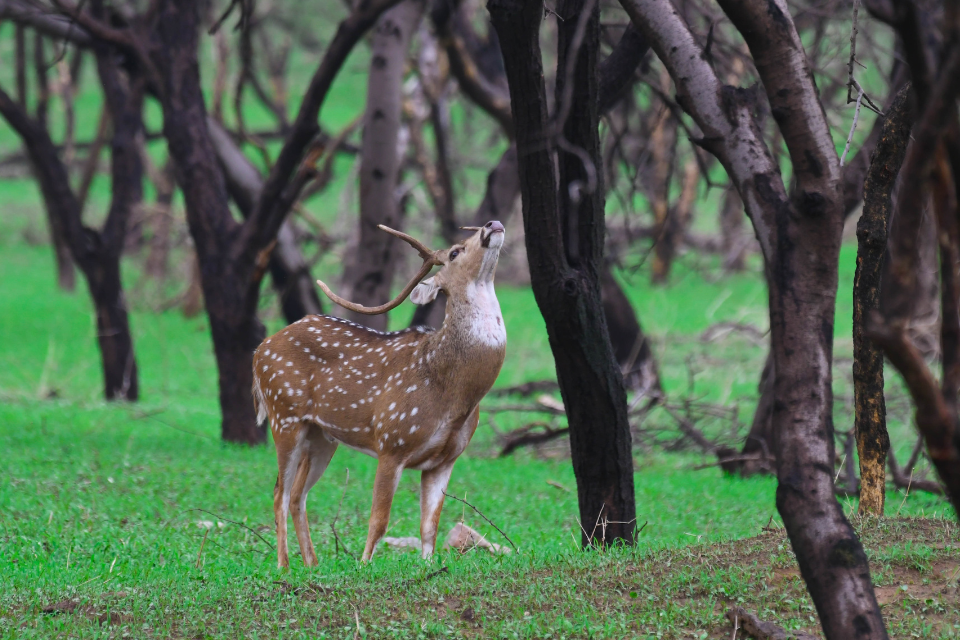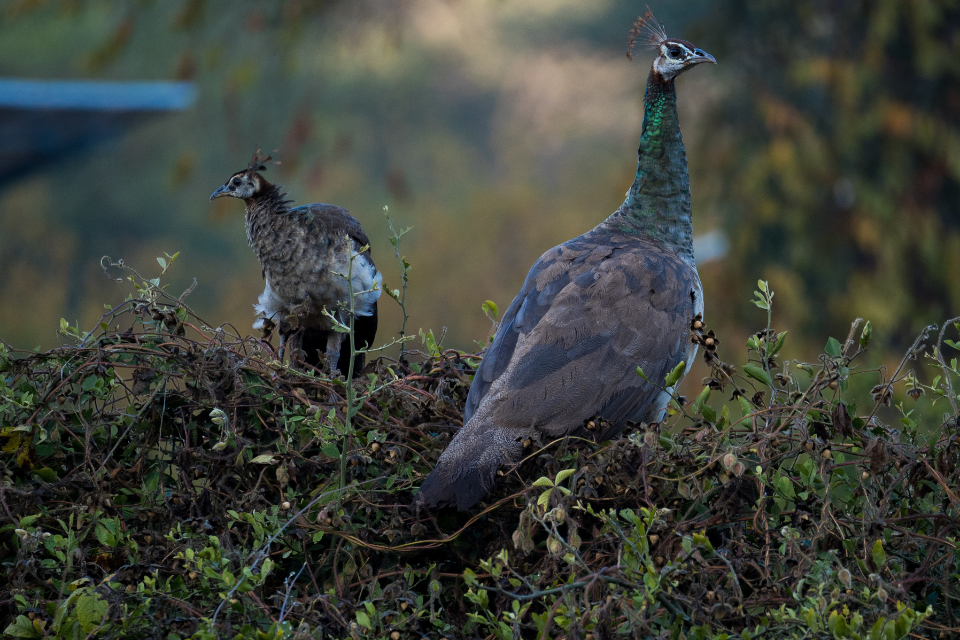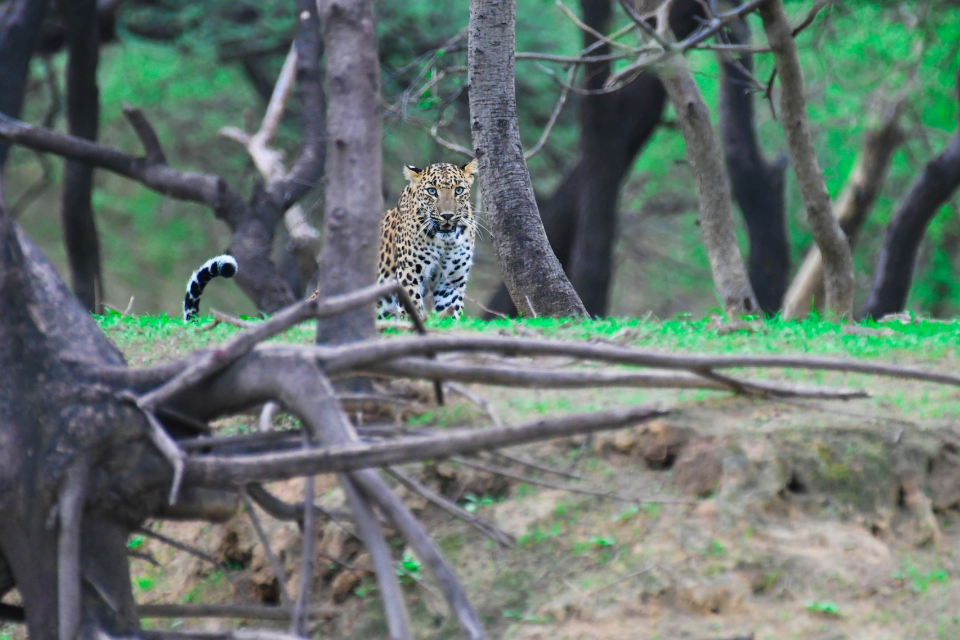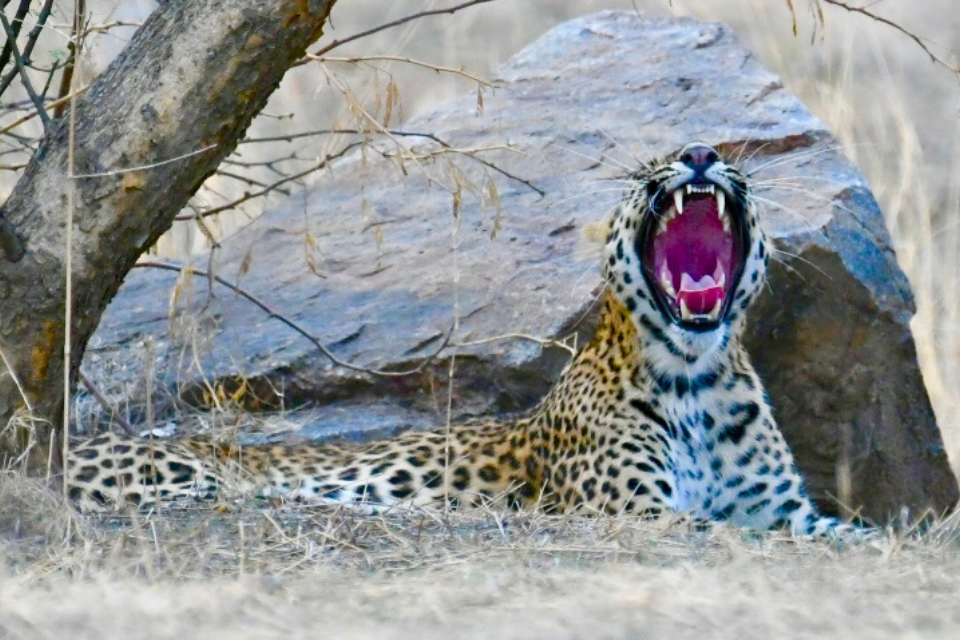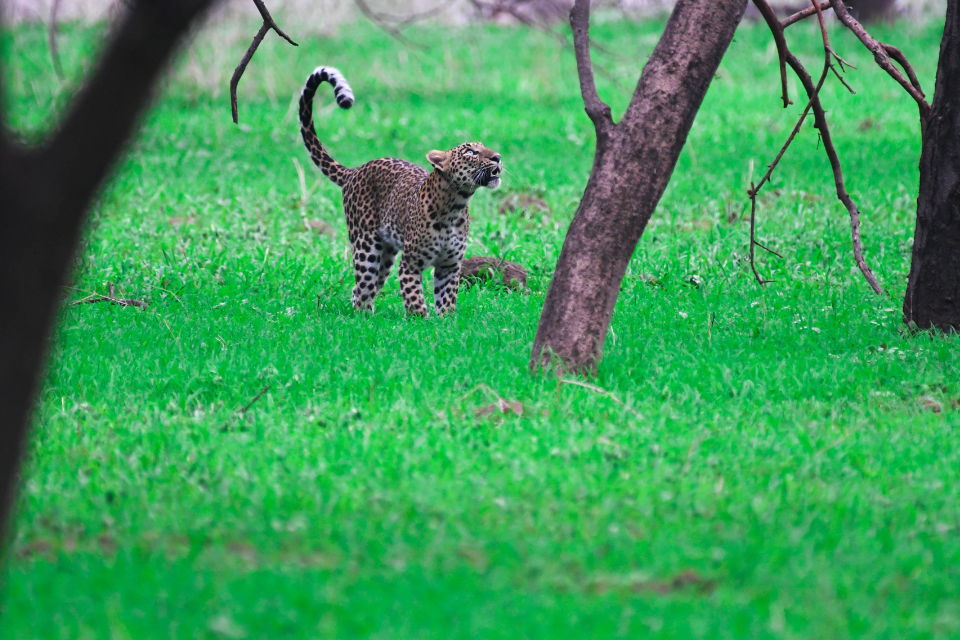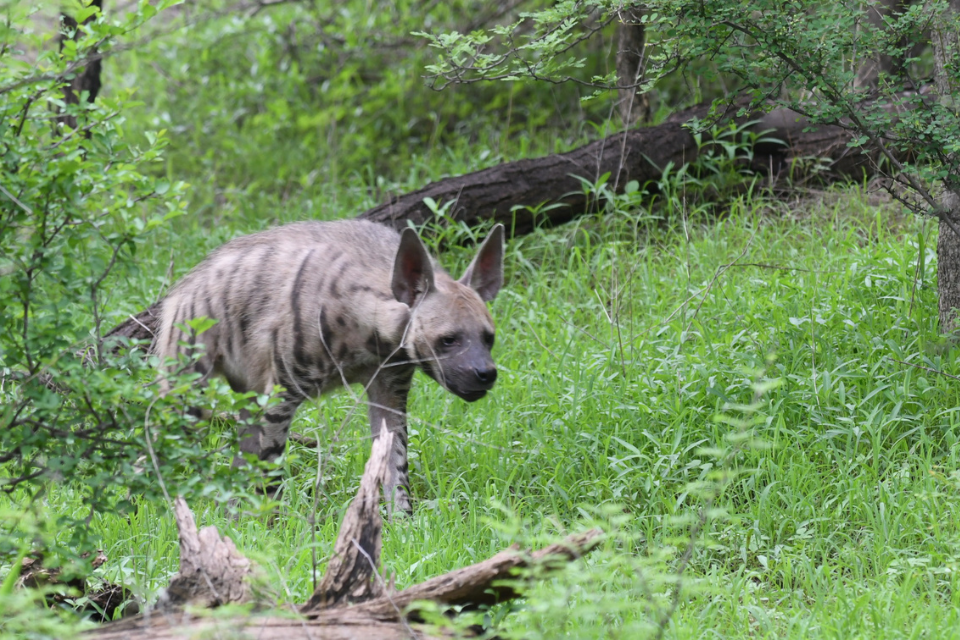
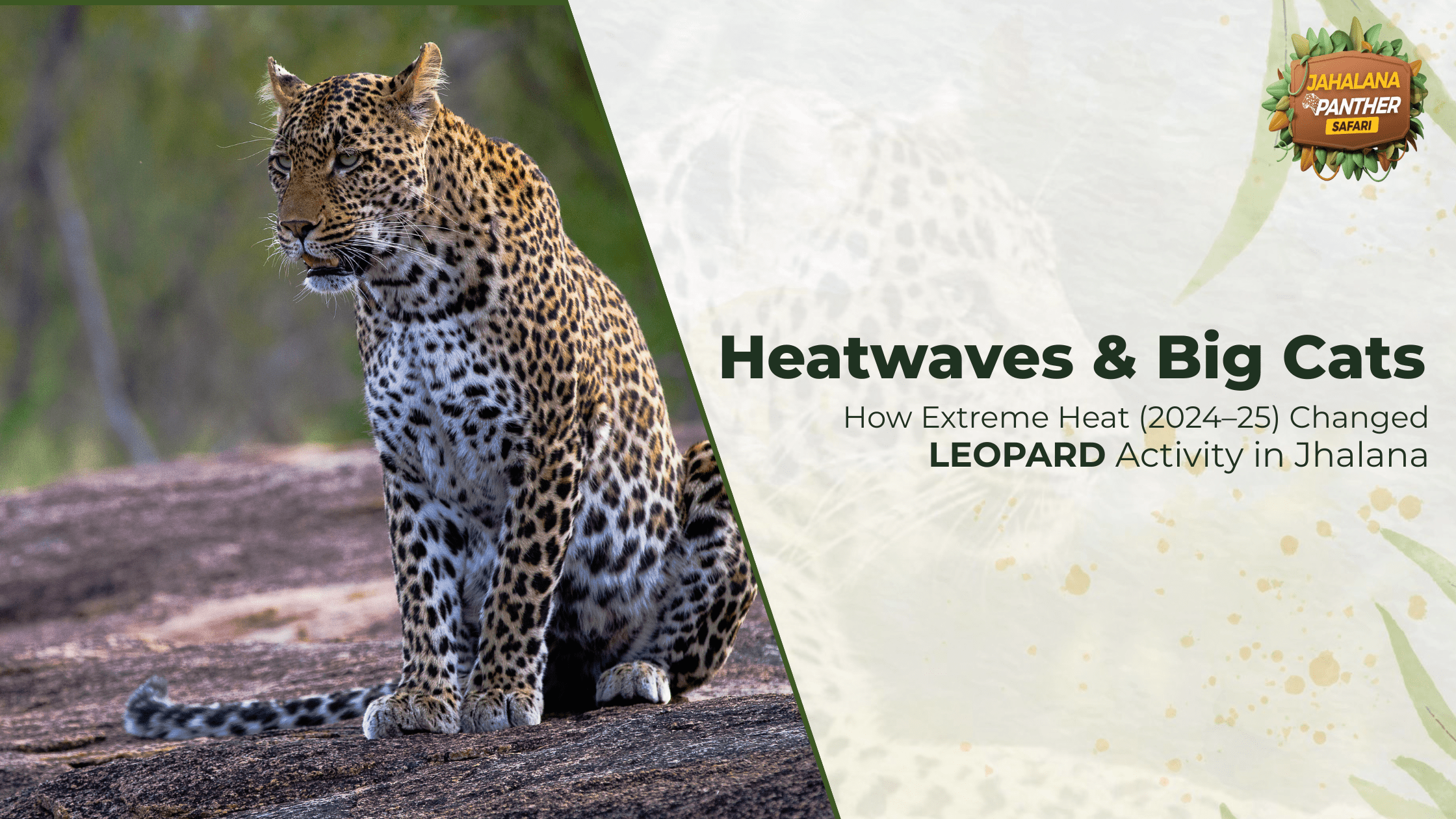
Heatwaves & Big Cats: How Extreme Heat (2024–25) Changed Leopard Activity in Jhalana
From April to June 2024, north and west India endured a punishing heatwave season, with the India Meteorological Department reporting multiple “severe heatwave” days and recorded highs like 50.5°C in Churu, Rajasthan. Jaipur itself flirted with the mid-40s multiple times and clocked 44.8°C on one of the season’s hottest days. 2025 brought an early spring escalation across Rajasthan, with Barmer capturing April heat records and dozens of stations crossing 43°C. These spikes weren’t one-off anomalies; they’re part of a trend of more frequent and longer heatwaves across South Asia.
Set against this backdrop is Jhalana–Amagarh, Jaipur’s celebrated urban leopard landscape, first notified as a leopard reserve in 2017, spanning roughly 20 km² in Jhalana and adjoining Amagarh forests. It is widely recognized for close-range leopard sightings and unusually high densities for an urban edge reserve
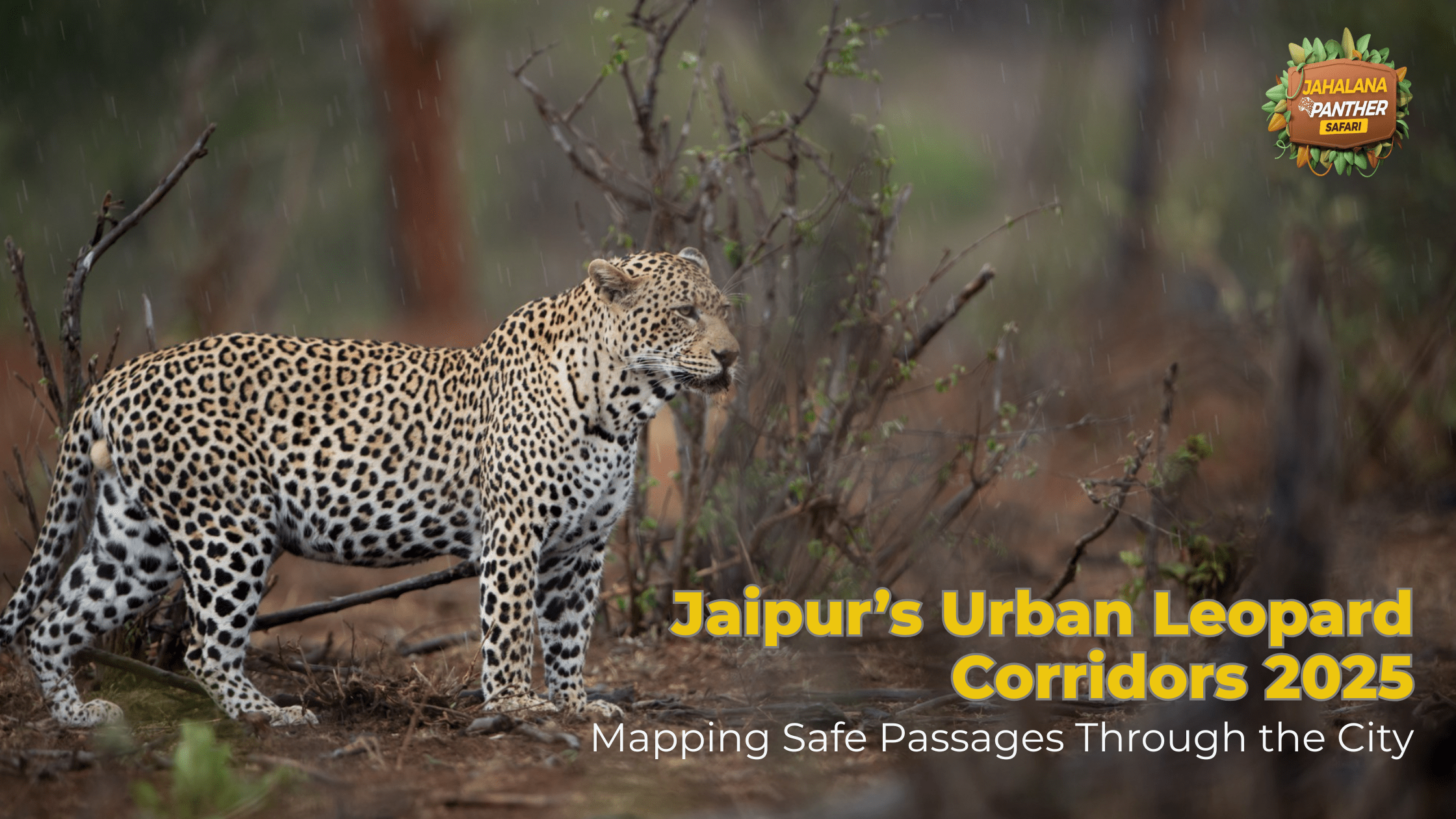
Jaipur’s Urban Leopard Corridors 2025: Mapping Safe Passages Through the City
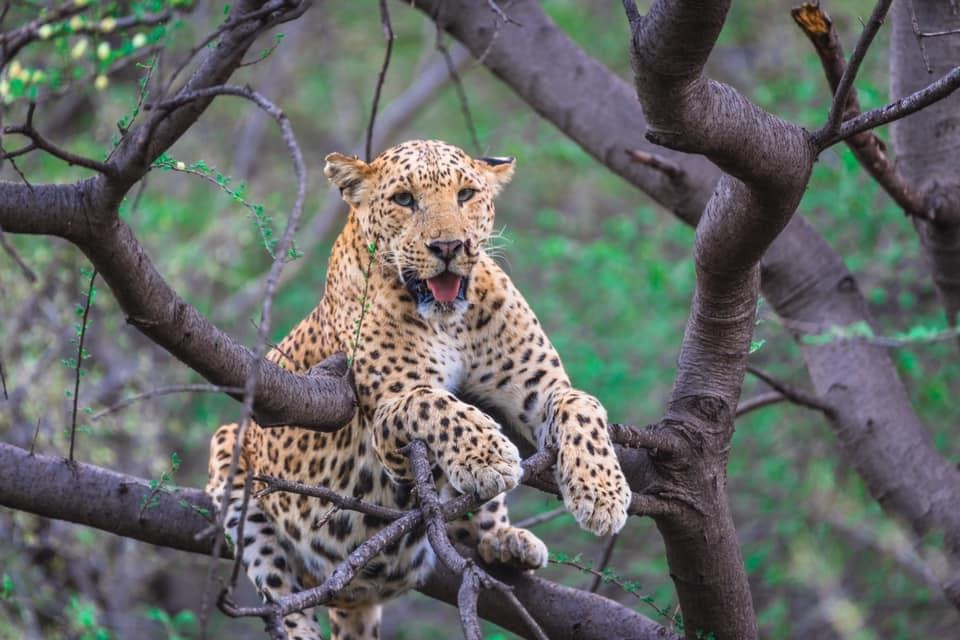
Jaipur is one of the few global cities where leopards live inside and around the metropolitan fabric—with Jhalana as the flagship urban reserve and Amagarh and Nahargarh forming the northern hill belt. In 2025 the story accelerated: Jaipur opened a third leopard safari zone (Maila Bagh/Beed Papad) and announced new internal routes at Jhalana, while real-world incidents reminded everyone that big cats still use city edges, nallahs, quarries and hill spurs to move. These developments sharpen a central question for a growing city: where are the safe passages (corridors) for leopards, and how do we keep both people and wildlife safe?
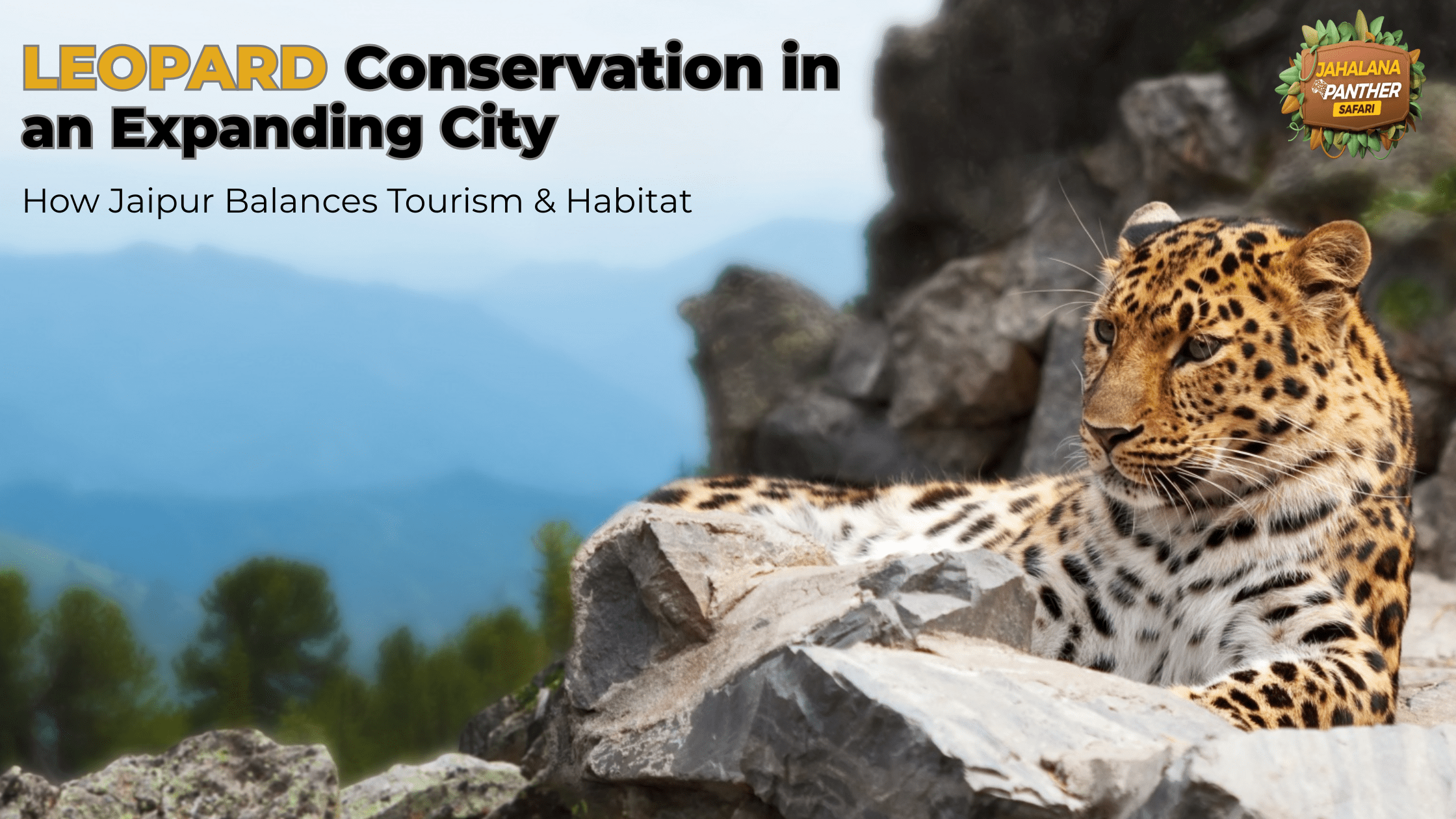
Leopard Conservation in an Expanding City: How Jaipur Balances Tourism & Habitat
At first glance, Jaipur—with its pink facades, bustling bazaars, and ring of expanding suburbs—seems an unlikely home for a thriving population of leopards. Yet within city limits lies Jhalana, a scrub-forest mosaic that became India’s first dedicated leopard reserve in 2017. The designation was more than symbolic; it formalized management tools, tourism rules, and monitoring systems tailored to an apex predator living mere kilometers from residential colonies and glass-fronted IT parks.
This blog explores how Jaipur balances tourism and habitat in an urban setting: what it means to protect leopards in a city, how corridors keep genetics flowing, why carrying capacity matters for both cats and people, and how community engagement turns neighbors into guardians. If you’re researching “leopard conservation Jaipur” or the broader idea of an “urban leopard reserve India”, consider this your field guide to the strategies, trade-offs, and lessons that Jhalana continues to offer.
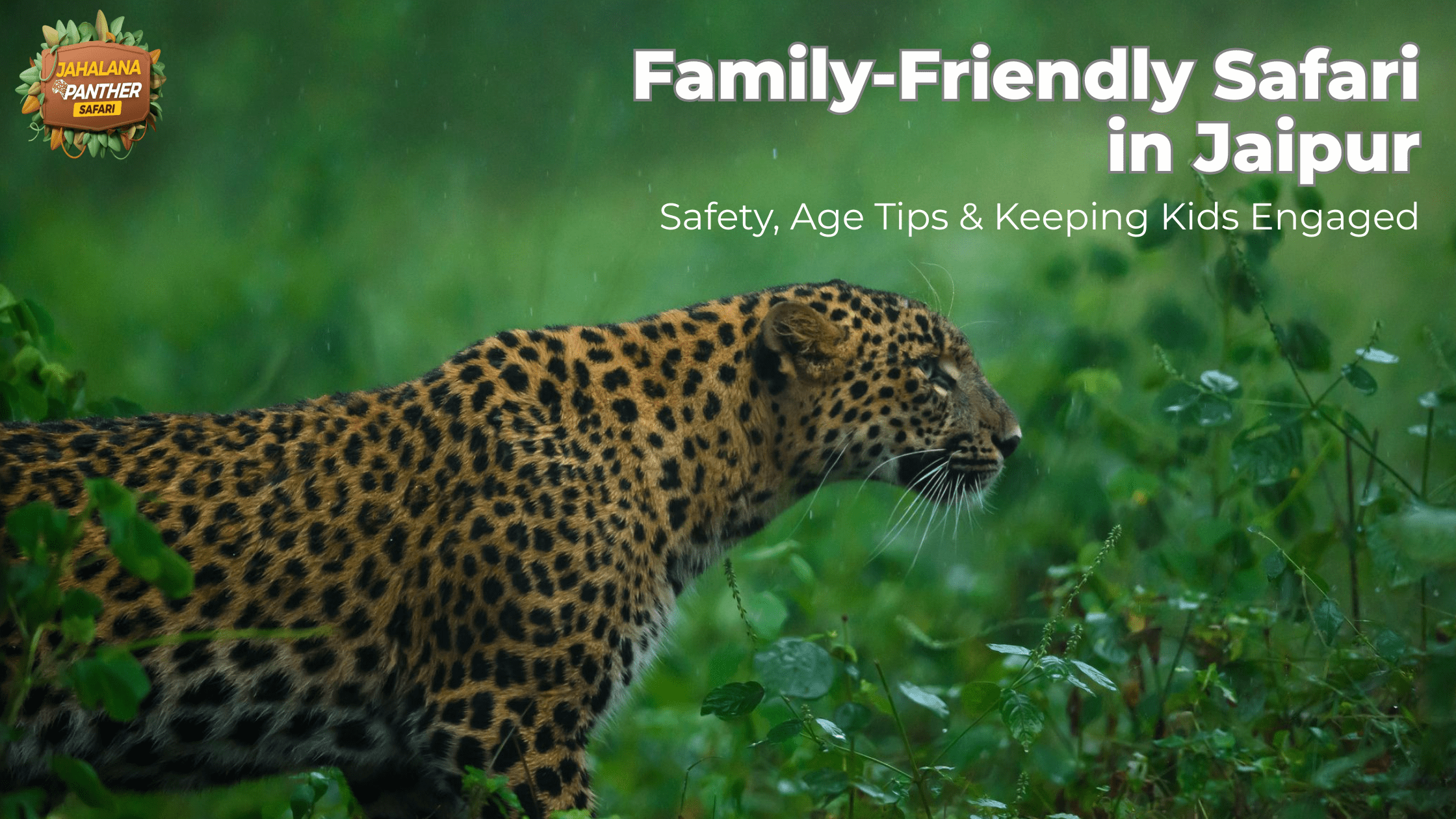
Family-Friendly Safari in Jaipur: Safety, Age Tips & Keeping Kids Engaged
If your crew loves animals, open skies, and stories that come alive off the page, a Jaipur safari with kids is an incredible memory-maker. The Pink City offers access to dry forests and scrublands where you can spot leopards, antelopes, peacocks, and a wide cast of birds and reptiles. Compared to deeper wilderness trips, Jaipur’s proximity to city comforts—good roads, reliable guides, and medical facilities—makes it an approachable first safari for families. Add in flexible vehicle options (open jeeps/gypsies and canters), experienced rangers, and solid tour operators, and you’ve got the right balance of adventure + safety.
This guide is crafted for parents who want practical, real-world advice: exactly how to seat the kids safely, what to do about noise etiquette, where restroom breaks fit into the plan, which binoculars work for small hands, and how to pace the day so everyone stays engaged.
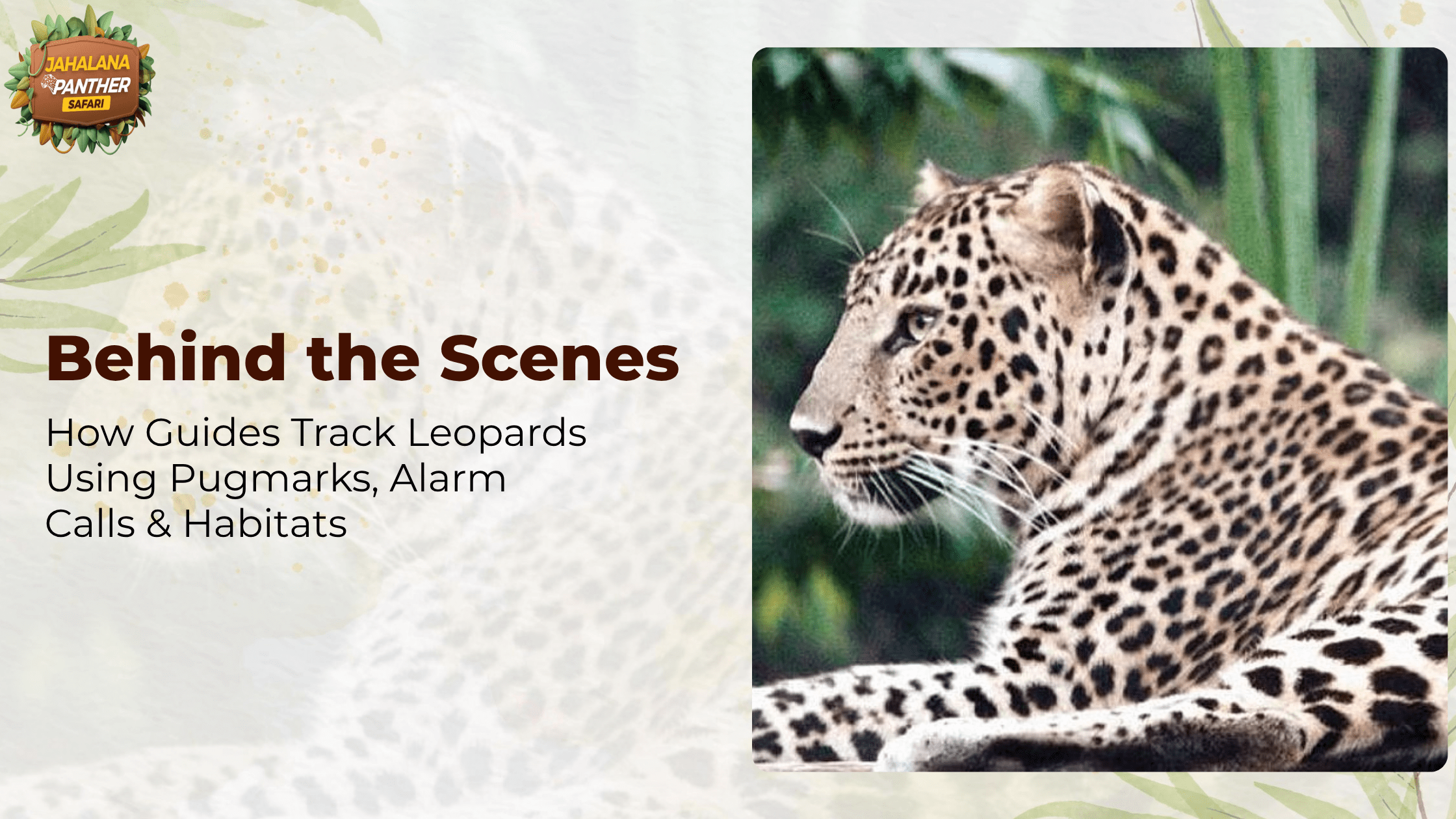
Behind the Scenes: How Guides Track Leopards Using Pugmarks, Alarm Calls & Habitats
Tyres crunch softly over gravel as dawn thins the night. Somewhere ahead, a langur’s clipped bark ricochets across the scrub. Your guide lifts a hand: the vehicle rolls to a hush. On the track’s edge—an oval pad with three clear lobes on the back edge—a fresh imprint glistens where dew has darkened the dust. “Leopard,” your guide murmurs. You lean closer. The jungle seems to exhale.
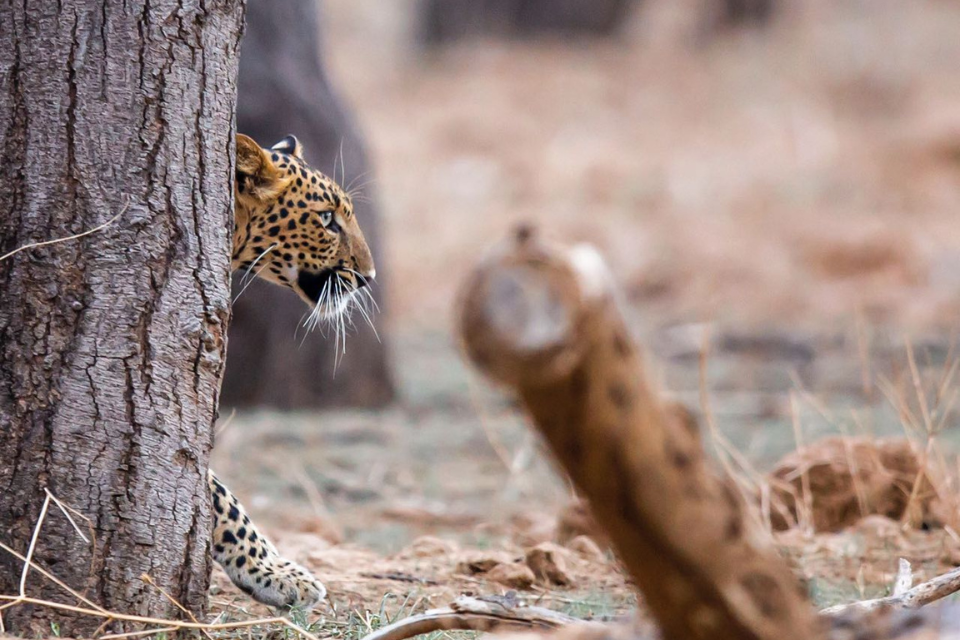
What follows isn’t luck. It’s fieldcraft: a disciplined blend of sign-reading (pugmarks), acoustic triangulation (alarm calls), and habitat interpretation that guides around Jaipur (and across India) use to find the subcontinent’s most elusive cat—without broadcasting sensitive locations or relying on invasive tracking tech.
This story-driven explainer opens the curtain on the skills, routines, and ethics our team lives by—so you’ll know exactly what’s going on when your guide suddenly changes direction, stops to sniff the wind, or becomes fascinated by a smudge in the dust.
First-Timer’s Gear List for Jaipur Leopard Safaris (Season-by-Season Packing)
Leopards around Jaipur are famously elusive, and the terrain swings from arid scrub to rocky ravines. That means your packing choices matter a lot more than you’d think. This guide breaks down month-by-month clothing, recommended lens focal lengths, dust and monsoon protection, and a complete Jaipur safari packing list so first-timers can plan confidently. You’ll also find a simple call-to-book if you want us to set up a responsible, well-equipped ride.
________________________________________
TL;DR (Skim-Friendly)
• Wear earth tones (olive, tan, brown, grey); avoid bright whites, neon, and noisy fabrics.
• Camera kit that works year-round: APS-C: 100–400mm (or 150–600mm), Full-frame: 200–500/600mm; add a 24–70/105mm for habitat.
• Pack dust covers, microfiber cloths, blower, and zip-top bags. In monsoon, add rain sleeves, dry bags, and anti-fog wipes.
• Morning drives are chilly Nov–Feb; bring mid-layer + windproof. May–June is scorching: breathable shirts, sun hat, electrolytes.
• Footwear: closed-toe trail shoes with grippy soles; flip-flops only for lodge wear.
• Binoculars 8×42 or 10×42, soft beanbag for vehicle rail, no tripods in vehicles (a monopod is OK if your operator allows and it doesn’t disturb others).
• Keep your main kit in a 20–30L daypack with silica gel and spares (batteries/cards) in a waterproof pouch.
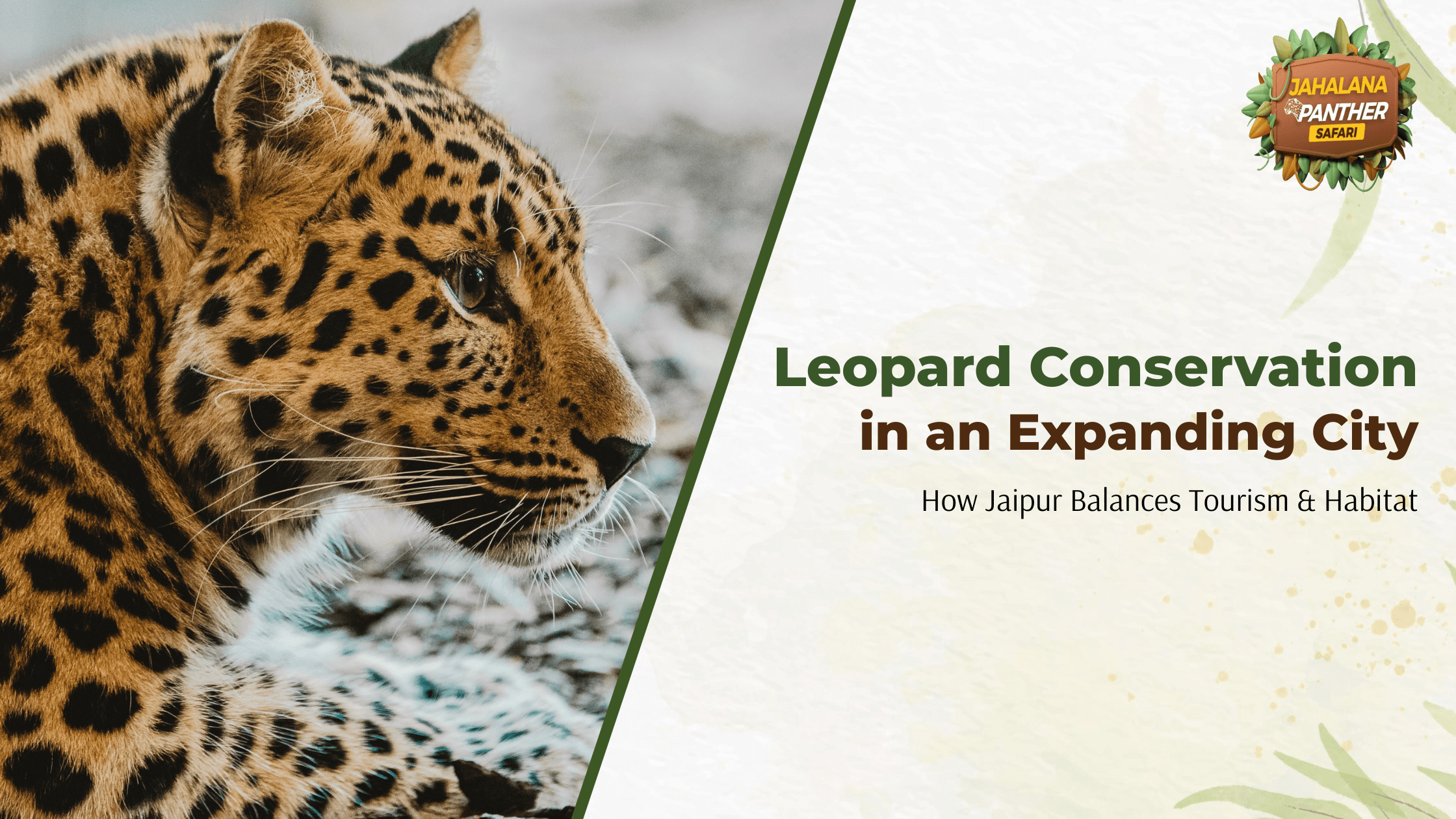
Leopard Conservation in an Expanding City: How Jaipur Balances Tourism & Habitat
Jaipur is famous for forts, textiles, and pink façades—but one of its most compelling stories prowls in the scrub hills that ring the city. In 2017, as part of Rajasthan’s “Project Leopard,” Jhalana on Jaipur’s southeastern edge was formally designated as a leopard reserve—a pioneering move for an urban landscape in India. Since then, the city has tried to do something few fast-growing metros attempt: share space with a big cat while inviting visitors to learn, not intrude.
This guide unpacks how Jaipur is attempting that balance—what makes Jhalana unique, how corridors and carrying capacity shape decisions, what community engagement looks like on the ground, and how tourism can help (or hurt) conservation if not done carefully.
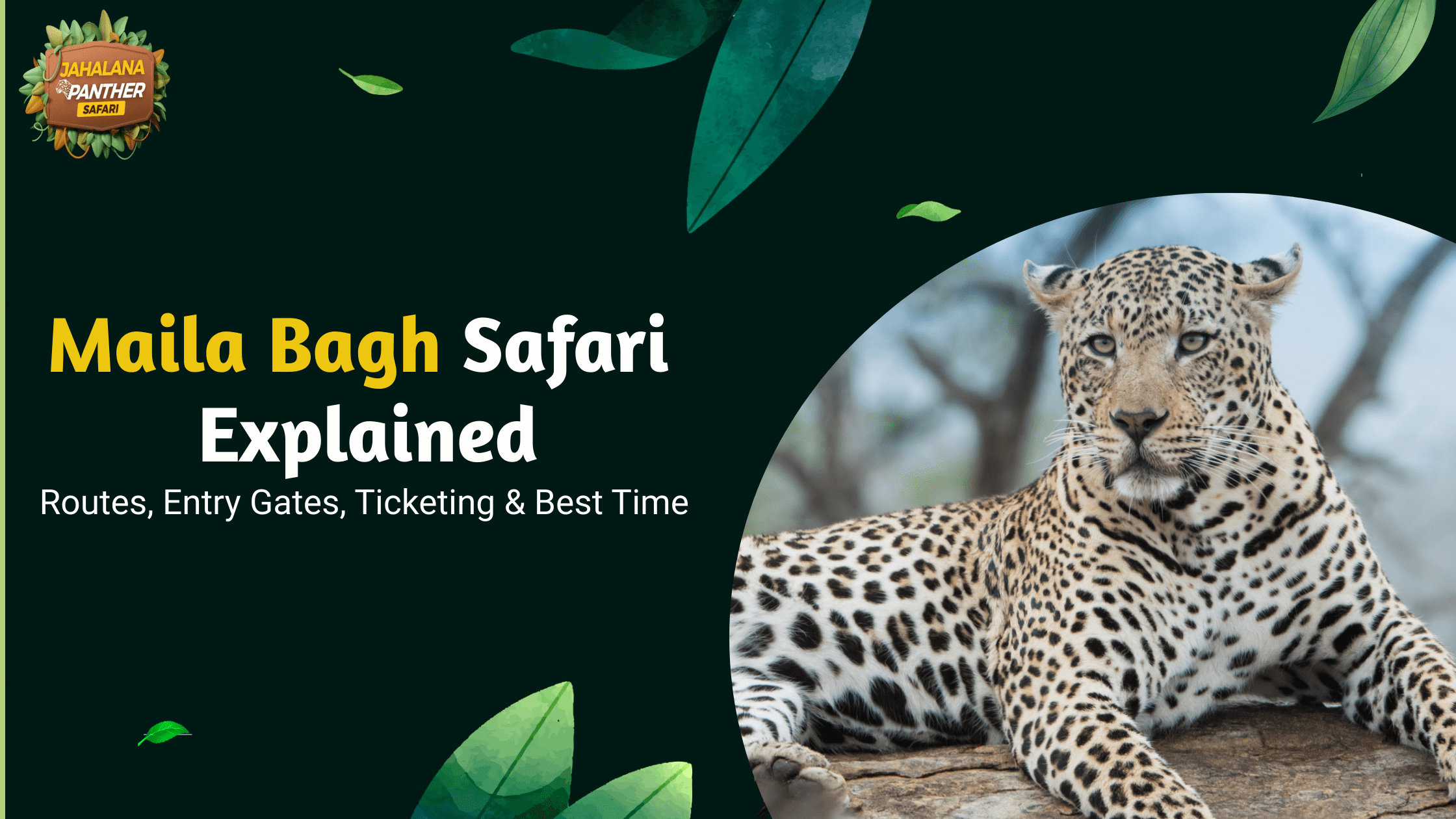
Maila Bagh Safari Explained: Routes, Entry Gates, Ticketing & Best Time
The operational entry used by registered safari vehicles is via Vidyadhar Nagar (north/north-east Jaipur). Local coverage and operator pages consistently reference this approach for Maila Bagh–Beed Papad drives. Pin “Vidyadhar Nagar leopard safari entry” (near Bhuteshwar Mahadev / Papad Ke Hanumanji corridor) and then follow on-ground boards to the forest department check-post. Always buffer 20–25 minutes for paperwork/briefing.
Parking & reporting: Most operators ask you to report 30–40 minutes before your slot at the designated parking/assembly point, from where registered gypsies enter the safari in batches. Keep original ID handy.
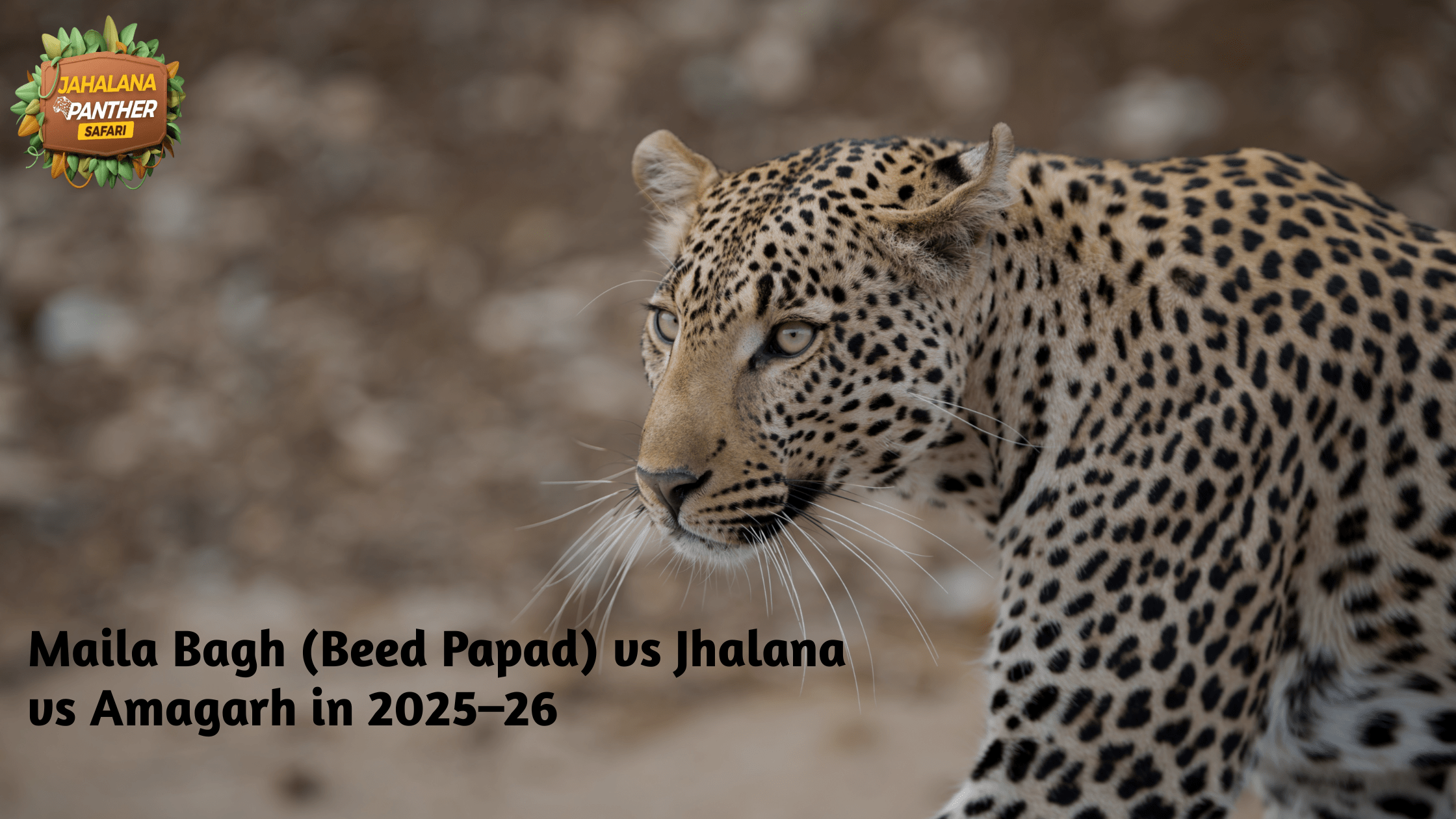
Maila Bagh (Beed Papad) vs Jhalana vs Amagarh in 2025–26:
if you’re chasing freshest routes and fewer crowds, Maila Bagh/Beed Papad is the hot, new third zone. For the most established logistics and “safe bet” urban leopard viewing, Jhalana remains the classic. If you want rugged terrain, birding variety and seasonal drama in the Aravallis, Amagarh is a strong middle path. This guide compares them head-to-head—pros/cons, access, leopard density, track networks, approximate booking caps, timings, and best months—and ends with a decision flowchart and FAQs so you can book with confidence.
Maila Bagh (often called Beed Papad Safari) was officially launched around World Environment Day, June 5, 2025, adding a third leopard-watching venue in Jaipur alongside Jhalana and Amagarh. Early coverage cited about 19 leopards, two primary routes (Kishan Bagh side and New Biological Park–Audhi Ramsagar linkage), roughly 15 km² of motorable tracks, and ~10 registered vehicles for guided tours, with access via Vidyadhar Nagar.
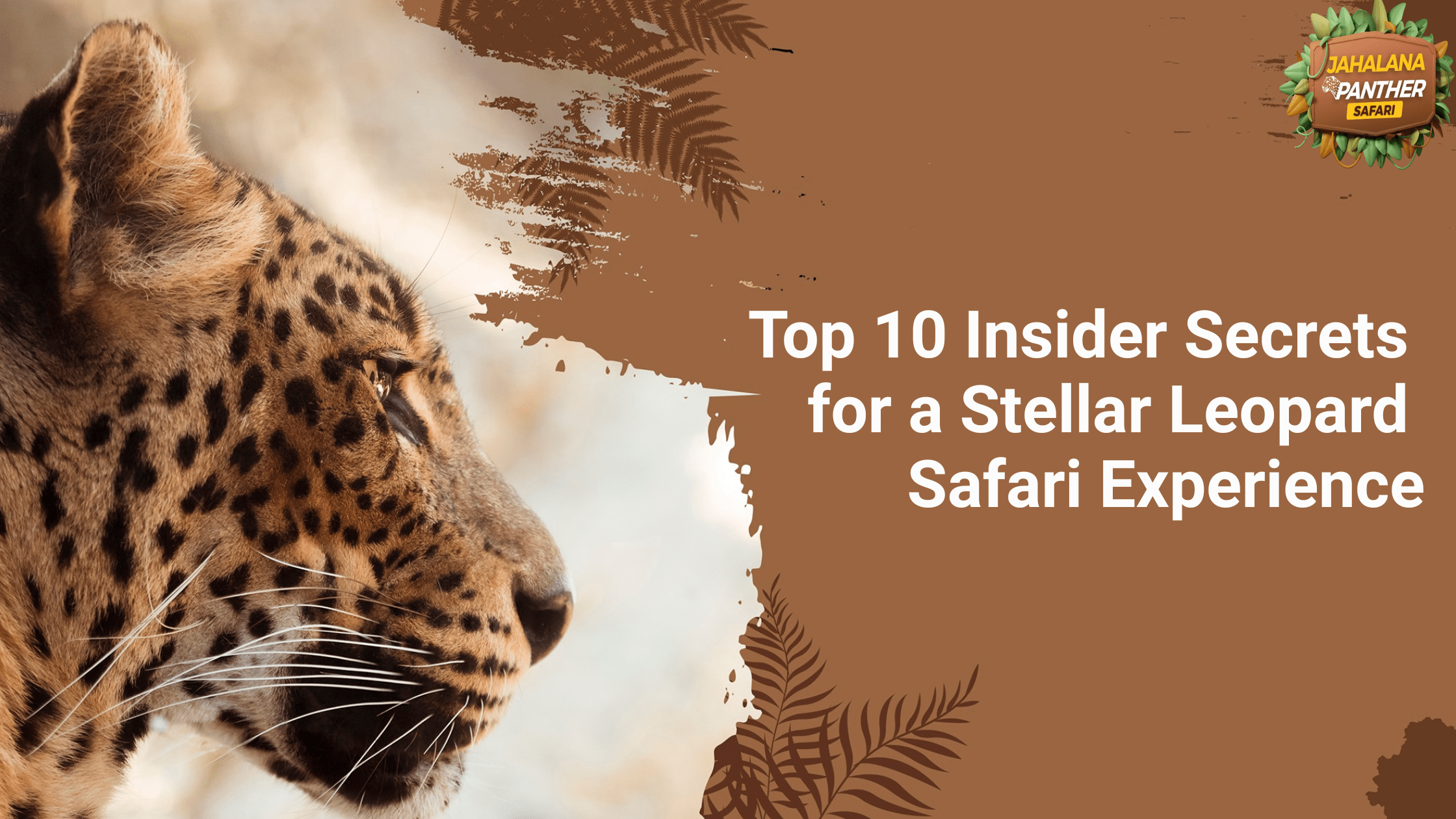
Top 10 Insider Secrets for a Stellar Leopard Safari Experience
Leopards are the ghosts of the savannah and forest—present, watching, yet rarely seen on your schedule. While luck plays a role, seasoned guides know that a few quiet strategies dramatically improve the odds of a memorable encounter and the quality of your images. This guide distills those insider moves into 10 practical secrets you can use on your next safari—whether you’re in India’s rocky scrublands, Africa’s acacia savannahs, or the teak forests where leopards slink between sun and shade.
Promise of this guide: Not obvious clichés. You’ll get granular, field-useful tips about timing, vehicle etiquette, shot planning, gear setup, and ethical behavior that actually leads to calmer cats and better frames.
This month-by-month guide shows you what to expect in each window—weather, visibility, birdlife, track conditions, and how to tune your plan for families, photographers, or first-timers.