Deep within the urban landscape of Jaipur, Rajasthan, lies a wilderness that defies modern expectations. While the Pink City is universally celebrated for its grand palaces, desert fortresses, and vibrant bazaars, it also holds an extraordinary environmental secret.
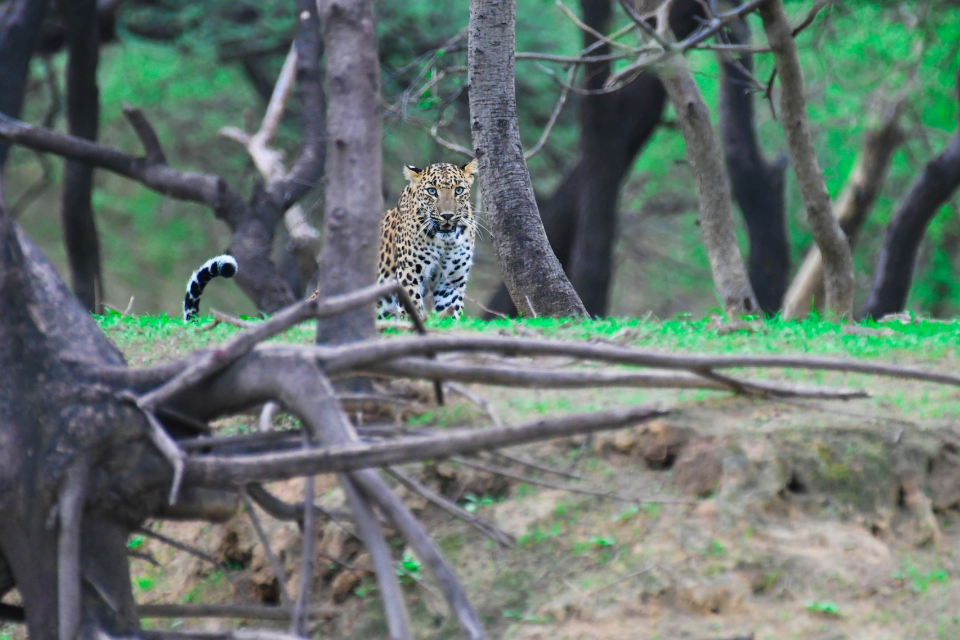
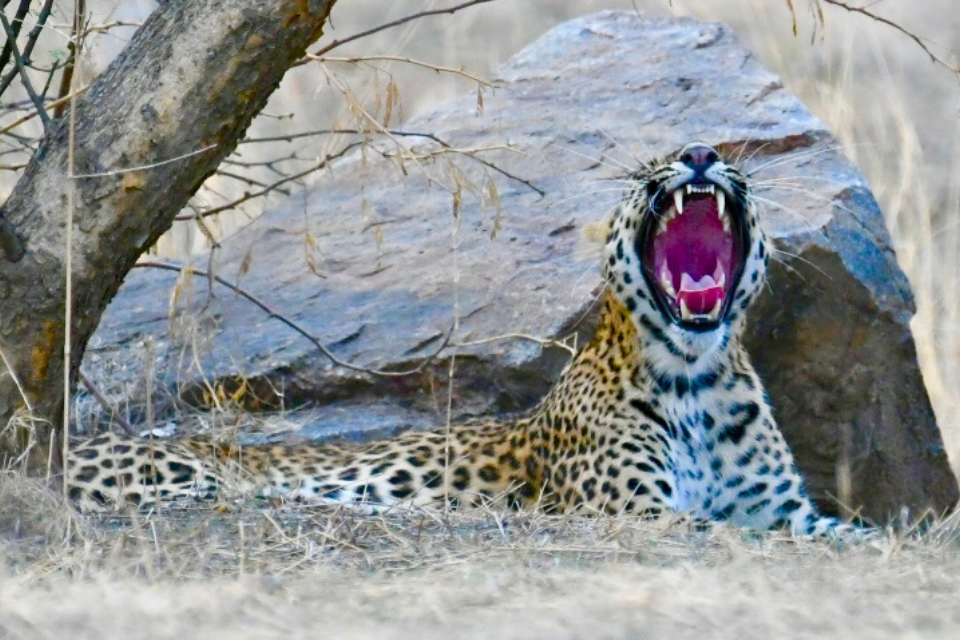
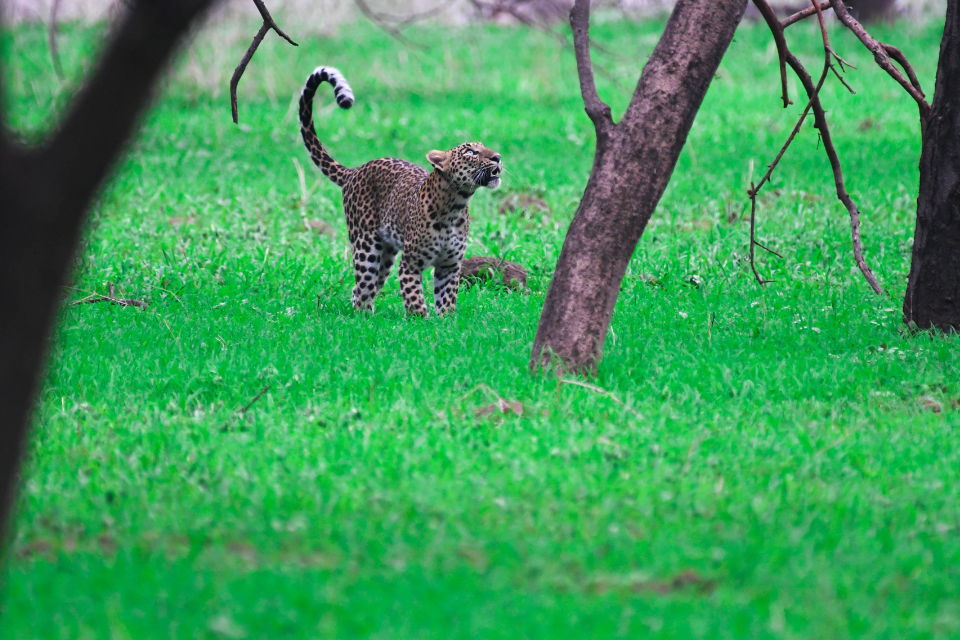
Spanning an area of roughly 20 to 23 square kilometers along the southeastern edge of the city, Jhalana Panther Safari (established as India’s first official leopard reserve in 2017) boasts one of the highest densities of leopards in the world.
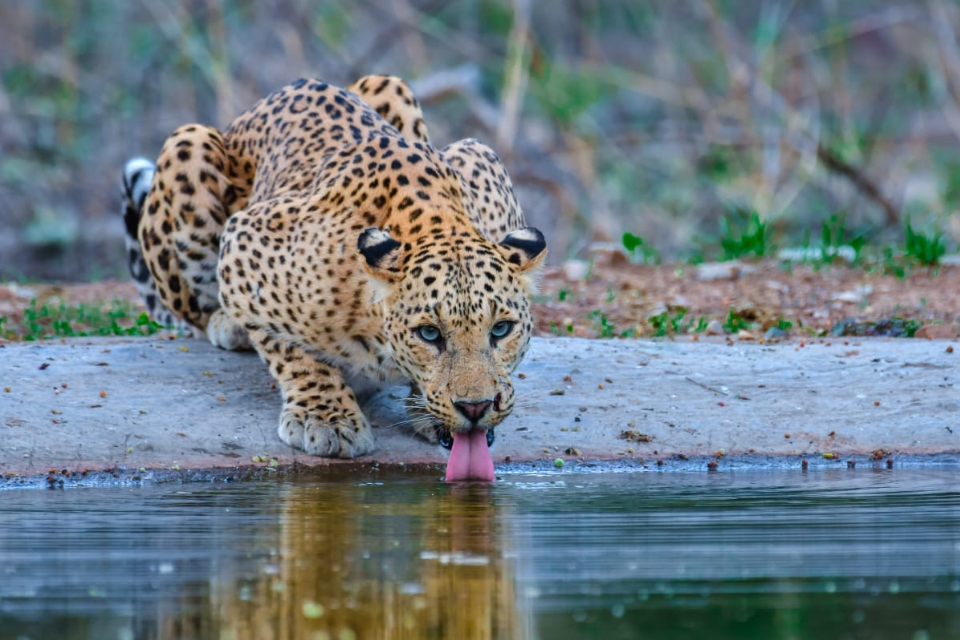
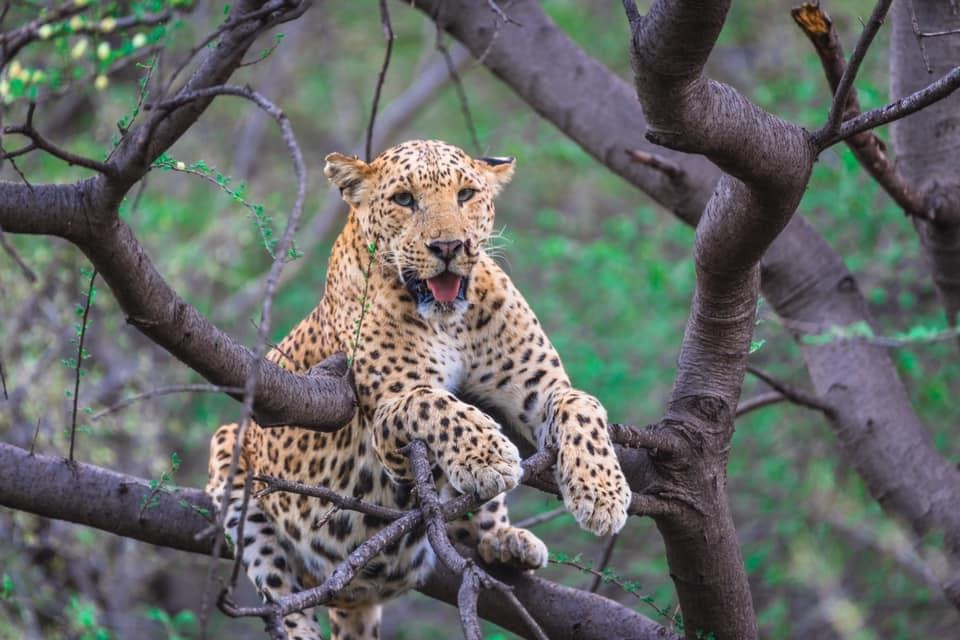
Unlike their elusive, nocturnal counterparts in large national parks, the big cats of Jhalana have adapted seamlessly to their unique home. They are highly diurnal (active during daylight hours) and remarkably accustomed to safari vehicles, offering wildlife enthusiasts and photographers some of the clearest, most reliable big cat sightings anywhere on the planet.
This comprehensive guide breaks down everything you need to know to plan a flawless trip to Jhalana—including seasonal dynamics, booking hacks, terrain navigation, and behavioral insights into the reserve’s legendary spotted residents.
The Ecological Marvel of an Urban Wilderness
For centuries, the craggy hills of the Aravalli range surrounding Jaipur served as royal hunting grounds (shikaar blocks) for the Kachwaha Rajput rulers. Historically, these deciduous dry forests housed both tigers and leopards. However, changing land dynamics and hunting pressure took a heavy toll.
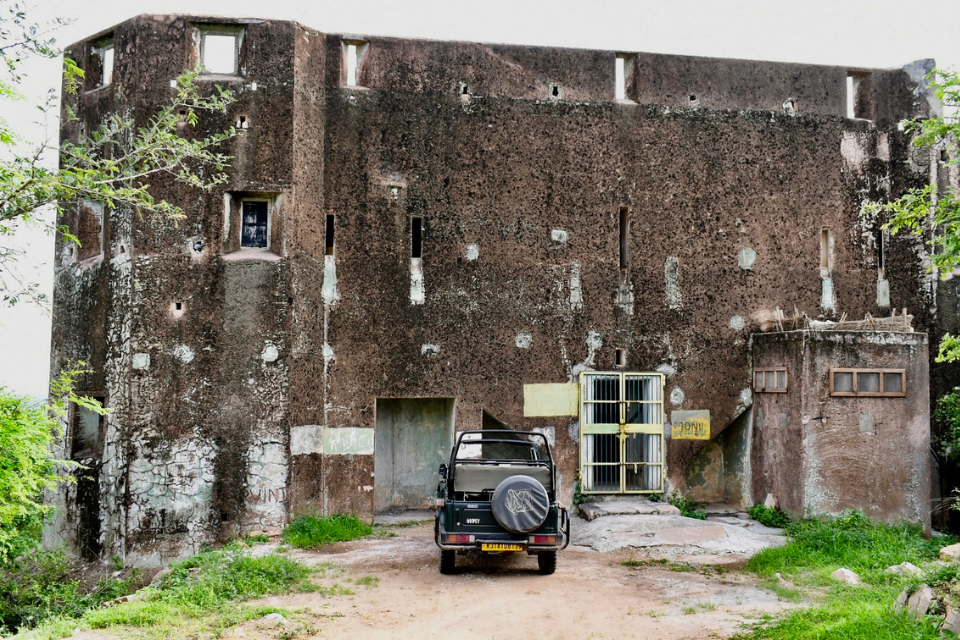
The last resident tigress of Jhalana was shot in the 1940s from the ramparts of Shikar Oudhi, a historic multi-story hunting lodge that still stands deep inside the forest today as an elevated watchtower.
Following the departure of tigers, the Indian leopard (Panthera pardus fusca) stepped up as the undisputed apex predator of this pocket-sized ecosystem. In the early 1960s, the state stepped in to declare Jhalana a reserve forest, shielding its rugged limestone terrain and native Dhok (Anogeissus pendula) trees from the pressures of city expansion.
Today, this tiny, isolated island of green supports a thriving population of over 40 leopards. This creates an incredibly intense, compact ecosystem where territories overlap, and big cat sightings often happen within mere minutes of crossing the forest check-post.
Seasonal Dynamics: The Best Time to Visit
Unlike many of India’s large tiger reserves (like nearby Ranthambore or Sariska), which shut down entirely for the summer monsoon season, Jhalana Leopard Reserve remains open 365 days a year. Every season alters the landscape and animal behavior dramatically:
| Season | Months | Average Temp | Visual Landscape | Sighting Dynamics |
| Winter | October to March | 8°C – 25°C | Post-monsoon greenery is fading into golden dry grass. | Excellent. Mild weather keeps leopards active and moving throughout the day. Perfect for tracking footprints. |
| Summer | April to June | 30°C – 45°C | Highly arid; deciduous trees drop leaves; bare soil and rocks. | Peak Photography. Leopards are forced to visit the designated artificial water holes frequently. Sighting chances are maximum, though heat can be punishing. |
| Monsoon | July to September | 25°C – 35°C | Lush, dense, vibrant green jungle with flowing seasonal streams. | Moderate. The thick foliage makes spotting camouflaged leopards challenging, but the landscapes are stunningly beautiful, and crowds are minimal. |
The Golden Rule of Timing
If your primary goal is clean, unobstructed wildlife photography, choose late summer (April to June). The forest clears out its undergrowth, giving you crisp lines of sight.
If your priority is comfortable travel weather alongside great tracking opportunities, stick to the winter peak (November to February). During these months, ensure you carry heavy jackets for the morning safaris; the open 4×4 Gypsies moving through valleys can get incredibly chilly before sunrise.
The Shift Timings (Varies by Season)
Safaris are conducted in two primary shifts per day: a crisp morning slot and a late afternoon slot designed to match peak animal movement. Because tracking depends heavily on sunlight, the Forest Department adjusts the gate entry and exit timings across the year:
-
Winter Slots (Oct–Mar):
-
Morning: 7:00 AM – 10:30 AM
-
Afternoon: 3:00 PM – 6:00 PM
-
-
Summer Slots (Apr–Sep):
-
Morning: 6:00 AM – 9:30 AM
-
Afternoon: 3:30 PM – 6:30 PM
-
Pro-Tip on Slots: Always aim for the morning slot if you are visiting during the hotter months. Leopards often sit on exposed rocks to catch the early sun before retreating deep into shady valleys once the heat peaks.
Jhalana Safari Booking Tips & Strategy
Booking a safari at Jhalana requires a bit of planning, especially if you are aiming for weekend slots or peak winter holiday weeks.
Step-by-Step Booking Process
-
The Official Channel: All bookings are strictly regulated by the Rajasthan Forest Department. While third-party aggregators exist, the most direct and transparent pricing is available through the official Single Sign-On (SSO) Rajasthan tourism portal or registered desk operators.
-
Advance Window: Bookings open up to 90 days in advance. For weekends, try to book at least 30 to 45 days ahead.
-
Vehicle Configuration: Safaris are executed strictly using authorized open-top 4×4 Maruti Gypsies. Each vehicle is capped at a maximum of 6 passengers plus an official driver and a certified naturalist tracker.
-
The Identification Rule: You must provide valid government-issued ID details (Aadhaar, Passport, or Driving License) for every single passenger at the time of booking. The physical ID card must match your entry permit exactly at the gate checkpoint; screenshots are not accepted.
Understanding the Cost Structure
You can choose between a Sharing Safari (where you book individual seats in a Gypsy) or a Private Full-Vehicle Booking.
[Total Private Cost] = [Base Forest Permit Fee] + [Vehicle Hire Charges] + [Mandatory Guide Fee]
-
For Indian Nationals: Expect around ₹1,500 per person on a sharing basis, or roughly ₹7,000–₹7,500 for a fully private Gypsy.
-
For Foreign Nationals: Expect roughly ₹2,250–₹3,000 per person sharing, or around ₹12,000 for a private Gypsy.
-
Note: An additional charge applies if you choose to explore the specialized Shikar Oudhi historic loop, which requires exclusive clearances.
Decoding the Zones & Secret Routes
The reserve is structurally divided into two primary safari zones (Route 1 and Route 2). To prevent overcrowding and maintain ecological safety, the Forest Department caps the number of vehicles entering per shift (typically around 10–12 Gypsies per zone).
Vehicles and routes are allotted randomly by a computerized gate system on the day of your safari—you cannot explicitly purchase a “better” zone in advance. However, both zones have a fantastic track record:
Route 1 (The Lowlands and Water Holes)
This route winds along the base of the flat-topped quartz hills, passing through sections heavily populated by native Dhok trees and open scrub patches. It features several artificial watering holes managed by the forest staff. It is an exceptional route during the dry summers, as leopards frequently descend from the hills to drink or rest under the shaded canopies nearby.
Route 2 (The Rocky Higher Slopes & Shikar Oudhi)
This route takes you deep into steeper rocky terrain, passing through dry riverbeds and climbing towards the historic Shikar Oudhi watchtower. This zone is highly favored by dominant territorial males who love to sun themselves on elevated rock ledges. It also provides a stunning panoramic view where you can see the sharp boundary line where the dense jungle drops off into Jaipur’s modern skyline.
The Legendary Leopards of Jhalana
What makes a Jhalana safari truly unique is that the tracking guides don’t just point out a leopard; they introduce you to an individual with a name, a known lineage, and a distinct personality. The naturalists here have meticulously mapped the spot patterns (which serve as unique biological fingerprints) of the resident cats. Keep an eye out for these famous icons:
-
Bahadur: A massive, confident male who rules a prime slice of the tourist zone. Known for his absolute indifference to safari vehicles, Bahadur often walks directly along the main safari tracks, offering photographers incredible close-up opportunities.
-
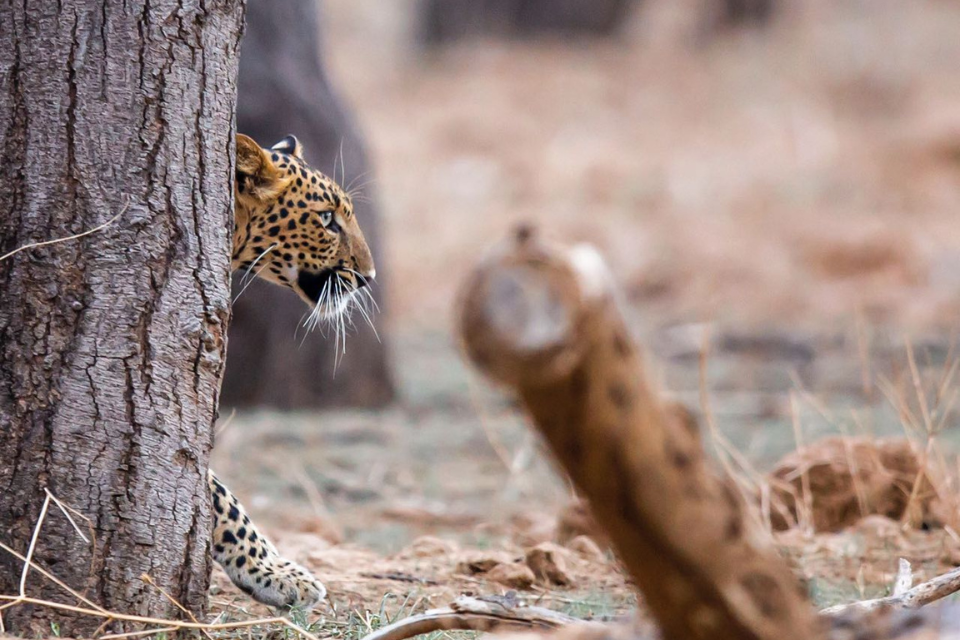
Jalebi: One of the most photographed female leopards in the reserve’s history. Named after the intricate, circular rosette patterns on her coat, she is famously relaxed and has raised multiple litters of cubs right within sight of the tourist paths.
-
Flora: A dominant female known for her stealth and brilliant hunting skills along the rocky ridges of Route 2.
Beyond Leopards: The Supporting Cast of Characters
While the leopards are undeniably the star attraction, Jhalana’s compact ecosystem supports an astonishingly diverse array of wildlife that keeps every minute of the drive interesting.
The Predators and Scavengers
-
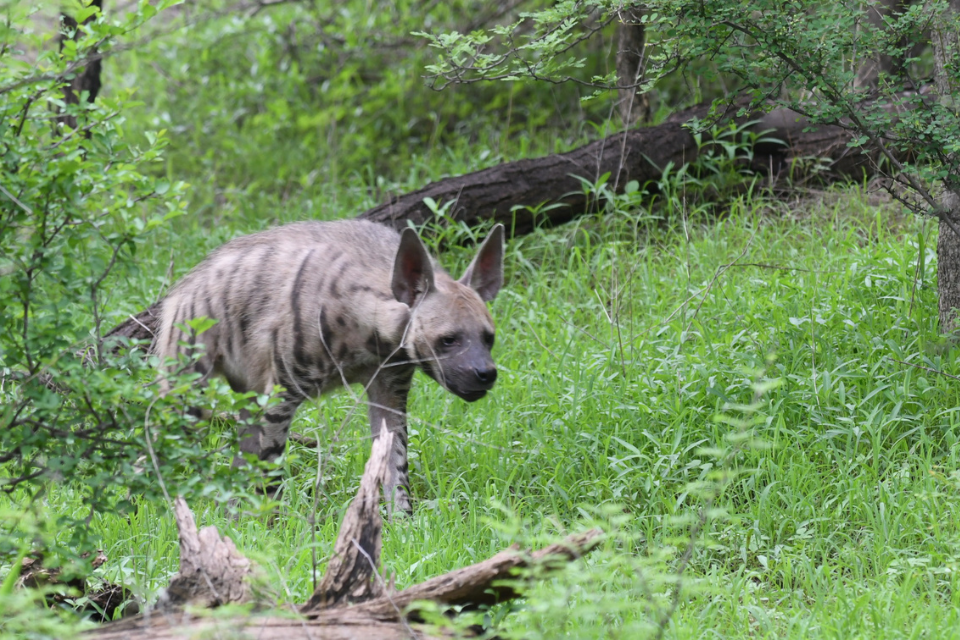
Striped Hyena: Jhalana is one of the best places in India to spot the elusive striped hyena. Highly nocturnal elsewhere, they are occasionally seen here in the early mornings returning to their rocky dens. They share a tense relationship with the leopards, often attempting to scavenge kills.
-
Jungle Cats & Desert Foxes: Smaller, agile hunters that dart through the dry undergrowth, specializing in catching desert hares and rodents.
The Herbivores
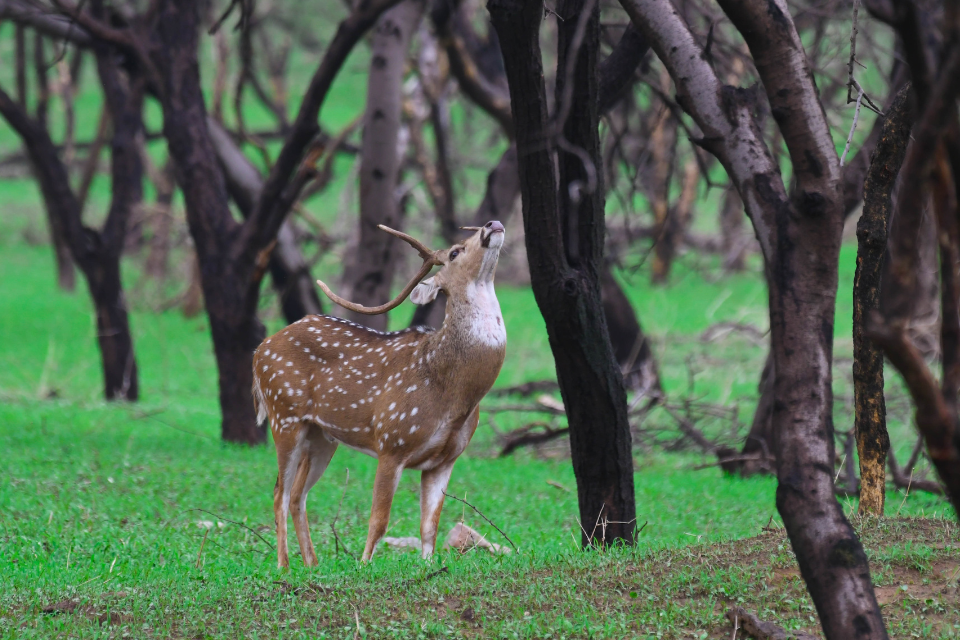
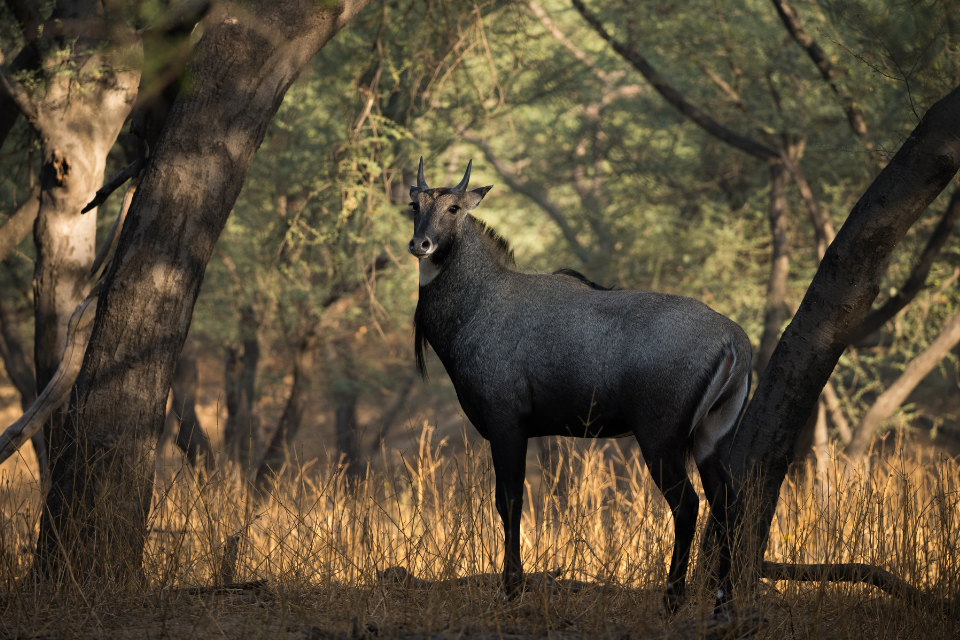
The primary prey base keeping the leopard population thriving includes healthy herds of Chital (Spotted Deer), Sambar Deer (found in the steeper, rocky terrain), and the large Nilgai (Blue Bull). You will also see massive troops of Hanuman Langurs occupying the treetops. The langurs serve as the jungle’s ultimate alarm system—their harsh, barking alarm calls are the primary tool guides use to track a moving leopard.
Essential Rules & Safari Etiquette
To ensure a safe and memorable experience for both you and the wildlife, strictly follow these simple ground rules:
-
Dress Vertically: Wear neutral, earthy colors—khakis, olive greens, browns, and soft greys. Avoid bright, neon clothes (like reds, yellows, or bright whites) that stand out sharply against the dry forest background and can make animals uneasy.
-
Absolute Silence: When a leopard is sighted, keep your voice to a low whisper. Sudden loud noises or standing up abruptly in the open Gypsy can cause the cat to retreat into the dense brush.
-
No Plastic: Jhalana is a strict zero-plastic zone. Do not carry disposable plastic bottles or snack wrappers into the reserve.
-
Patience Wins: Wildlife safaris are about the thrill of the chase. Trust your naturalist and driver; instead of rushing frantically from one track to another, sometimes sitting silently near a water hole or listening to alarm calls yields the ultimate reward.
Quick Logistics Reference
-
Proximity: The beauty of Jhalana is its accessibility. It sits right inside Jaipur city limits. It is just 6 km (a 15-minute drive) from Jaipur International Airport and roughly 10 km from the main Jaipur Railway Station. This means you can easily fit a complete morning safari into your travel itinerary before heading out to catch a flight.
-
What to Pack: A dust mask or scarf (the tracks get incredibly dusty), high-zoom binoculars, a telephoto lens (300mm minimum recommended for photographers), and a valid physical government ID.