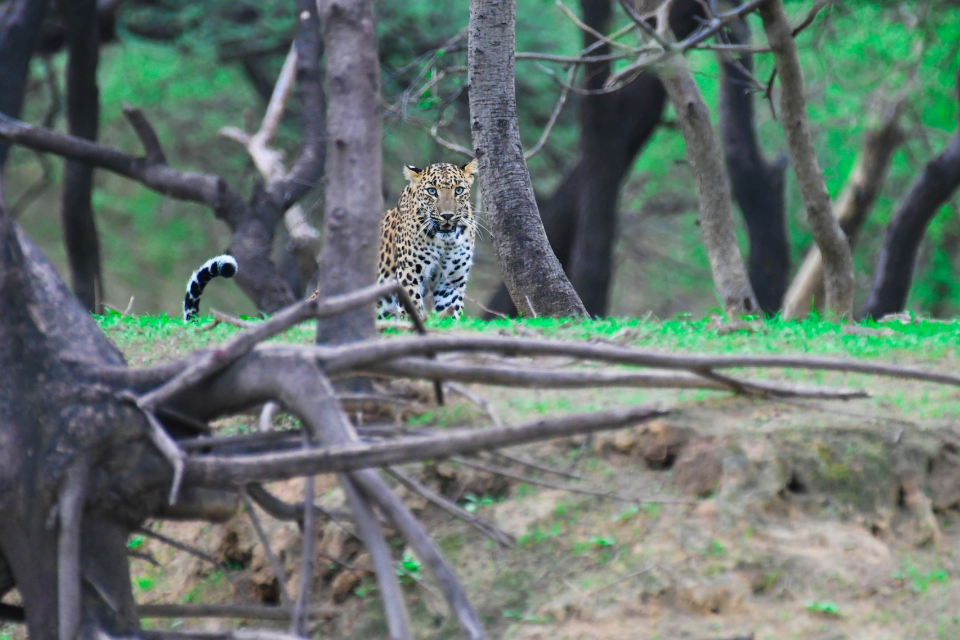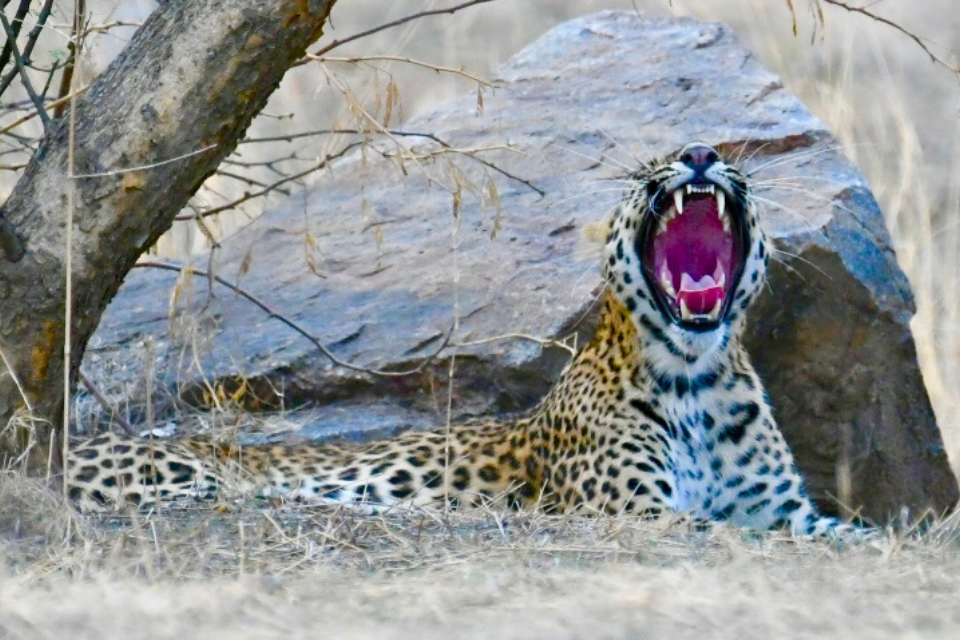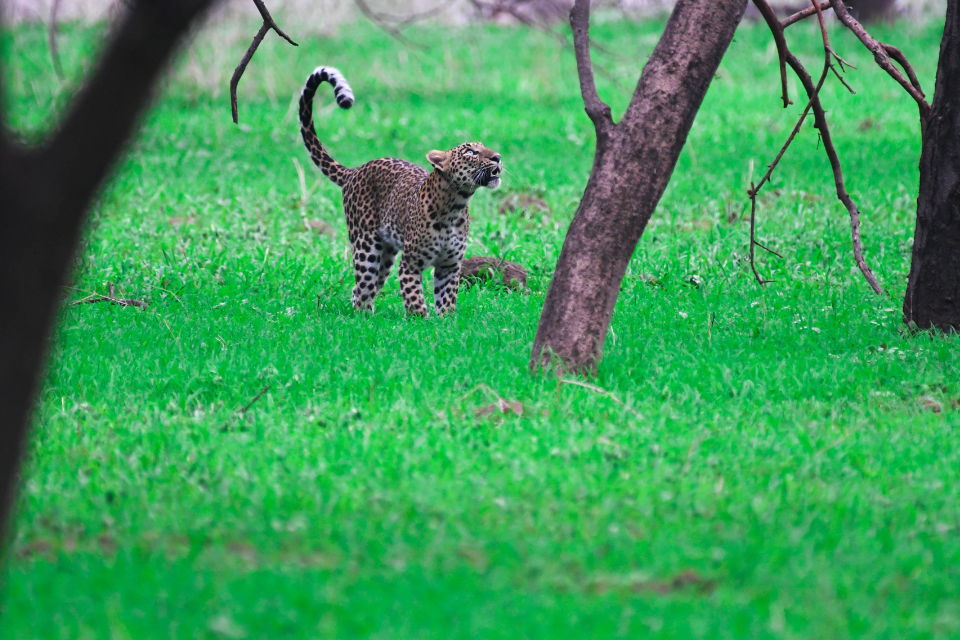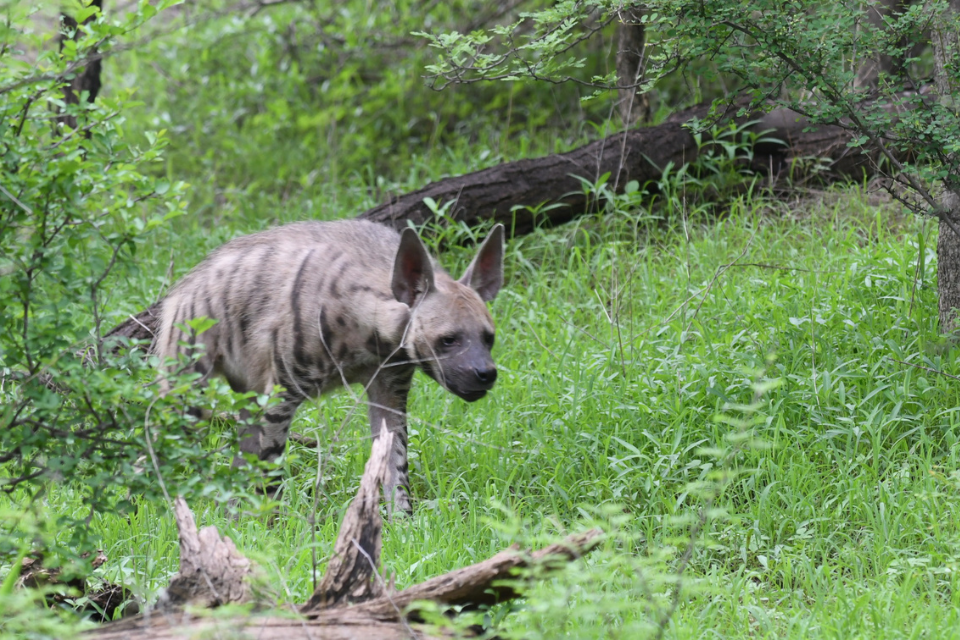
Behind the Scenes: How Guides Track Leopards Using Pugmarks, Alarm Calls & Habitats
Tyres crunch softly over gravel as dawn thins the night. Somewhere ahead, a langur’s clipped bark ricochets across the scrub. Your guide lifts a hand: the vehicle rolls to a hush. On the track’s edge—an oval pad with three clear lobes on the back edge—a fresh imprint glistens where dew has darkened the dust. “Leopard,” your guide murmurs. You lean closer. The jungle seems to exhale.
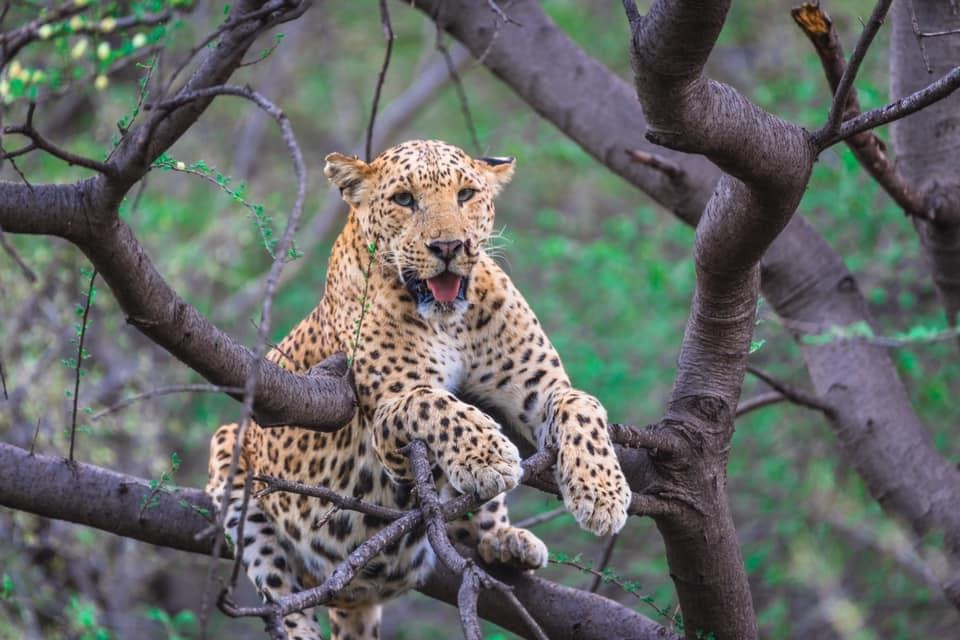
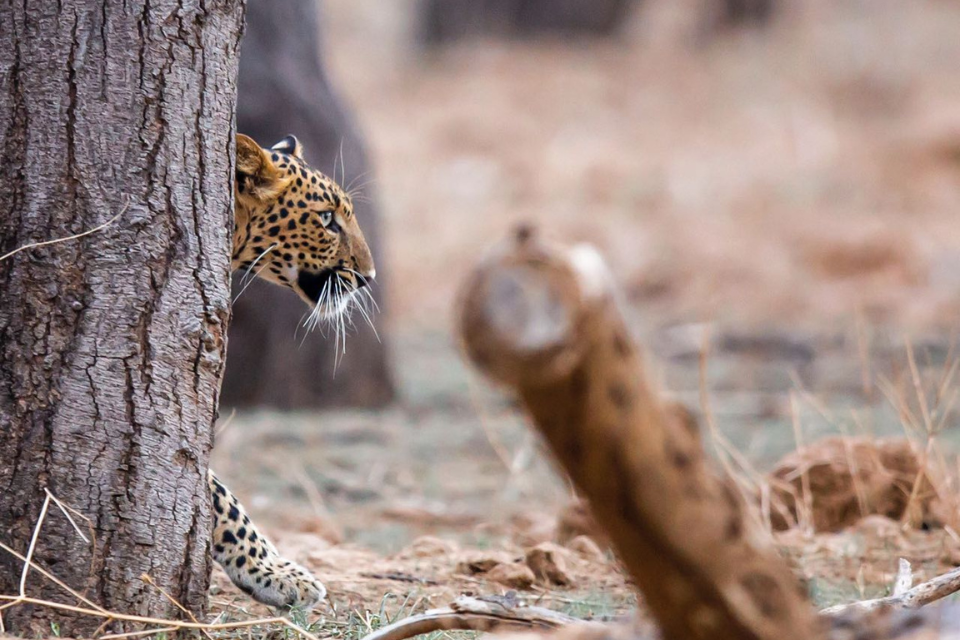
What follows isn’t luck. It’s fieldcraft: a disciplined blend of sign-reading (pugmarks), acoustic triangulation (alarm calls), and habitat interpretation that guides around Jaipur (and across India) use to find the subcontinent’s most elusive cat—without broadcasting sensitive locations or relying on invasive tracking tech.
This story-driven explainer opens the curtain on the skills, routines, and ethics our team lives by—so you’ll know exactly what’s going on when your guide suddenly changes direction, stops to sniff the wind, or becomes fascinated by a smudge in the dust.
Two-Day Jaipur Wildlife Itinerary: Combine Jhalana, Amagarh & Maila Bagh With City Sights
Planning a short Jaipur break that balances big-cat thrills with Old City charm? Here’s a 2 day Jaipur wildlife itinerary designed to maximize leopard safaris at Jhalana, Amagarh, and Maila Bagh (Beed Papad) while slotting in the must-see forts, palaces, and markets. You’ll get AM/PM slot pairings, hotel zone advice, typical commute times, and clear CTAs to book safaris and city add-ons—perfect for both inspiration and quick transactions.
________________________________________
Why this plan works (in 30 seconds)
• Three urban leopard landscapes within Jaipur: Jhalana (SE Jaipur), Amagarh (Galta/Agra Road hills), and Maila Bagh–Beed Papad (Nahargarh side). Maila Bagh opened as the city’s third safari in 2025, expanding tracks and visitor facilities.
• Two daily safari windows in Jaipur—morning and evening—let you pair game drives with city sights when the light is best. Typical slot bands vary by season; examples below.
• Short commutes from most hotel zones mean you can do two safaris per day without wasting hours in traffic.
First-Timer’s Gear List for Jaipur Leopard Safaris (Season-by-Season Packing)
Leopards around Jaipur are famously elusive, and the terrain swings from arid scrub to rocky ravines. That means your packing choices matter a lot more than you’d think. This guide breaks down month-by-month clothing, recommended lens focal lengths, dust and monsoon protection, and a complete Jaipur safari packing list so first-timers can plan confidently. You’ll also find a simple call-to-book if you want us to set up a responsible, well-equipped ride.
________________________________________
TL;DR (Skim-Friendly)
• Wear earth tones (olive, tan, brown, grey); avoid bright whites, neon, and noisy fabrics.
• Camera kit that works year-round: APS-C: 100–400mm (or 150–600mm), Full-frame: 200–500/600mm; add a 24–70/105mm for habitat.
• Pack dust covers, microfiber cloths, blower, and zip-top bags. In monsoon, add rain sleeves, dry bags, and anti-fog wipes.
• Morning drives are chilly Nov–Feb; bring mid-layer + windproof. May–June is scorching: breathable shirts, sun hat, electrolytes.
• Footwear: closed-toe trail shoes with grippy soles; flip-flops only for lodge wear.
• Binoculars 8×42 or 10×42, soft beanbag for vehicle rail, no tripods in vehicles (a monopod is OK if your operator allows and it doesn’t disturb others).
• Keep your main kit in a 20–30L daypack with silica gel and spares (batteries/cards) in a waterproof pouch.
Leopard Conservation in an Expanding City: How Jaipur Balances Tourism & Habitat
Jaipur is famous for forts, textiles, and pink façades—but one of its most compelling stories prowls in the scrub hills that ring the city. In 2017, as part of Rajasthan’s “Project Leopard,” Jhalana on Jaipur’s southeastern edge was formally designated as a leopard reserve—a pioneering move for an urban landscape in India. Since then, the city has tried to do something few fast-growing metros attempt: share space with a big cat while inviting visitors to learn, not intrude.
This guide unpacks how Jaipur is attempting that balance—what makes Jhalana unique, how corridors and carrying capacity shape decisions, what community engagement looks like on the ground, and how tourism can help (or hurt) conservation if not done carefully.
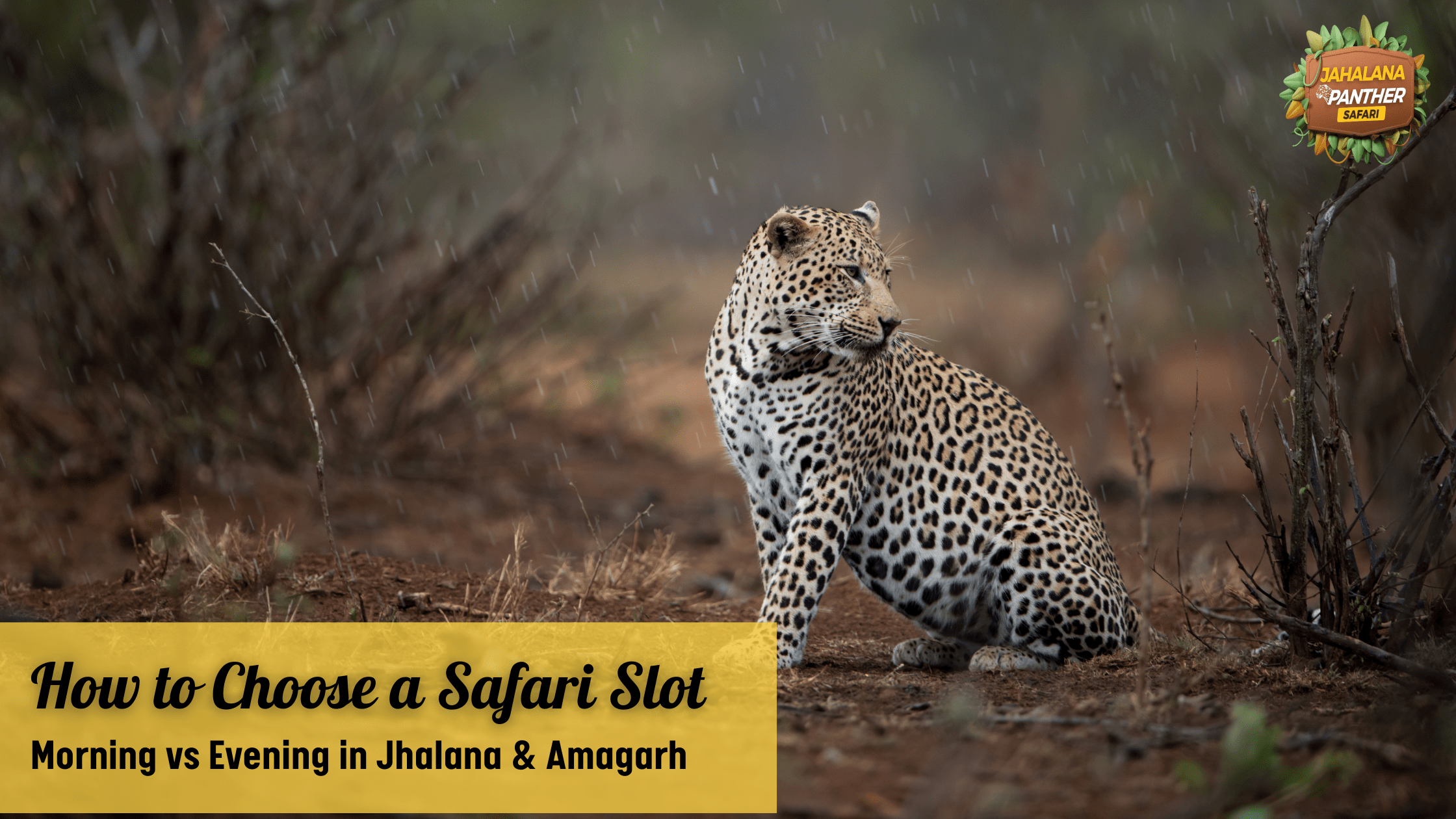
How to Choose a Safari Slot: Morning vs Evening in Jhalana & Amagarh
Jaipur leopard safari timings at a glance (seasonal)
Exact reporting times change with sunrise/sunset, but the department and leading booking portals publish seasonal slot windows you can plan around:
• Jhalana Leopard Reserve (typical ranges)
o Aug–Oct: ~06:45–09:15 (morning), ~15:45–18:15 (evening)
o Nov–Jan: ~07:00–09:30, ~15:15–17:45
o Feb–Mar: ~06:15–08:45, ~15:45–18:15
o Apr–May: ~05:45–08:15, ~16:15–18:45
o Jun–Jul: ~05:45–08:15, ~16:45–19:15 (monsoon)
• Amagarh Leopard Reserve (typical ranges)
o Mirrors Jhalana’s seasonality with similar windows: 07:00–09:30 / 15:15–17:45 (peak winter) and ~05:45–08:15 / 16:45–19:15 (peak summer/monsoon). Some operator sites also quote 05:30–08:30 / 16:30–19:30 as broad operating bands depending on season and daylight. Always check your voucher.
Pro tip: Season defines comfort and light more than the park choice. Jhalana is older and very consistent for leopard sightings; Amagarh is newer and scenic with rugged Aravalli backdrops. Book whichever has seat availability—but choose the slot that fits your goal.
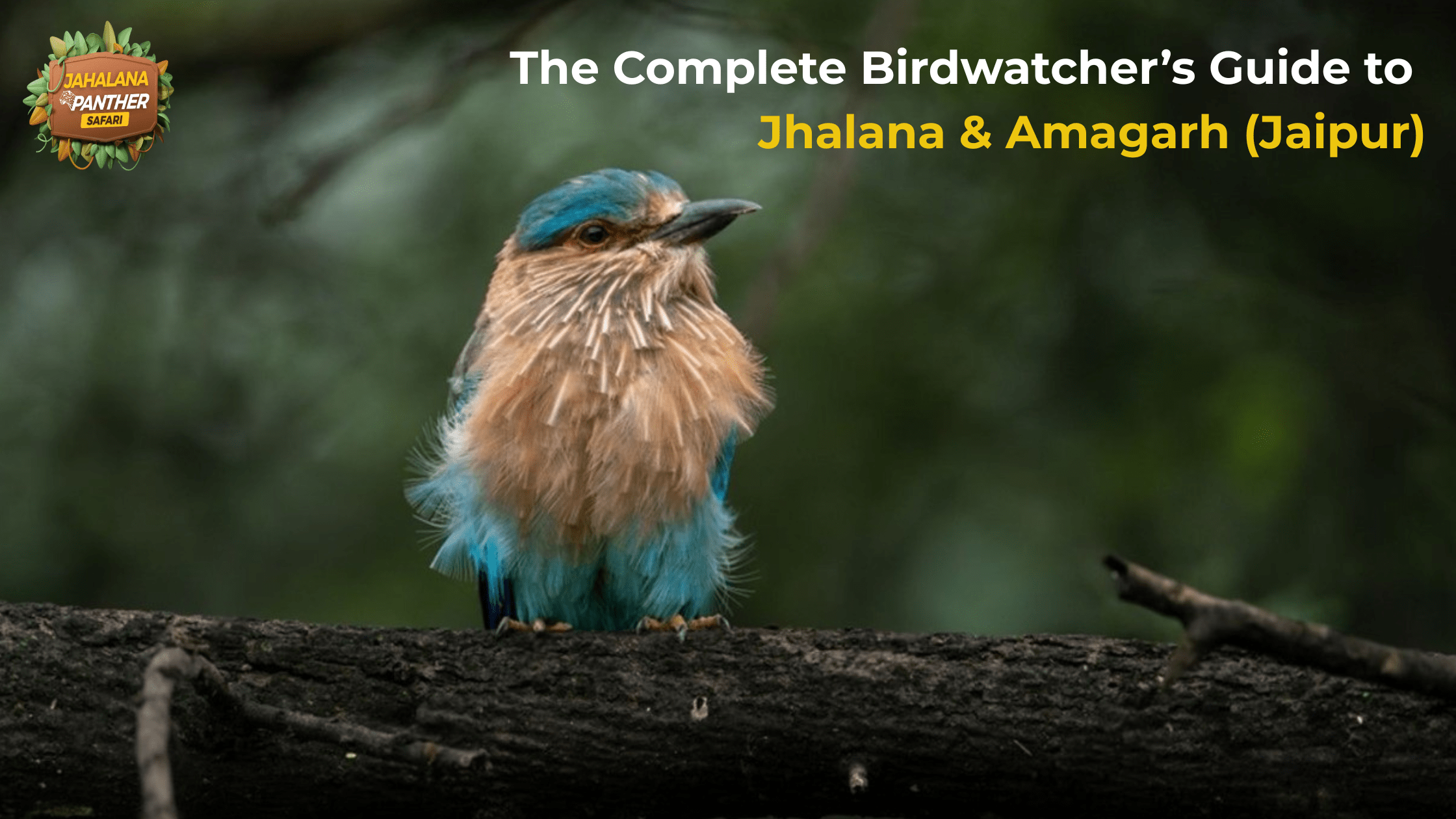
The Complete Birdwatcher’s Guide to Jhalana & Amagarh (Jaipur)
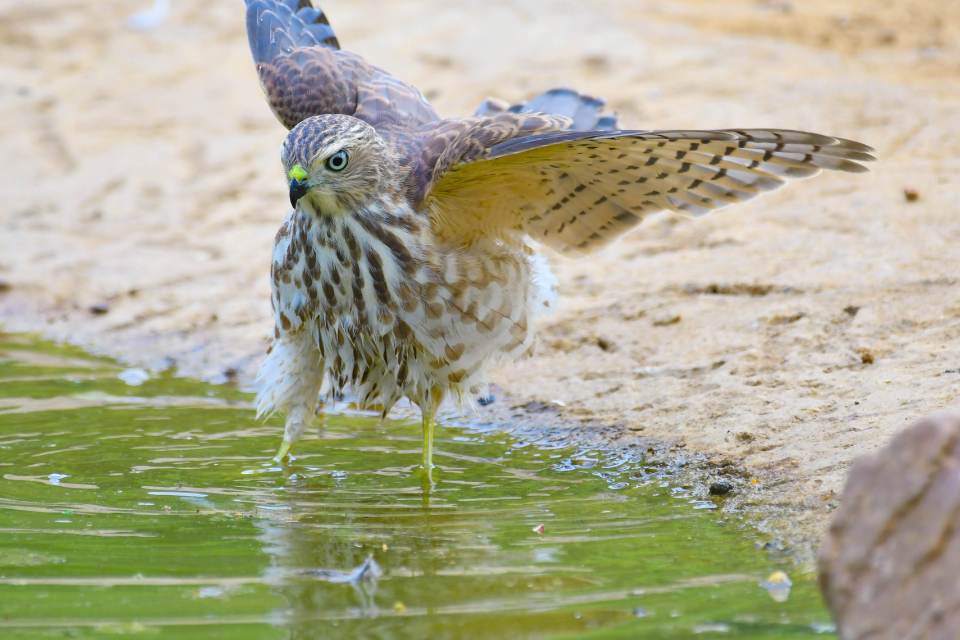
When most people think of Jhalana, they think leopards. But the same scrub-forest, rocky Aravalli slopes, and small waterholes that shelter big cats also host a remarkably reliable dry-zone bird assemblage—francolins calling at dawn, drongos hawking insects on open tracks, bee-eaters flashing neon over thorn scrub. Just across the ridge, Amagarh Fort and the surrounding hills add cliff and temple-tank habitats that pull in different species, especially during migration and the monsoon.
This guide keeps things practical and SEO-sharp for “birding Jhalana” and “birds of Amagarh” searches while giving you a field-ready plan: what to look for, where to go, when to go, how to log on eBird—and how to do all of it responsibly.

How to Photograph Leopards at Dusk: Settings, Spots & Ethics at Jhalana
Jhalana’s compact, scrub-forest habitat and rocky hillocks create natural funnels for leopard movement. As temperatures drop toward evening, leopards often transition from day beds in thickets toward edge habitats: the interface of rocks, trails, and shallow nullahs. You’re betting on predictable movement windows in unpredictable light—that’s where skill with exposure, autofocus, and vehicle craft pays off.
Behavioral cues to watch:
• Head-up scanning from rocks or termite mounds just before last light.
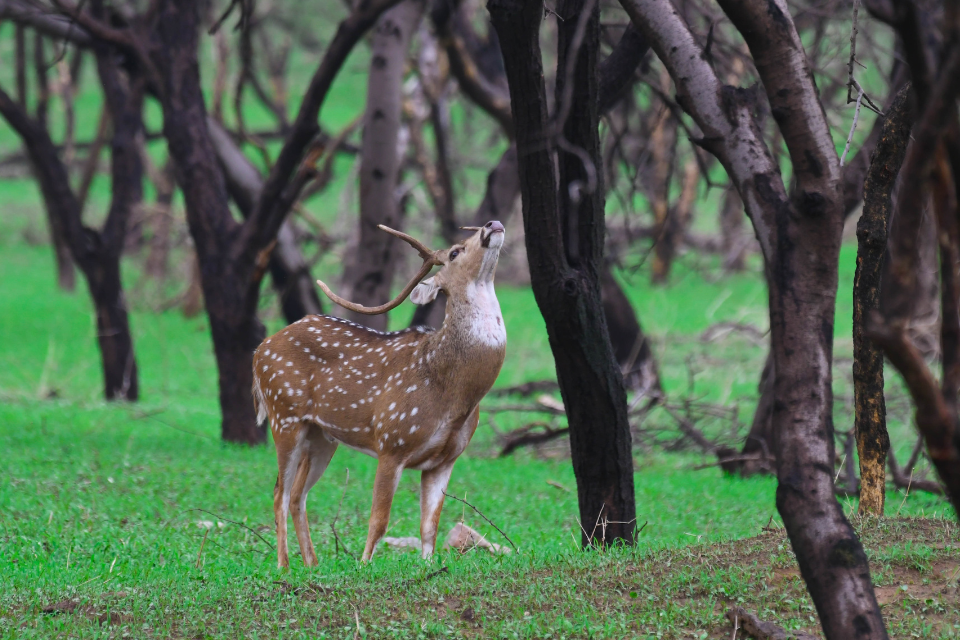
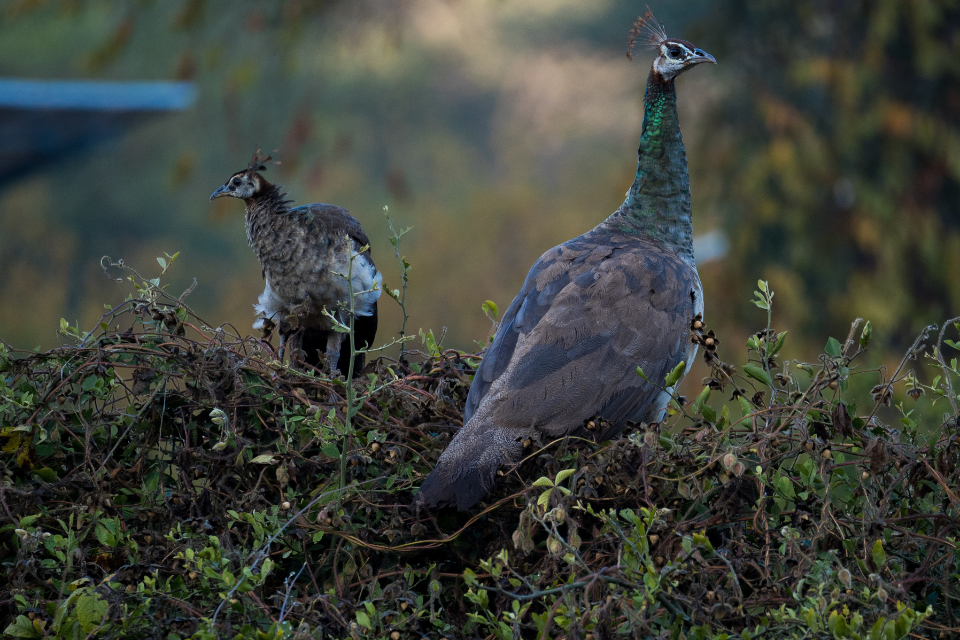
• Trail crossings at scrub edges; listen for alarm calls (peafowl, langur, sambar).
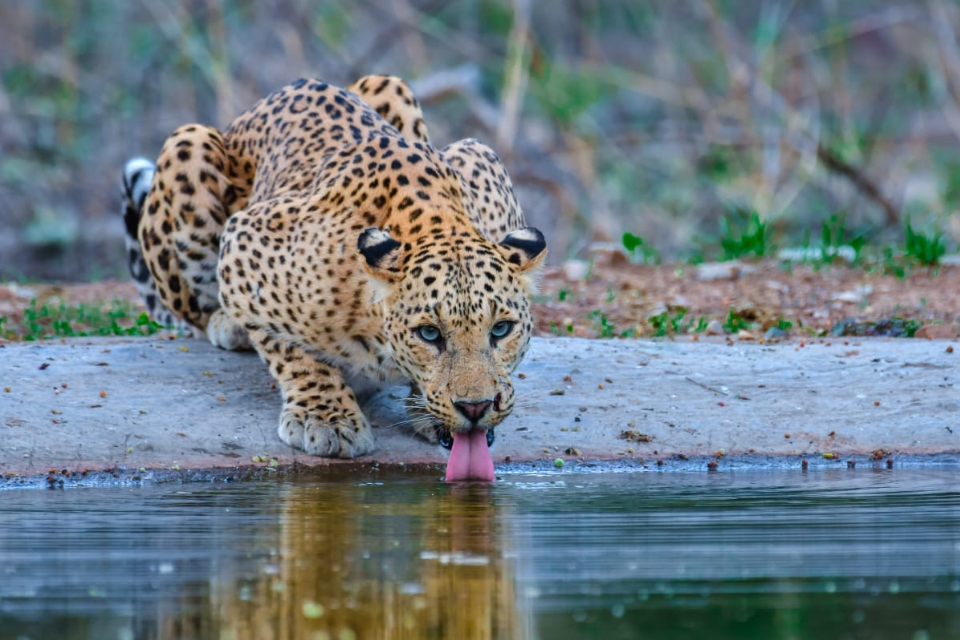
• Waterhole checks on warmer evenings.

Gypsy vs Bolero vs Shared Jeep: Picking the Right Vehicle Type for Jaipur Safaris
The right vehicle decides what you see, how comfortably you see it, and how good your photos look. In habitats like Jhalana (acacia-scrub, undulating hills, narrow tracks), vehicle height and side openness directly impact your eye-level composition with leopards and other wildlife. So, “Jaipur safari Gypsy or Bolero?” isn’t just a preference—it’s your field strategy.
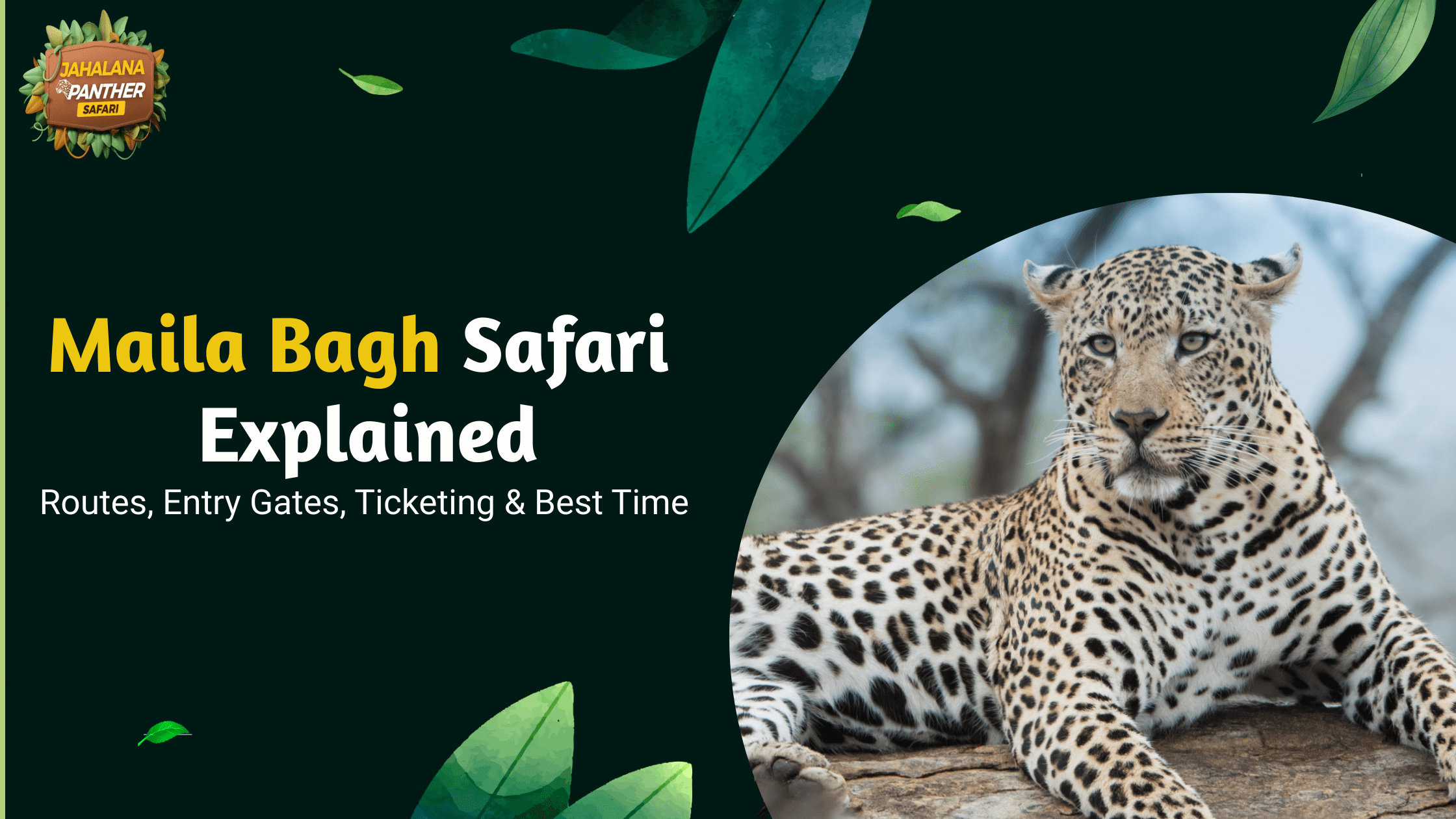
Maila Bagh Safari Explained: Routes, Entry Gates, Ticketing & Best Time
The operational entry used by registered safari vehicles is via Vidyadhar Nagar (north/north-east Jaipur). Local coverage and operator pages consistently reference this approach for Maila Bagh–Beed Papad drives. Pin “Vidyadhar Nagar leopard safari entry” (near Bhuteshwar Mahadev / Papad Ke Hanumanji corridor) and then follow on-ground boards to the forest department check-post. Always buffer 20–25 minutes for paperwork/briefing.
Parking & reporting: Most operators ask you to report 30–40 minutes before your slot at the designated parking/assembly point, from where registered gypsies enter the safari in batches. Keep original ID handy.
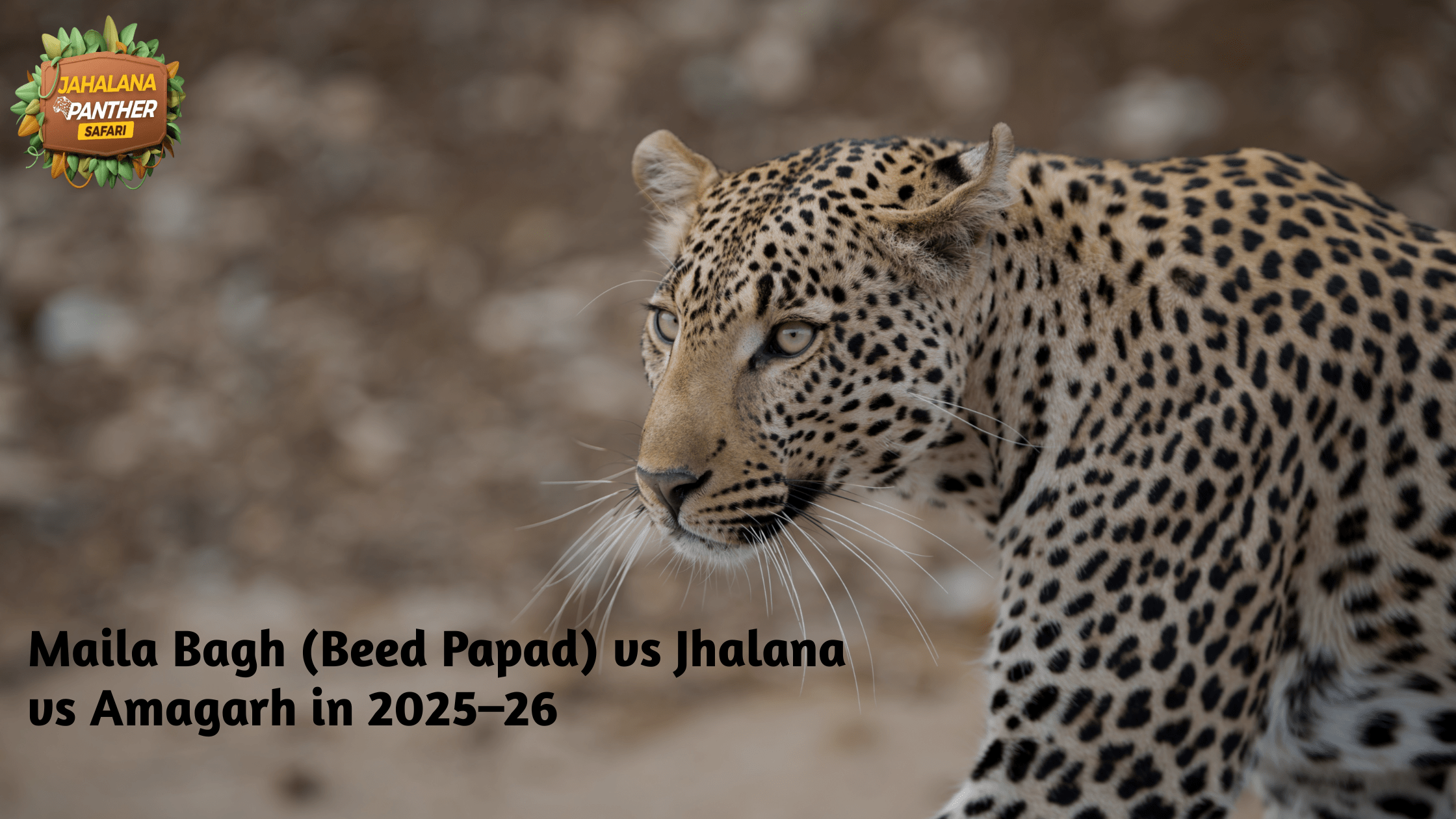
Maila Bagh (Beed Papad) vs Jhalana vs Amagarh in 2025–26:
if you’re chasing freshest routes and fewer crowds, Maila Bagh/Beed Papad is the hot, new third zone. For the most established logistics and “safe bet” urban leopard viewing, Jhalana remains the classic. If you want rugged terrain, birding variety and seasonal drama in the Aravallis, Amagarh is a strong middle path. This guide compares them head-to-head—pros/cons, access, leopard density, track networks, approximate booking caps, timings, and best months—and ends with a decision flowchart and FAQs so you can book with confidence.
Maila Bagh (often called Beed Papad Safari) was officially launched around World Environment Day, June 5, 2025, adding a third leopard-watching venue in Jaipur alongside Jhalana and Amagarh. Early coverage cited about 19 leopards, two primary routes (Kishan Bagh side and New Biological Park–Audhi Ramsagar linkage), roughly 15 km² of motorable tracks, and ~10 registered vehicles for guided tours, with access via Vidyadhar Nagar.