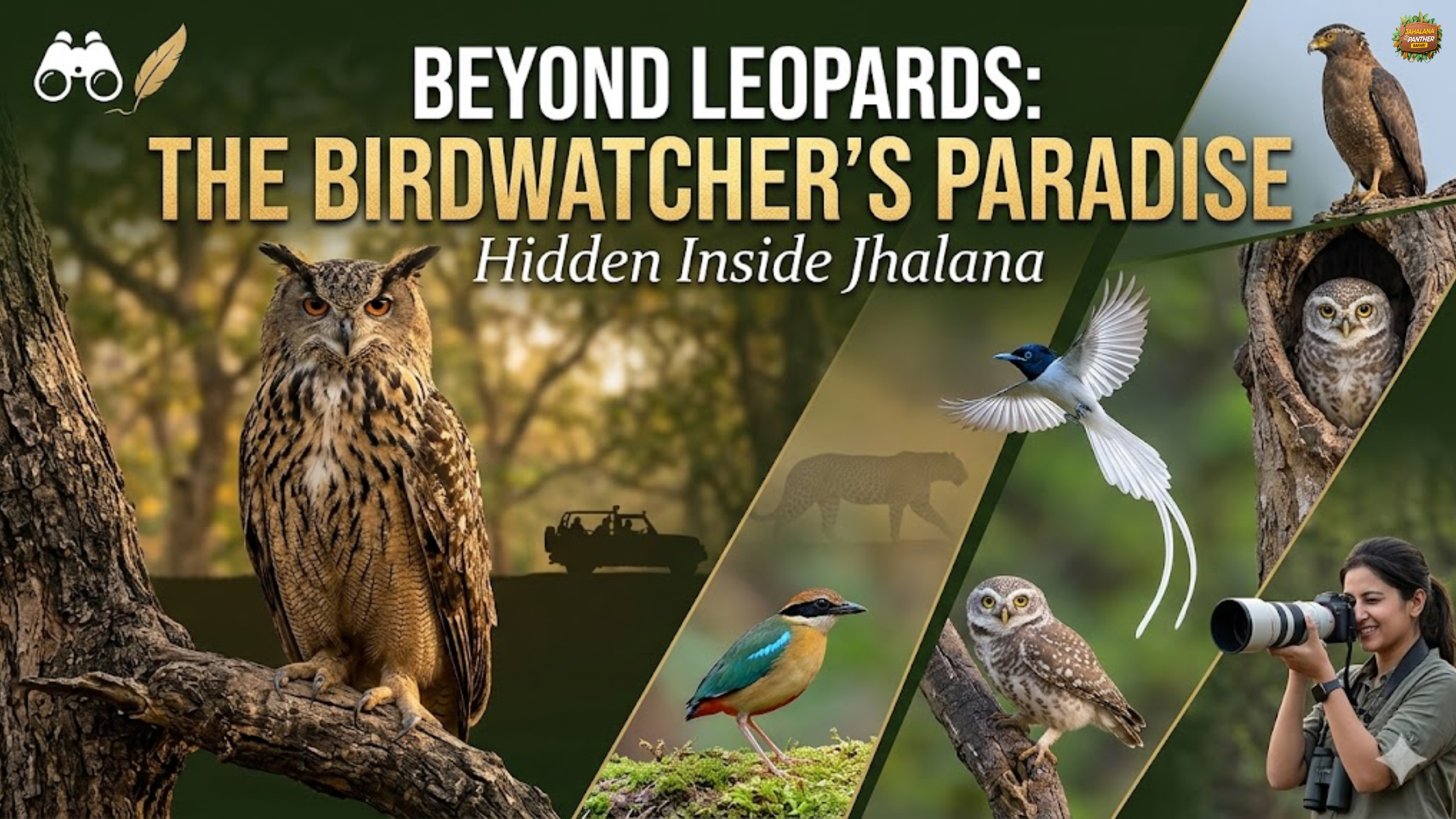
Beyond Leopards: The Birdwatcher’s Paradise Hidden Inside Jhalana
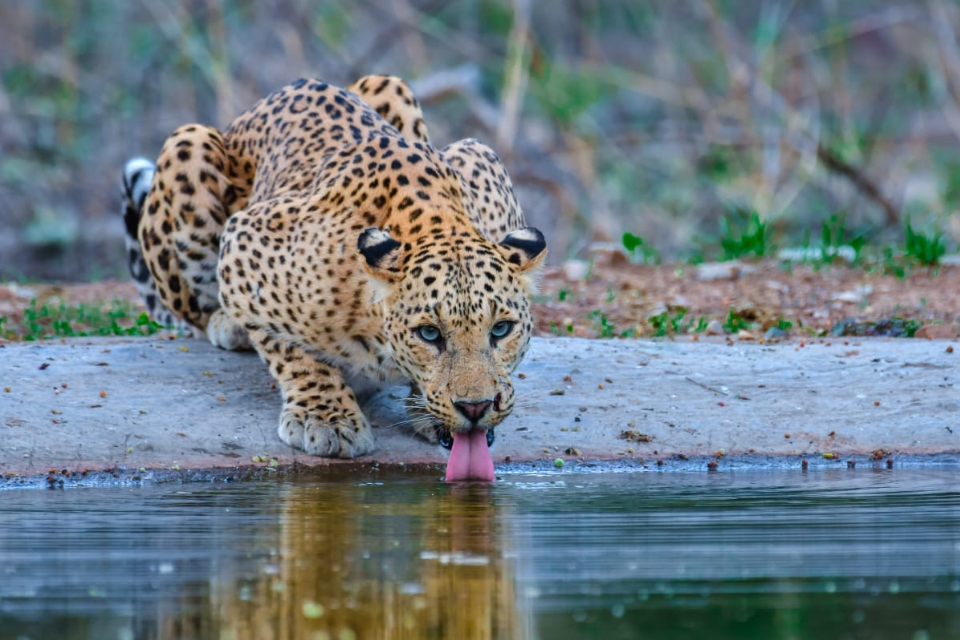
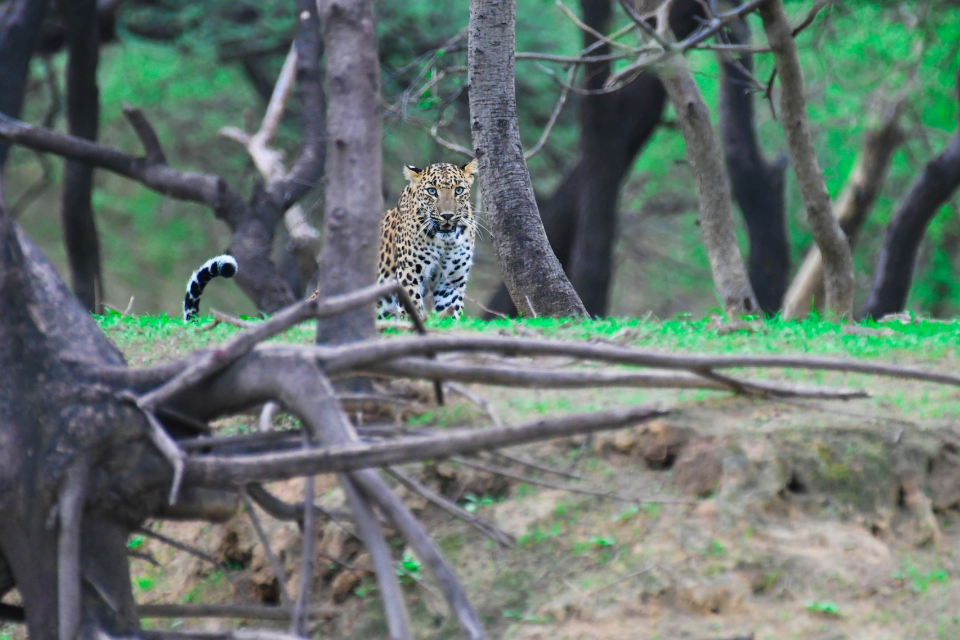
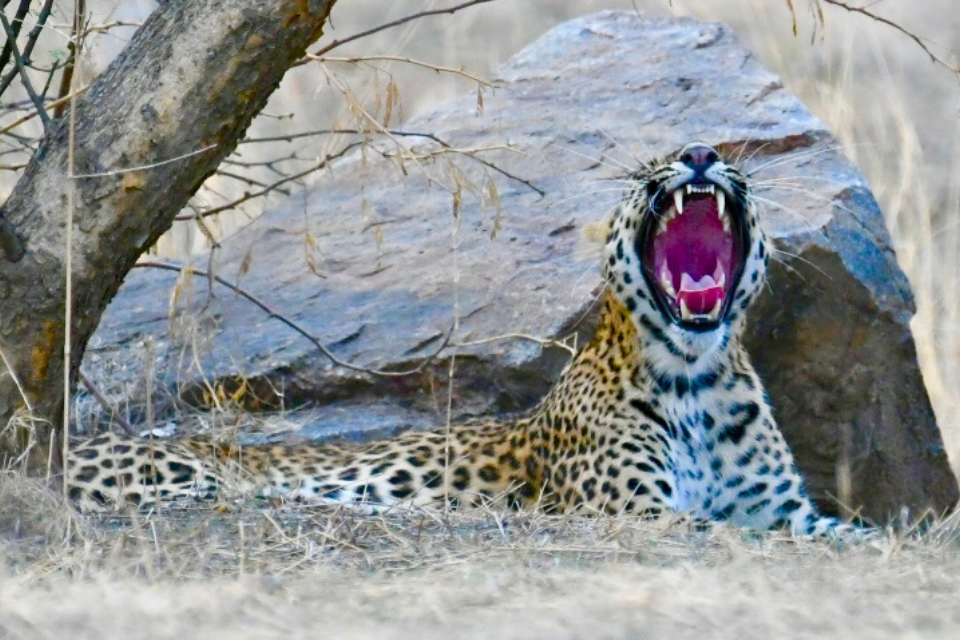
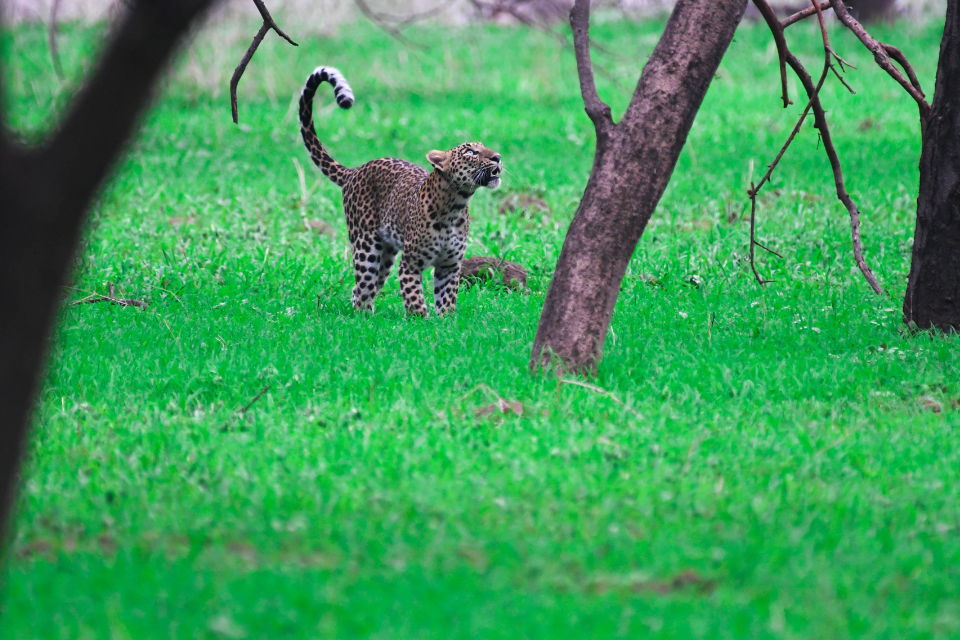
Jhalana Leopard Reserve, situated in the heart of Jaipur, is globally renowned for its high density of Panthera pardus (Leopards). However, when the leopard’s growl fades into the shadows, another world awakens—one filled with vibrant colors, melodic whistles, and majestic wings. Jhalana is not just a predator’s kingdom; it is a “Hidden Birding Hub.” If you are an ornithologist or a nature enthusiast, bird watching in Jhalana offers an experience that transcends the typical safari, showcasing over 200 species of birds.
Why Jhalana is More Than Just Leopards
Most visitors flock to Jhalana with a singular goal: spotting a leopard. But true peace is found by those who turn their gaze toward the canopy. Jhalana’s ecosystem is a unique mix of dry deciduous and thorn forests, making it a critical component of birding tours in Rajasthan. The silence of the forest, broken only by the crunch of dry leaves under a jeep’s tires, provides the perfect acoustic backdrop for identifying rare bird calls.
The Seasonal Magic: Migratory Birds in Jaipur
As the seasons shift in the Pink City, so does the avian life inside Jhalana. During the monsoon and winter months, the reserve becomes a vital international transit point for feathered travelers.
1. The Winter Guests (November to February)
When the harsh winters of Siberia and Europe set in, a variety of migratory birds make Jhalana their temporary home. During a winter safari, keep your binoculars ready for:
-
Steppe Eagle: A majestic migratory raptor often seen soaring high above the cliffs.
-
Northern Pintails & Shovellers: While primarily found near water bodies, they are often spotted around Jhalana’s man-made water holes.
-
Common Kestrel: Famous for its “hovering” technique while hunting in the open scrubland.
2. The Monsoon Residents (July to September)
The rains transform Jhalana into a lush green haven, inviting “Summer Migrants” who come here specifically for breeding and nesting.
The Jewel of Jhalana: The Indian Pitta
If you are birding in Jhalana and haven’t spotted the Indian Pitta Jhalana, your trip is arguably incomplete. Locally known as “Navrang” (Nine Colors), this bird is the ultimate prize for birdwatchers.
-
Spotting Tip: The Indian Pitta arrives with the first monsoon showers in June. Its loud, clear two-note whistle is a giveaway, often heard from the dense undergrowth.
-
A Visual Masterpiece: With nine vibrant colors on its body, it is a primary subject for avian photography in India. Capturing a Pitta in the soft, diffused light of a rainy morning is a dream for any wildlife photographer.
Sky Predators: Eagle Sightings Jaipur
The high cliffs of the Aravalli range and the ancient trees within the reserve serve as ideal nesting grounds for raptors. Eagle sightings in Jaipur are arguably at their best within the boundaries of Jhalana.
-
Crested Serpent Eagle: Often seen perched motionless on high branches, scanning the ground for snakes and lizards.
-
White-eyed Buzzard: A permanent resident of Jhalana, easily identified by its distinct white iris and orange-yellow cere.
-
Short-toed Snake Eagle: Known for its incredible ability to hover in mid-air before diving onto its prey.
Avian Photography India: Mastering the Jhalana Terrain
Photographing birds in Jhalana can be challenging due to the dry scrub background and fluctuating light conditions. Here is how to master it:
Essential Gear for Bird Photography:
-
Lenses: A minimum of 400mm or 600mm telephoto lens is essential for capturing shy species without disturbing them.
-
Shutter Speed: To freeze the action of a bird in flight or a quick branch-hop, keep your shutter speed above 1/1600s.
-
Binoculars: Do not rely solely on your camera. Use 8×42 binoculars to scan the bushes before lifting your heavy gear.
Professional Photography Insights:
-
The Golden Hour: The first two hours after sunrise provide a warm, golden glow that highlights the natural iridescence of bird feathers.
-
The Art of Silence: Birds in Jhalana are more sensitive to human voices than leopards. Maintaining absolute silence will allow birds to approach closer to your vehicle.
Practical Insights for Your Visit
To make the most of your birding tours in Rajasthan, consider these practical tips:
-
Best Time for Birding: The morning safari slot is vastly superior for birding. In winter, raptors become active as the sun warms up the thermal currents.
-
Camouflage is Key: Wear earth-toned clothing—Olive Green, Khaki, or Brown. Bright colors like red or yellow act as a warning signal to birds, causing them to fly away.
-
Expert Guides: Always request a guide specifically interested in ornithology. Many drivers in Jhalana are experts at identifying birds by their calls alone.
The Ecological Importance of Jhalana
The Rajasthan Forest Department’s conservation efforts have turned Jhalana into a safe sanctuary. By maintaining water holes and clearing invasive species like Prosopis juliflora, they have ensured that the bird population remains stable. This makes Jhalana a top recommendation for bird watching in Jhalana because the human-wildlife conflict is minimal compared to other open forests.
The Raptor Diversity: Beyond Eagles
While eagles take the spotlight, Jhalana is home to other fascinating birds of prey:
-
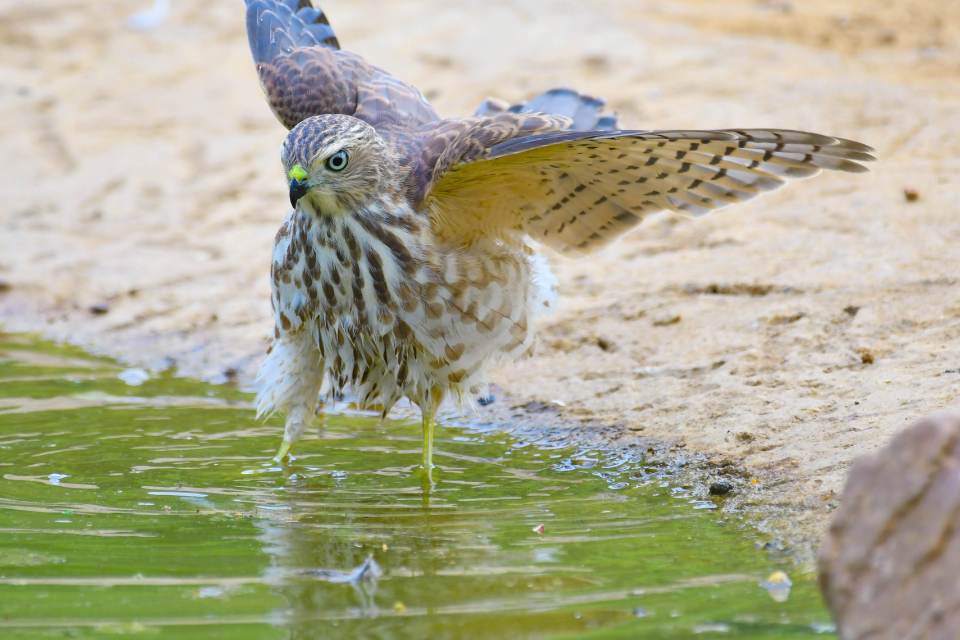
Shikra: A small, fast-moving raptor often seen darting through the trees.
-
Oriental Honey Buzzard: Recognizable by its small head and long neck, often seen raiding beehives.
-
Spotted Owlet: Look for them in the hollows of old trees near the entrance of the park.
Detailed Species Checklist for Birders
When you visit, try to cross these off your list:
-
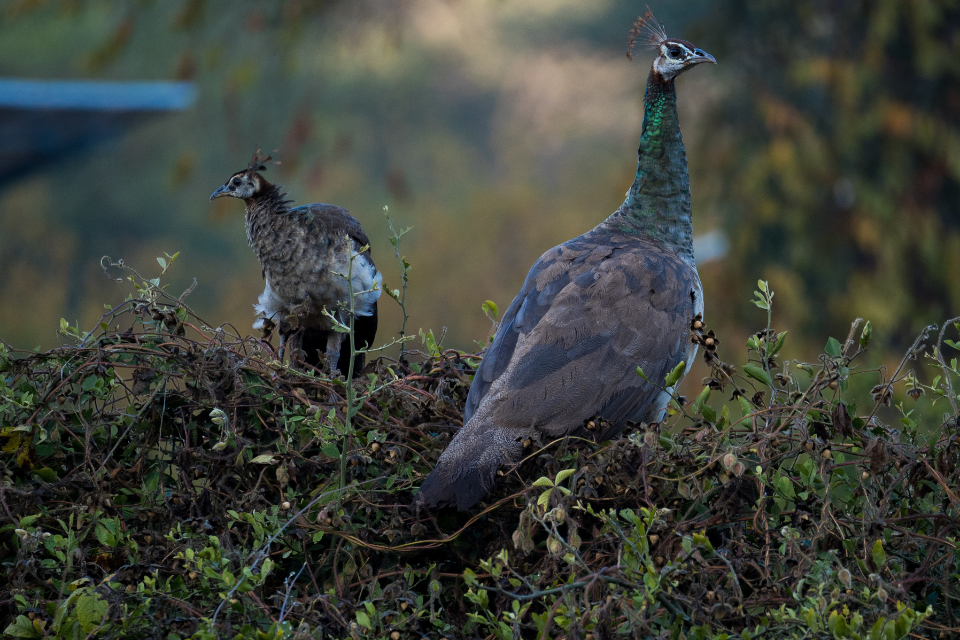
Peafowl: Ubiquitous but stunning in the wild.
-
Grey Francolin: Often seen running across the safari tracks.
-
Rufous Treepie: Bold birds that often come close to the jeeps.
-
Yellow-footed Green Pigeon: The state bird of Maharashtra, found in large numbers here.
-
Paradise Flycatcher: Spotting the long, white ribbon-like tail of the male is a highlight of the monsoon.
Frequently Asked Questions (FAQs)
Q1. Is there a separate ticket for bird watching in Jhalana?
No, the standard Leopard Safari ticket covers your entry. However, you should inform your driver and guide beforehand that you wish to focus on birding so they can drive more slowly and stop at known birding hotspots.
Q2. What is the best month to see the Indian Pitta?
The best window is from late June to August. This is their breeding season when they are most vocal and visible.
Q3. Are binoculars provided during the safari?
Most safari operators do not provide binoculars. It is highly recommended to carry your own high-quality pair for the best experience.
Q4. Can I go on a birding walk inside Jhalana?
No, walking is strictly prohibited inside the leopard reserve for safety reasons. All birding must be done from the safety of a registered safari vehicle.
Q5. How many bird species can I expect to see in one trip?
In a single 3-hour morning safari, an experienced birder can easily spot between 30 and 50 different species, depending on the season.
Conclusion: The Final Takeaway
Jhalana is not merely a “Leopard Kingdom”; it is a vibrant, multi-layered ecosystem where every tree has a story, and every whistle belongs to a hidden gem. Bird watching at Jhalana connects you to the finer details of nature that are often overlooked in the rush to find big cats.
The next time you plan a trip to Jaipur, look beyond the spots of the leopard. Look for the “Navrang” in the bushes and the “Majestic Eagle” in the sky. Your journey into avian photography in India will be forever enriched by the hidden paradise of Jhalana.