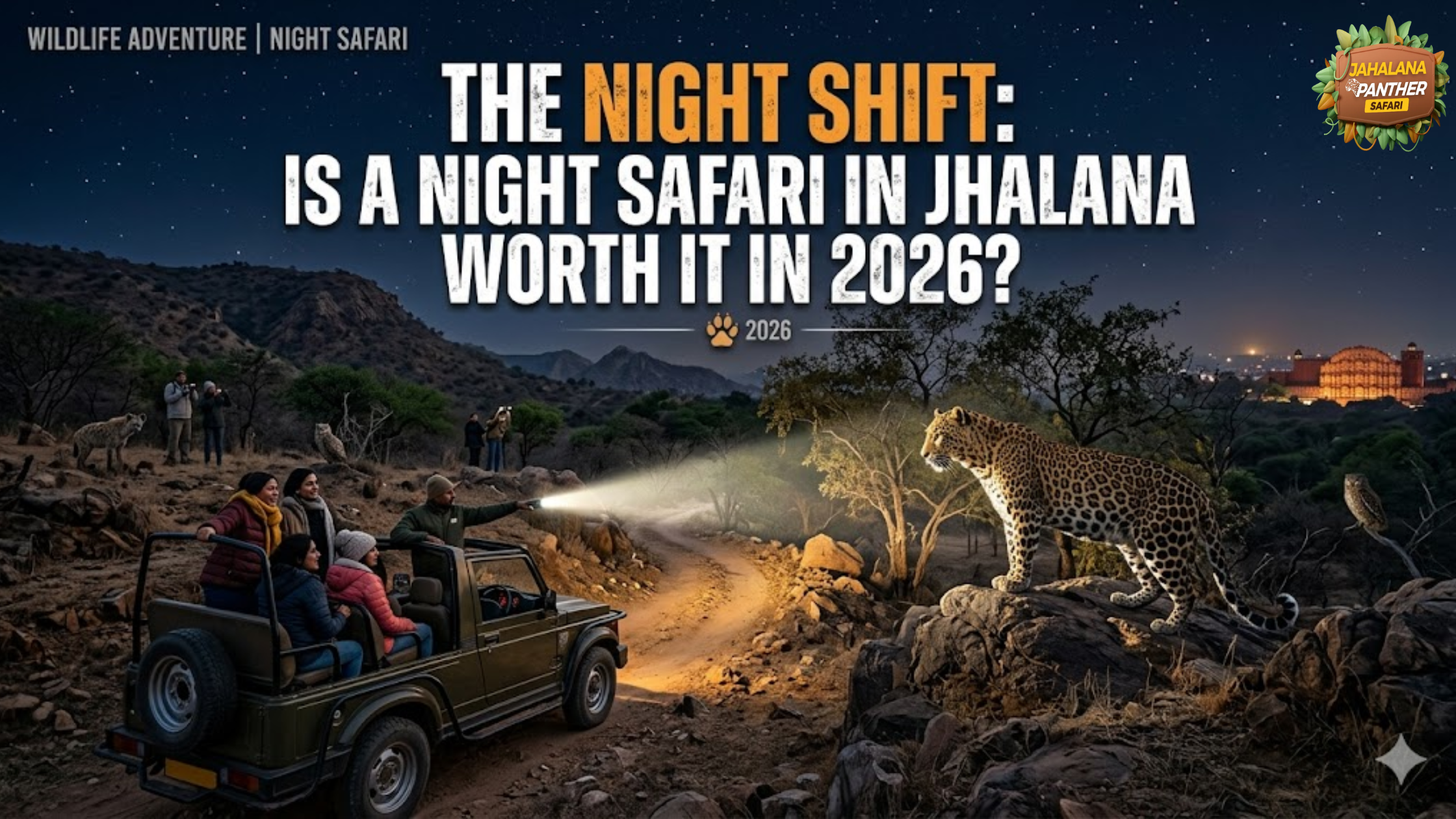
The Night Shift: Is a Night Safari in Jhalana Worth It in 2026?
The moon rises over the Aravalli Hills, casting long, silver shadows across the scrubby terrain of Jaipur. While the Pink City sleeps, a different kind of life begins to stir. If you thought the only way to see a leopard was under the blazing Rajasthan sun, think again.
As we move into 2026, the night safari Jhalana has become one of the most talked-about Jaipur adventure activities. But is it truly worth the investment, or are you just driving through the dark? In this guide, we break down everything from the Jhalana night tour cost to the thrill of spotting the nocturnal wildlife Jaipur hides within its city limits.
What Exactly is the Jhalana Night Safari?
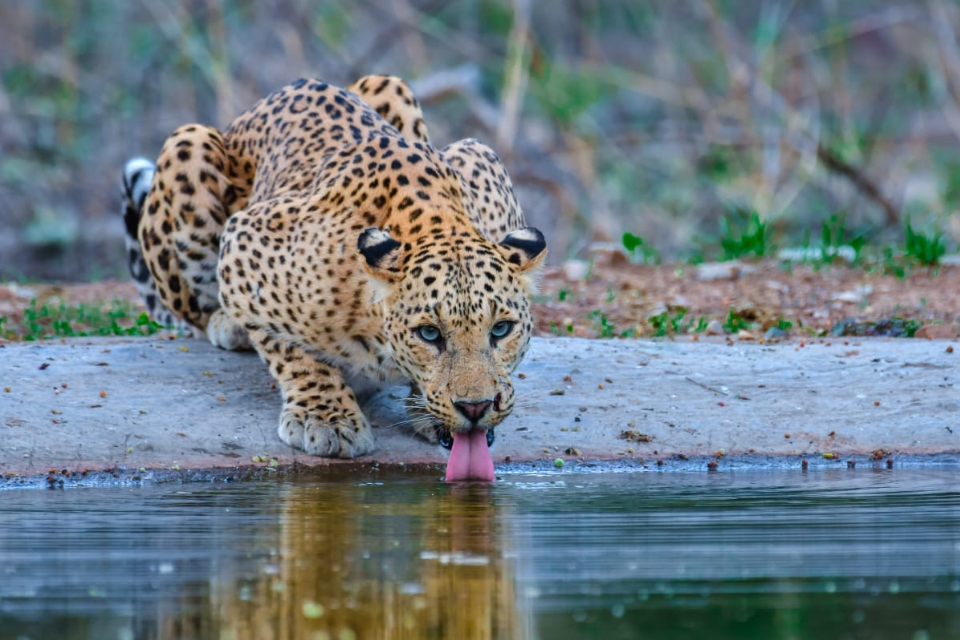
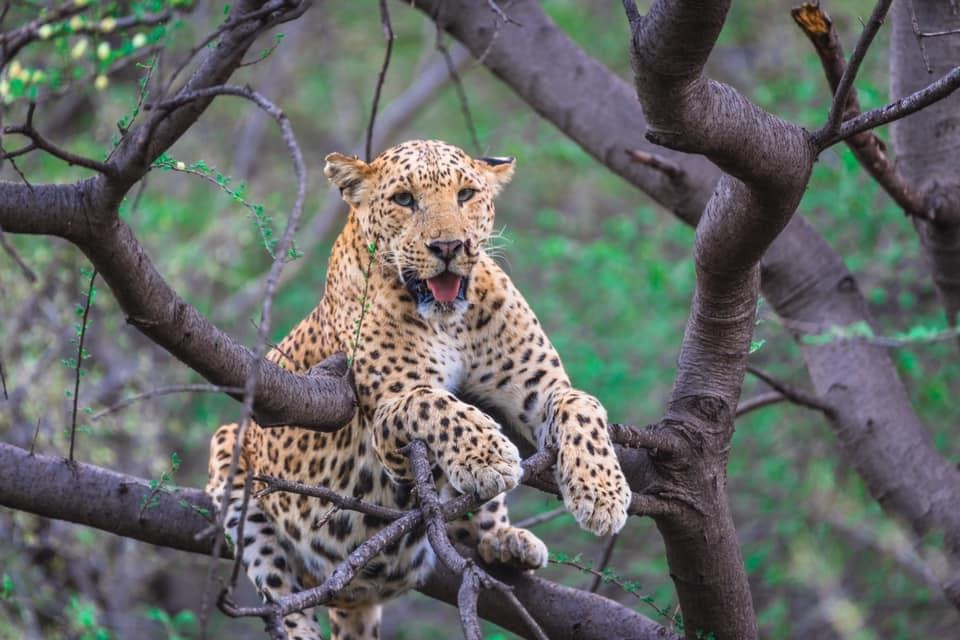
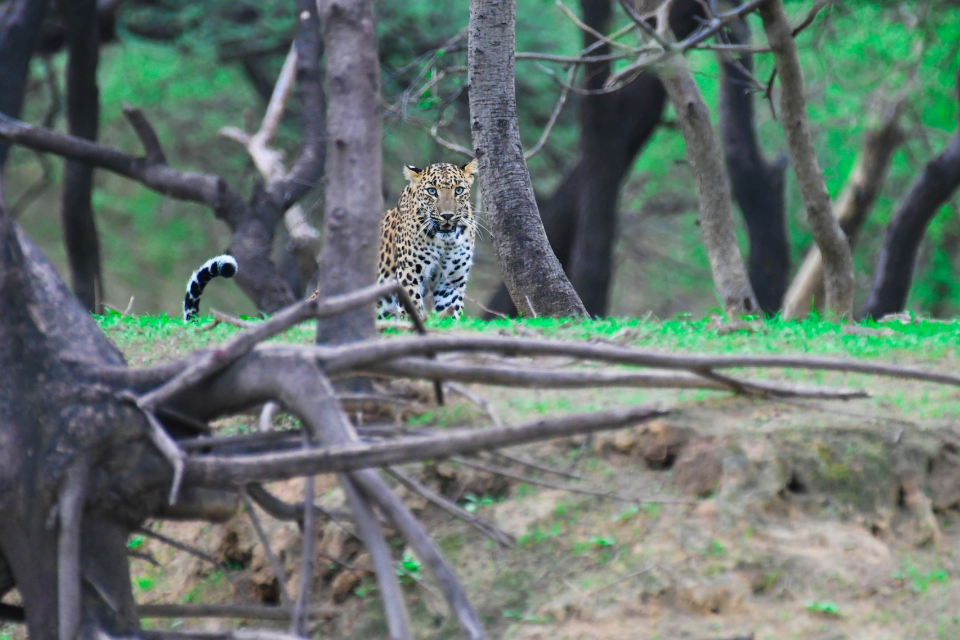
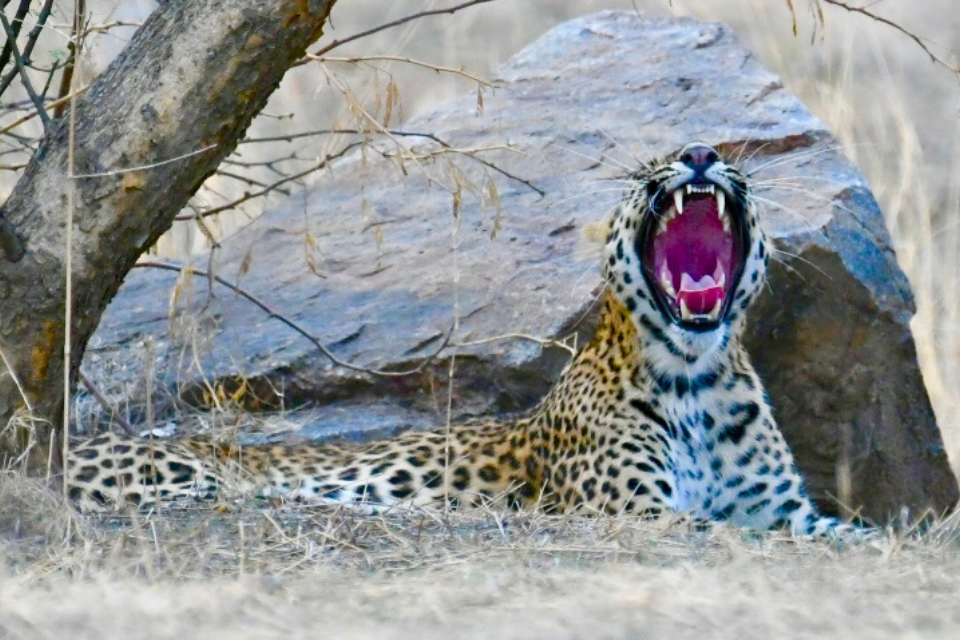
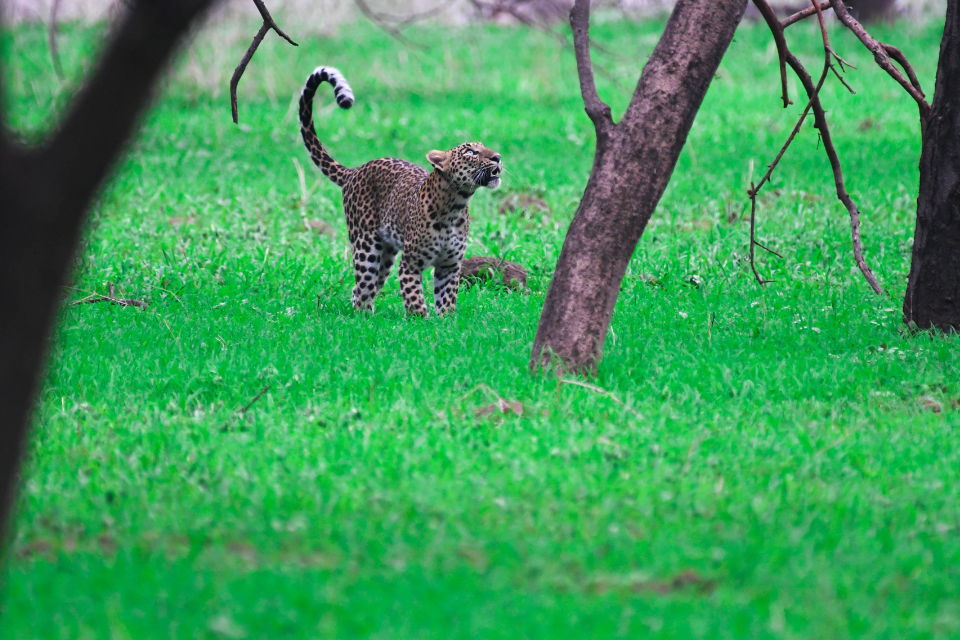
Located right in the heart of the city, Jhalana Leopard Reserve was India’s first dedicated leopard conservation site. While morning and evening drives are classics, the night safari offers a sensory shift. Using specialized, non-intrusive tracking lights and the skills of expert naturalists, this tour allows you to witness the “Golden Ghost” of the forest in its most natural, active state.
The Behavioral Shift
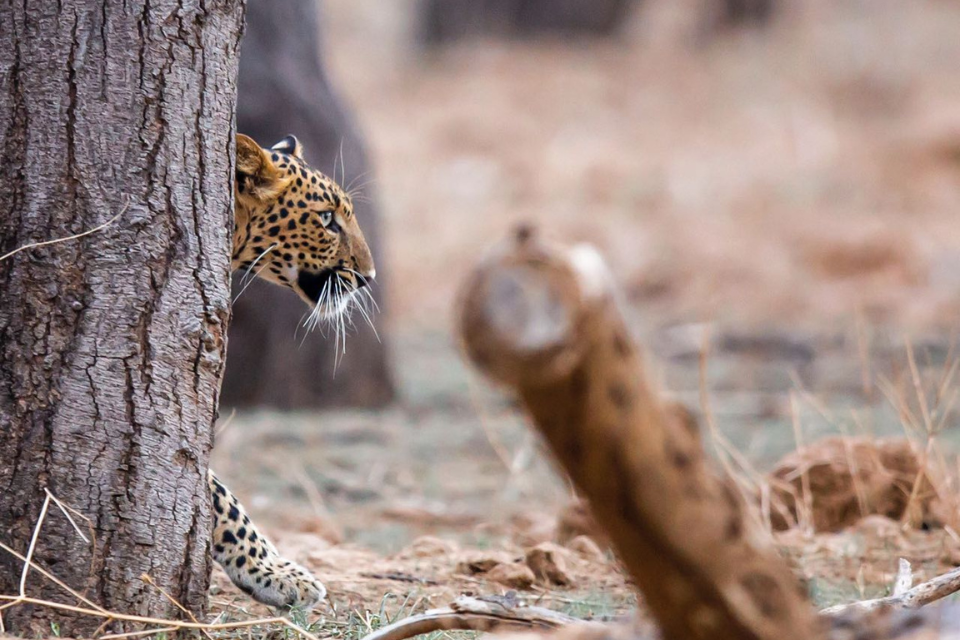
Leopards are naturally nocturnal hunters. During the day, they are often seen resting in the shade or on rocky outcrops to escape the heat. At night, the energy changes. You aren’t just looking for a leopard; you are watching a predator on the move—patrolling territory, calling for mates, or stalking prey.
Nocturnal Wildlife Jaipur: What Can You See?
While leopard sightings at night are the primary draw, the Jhalana forest is teeming with creatures that only emerge after the sun dips below the horizon. The ecosystem changes completely once the light fades.
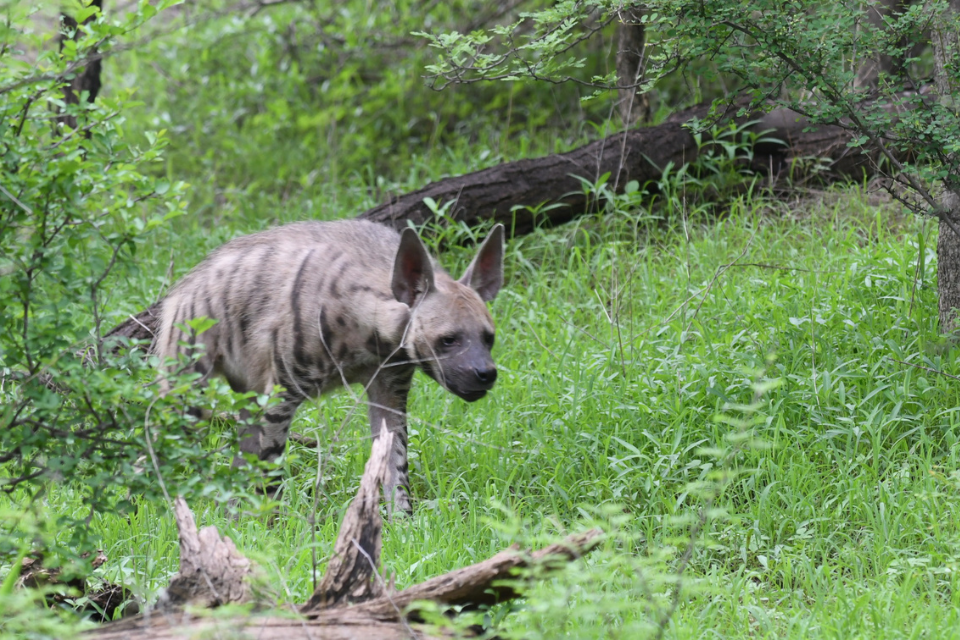
- The Striped Hyena: Often elusive during the day, hyenas are frequently spotted scavenging or patrolling their territory at night. Their eerie “laugh” is a staple sound of the Jhalana night.
- Desert Fox & Golden Jackal: These clever canines are highly active under the moonlight, and their glowing eyes are often the first thing you see in the brush.
- Indian Civets & Porcupines: The night safari is perhaps the best time to see these smaller, fascinating mammals that are nearly impossible to find during the day.
- The Jungle Cat: Smaller than the leopard but equally fierce, seeing a jungle cat on the hunt is a rare treat for wildlife enthusiasts.
- Owls and Nightjars: For birders, the night safari Jhalana provides a chance to see the Indian Eagle-Owl and various species of nightjars in flight.
The 2026 Verdict: Is the Adventure Worth It?
The popularity of Jhalana has surged recently, making night safari booking Rajasthan a competitive task. To decide if it’s right for you, consider these factors:
The Sighting Success Rate
Leopards in Jhalana are unusually comfortable with vehicles. In 2026, with improved conservation efforts and restricted vehicle counts, the population has remained healthy. While no wildlife sighting is ever guaranteed, the night shift often provides more “action” compared to the “sleepy” leopards seen during morning hours.
Atmosphere and Experience
There is a profound silence in the Jhalana forest at night that you simply don’t get during the day. The city lights of Jaipur are visible in the distance from certain high points, creating a surreal contrast between modern urban life and the raw, ancient wild.
Jhalana Night Tour Cost & Booking Guide
Planning a night safari booking Rajasthan requires advance preparation. In 2026, prices have stabilized, but the demand for night slots—which are fewer than day slots—remains incredibly high.
Estimated Costs for 2026
| Category | Estimated Price (Per Person) | Full Gypsy (Up to 6 People) |
| Indian Nationals | ₹1,200 – ₹1,500 | ₹7,000 – ₹8,500 |
| Foreign Nationals | ₹2,500 – ₹3,000 | ₹12,000 – ₹15,000 |
Note: Costs include permit fees, vehicle charges, and guide fees. Prices may vary slightly based on seasonal demand.
How to Secure Your Slot
- Official Portal: Always use the Rajasthan Forest Department’s official booking site or a verified local travel partner.
- Timing: Night safaris typically run in two slots between 7:00 PM and 11:00 PM.
- Advance Booking: It is highly recommended to book at least 45 days in advance for weekends and holidays.
Practical Insights for Your Night Adventure
To make the most of your night safari Jhalana experience, keep these professional tips in mind:
- Layer Up: Even in the summer, the open-top Gypsies can feel breezy at night. In winter (November to February), it is bitterly cold due to the open forest air. Wear heavy layers and a windcheater.
- Photography Gear: Night photography is challenging. You will need a camera with high ISO capabilities and a “fast” lens (f/2.8 or wider).
- No Flash Photography: This is strictly prohibited to protect the animals’ vision. The guides use a special dimmed spotlight to help you see; your camera must work with that light.
- Stay Silent: Nocturnal animals have incredible hearing. Keep your voice to a whispered tone to avoid scaring away a leopard before it crosses the road.
Comparison: Day Safari vs. Night Safari
| Feature | Day Safari | Night Safari |
| Primary Goal | Sunbathing leopards, landscapes. | Hunting behavior, rare nocturnal mammals. |
| Photography | Excellent natural light. | High difficulty; requires pro equipment. |
| Temperature | Can be very hot (up to 45°C). | Cool, crisp, and comfortable. |
| Crowd Level | Moderate to High. | Exclusive and quiet. |
Maximizing the Experience: The Double Safari
A popular strategy in 2026 is the “Double Safari.” Book the last evening slot (ending at sunset) and follow it immediately with the first night slot. This allows you to witness the forest’s transition—the “changing of the guard”—as the diurnal animals head to sleep and the predators wake up.
Conclusion: The Final Takeaway
Is a night safari in Jhalana worth it in 2026? Absolutely. While the morning drives offer the best light for Instagram photos, the night safari offers the best “story.” It is one of the few places in the world where you can sit in an open vehicle and watch a wild leopard navigate the shadows with the lights of a major city twinkling in the background.
If you are looking for Jaipur adventure activities that go beyond the forts and palaces, the night safari is a must. It is raw, thrilling, and a powerful reminder of the wildlife that thrives just outside our doorstep.
Ready to track the spots? Don’t wait—secure your night safari booking Rajasthan today and prepare for a moonlit encounter with the kings of the Aravallis!
FAQs
1. Are leopard sightings guaranteed during the night safari?
No wildlife sighting can be 100% guaranteed. However, Jhalana has one of the highest leopard densities in the world, making leopard sightings at night very frequent.
2. Is it safe to be in an open Gypsy at night?
Yes. The leopards of Jhalana are well-habituated to the presence of vehicles. As long as you stay inside the Gypsy and follow your guide’s instructions, it is perfectly safe.
3. What is the Jhalana night tour cost for solo travelers?
Solo travelers usually have to pay for a full Gypsy or wait to join a shared group, which can cost between ₹1,200 and ₹1,500 depending on the current forest department rates.
4. Can I use my phone camera for photos at night?
Modern smartphones with “Night Mode” can take decent photos of stationary animals, but for moving leopards, a professional DSLR or Mirrorless camera is far better.
5. What is the best season for the night safari?
While available year-round, October to March offers the most pleasant weather. April to June is hot, but sightings are high as animals frequent water holes at night.
6. How long does the night safari last?
A typical session lasts approximately 2.5 to 3 hours.
7. Is there a difference between Jhalana and Amagarh night safaris?
Both offer excellent nocturnal wildlife Jaipur experiences. Amagarh is newer and sometimes less crowded, while Jhalana is the classic choice with more established tracking routes.