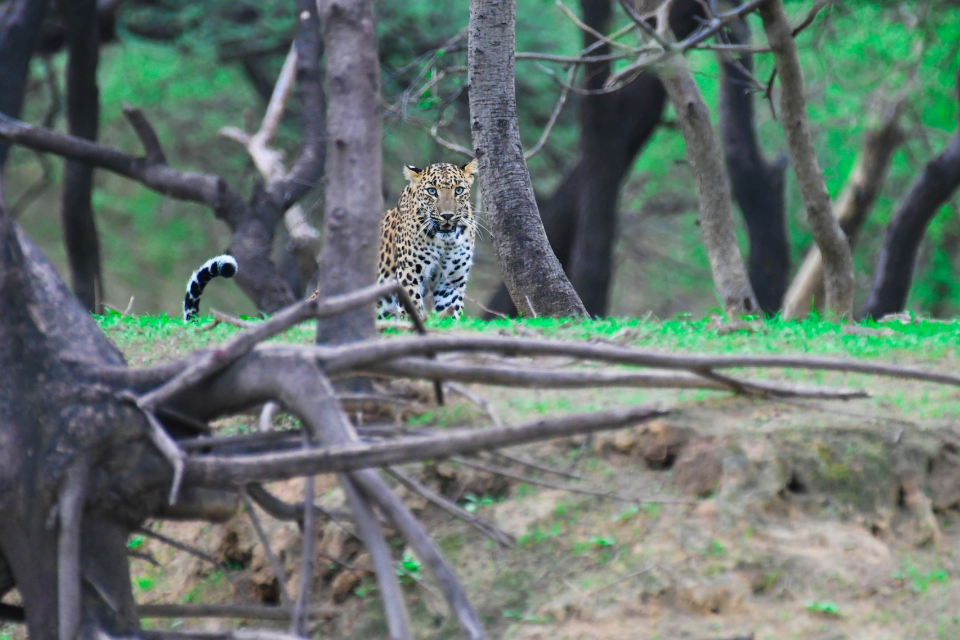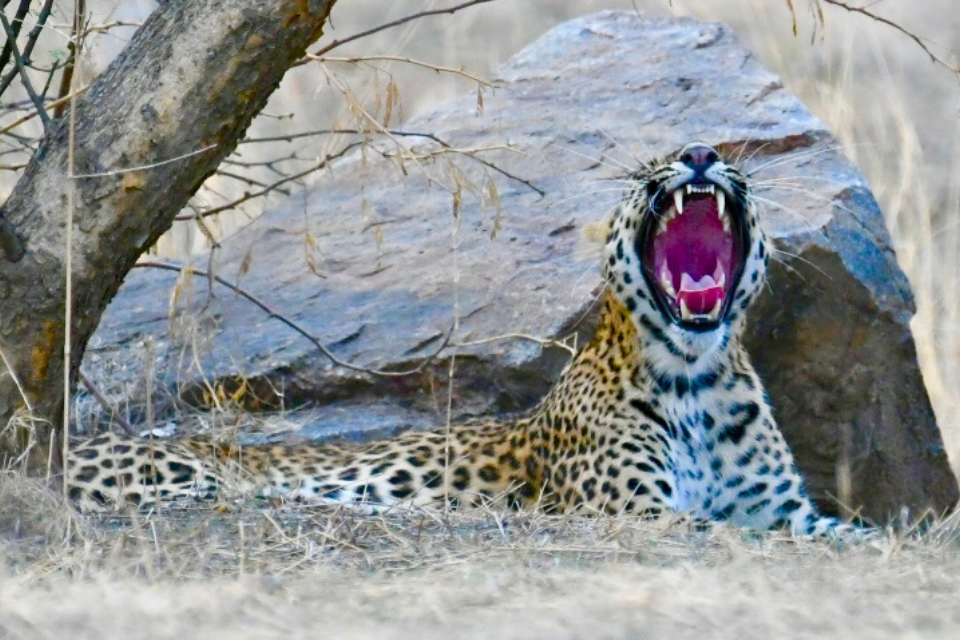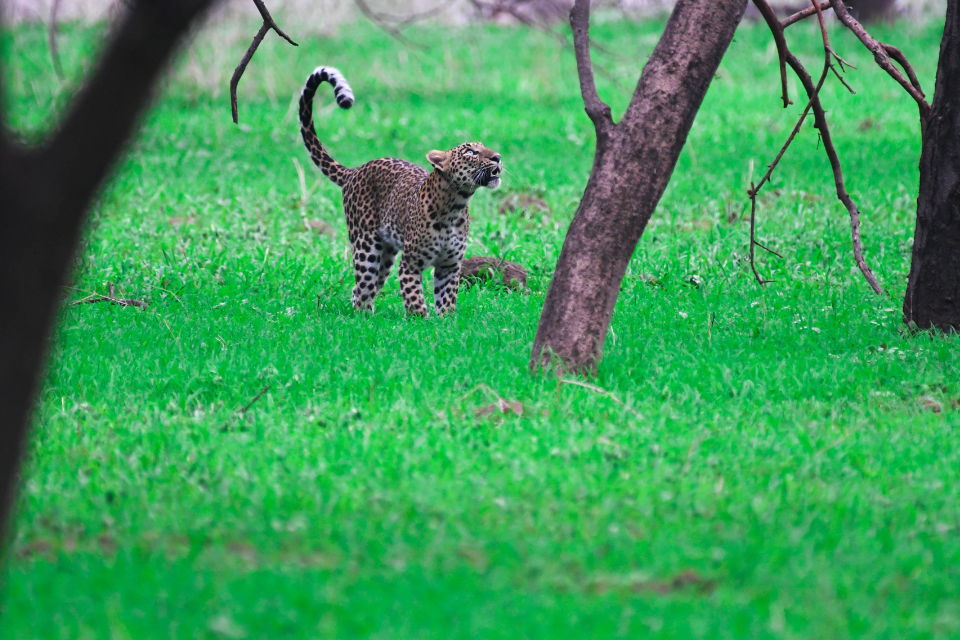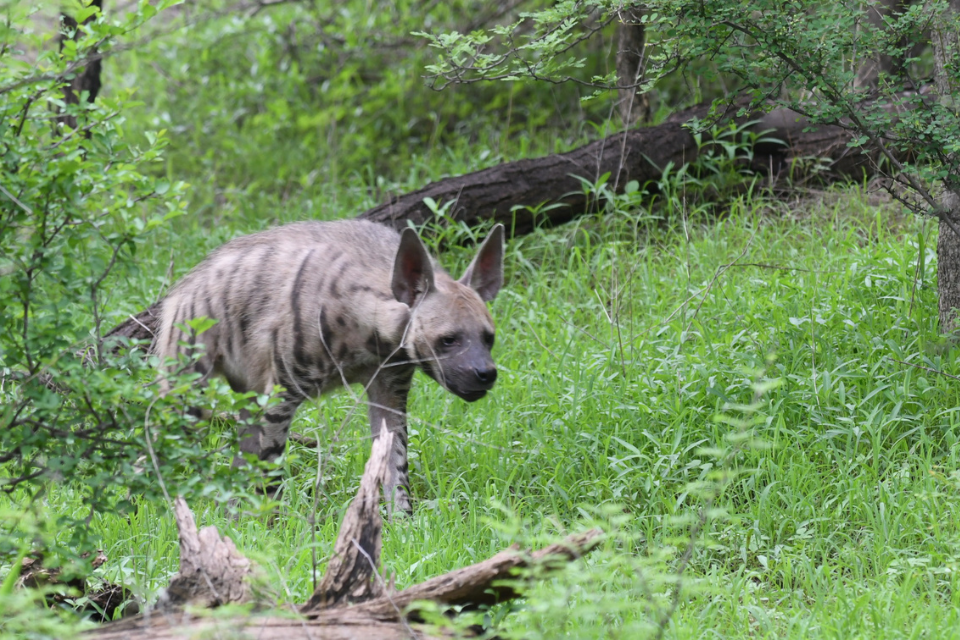
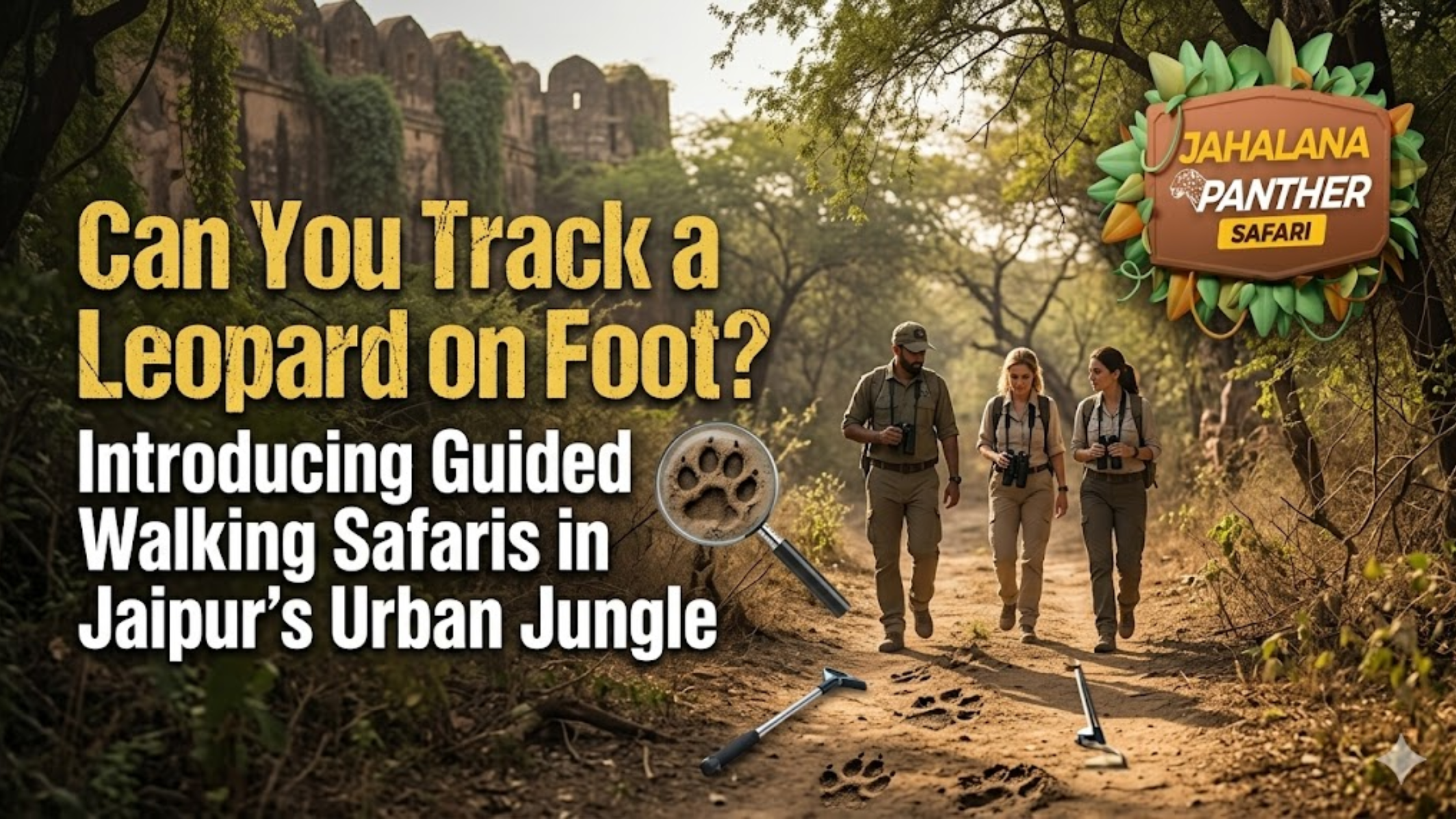
Jaipur, the “Pink City,” is famous for its rose-hued forts and royal heritage. But in 2026, a new kind of adrenaline is pulsing through the Aravalli hills. While most travelers view the wild from the back of a 4×4 Gypsy, a select group of adventurers is asking a bolder question: Can you track a leopard on foot?
The answer is a thrilling “Yes”—but only with the right expertise. Welcome to the world of guided nature walks Rajasthan, where the boundary between the city and the wild disappears. In the urban jungle safari of Jaipur, tracking a leopard on foot is the ultimate masterclass in mindfulness and ancient forest lore.
The Myth vs. Reality: Walking with Predators
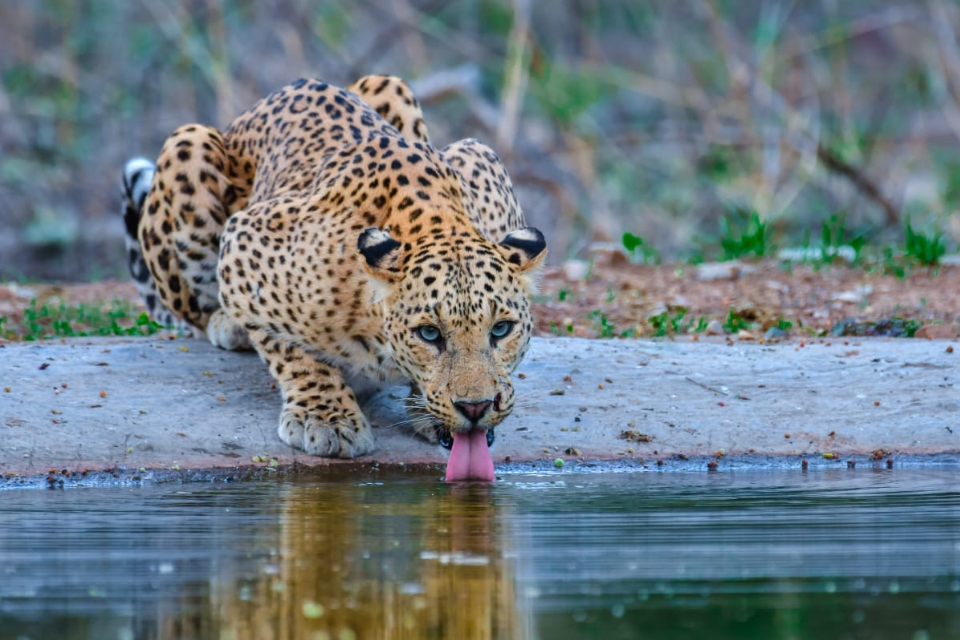
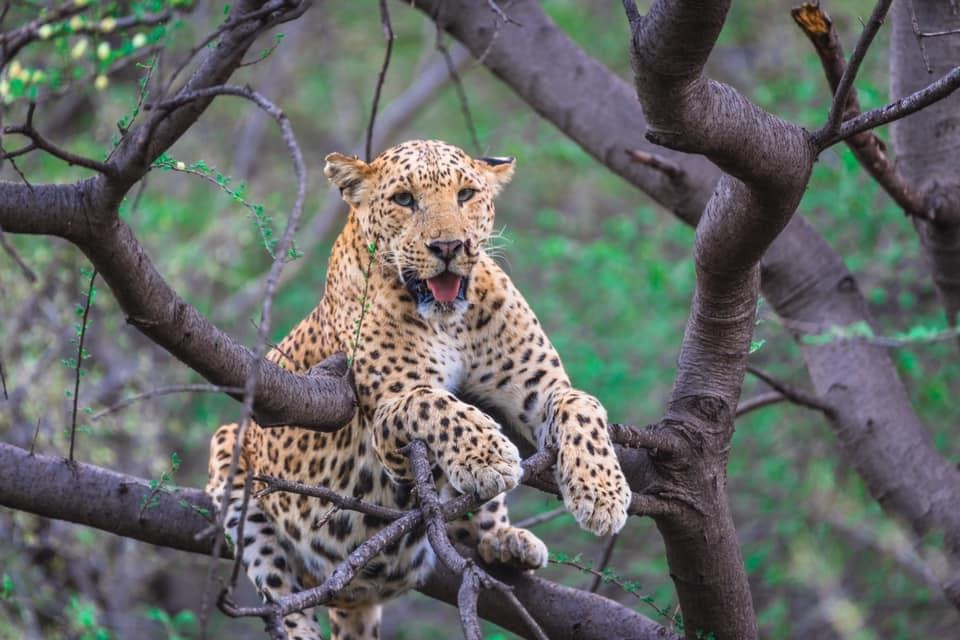
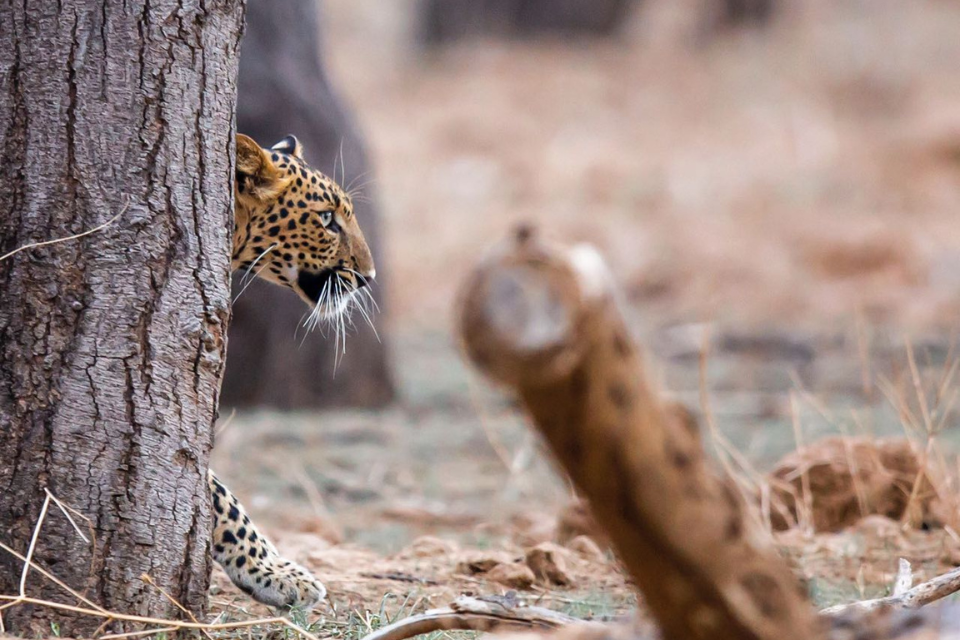
For decades, the idea of walking in a leopard reserve was considered impossible. Leopards are the “Ghosts of the Forest”—solitary, camouflaged, and apex predators. However, in 2026, specialized walking safari Jaipur programs have emerged, not to “hunt” or “harass,” but to observe the subtle language of the wilderness. While many travelers still prefer the traditional jhalana panther safari in a 4×4 Jeep, the walking experience offers a deeper, more visceral connection to the land that a vehicle simply cannot provide.
Is it Safe?
Tracking a leopard on foot isn’t a stroll in a park; it is a controlled, high-senses experience. Guided by master trackers (often from the nomadic Pardhi or Meena communities), you learn that safety in the jungle comes from knowledge, not weapons.
- Distancing: You never “approach” a leopard. You track its signs.
- Group Dynamics: Walks are conducted in small, silent groups to minimize impact.
- Expertise: Naturalists use “Audio-Triangulation”—listening to the forest’s alarm calls—to ensure you are never caught off guard.
The Art of Leopard Tracking India: Reading the “Dust Diary”
When you are on a walking safari Jaipur, your eyes shift from the horizon to the ground. Expert trackers refer to the sandy paths of the Aravallis as the “Dust Diary.”
Reading the Signs:
- Pugmarks: A fresh pugmark has sharp, crisp edges. If you see wind-blown dust inside the print, the leopard passed hours ago. If the edges are crumbling, the cat is likely nearby.
- Scrapes: Leopards use their hind legs to scrape the earth, leaving scent markers to define their territory. Finding a fresh scrape is a clear signal: You are in his home now.
- Kill Sites: A lingering musk-like smell or a cluster of vultures in the trees often indicates a “kill” hidden in a nearby thicket.
The “Jungle Telegraph”: Listening to the Alarm Calls
In an urban jungle safari, your ears become your most valuable tool. The forest is never truly silent; it is constantly “talking” about the leopard’s movements.
- The Langur’s Bark: A guttural, sharp “Khok-Khok” from a Grey Langur is the most reliable leopard alert.
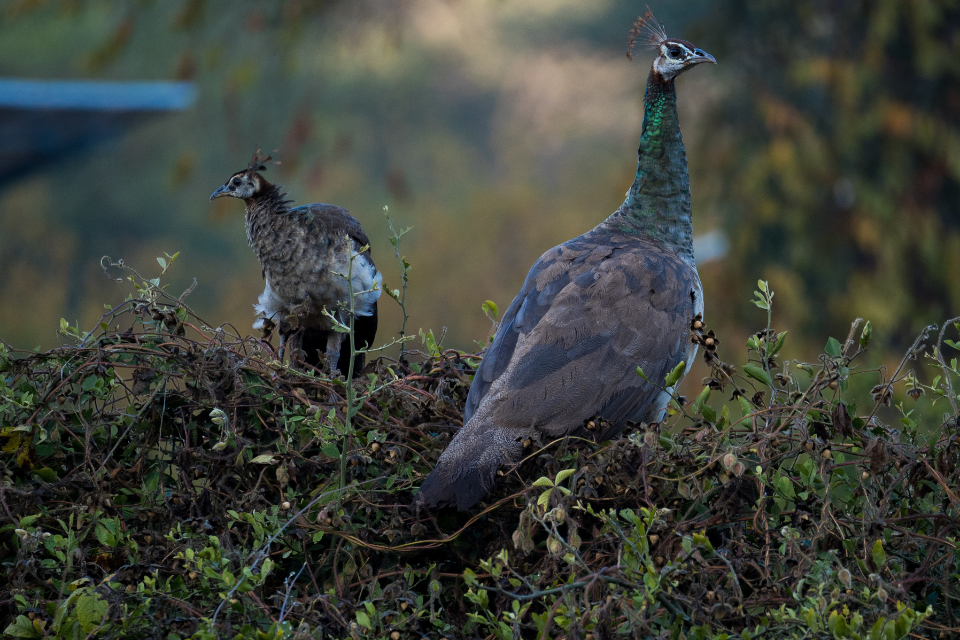
- The Peacock’s Scream: Peafowls are the sentinels of the Aravallis. Their rhythmic, metallic “Pee-awk” call usually signals a predator in motion.
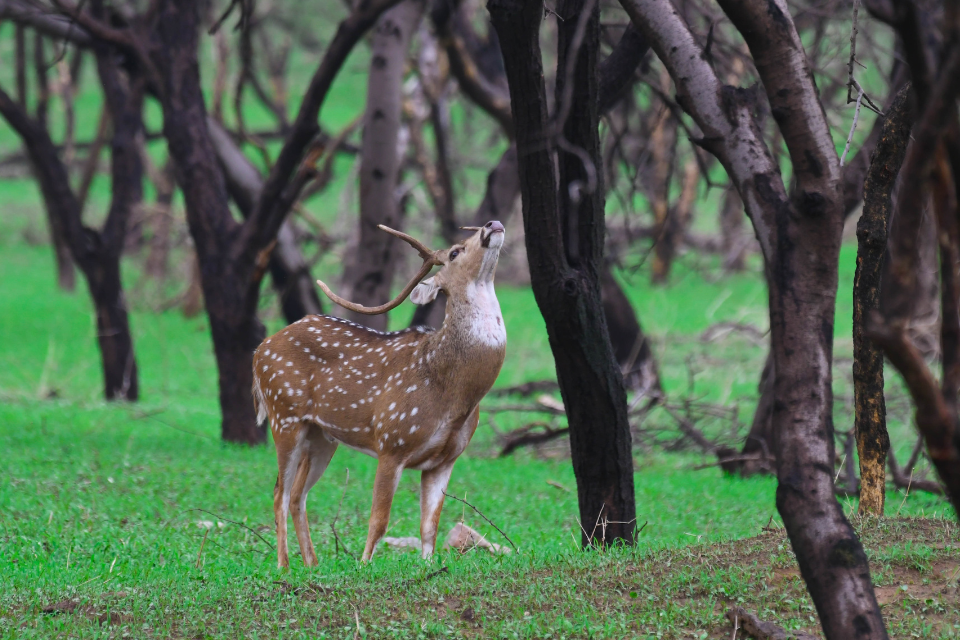
- The Silence of the Chital: When the Spotted Deer freeze and stare in one direction, the leopard is likely lurking in the shadows.
Why Jaipur is the Global Hub for Urban Jungle Safaris
Jaipur is one of the few places on Earth where high-density leopard populations live on the fringes of a million-plus city. This unique “Co-existence” makes guided nature walks Rajasthan a world-class experience.
Key Locations:
- Jhalana Peripheral Trails: Safe, guided walking zones on the edge of the reserve.
- Amagarh Buffer Zones: Steep, rocky terrains perfect for high-ground vantage tracking.
- Nahargarh Biological Park: Offers educational nature trails focused on flora and smaller fauna.
Practical Insights: Preparing for Your Walking Safari
If you’re ready to step out of the Jeep and onto the trail, here is how to prepare:
- What to Wear: Stick to Earth Tones (Khaki, Olive, Grey). Bright colors act as a “visual alarm” for wildlife.
- Footwear: Sturdy, closed-toe hiking boots are mandatory. The Aravalli terrain is thorny and rocky.
- Gear: * Polarized Binoculars: Essential for spotting camouflaged leopards on rocky ledges.
- Camera: A 100-400mm lens is the sweet spot.
- Ethics: Never feed animals or throw trash. In 2026, “Leave No Trace” is the golden rule of walking safari Jaipur.
Comparison: Jeep Safari vs. Walking Safari
| Feature | 4×4 Jeep Safari | Guided Walking Safari |
| Perspective | High-speed, covers more ground | Slow, focuses on micro-details |
| Adrenaline | High (Visual sightings) | Deep (The thrill of the hunt/signs) |
| Focus | Photography of animals | Education and tracking lore |
| Physical Effort | Minimal | Moderate (2-3 hours of walking) |
The Role of Community: Walking with the Pardhis
In 2026, the most authentic leopard tracking India experiences are led by the Pardhi community. Once hunters, they are now the protectors of the forest.
- Ancient Wisdom: They can identify the age of a leopard just by the smell of its spray.
- Conservation: By booking a walking tour with them, you directly support their transition into sustainable eco-tourism.
Frequently Asked Questions (FAQs)
1. Is it legal to walk inside Jhalana Leopard Reserve?
Walking is strictly prohibited inside the core safari zones of Jhalana. However, specialized walking safari Jaipur programs operate in designated buffer zones and peripheral forest areas with official forest department permissions.
2. What is the minimum age for a walking safari?
Most operators require participants to be at least 12 years old, as a certain level of discipline and silence is required on the trail.
3. Will I actually see a leopard on foot?
Visual sightings on foot are rare and, for safety reasons, kept at a distance. The focus of leopard tracking India on foot is to learn the art of tracking—pugmarks, alarm calls, and scent—rather than forced encounters.
4. How long does a typical walking safari last?
Usually, these guided nature walks Rajasthan last for 2 to 3 hours, starting at the crack of dawn (around 6:00 AM) to catch the freshest tracks.
5. Can I go tracking without a guide?
Absolutely not. It is extremely dangerous and illegal to enter these forest zones without a certified naturalist and forest permit.
6. Do leopards attack people on walking safaris?
In a guided environment, attacks are virtually unheard of. Leopards are shy and will almost always move away if they detect human presence. The guides are trained to read the animal’s behavior to maintain a safe distance.
7. What is the best season for walking safaris in Jaipur?
October to March is ideal. The weather is cool, and the dry winter air makes alarm calls carry further, making tracking much more effective.
8. How do I book a guided nature walk in Jaipur?
In 2026, you can book through the SSO Rajasthan portal under the “Eco-Tourism” section or via authorized eco-travel boutique agencies in Malviya Nagar, Jaipur.
Conclusion: A Lesson in Humility
Can you track a leopard on foot? Yes. But more importantly, the experience teaches you how to see the world. An urban jungle safari in Jaipur isn’t about the “kill” or the “sighting”; it’s about the silent conversation between the earth and your feet.
By choosing guided nature walks Rajasthan, you aren’t just a tourist—you are a student of the wild. You leave the forest with a deeper respect for the “Ghost of the Aravallis” and a renewed sense of peace that only the desert silence can provide.