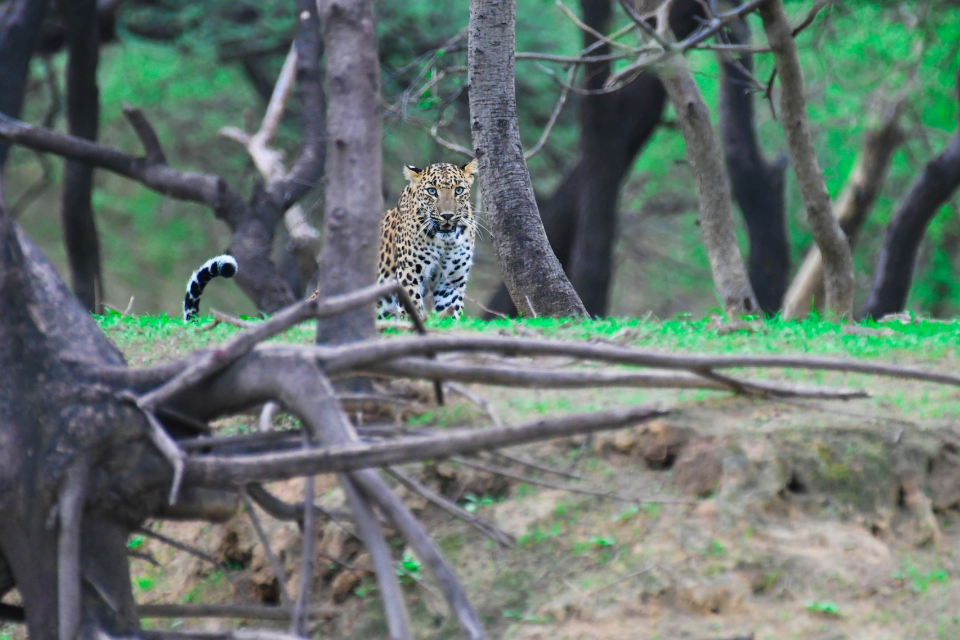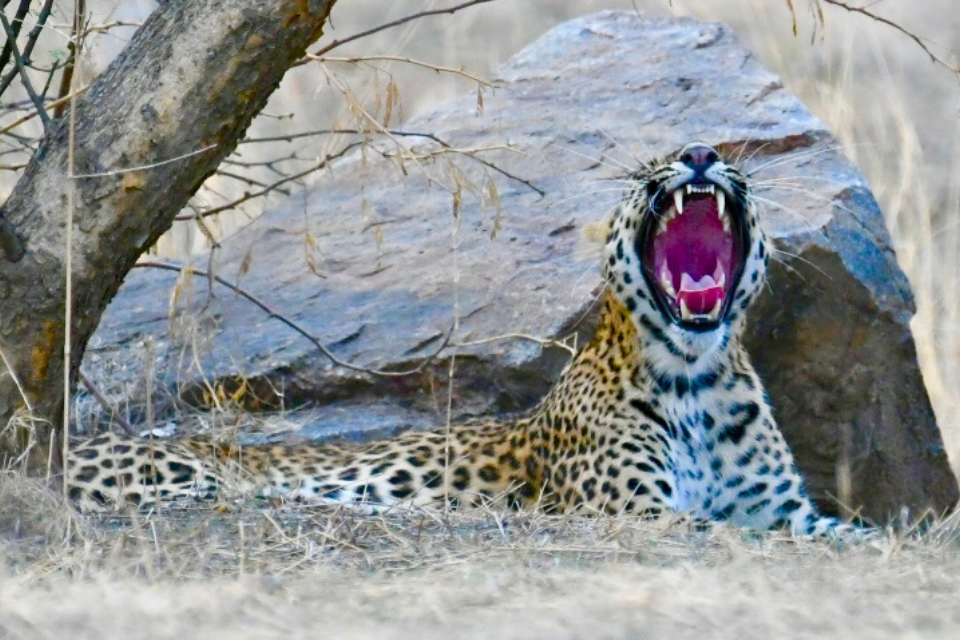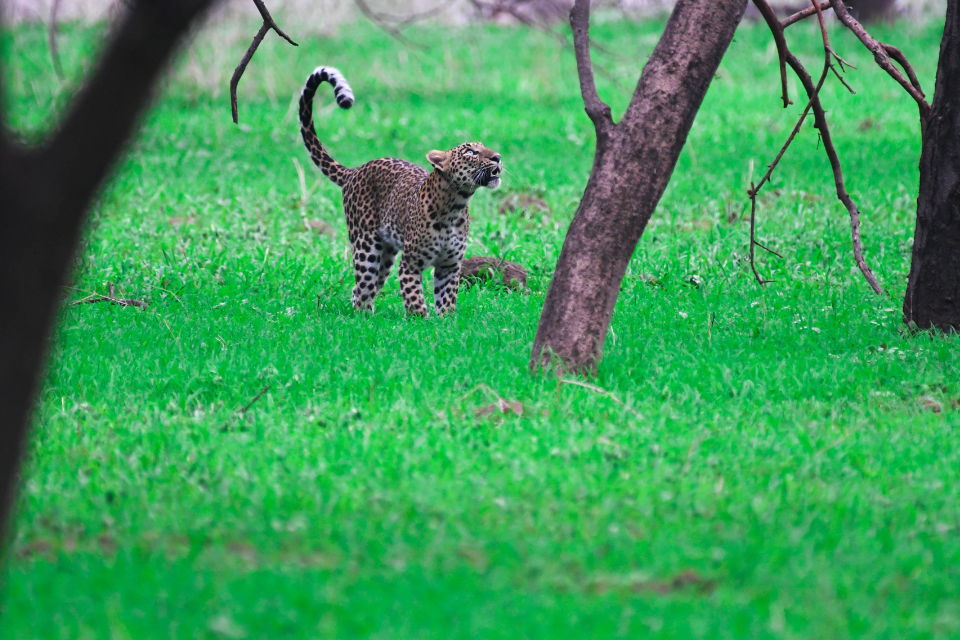
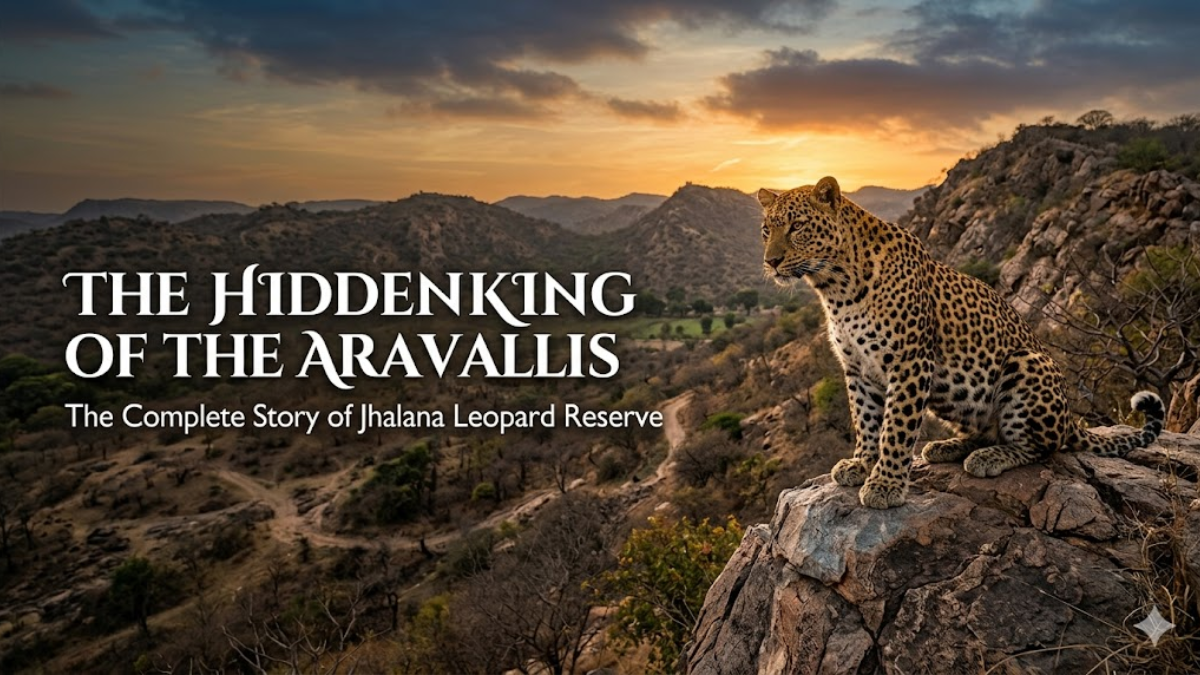
When the name Jaipur is mentioned, the mind instantly conjures up images of terracotta-pink walls, grand palaces, the rhythmic beats of Ghoomar, and the royal legacy of majestic forts. However, right in the center of this bustling urban sprawl and historic landscape, a thrilling ecological secret is thriving. This is the Jhalana Leopard Conservation Reserve (commonly known as Jhalana Panther Safari).
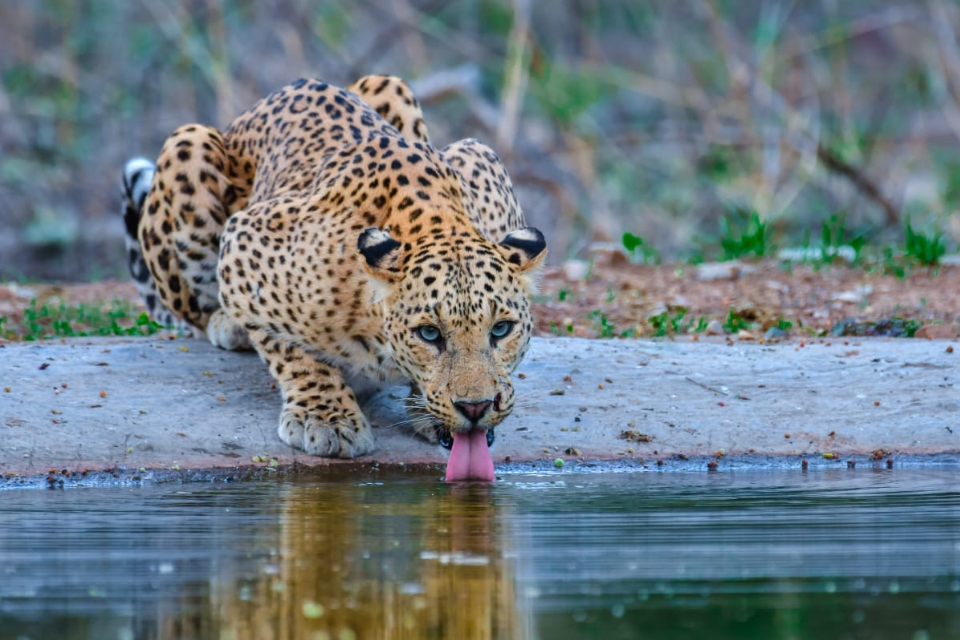
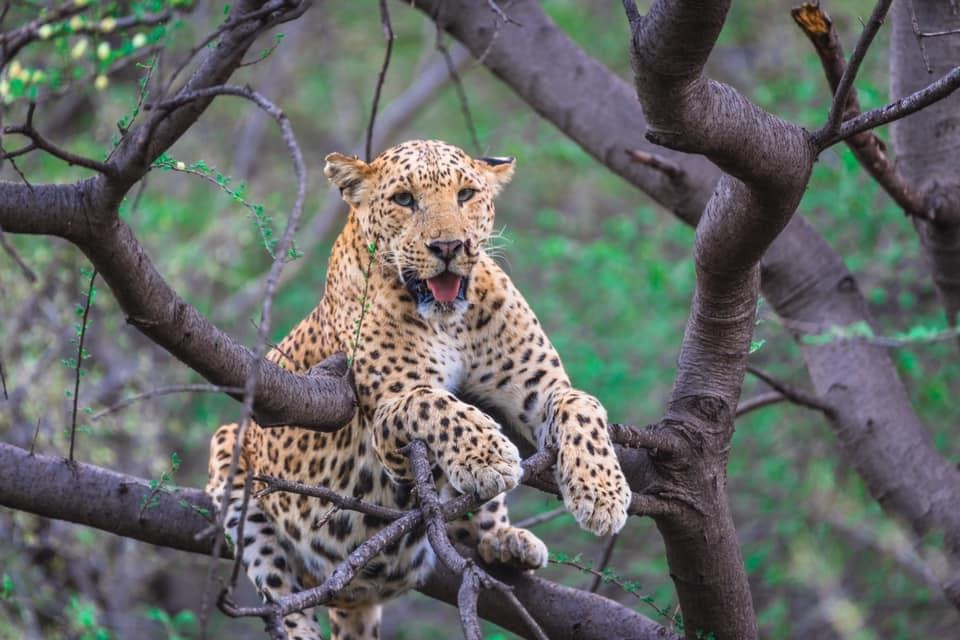
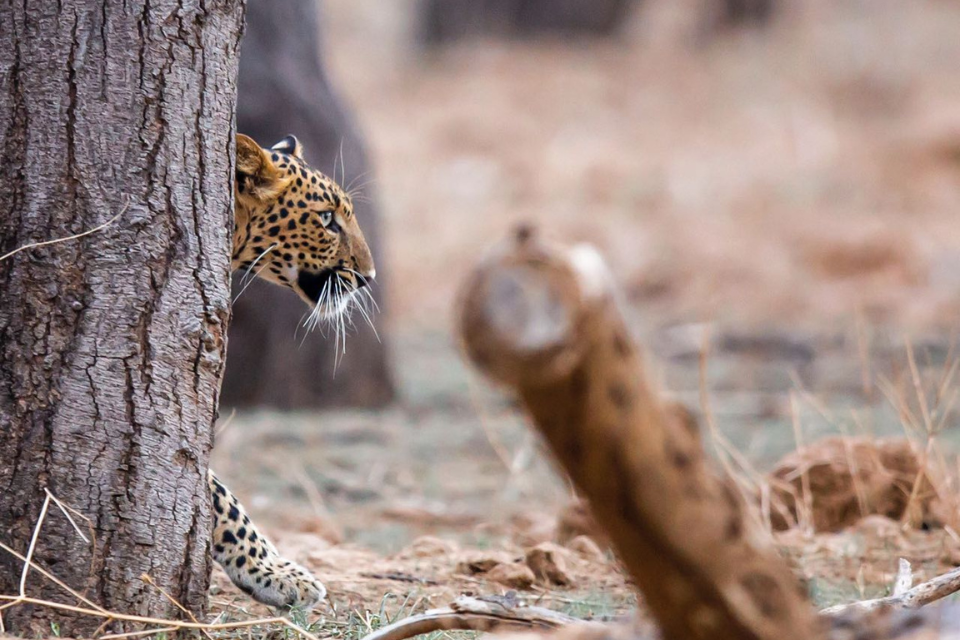
Spanning a highly concentrated area of just about $20 \text{ to } 23 \text{ square kilometers}$, Jhalana holds the proud distinction of being India’s very first protected forest block dedicated exclusively to the conservation of leopards (Panthera pardus). While leopards across most global wildlife parks are notorious for being shy, nocturnal, and incredibly elusive, Jhalana turns this definition on its head. The leopards here are bold, confident, and walk majestically right past tourist gypsies.
This comprehensive guide takes you deep into the historical archives, rugged terrains, and unique animal behaviors of Jhalana to help you plan an unforgettable wilderness adventure.
The Historical Journey: From Royal Hunting Grounds to a Conservation Miracle
The history of Jhalana is as old and dramatic as the Pink City itself. Long before cameras started clicking here, the valleys echoed with the sound of royal gunfire.
The Private Preserve of Royalty
During the 19th and early 20th centuries, the dense forest block of Jhalana served as the private hunting grounds (Shikar) for the Maharajas of Jaipur and state nobles. Surrounded by the natural boundary of the Aravalli hills, the forest was teeming with wild boars, spotted deer, blue bulls, and tigers. The rulers frequently hosted foreign dignitaries, British Viceroys, and fellow royals here to showcase the thrill of the hunt.
The Historic ‘Shikar Audhi’
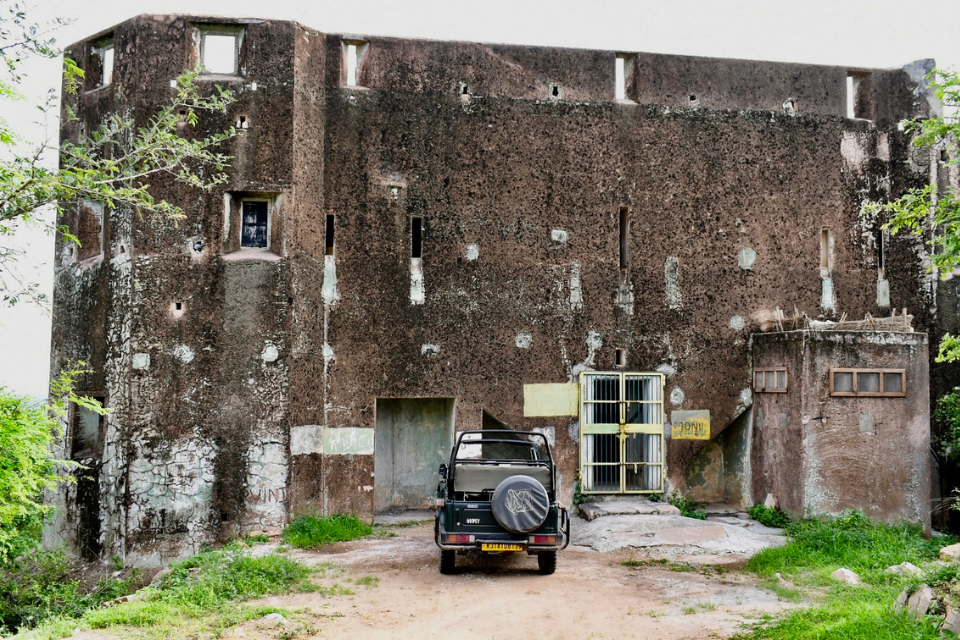
Standing deep in the heart of the reserve is a double-storied stone structure known as the ‘Shikar Audhi’. This was a royal watchtower and hunting lodge. Rulers would sit on the upper deck of this fort-like post, waiting for wild animals to visit the natural waterhole below before taking aim.
The darkest page in Jhalana’s history was written in 1948, when the very last wild tiger of this forest was shot down. Following this, apex tigers disappeared from the ecosystem entirely, and any surviving cubs were shifted to the Jaipur Zoo.
Devastation and Illegal Mining
With the tigers gone, the forest faced a severe existential threat. During the 1970s and 1980s, large-scale commercial stone quarrying and illegal sand mining began stripping the Aravalli hills. Dynamite blasts shattered the silence, and the local ecosystem was brought to the brink of absolute collapse.
The Supreme Court’s Intervention and Nature’s Rebirth
In the 1990s, the Supreme Court of India stepped in with a historic verdict, banning all mining and industrial activities across the sensitive Aravalli range. The Rajasthan Forest Department took strict control of the degraded land. With human interference removed, the forest began to heal itself.
In the complete absence of larger predators like tigers or lions, the highly adaptable leopard stepped up to claim the throne. Because there was no apex competitor to steal their prey or threaten their cubs, the leopard population flourished in a secure, undisturbed environment.
2017: A Landmark Evolution
Recognizing this unique high-density habitat, the Government of Rajasthan officially declared Jhalana as ‘India’s First Leopard Conservation Reserve’ in May 2017. By May 2018, it opened its gates to organized eco-tourism, changing the landscape of wildlife travel in India.
Geography & Urban Oasis Ecosystem
The spatial geography of Jhalana is nothing short of a miracle. This is not a remote jungle located hundreds of miles away from civilization; it is completely bordered by Jaipur’s heavily populated areas like Malviya Nagar, Bajaj Nagar, and Kanakpura. On one side of a concrete boundary wall lie multi-story corporate parks, shopping malls, and heavy city traffic; on the other side lies the silence of the ancient Aravallis.
The Rugged Terrain (Topography)
Jhalana sits over the foothills of the Aravalli Range, one of the oldest mountain systems in the world. The ground terrain is characterized by dry, rocky outcrops, sharp desert cliffs, narrow sandy valleys, and flat scrub plains. During the short monsoon season, rainwater rushing down the hills creates seasonal streams that quickly dry out by winter.
Climate and Seasonal Shifts
The reserve features a dry deciduous and thorn scrub forest ecosystem. The landscape changes colors dramatically across three distinct seasons:
| Season | Months | Forest Landscape | Wildlife Dynamics |
| Summer | April to June | Completely dry, leafless canopy, temperatures up to $45^{\circ}\text{C}$. | High visibility; leopards are easily spotted around waterholes even at noon. |
| Monsoon | July to September | Lush green cover, filled streams, highly scenic environment. | Tracking is trickier due to dense foliage, but landscape photography is stunning. |
| Winter | October to March | Mild brown and green hues, pleasant weather down to $5^{\circ}\text{C}$. | Leopards love to spend hours basking in the soft sun on open rocks. |
The Kings of Jhalana: Understanding Their Unique Behavior
In traditional national parks, catching a glimpse of a leopard requires immense luck. They are evolutionary masters of camouflage, hunting under the cover of night and resting high up on hidden tree branches during the day. However, Jhalana’s leopards have developed an extraordinary diurnal behavior (active during the day).
Unafraid and Custom-Fit to Safari Gypsies
This fascinating behavioral shift is driven by two main factors:
-
Lack of Competition: Since there are no tigers or lions to bully them, Jhalana’s leopards do not have to drag heavy carcasses up into trees. They hunt comfortably on the ground and rest openly in the valleys, significantly boosting their confidence.
-
Urban Adaptation: Living on the edge of a major metropolis for generations has naturally desensitized these cats to human sounds. They do not view a slow-moving safari gypsy as a threat. It is common for a leopard here to walk casually right alongside a tourist vehicle without altering its pace.
Population Density and Famous Felines
Today, over 40 wild leopards live within this compact reserve, making it one of the densest leopard habitats globally. Local naturalists and trackers have come to recognize individual leopards by their distinct facial spot patterns:
-
Machli / Jalebi: A gorgeous, dominant female leopard known for her distinct markings and highly photogenic nature.
-
Rana: A legendary, massive male king who ruled a giant territory across Jhalana’s primary valleys for years.
-
Flora: A famous resident mother leopard is frequently seen teaching her young cubs how to navigate the rocky crags near the central water stations.
Biodiversity: The Thriving Food Web
While leopards are the undeniable headline act, Jhalana protects a surprisingly diverse array of wildlife that keeps the forest’s metabolic engine running smoothly.
Co-Predators and Smaller Carnivores
The food web includes several other fascinating hunters that share the territory:
-
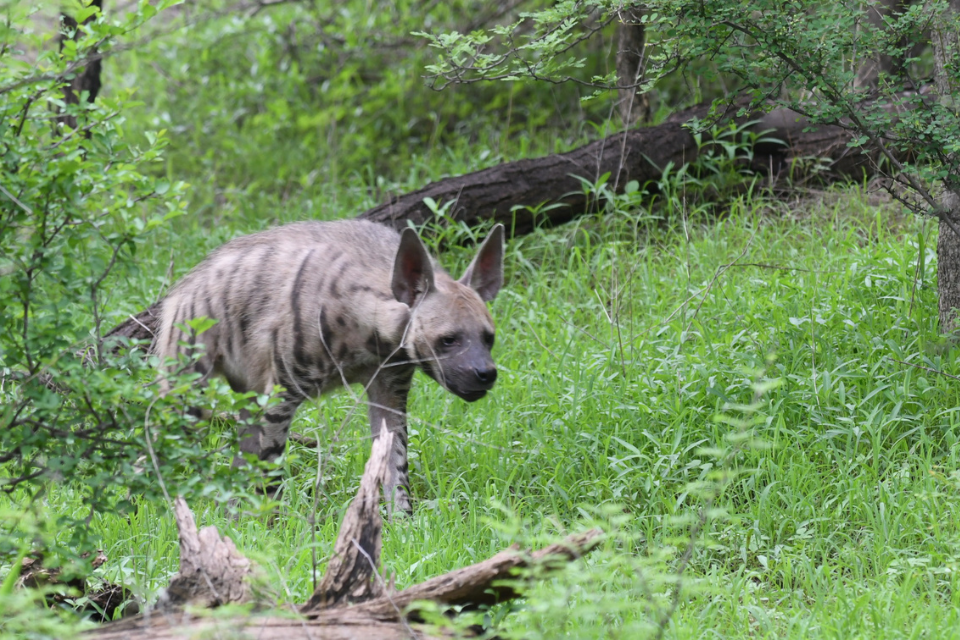
Striped Hyena: The second-largest carnivore in Jhalana. Hyenas here are surprisingly active and can often be seen scavenging leopard kills or trotting along sandy paths.
-
Jungle Cat & Desert Cat: Small, incredibly agile wild felines that keep the rodent and small bird populations in check.
-
Golden Jackals & Desert Foxes: Frequently found patrolling the open flat scrub patches in family packs.
-
Indian Civet & Grey Mongoose
The Prey Base (Herbivores)
To support forty top-tier predators, the reserve maintains a robust population of herbivores:
-
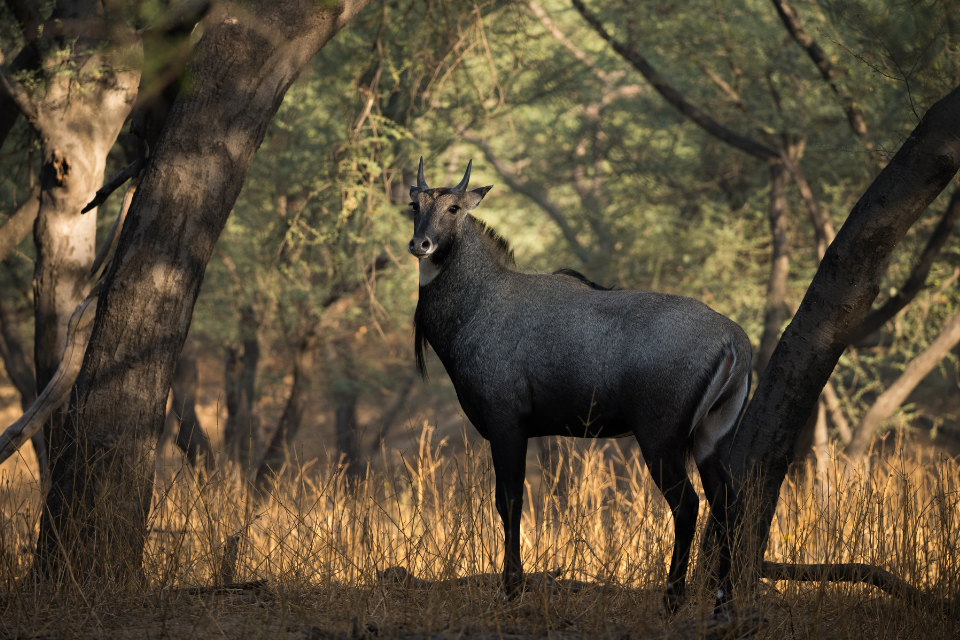
Nilgai (Blue Bull): Asia’s largest antelope. Due to their massive size, adult Nilgai are safe, but their calves are a steady food source for large male leopards.
-
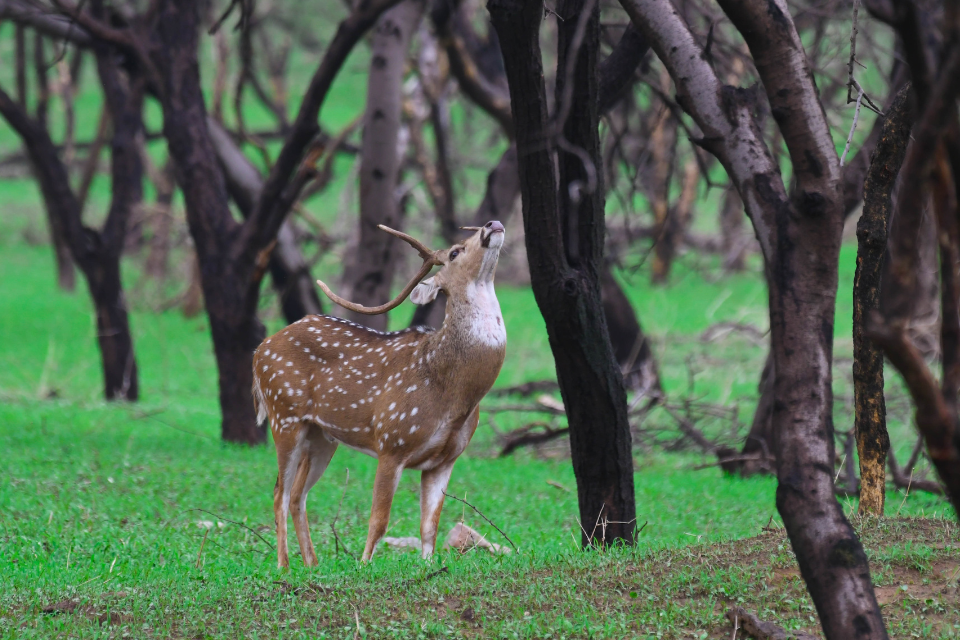
Chital (Spotted Deer): Beautifully dappled deer that serve as the primary prey base inside the valleys.
-
Wild Boars: Highly aggressive and powerful, presenting a high-energy, risky meal option for seasoned panthers.
-
Hanuman Langurs: These monkeys share an invaluable alarm network. The moment a langur spots a leopard moving through the brush, it emits a sharp, barking alarm call that warns the entire forest.
An Avian Paradise for Birdwatchers
With more than 150 species of birds, Jhalana is a prime birdwatching destination right inside the city limits.
-
Indian Pitta: A stunning jewel-toned bird featuring nine distinct colors, visiting the reserve during the monsoon breeding months.
-
Dusky Eagle-Owl: A magnificent, large nocturnal raptor often spotted roosting silently in old banyan trees.
-
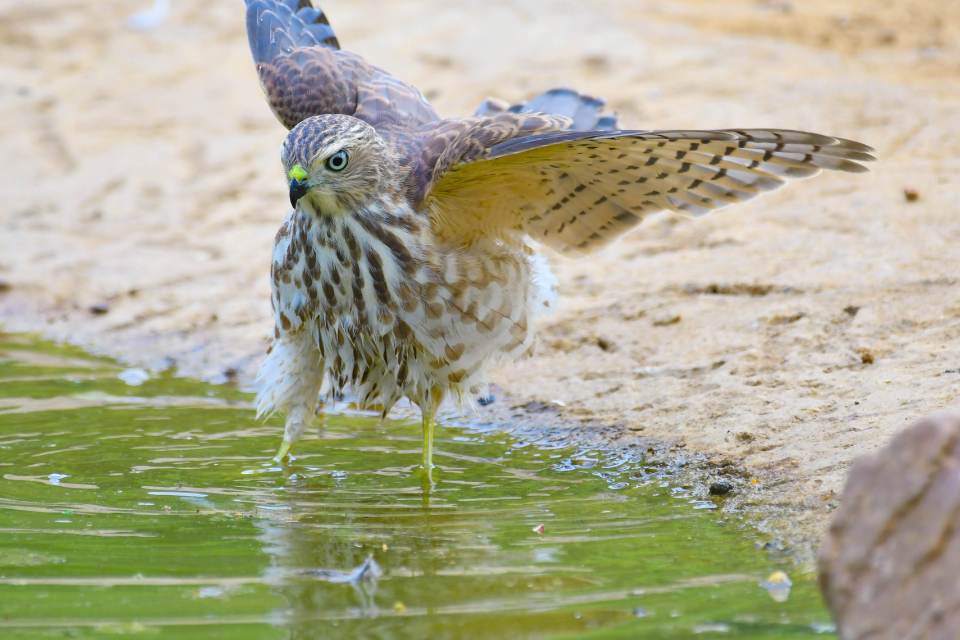
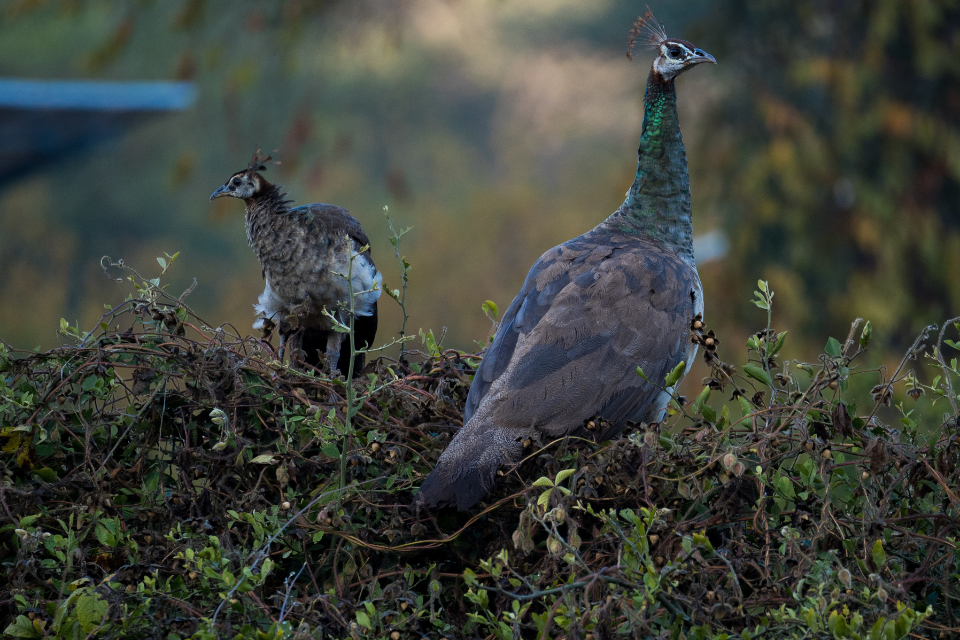
Other Key Species: Indian Peafowl (seen in massive numbers), Shikra hawks, Crested Serpent Eagles, Golden Orioles, and the vibrant Eurasian Roller.
The Flora: Green Infrastructure of the Hills
The vegetation of Jhalana looks harsh and thorny at first glance, but it is beautifully engineered to survive extreme desert heat while providing vital cover for wildlife.
1. Dhok (Anogeissus pendula)
The true anchor of the Aravalli ecosystem. Dhok trees cover nearly 70% of Jhalana’s hillsides. Their roots grip onto fractured rocks, stopping severe soil erosion. Their leaves dry to a dull grey-brown in summer but spring back into rich green foliage within 48 hours of the first monsoon rains, offering perfect cover for hiding deer.
2. Vilayati Babool (Prosopis juliflora)
An exotic, invasive species was introduced decades ago for fuel. While it restricts the growth of local grasses, it currently provides dense, low-lying thickets that wild boars and hyenas use as secure denning sites.
3. Khejri (Prosopis cineraria)
The state tree of Rajasthan is famously known as the ‘Life-giving tree of the desert’. Its nutrient-rich leaves are favored by langurs and deer, and its root system taps into water tables deep below the rocky surface.
4. Ker (Capparis decidua) & Ber (Ziziphus nummularia)
Leafless, thorny shrubs that thrive in sand. In peak summer, Ker bursts into bright pink-orange berries, providing a crucial food supply for local birds and primates when water is scarce.
Safari Manual: Rules, Timings & Booking Details
Because Jhalana is an environmentally sensitive zone, tourist entry is strictly regulated by the state forest department.
Vehicle Protocols
-
Safaris are conducted exclusively via registered open-top 4×4 Gypsies.
-
A single vehicle can accommodate a maximum of 6 passengers (excluding the driver and guide).
-
Private civilian cars, bikes, or large buses are strictly barred from entering the forest tracks to keep noise and air pollution minimal.
Safari Zones
The park is split into two major travel zones:
-
Zone 1 (Core Central): Features deep rocky ravines, historical hunting tracks, and major solar-powered water stations. Sighting chances here are exceptionally high. The historic Shikar Audhi is located in this zone.
-
Zone 2: Comprises flatter scrub terrains and winding foothill paths. This zone offers fantastic birdwatching and great opportunities to spot hyenas and foxes alongside leopards.
Seasonal Timings Shift
The reserve stays open throughout the year. However, gate timings change according to seasonal sunrise and sunset hours:
| Operational Months | Morning Shift | Evening Shift |
| April 1 to May 31 | 06:00 AM – 08:30 AM | 05:00 PM – 07:30 PM |
| June 1 to July 31 | 05:45 AM – 08:15 AM | 04:45 PM – 07:15 PM |
| August 1 to October 31 | 06:15 AM – 08:45 AM | 03:30 PM – 06:00 PM |
| November 1 to January 31 | 06:30 AM – 09:00 AM | 03:15 PM – 05:45 PM |
| February 1 to March 31 | 06:15 AM – 08:45 AM | 03:45 PM – 06:15 PM |
Fee Structure (Estimated Operational Costs)
Official tariffs are subject to government updates, but a standard estimate includes:
-
Indian Nationals (Shared Gypsy Seat): Approx. ₹1,250 – ₹1,500 per person.
-
Full Private Gypsy (Up to 6 Indians): Approx. ₹6,700 – ₹7,500.
-
Foreign Tourists (Per Seat): Approx. ₹2,200 – ₹2,800.
-
Note: The booking fee automatically includes your jungle entry permit, vehicle hire, and the mandatory government guide fees.
Booking Warning: Only a fixed number of gypsies are permitted per shift. Slots for weekend morning tracks fill up months in advance. Always secure your seat online via the official Rajasthan Single Sign-On (SSO) Portal or authorized wildlife tourism channels before arriving.
Conservation Challenges: The Urban Boundary
Managing a wildlife reserve wrapped tightly by a metropolitan city presents unique environmental challenges:
-
Human-Wildlife Interaction: Jhalana is secured by high perimeter walls, but leopards are exceptional climbers. Occasionally, during the night, a leopard might cross the wall into the surrounding institutional areas or roads in search of easy prey like stray dogs. Fortunately, the local communities respect wildlife, keeping conflict remarkably low.
-
Genetic Isolation: Because the forest is completely cut off from other major reserves (like Sarisika or Ranthambore) by highways and buildings, there is no natural wildlife corridor left. Over generations, this isolation can pose an inbreeding risk, which scientists are closely tracking.
-
Waste and Encroachment: Being near city lines means forest rangers must constantly monitor the walls to prevent urban plastic litter from drifting into the delicate wilderness tracks.
Smart Conservation Systems Put in Place
To secure the park’s future, the Rajasthan Forest Department and local eco-groups have deployed advanced conservation measures:
-
The Launch of Amagarh Reserve: To relieve tourist pressure on Jhalana, the nearby forest block of Amagarh was developed into Jaipur’s second leopard reserve, creating more protected space.
-
Solar-Powered Waterholes: Automated camera traps keep track of wildlife health 24/7. Additionally, solar pumps fill artificial waterholes daily during summer so animals never have to venture cityward for water.
Visitor Code of Conduct: Dos and Don’ts
To ensure your safety and respect the wild habitat, follow these simple rules:
-
Wear Earthy Tones: Dress in khaki, olive green, grey, or brown. Avoid bright reds, whites, or neon colors that can startle the animals.
-
Maintain Strict Silence: Leopards have incredibly sharp hearing. Loud talking or shouting can cause them to retreat into deep cover instantly.
-
Never Step Out of the Vehicle: Alighting from your gypsy during the safari is strictly forbidden and dangerous.
-
No Flash Photography: Turn off your camera’s flash completely to protect the animals’ eyes.
Conclusion: Why Jhalana is a Must-Visit
Jhalana Leopard Reserve proves that with smart management and strict boundaries, pristine wilderness and major cities can coexist beautifully. It offers an incredible, high-probability big cat experience that fits perfectly into a busy travel itinerary.
You can spend your morning admiring the intricate palaces of Jaipur and your afternoon tracking wild leopards across ancient rocky cliffs—making the Pink City an unmatched destination for heritage and wildlife lovers alike.