The Ghost in the Metro: Why the Urban Leopard Safari is 2026’s Ultimate Thrill
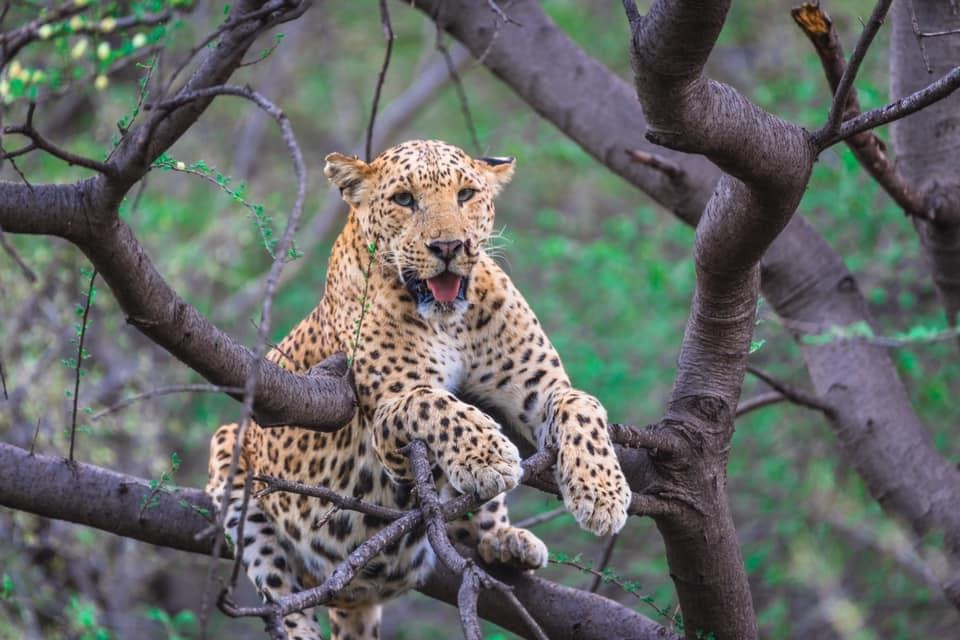
In the heart of Jaipur, where the rhythmic clanging of temple bells meets the hum of a rising metropolis, a silent shadow moves along the quartzite ridges of the Aravallis. It isn’t a myth, and it isn’t a stray. It is the Urban Leopard—the world’s most adaptable apex predator, thriving in a high-definition boundary between ancient wilderness and 21st-century urbanity. To witness this phenomenon, travelers are now flocking to the Urban Leopard Safari, a unique expedition that challenges everything we know about big cat conservation.
While global travelers have long flocked to the dense jungles of Africa or the tiger-heavy forests of Central India, Jhalana Leopard Reserve emerged in 2026 as the definitive theater for a new kind of wildlife experience. This isn’t just a “safari”; it is a masterclass in coexistence, and booking an Urban Leopard Safari is the only way to truly understand how these predators navigate the concrete jungle’s edge.
1. The Evolution of the Ghost: From Royals to Reserve
To understand the significance of the Urban Leopard Safari, one must look at the history of these 20 square kilometers. For centuries, Jhalana served as the private hunting grounds for the Maharajas of Jaipur. The rugged terrain and dense scrub were the perfect hideouts for leopards. However, as Jaipur expanded, the forest became an island.
In the early 2010s, Jhalana was a neglected patch of wood. But a remarkable transformation occurred. Recognizing the unique density of the leopard population, the Rajasthan Forest Department converted it into India’s first dedicated Leopard Reserve. By 2026, the Urban Leopard Safari has become a global case study for “Urban Rewilding.” Unlike traditional parks where animals are isolated by hundreds of kilometers of forest, the Jhalana leopards are “socially aware” of their human neighbors, creating a unique behavioral loop that visitors experience firsthand during every Urban Leopard Safari.
2. The Psychology of the Urban Leopard
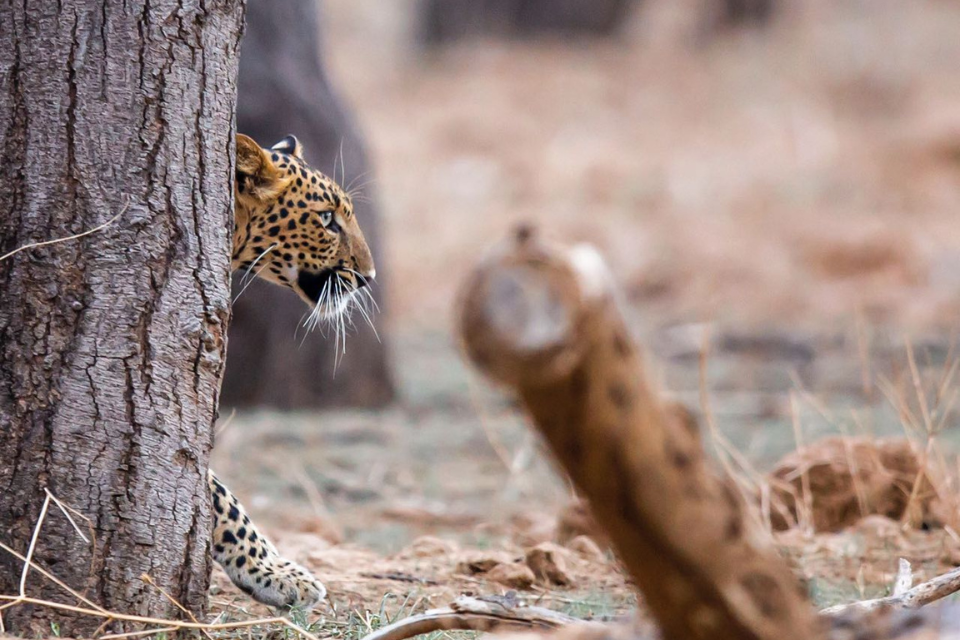
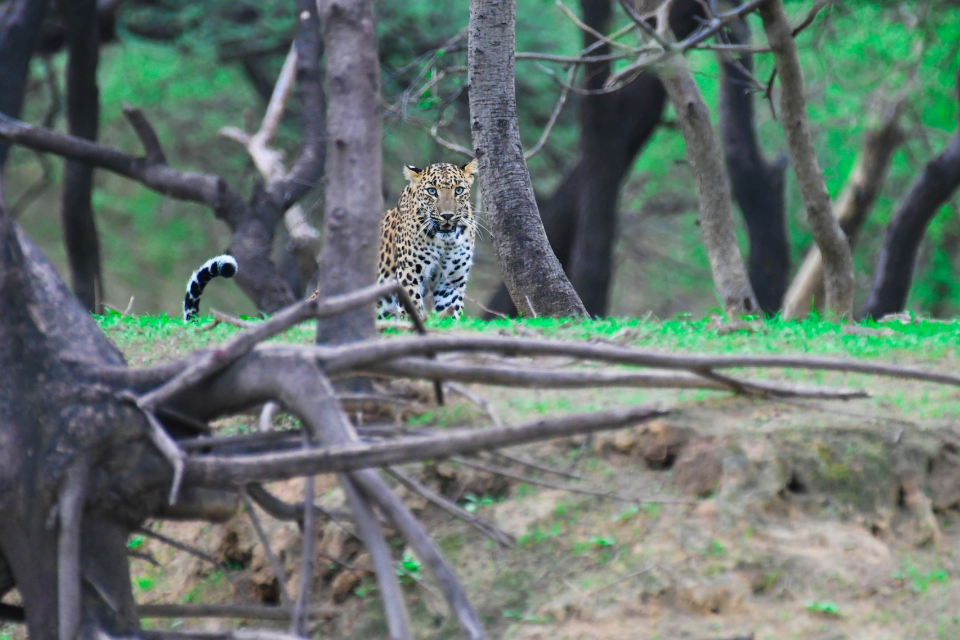
What makes an Urban Leopard Safari different? In traditional reserves like Ranthambore or Sariska, leopards are the “underdogs,” constantly looking over their shoulders for tigers. This fear makes them elusive and primarily nocturnal. In Jhalana, the leopard is the undisputed King, and the Urban Leopard Safari offers a front-row seat to their dominance.
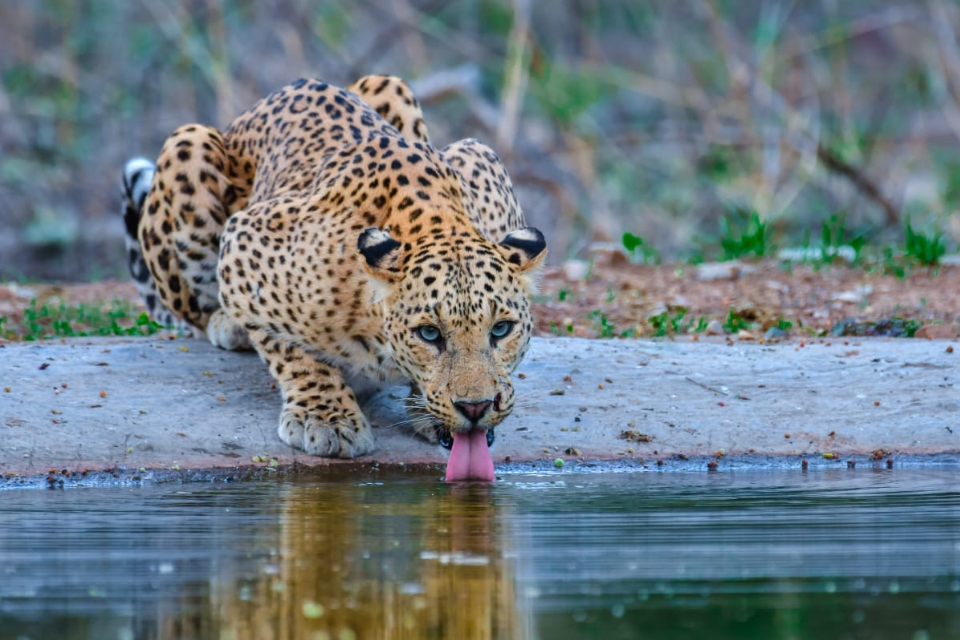
Because there are no larger predators to fear, the leopards of Jhalana exhibit a level of confidence rarely seen elsewhere. They are “diurnal”—active during the day—meaning your chances of witnessing a hunt or a mother nursing her cubs during an Urban Leopard Safari are statistically higher than almost anywhere else on the planet. In 2026, researchers have noted that these “City Cats” have developed unique behavioral traits. They have become habituated to the sound of airplanes landing at the nearby airport, a sound you will likely hear while on your Urban Leopard Safari, treating city noises as harmless ambient background rather than threats.
3. Decoding the ‘Dust Diary’: The Science of Tracking
A specialized Urban Leopard Safari is a game of sensory chess. Our naturalists don’t just look for spots; they read the “Dust Diary.” Because Jhalana is a dry, deciduous scrub forest, the sandy tracks act as a daily newspaper for every Urban Leopard Safari vehicle that enters the gates.
-
The Langur’s Gaze: In Jhalana, the Grey Langur is the primary informant. Their guttural bark is a localized alarm system that guides your Urban Leopard Safari driver. If a Langur is staring fixedly at a specific Dhok tree, the leopard is likely resting in its shade.
-
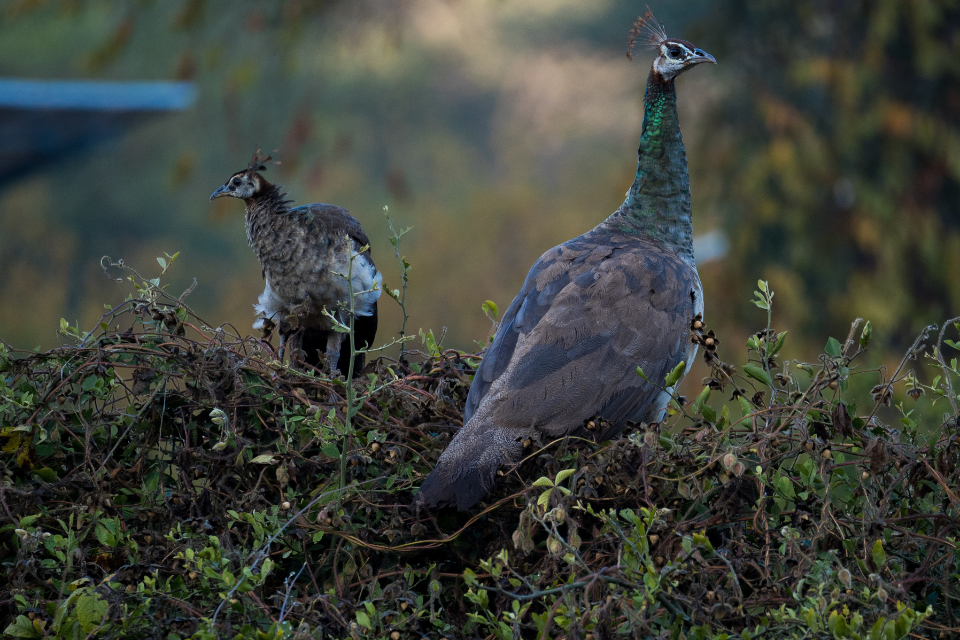
The Peacock’s Scream: In the evening shift of the Urban Leopard Safari, as the sun dips behind the Malviya Nagar skyline, the metallic “Pee-awk” of a peacock often signals a predator in motion.
-
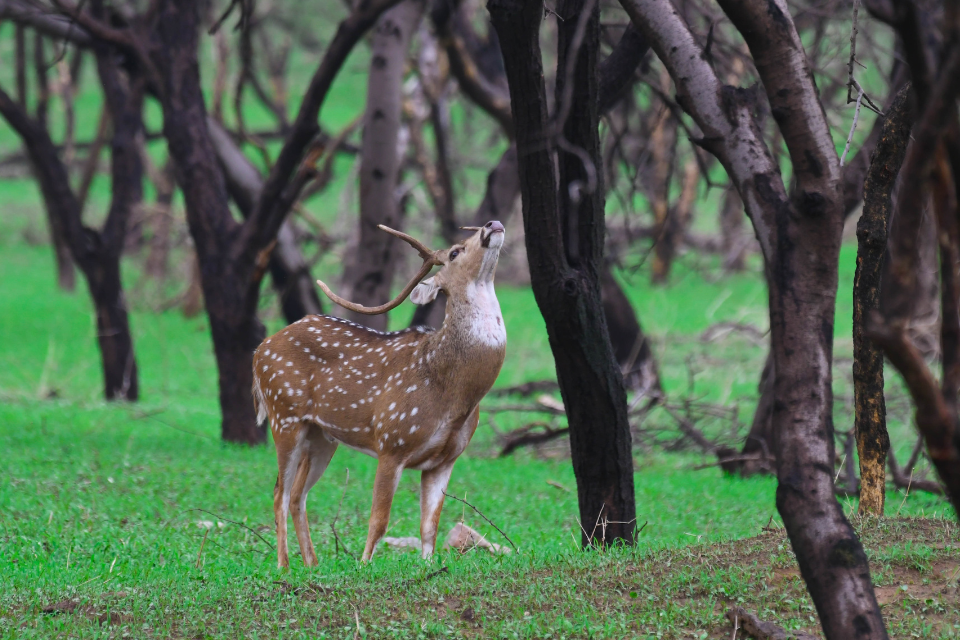
The Quartzite Vantage: Unlike the flat plains of other reserves, Jhalana is a “bowl.” Leopards use the high rocky outcrops to survey the valley for Chital (Spotted Deer). Smart trackers on an Urban Leopard Safari stop at the “Ghati” (valley entrance) and look up, not just into the bushes.
4. The ‘Wild vs. Urban’ Frame: A Photographer’s Holy Grail
For the modern 2026 traveler, a photo of a leopard in a bush is “standard.” However, the Urban Leopard Safari offers something far more poetic: the Urban Contrast Frame.
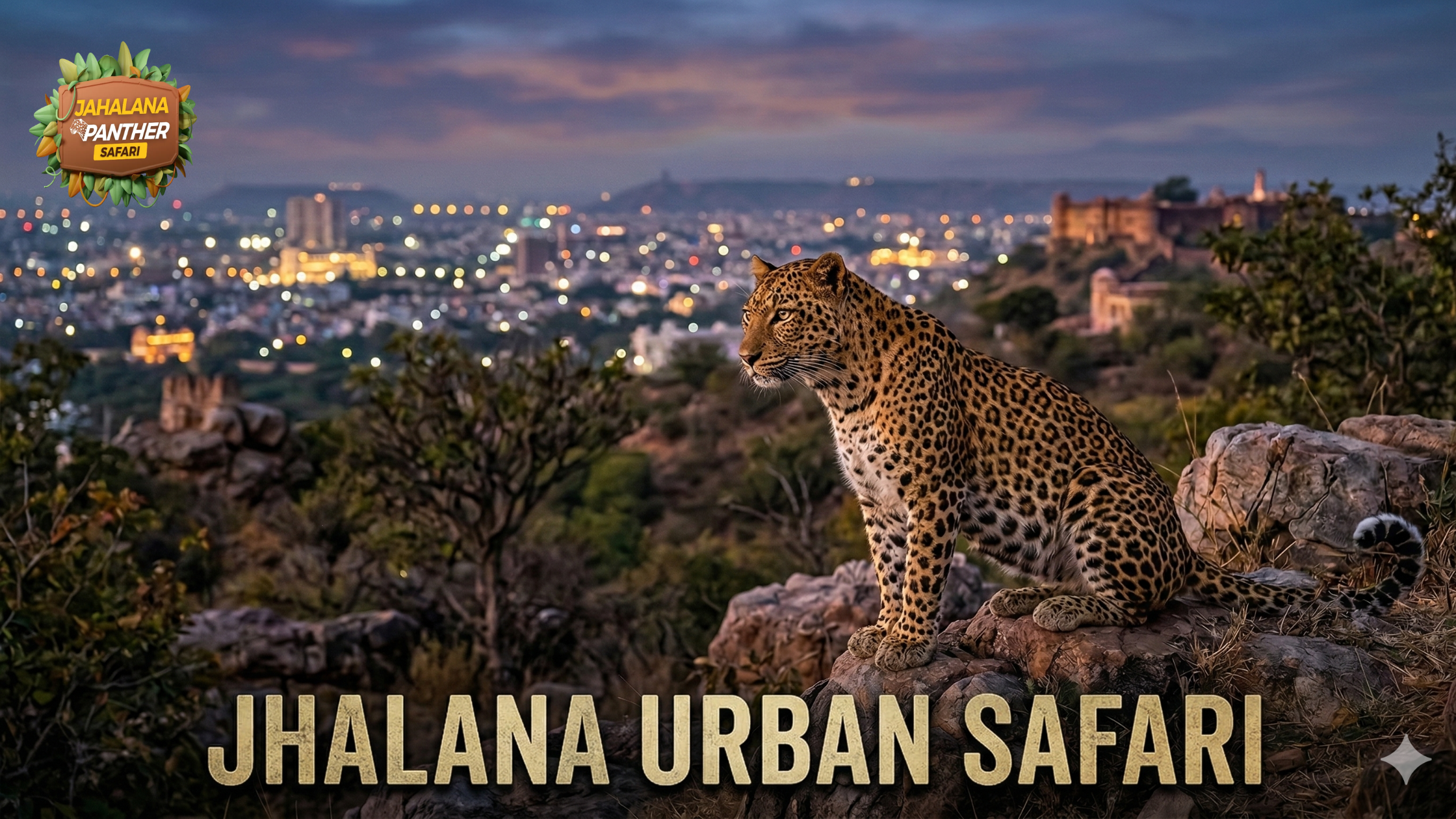
Imagine a frame where a wild, powerful leopard is perched on a 1.5-billion-year-old rock, and in the soft-bokeh background of your Urban Leopard Safari photos, you can see the shimmering lights of the Jaipur Airport or the silhouette of a distant skyscraper. This juxtaposition is the hallmark of the Urban Leopard Safari. It tells a story of resilience—a reminder that nature doesn’t just survive; it adapts. For those using the latest 2026 mirrorless tech during their Urban Leopard Safari, the low-light capabilities allow for stunning shots during the “Blue Hour,” where the leopard’s yellow eyes catch the city’s golden glow.
5. The Hyena Factor: Jhalana’s Secret Protagonist
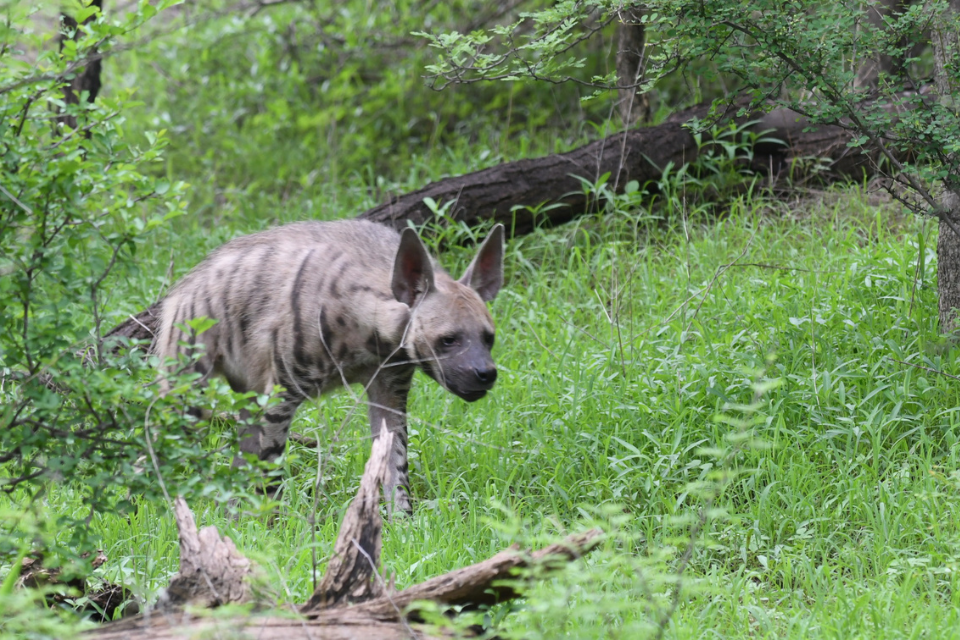
While the leopard is the star, the Urban Leopard Safari is incomplete without spotting the Striped Hyena. Often misunderstood and rarely seen in other parks, the hyenas of Jhalana are remarkably bold. They are the “cleaners” of the ecosystem, and encountering them is a highlight of any Urban Leopard Safari. In the early morning mist, seeing a hyena loping back to its cave in the Aravalli cliffs is a hauntingly beautiful sight. They share a complex relationship with the leopards—part competitors, part scavengers—adding a layer of dramatic tension to every Urban Leopard Safari drive.
6. Seasonal Secrets: Timing Your Trip
While 2026 travel guides still recommend October to March, the seasoned enthusiast knows that the Urban Leopard Safari reveals different secrets in different seasons:
-
The Summer Stakeout (April–June): As temperatures soar, leopards congregate around waterholes. This is the “high-reward” season for the Urban Leopard Safari, where patience pays off with incredible sightings.
-
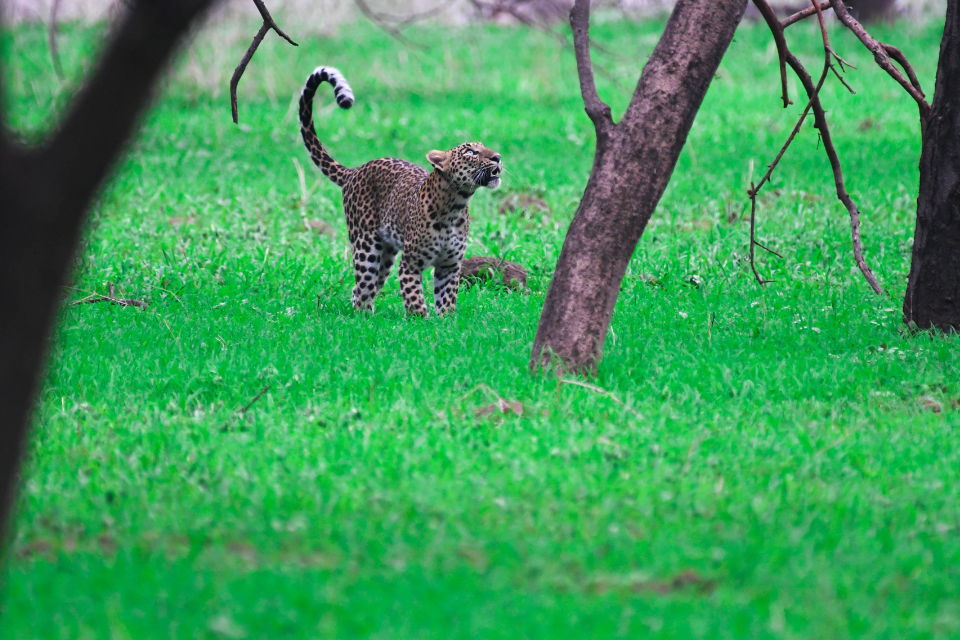
The Monsoon Magic (July–September): Jhalana is one of the few reserves in India that remains open during the monsoon, making the Urban Leopard Safari a year-round attraction. The forest turns emerald, providing a stunning color contrast.
-
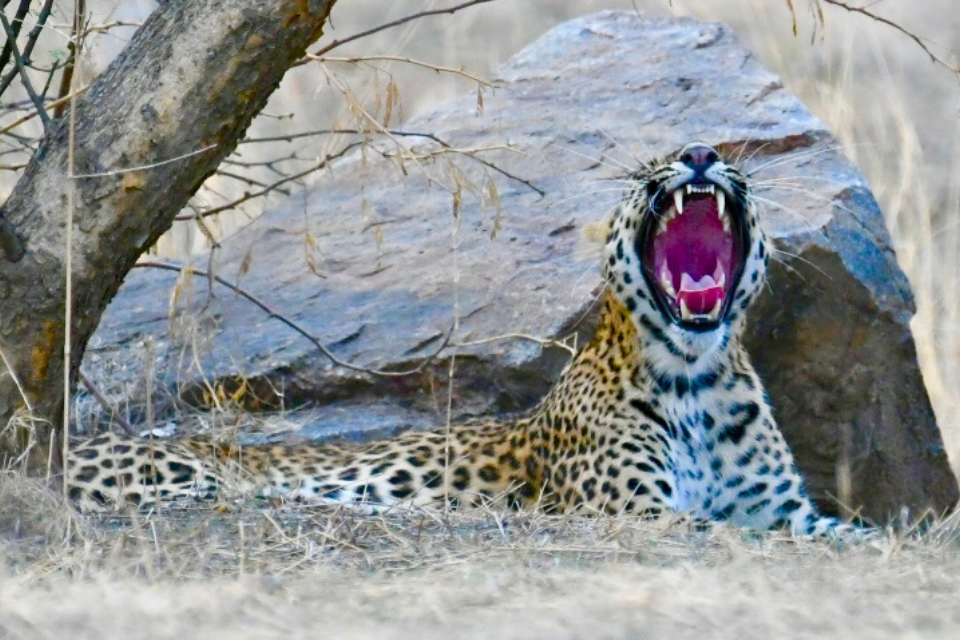
The Winter Sunbathe (November–February): Leopards love the winter sun. You’ll often find them splayed out on flat rocks, completely indifferent to the clicking shutters of nearby Urban Leopard Safari Gypsies.
7. Micro-Climatology and the Aravalli Ridge
The geology of Jhalana plays a massive role in why the Urban Leopard Safari is so successful. The Aravalli Range here is composed of ancient quartzite and metamorphic rocks. These rocks absorb heat during the day and radiate it at night, creating microclimates. Leopards move from the hot ridges to the cool, shaded “nallas” depending on the hour. Understanding this movement is what makes a professional Urban Leopard Safari guide so essential for a successful sighting.
8. Sustainable Coexistence: The 2026 Vision
Jhalana isn’t just a tourist spot; it’s a conservation miracle. Spanning only 20 sq km, it supports over 40 leopards. This density is a testament to the “Jhalana Model” of sustainable tourism. By regulating the number of vehicles allowed on an Urban Leopard Safari and strictly enforcing plastic-free zones, the Rajasthan Forest Department has ensured that the “urban” part of the leopard’s life doesn’t come at the cost of its “wild” essence. In 2026, every Urban Leopard Safari helps fund the AI-based camera traps that help rangers monitor the health and movement of each individual leopard in real-time.
9. Comparative Analysis: Jhalana vs. The Rest
Why choose an Urban Leopard Safari over others?
-
Jhalana vs. Ranthambore: Ranthambore is about the Tiger. It is a 4-hour drive from Jaipur. The Urban Leopard Safari is literally inside the city.
-
Jhalana vs. Jawai: Jawai offers a rustic landscape, but the Urban Leopard Safari in Jhalana’s compact nature ensures a higher frequency of sightings.
-
Jhalana vs. Amagarh: Amagarh is the “new kid,” but the Urban Leopard Safari remains the primary breeding ground and has the most “relaxed” leopards.
10. The Gear Guide: Shooting the Urban Ghost
If you are joining an Urban Leopard Safari in 2026, your gear matters:
-
Lenses: A 100-400mm is ideal for the proximity offered on an Urban Leopard Safari.
-
Stability: Beanbags are better than tripods in a moving Gypsy.
-
Audio: If you are a filmmaker, the sound of a leopard’s “sawing” call against the city’s hum is a unique auditory experience captured only during an Urban Leopard Safari.
Essential Jhalana FAQ
Q: Is a sighting guaranteed on a Leopard Safari?
A: While no wildlife experience is 100% guaranteed, the Leopard Safari boasts a sighting success rate of nearly 80-90% over a three-day period.
Q: How do I book a Leopard Safari?
A: Slots are booked via the Rajasthan Government SSO portal. In 2026, it is highly recommended to book your Leopard Safari at least 30-45 days in advance.
Q: Is the Leopard Safari safe for children?
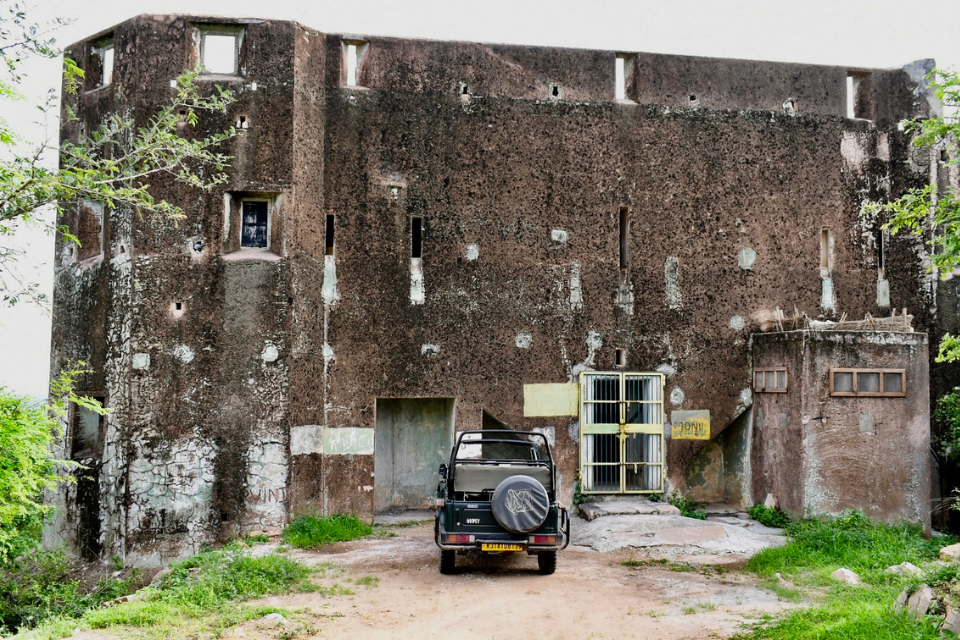
A: Yes. The safaris are conducted in secure, open-top 4×4 Gypsies with expert drivers who specialize in the Leopard Safari experience.
Q: What is the best shift for an Urban Leopard Safari?
A: Both morning and evening shifts offer unique lighting, but the evening Safari is famous for the silhouette shots against the Jaipur skyline.
Disclaimer
This blog is for informational and promotional purposes regarding the Leopard Safari. Wildlife sightings are subject to luck and the natural movement of animals; no other Leopard Safari can “guarantee” a sighting. We strictly adhere to the guidelines set by the Rajasthan Forest Department. Visitors are expected to maintain silence and respect the wildlife. Respect the “Ghost of the Forest”—you are a guest in their home during your Safari.