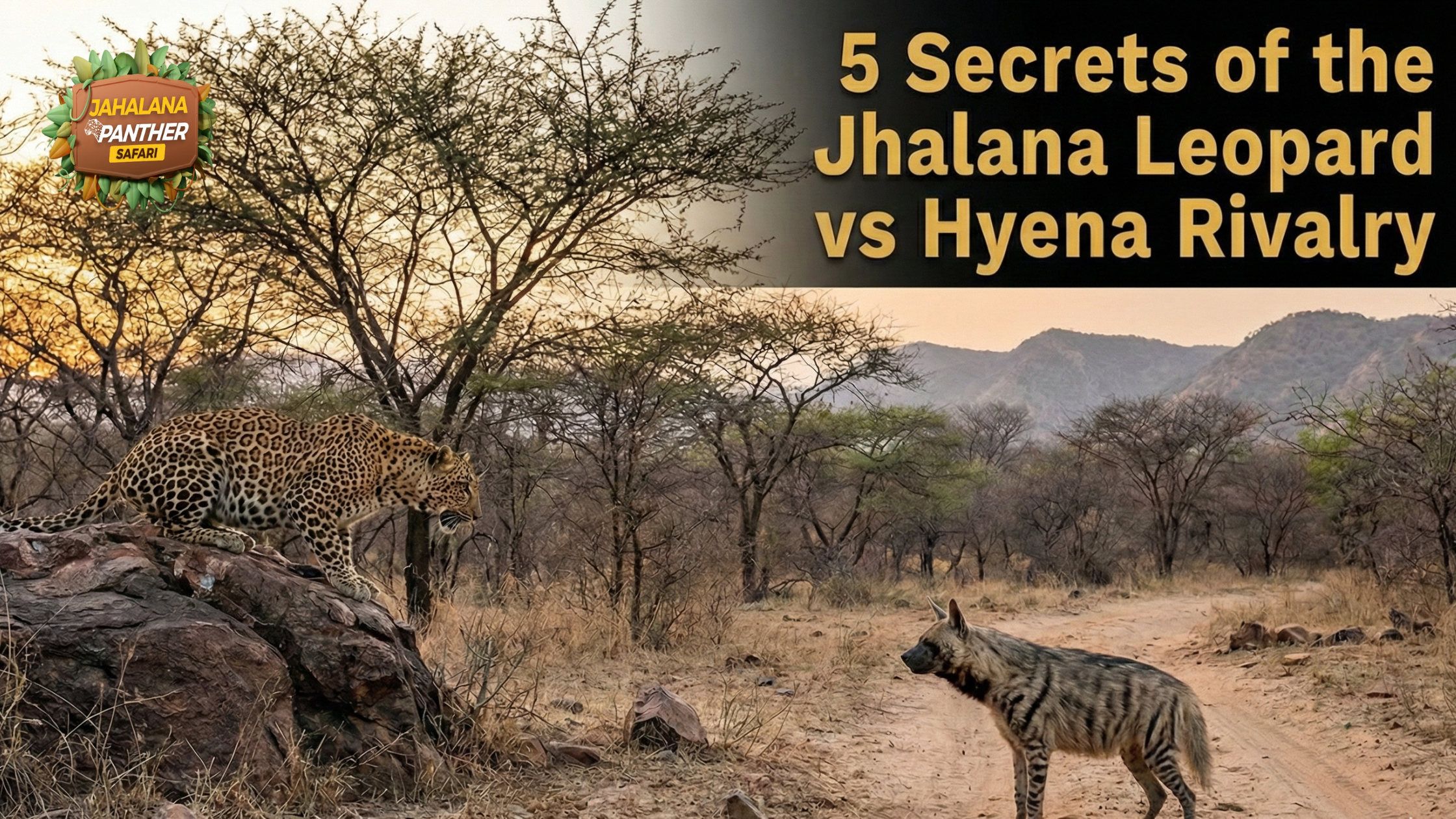
The War for the Ridges: 5 Secrets of the Jhalana Leopard vs Hyena Rivalry (2026 Guide)
In the rugged Aravalli terrain of Jaipur, a quiet but fierce war is being waged. On one side stands the Indian Leopard, the apex predator and the undisputed face of the Jhalana Panther Safari. On the other hand is the Striped Hyena, an often misunderstood scavenger that has mastered the art of “kleptoparasitism”—the sophisticated stealing of another predator’s hard-earned meal.
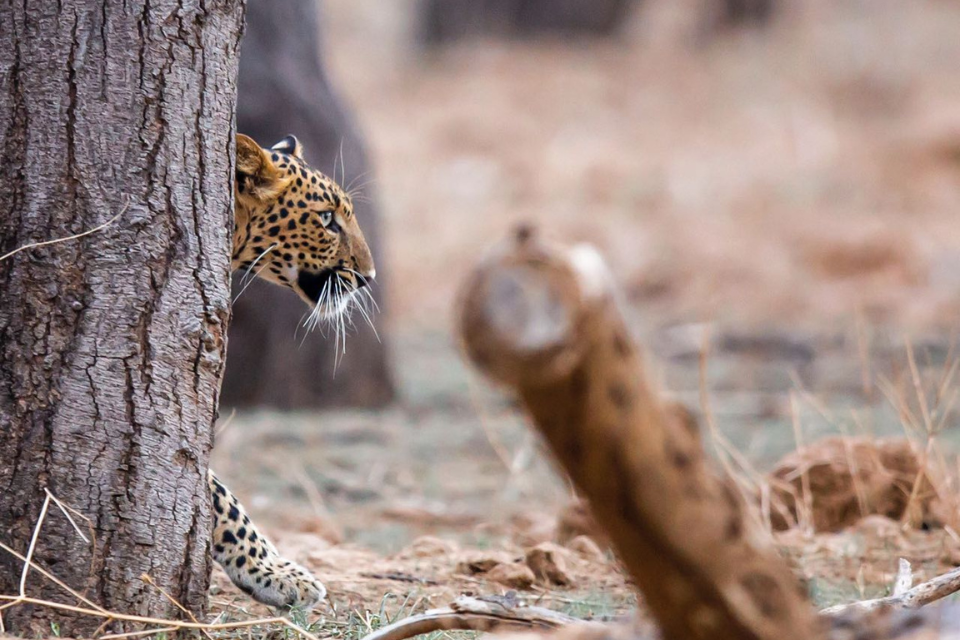
While most tourists are scanning the trees for a glimpse of Juliet or Bahubali, seasoned trackers are often listening for the tell-tale signs of this cross-species rivalry. This is not just a food fight; it is a battle for dominance in a high-density “island forest” where every square inch of territory counts. Witnessing a Jhalana Leopard vs Hyena standoff is a rare privilege that showcases the raw survival instincts of Rajasthan’s wildlife.
Anatomy of a Rival: Bite Force and Physicality
To understand the Jhalana Leopard vs Hyena dynamic, one must look at the raw physical stats. While the leopard is a more efficient killer, the hyena is built like a tank designed for durability.
The Leopard’s Agility
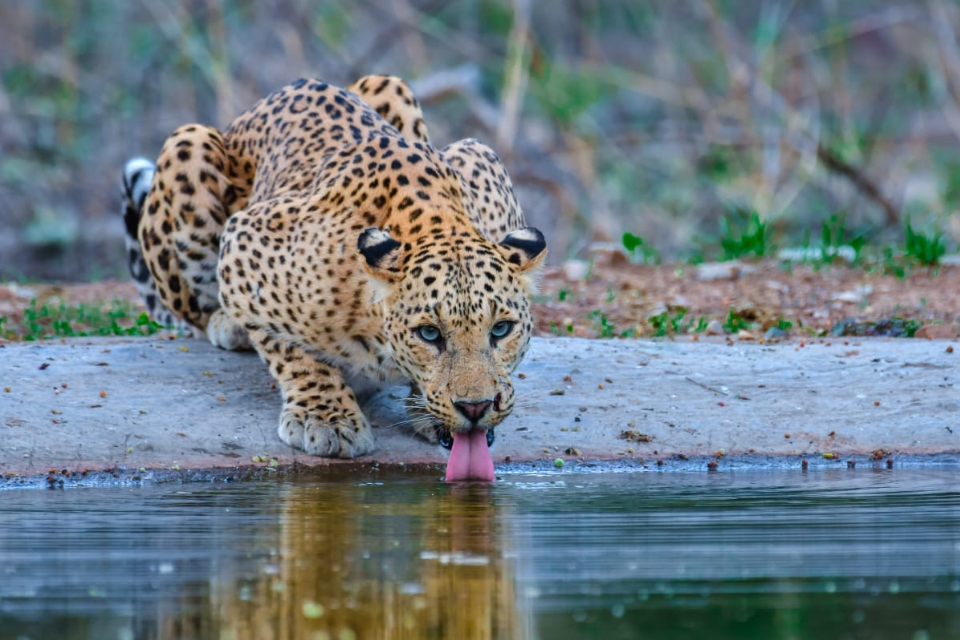
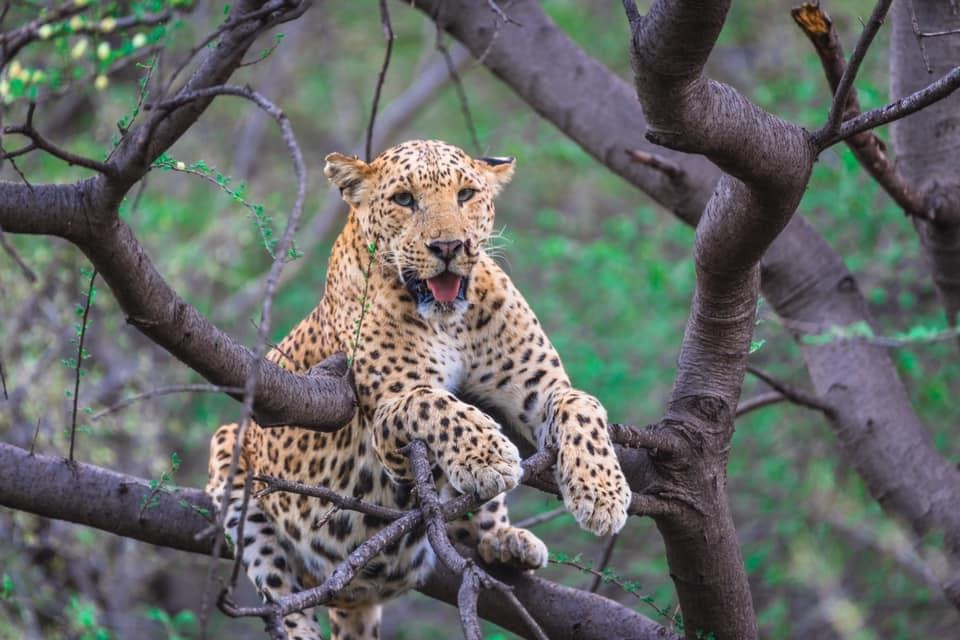
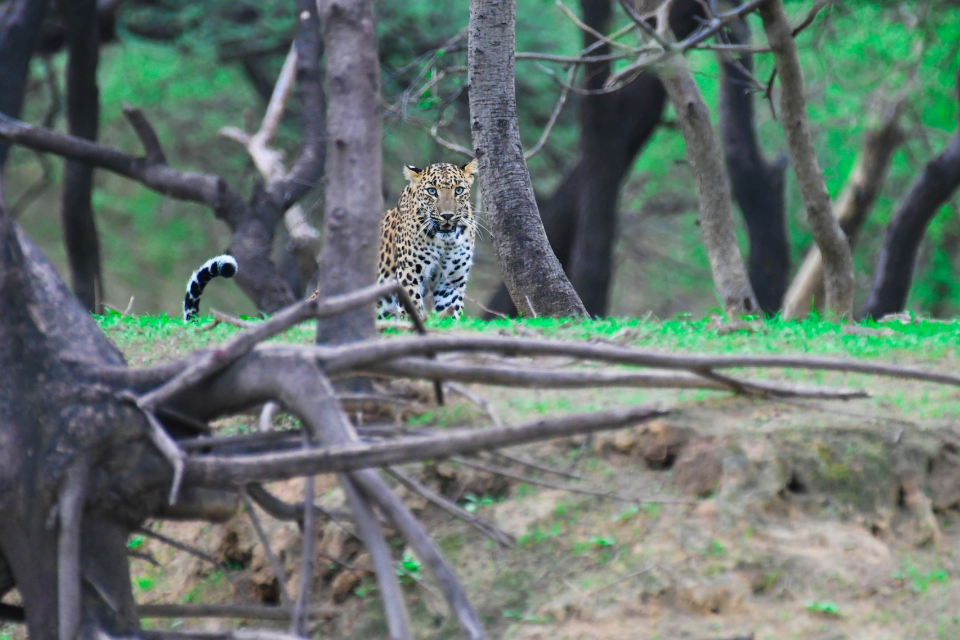
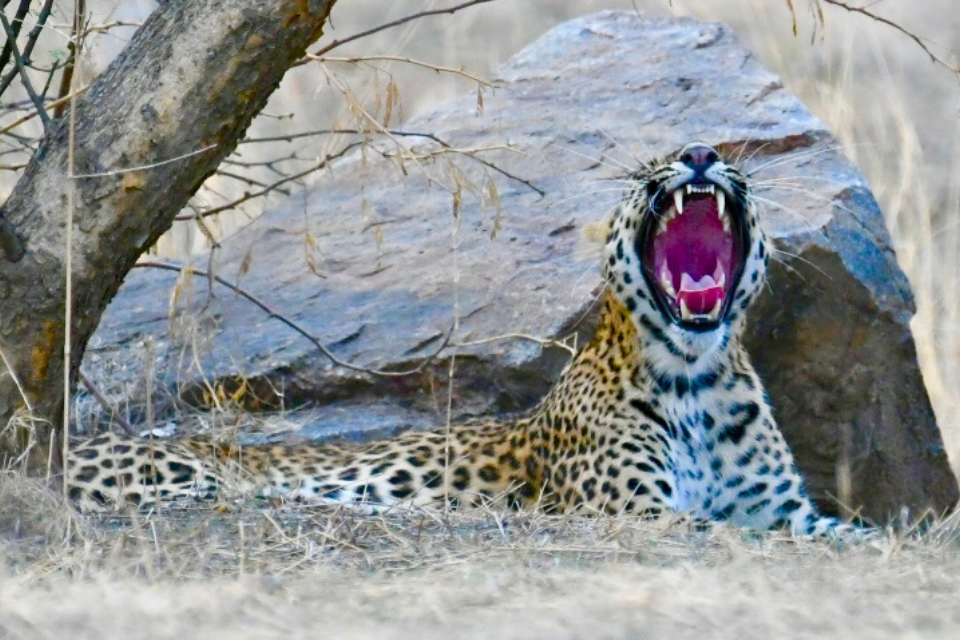
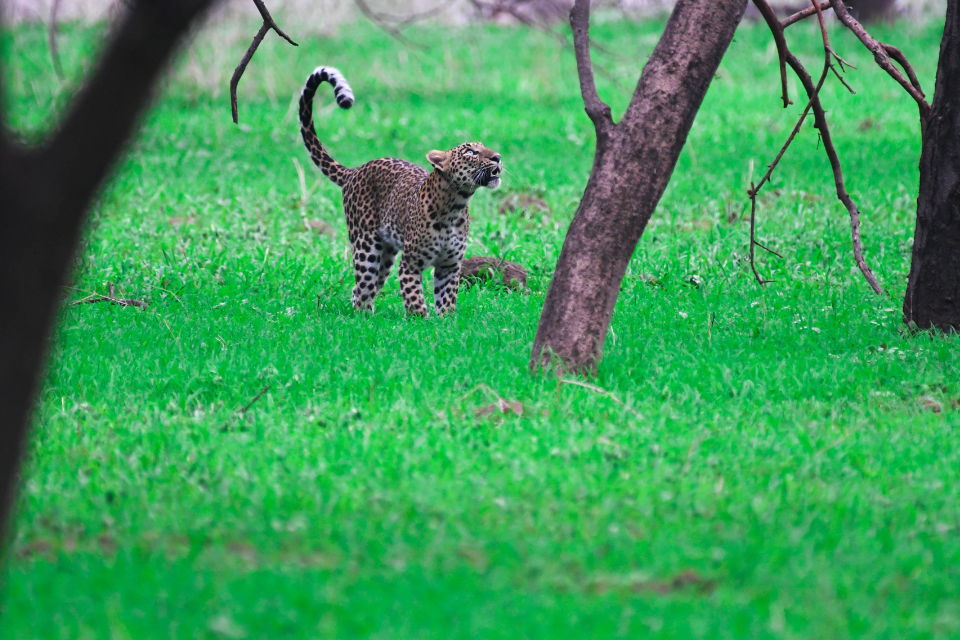
The leopard (Panthera pardus fusca) is a masterpiece of feline evolution. Weighing between 110–160 pounds (50–73 kg), it relies on a throat-crush or skull-piercing bite. Its greatest tactical advantage in Jhalana is its retractable claws and immense upper-body strength, allowing it to hoist a carcass twice its own weight into the safety of a tree—far out of reach of any hyena.
The Hyena’s Bone-Crushing Power
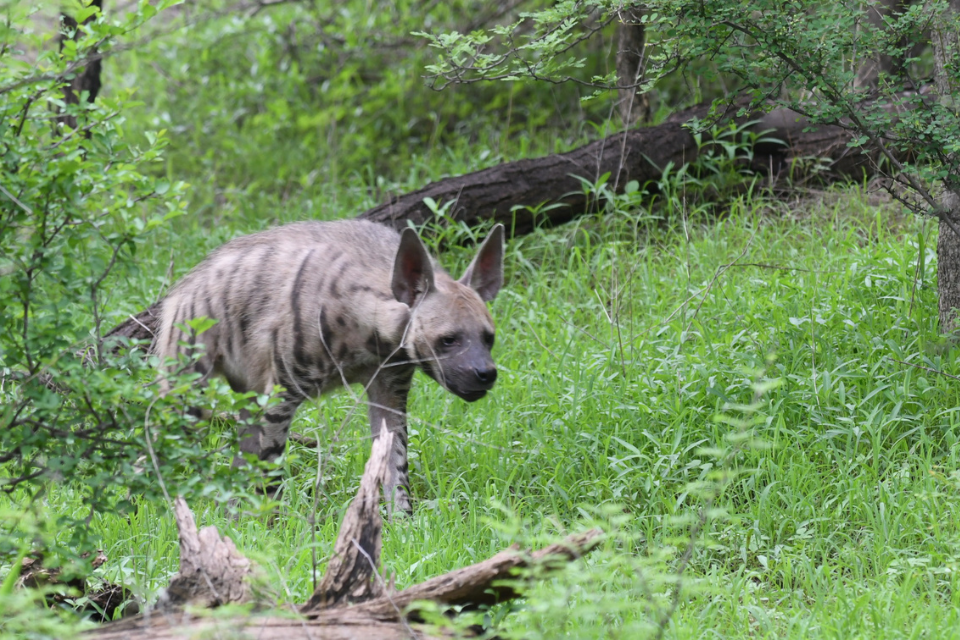
The Striped Hyena (Hyaena hyaena) may be smaller—averaging 55–120 pounds—but its jaw pressure is terrifying. Boasting a bite force of nearly 1,100 PSI, it can crush the femur of a Nilgai in seconds. This allows the hyena to consume parts of the prey that leopards leave behind, such as bones and hide, leaving almost zero waste. In a head-to-head confrontation, a hyena’s sloping back and thick neck protect it from the lethal “neck bite” that leopards use on smaller prey.
Kleptoparasitism: The Art of the Steal
The most frequent “war” between these two occurs at the dinner table. Recent studies and camera-trap data from Jhalana have highlighted a fascinating trend: the Jhalana Leopard vs Hyena interaction is often centered around food theft.
- The Tracking Phase: Hyenas in Jhalana have developed a sophisticated “cueing mechanism”. They don’t just hunt; they listen for the struggle of a leopard making a kill. They can often arrive at a carcass within minutes of a leopard beginning its meal.
- The Confrontation: A solitary leopard, despite its strength, often chooses to abandon a kill if faced by more than one hyena to avoid injury. In Jhalana’s fragmented landscape, injury can mean death, so the “fight over fight” response is common for the cat.
- The Imbalance: Jhalana is fenced. Leopards can jump the wall to hunt stray dogs in Jaipur’s residential areas, but hyenas are largely trapped inside. This makes the hyena even more desperate and aggressive in defending or stealing food within the reserve’s boundaries. This environmental constraint often escalates the Jhalana Leopard vs Hyena competition, as resources within the walls are finite.
Decoding the Jungle Telegraph: Alarm Calls
One of the most exciting parts of a Jhalana Panther Safari is learning to decode the forest’s warning system. Animals respond differently to leopards and hyenas, and knowing the difference between their alarm calls is crucial for tracking the elusive Jhalana leopard vs hyena interactions in the dense scrub.
Langur Monkey Signals
Langurs are the most reliable sentinels in Jhalana. When they spot a leopard, they emit a harsh, rhythmic “Kaon-Kaon” honking sound that follows the cat’s movement. However, for a hyena, the alarm is often less frantic or absent, as hyenas are scavengers and don’t typically pose a threat to monkeys in trees.
Peacock Screeches
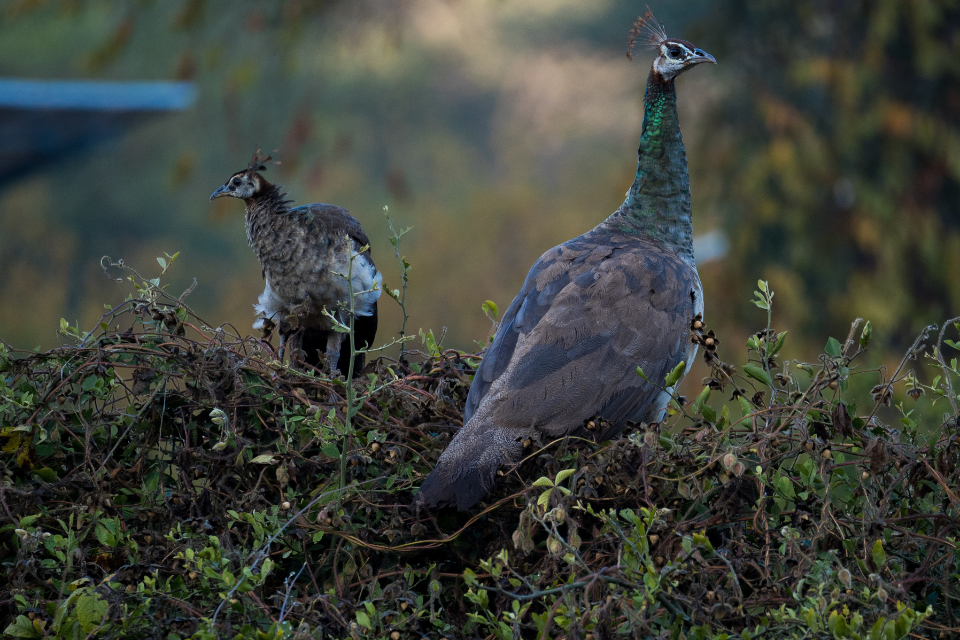
Peacocks have sharp eyesight and will screech a loud “Ka-Ka-Ka” at the sight of any predator. Because peacocks roost on the ground or low bushes, they are highly wary of hyenas. A frantic peacock alarm in a rocky area often points to a hyena emerging from its den.
Why This Rivalry is Essential for Ecosystem Health
The Jhalana Leopard vs Hyena conflict is not just a spectacle; it is a vital part of what keeps this urban forest alive.
- Natural Cleaning: By scavenging on leopard kills, hyenas prevent the spread of disease from rotting meat. They are the “sanitary workers” of the Aravallis.
- Population Control: While leopards control the deer and Nilgai numbers, hyenas keep the populations of smaller carnivores like foxes and jackals in check, ensuring a balanced food web.
- Habitat Restoration: The digging of dens by hyenas among the rocks creates shelters used by other smaller species, promoting biodiversity across the reserve.
Photography Tips: Capturing the Standoff
Photographing the Jhalana Leopard vs Hyena interaction requires patience and specific technical settings, as these standoffs often happen at dusk.
- Low Light Readiness: Set your ISO to 1600 or 3200 as the sun dips behind the Aravalli hills. Modern mirrorless cameras handle this noise well in post-processing.
- Shutter Priority: Keep your shutter speed at least 1/500th of a second. Even a slow-moving leopard can look blurred if your speed is too low during a growl or a pounce.
- The “Eyes” Rule: Always focus on the eyes. Use “Animal Eye-Detection AF” if your camera has it. A standoff where the eyes of both predators are in focus is the “holy grail” of Jhalana photography.
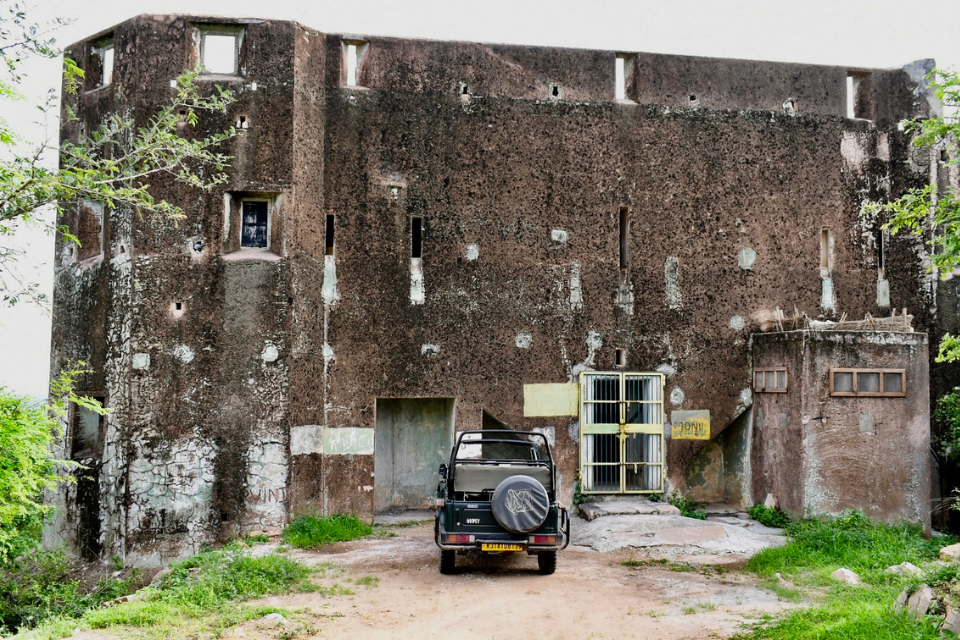
- Bean Bag Support: Since you cannot use tripods in a moving Gypsy, a bean bag resting on the vehicle’s railing is essential for stability in low light.
FAQ: The Jhalana Leopard vs Hyena Conflict
1. Can a hyena kill a leopard?
A. While rare, a group of hyenas can seriously injure or even kill a solitary leopard, particularly a sub-adult or an elderly cat.
2. Does the leopard always lose its kill to a hyena?
A. No. Dominant males like Bahubali have been seen successfully reclaiming kills and displacing hyenas through pure size and aggression.
3. Why are hyenas important for Jhalana?
A. They are the “sanitary workers” of the forest, preventing the spread of disease by consuming carcasses that would otherwise rot.
4. Are hyenas visible during the day?
A. Hyenas are primarily nocturnal, but they are frequently spotted during the first and last hours of the Jhalana safari plan.
5. Is there enough food for both in Jhalana?
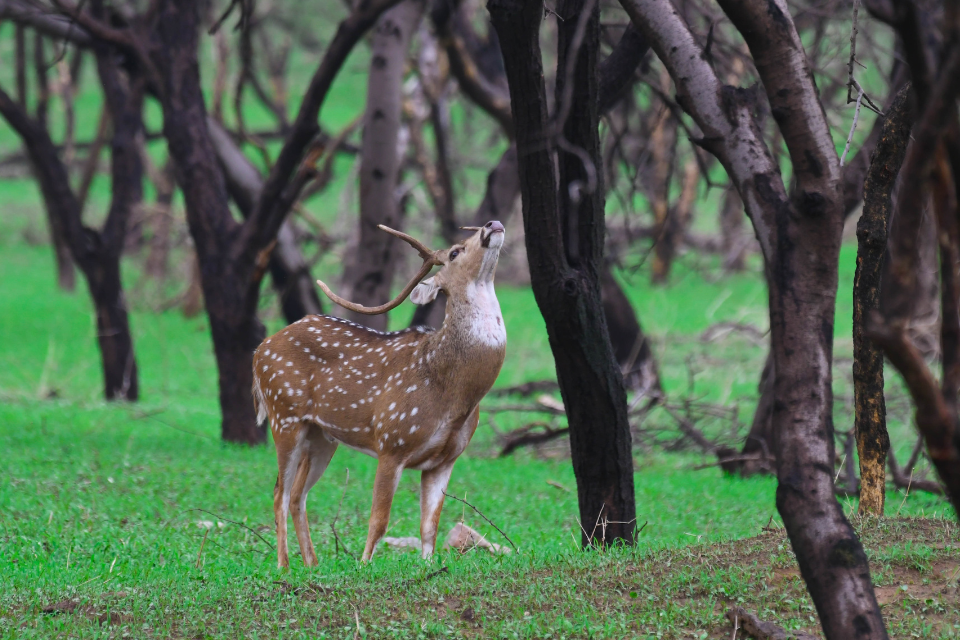
A. The high density of Nilgai and Spotted Deer provides plenty of prey, but the competition is focused on “ready-to-eat” meals.
6. How many hyenas are in Jhalana?
A. Estimates suggest a healthy population that coexists with the 40+ leopards in the reserve.
7. Do leopards climb trees in Jhalana to escape hyenas?
A. Yes. Hoisting a kill is a standard defense mechanism used by leopards to avoid food theft.
8. Will I see a hyena on my first safari?
A. Sightings are less common than leopards but occur frequently in Zone 1 and near rocky denning sites.
9. What is the bite force of a striped hyena?
A. It is approximately 1,100 PSI, which is enough to crush large bones.
10. Is Jhalana open for safaris during the monsoon?
A. Yes, Jhalana is one of the few reserves in India that remains open year-round.
Conclusion: The Delicate Balance of Jaipur’s Wild
The Jhalana Leopard vs Hyena rivalry is a reminder that the jungle is never “peaceful”—it is a constant negotiation of power. Seeing a leopard is a highlight, but seeing a leopard defending its territory against a cunning hyena is a story you will tell for a lifetime. It is this raw, unscripted drama that makes Jhalana the most exciting urban forest in the world.
Important Disclaimer
To ensure you witness the Jhalana Leopard vs Hyena drama safely and avoid Jhalana Safari booking mistakes:
- Official Oversight: All activities and sightings are governed by the Rajasthan Forest Department.
- Wildlife Ethics: Never encourage your driver to chase an animal or get too close during a standoff.
- No Sightings Guaranteed: These are wild animals. Sightings depend on luck and the skill of your guide.
- Book Your Expert Tracker: To maximize your chances of seeing this unique rivalry, book through our website. We work with naturalists who specialize in predator behavior and know the specific areas where the “War for the Ridges” is most active.
Experience the raw tension of the leopard vs the hyena.