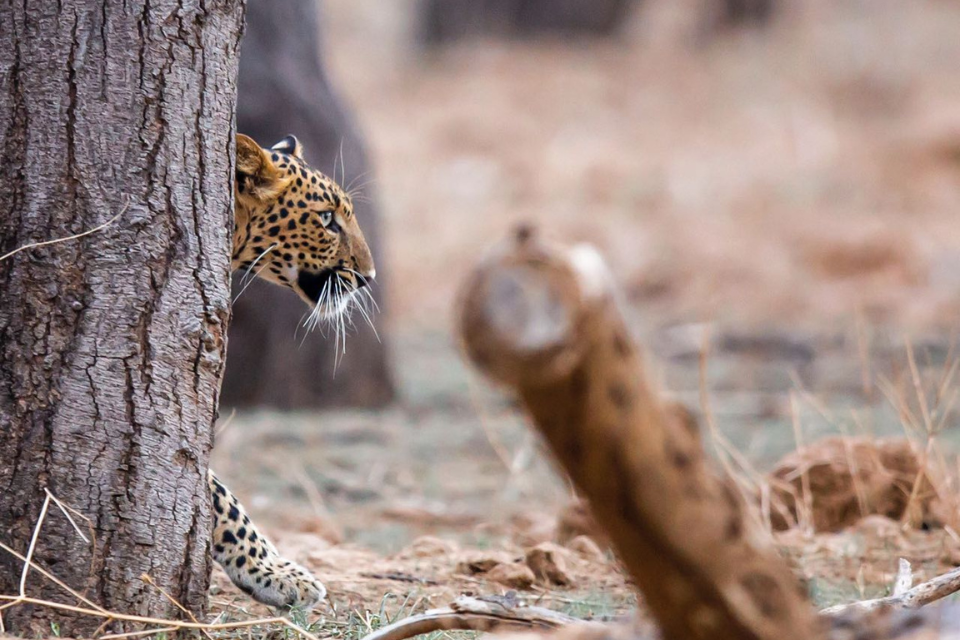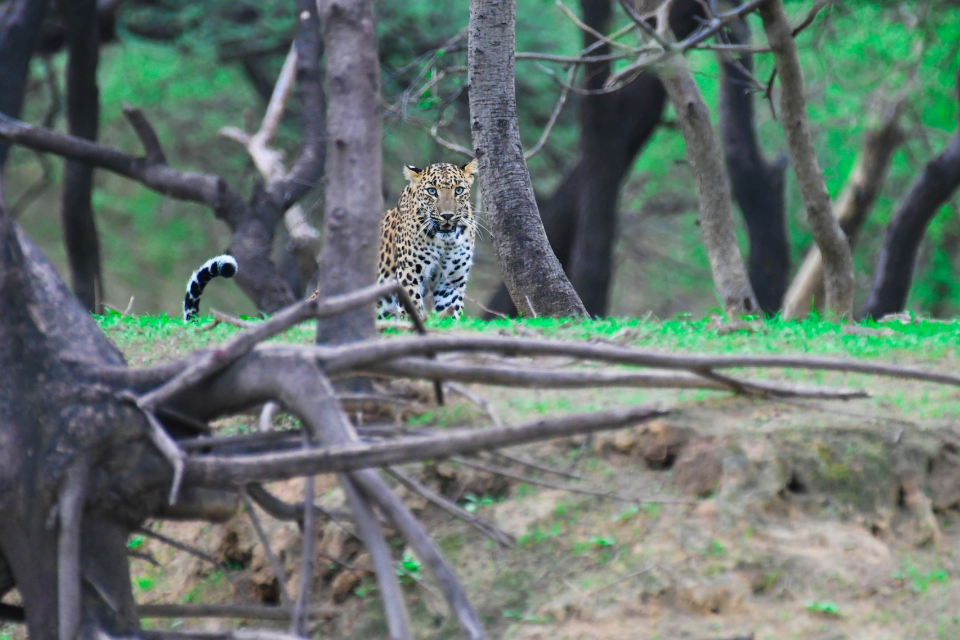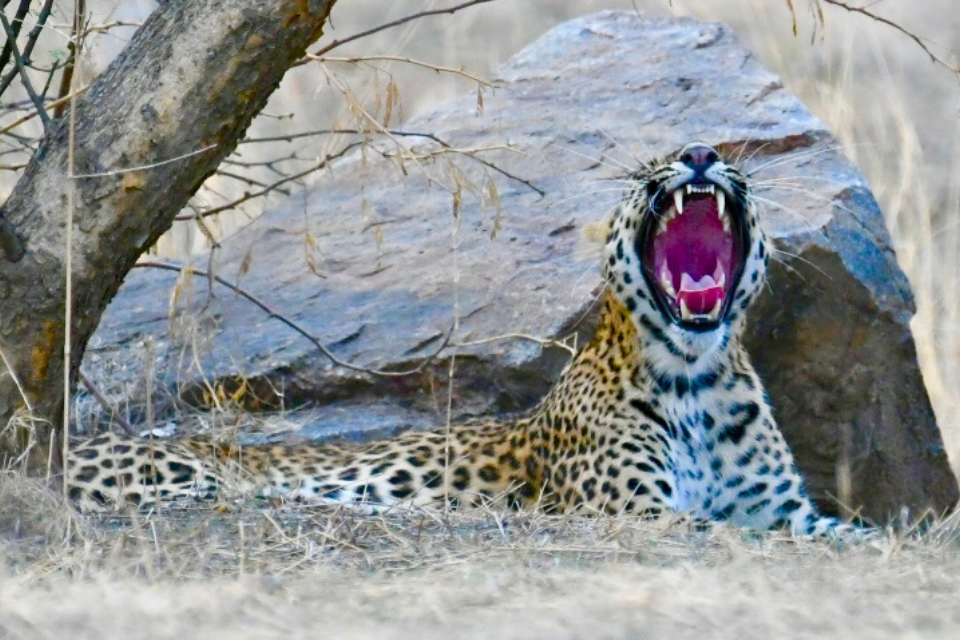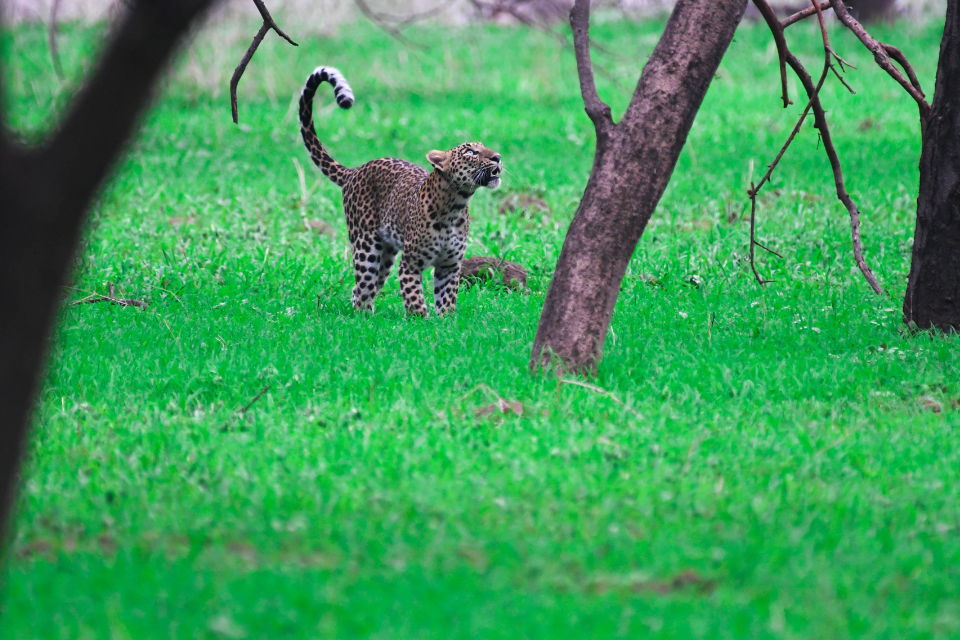
Imagine standing in the heart of a bustling metropolis, yet being surrounded by the silence of the wild. Suddenly, the golden coat of a leopard glimmers through the Dhok trees. This isn’t a scene from the deep jungles of Africa—this is Jhalana Leopard Safari, located right in the heart of Jaipur, Rajasthan.
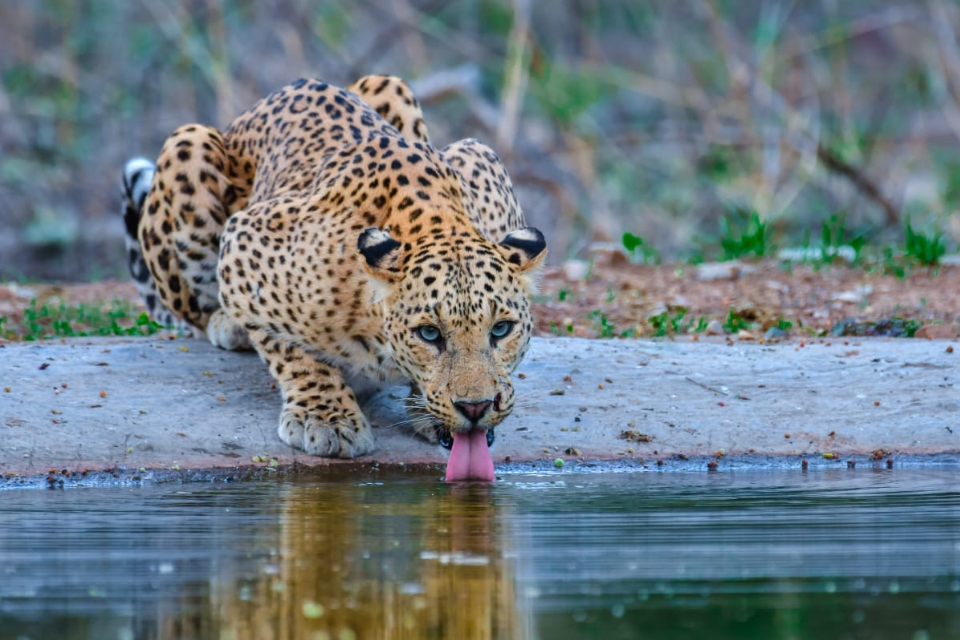
Once the private hunting grounds of the Royals of Jaipur, Jhalana has transformed into one of the world’s most unique wildlife destinations. Known as the “Leopard Capital of the World,” this reserve offers arguably the highest density of leopards in India, making sightings almost a guarantee rather than a stroke of luck.
Whether you are a wildlife photographer, a nature enthusiast, or a family looking for an unforgettable adventure, this guide covers everything you need to know about visiting Jhalana Leopard Reserve.
Why Jhalana is Unique: The Urban Jungle
Jhalana Leopard Reserve is India’s first dedicated Leopard Reserve. Spanning approximately 20 square kilometers, it sits comfortably within the Jaipur city limits. Unlike other national parks where tigers are the apex predators and leopards remain elusive shadows, here the Leopard is King.
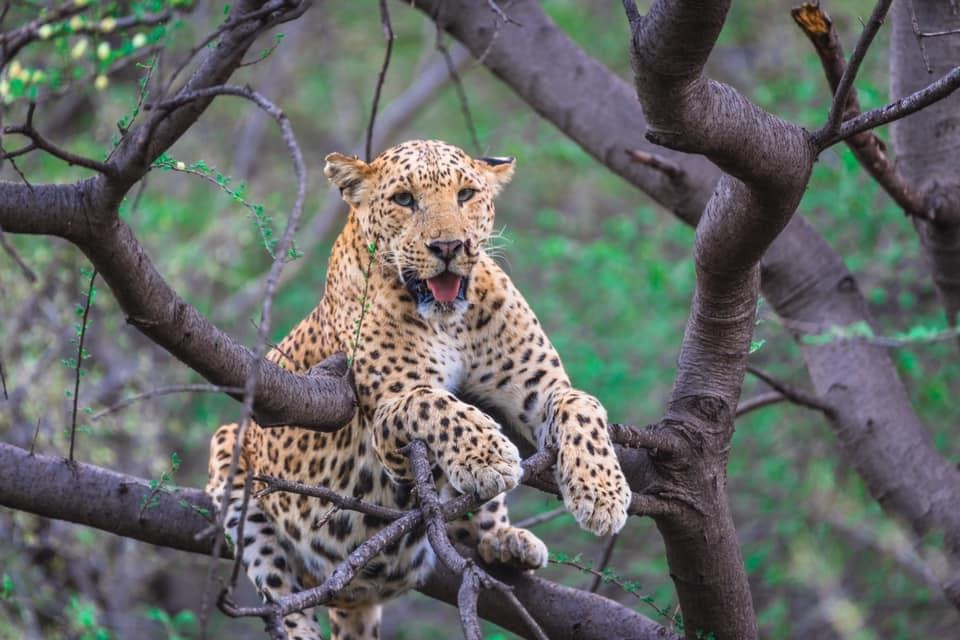
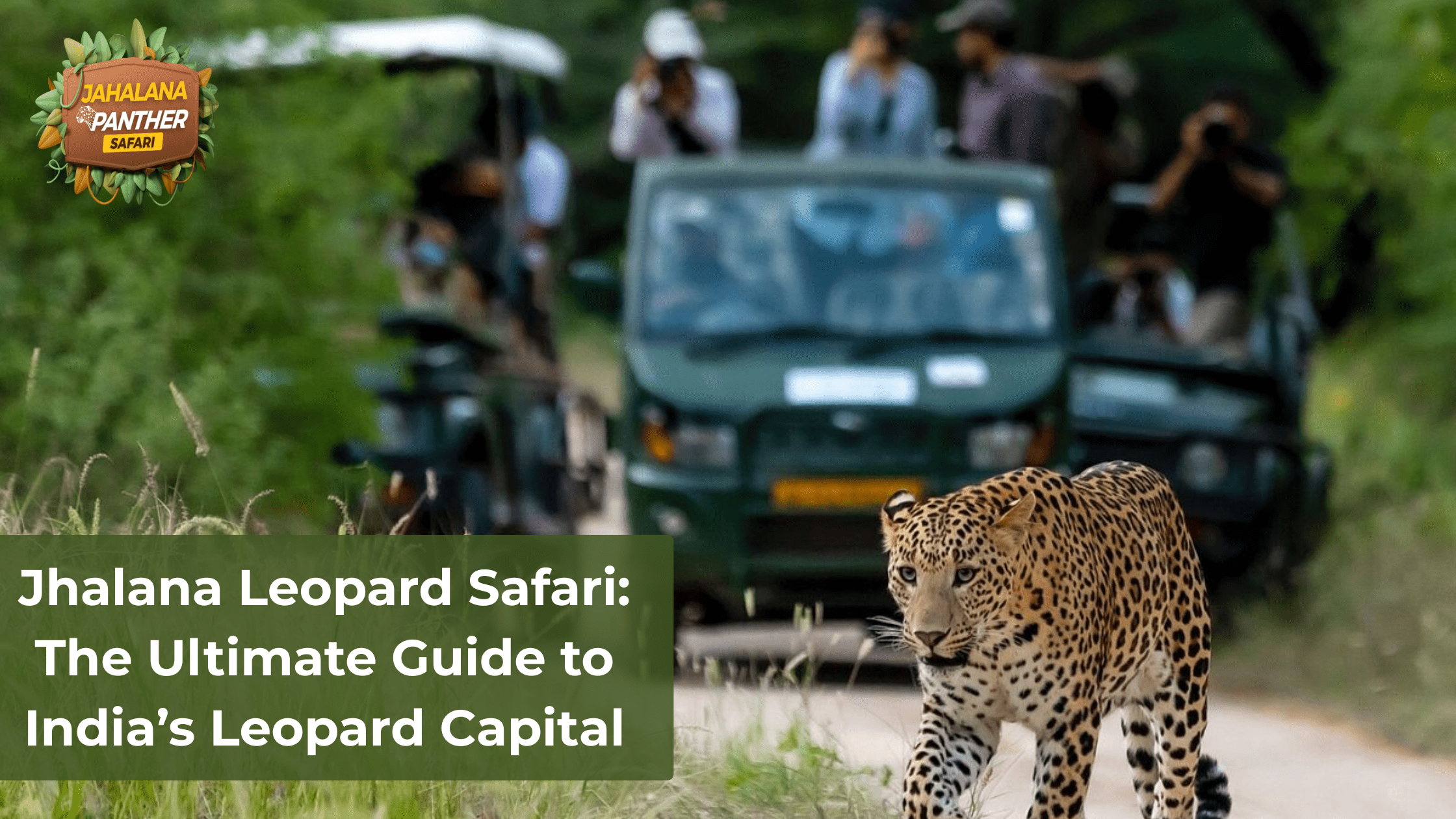
Because there are no tigers in Jhalana Leopard Safari to compete with, the leopards here are the apex predators. This has resulted in a population that is confident, diurnal (active during the day), and surprisingly comfortable around safari vehicles. It is not uncommon to see a leopard walking nonchalantly down the safari track or lounging on a rock just meters away from your gypsy.
The Wildlife of Jhalana: Beyond the Spots
While the majestic Indian Leopard is undoubtedly the star of the show, the biodiversity of Jhalana is surprisingly rich for a dry deciduous forest.
1. The Apex Predators: Indian Leopards
With a population estimated between 30 to 40 leopards, the density here is incredible. Famous leopards like “Juliet” and “Flora” have become local legends. The park’s open canopy makes it easier to spot these cats compared to the dense foliage of other reserves.
2. Other Carnivores
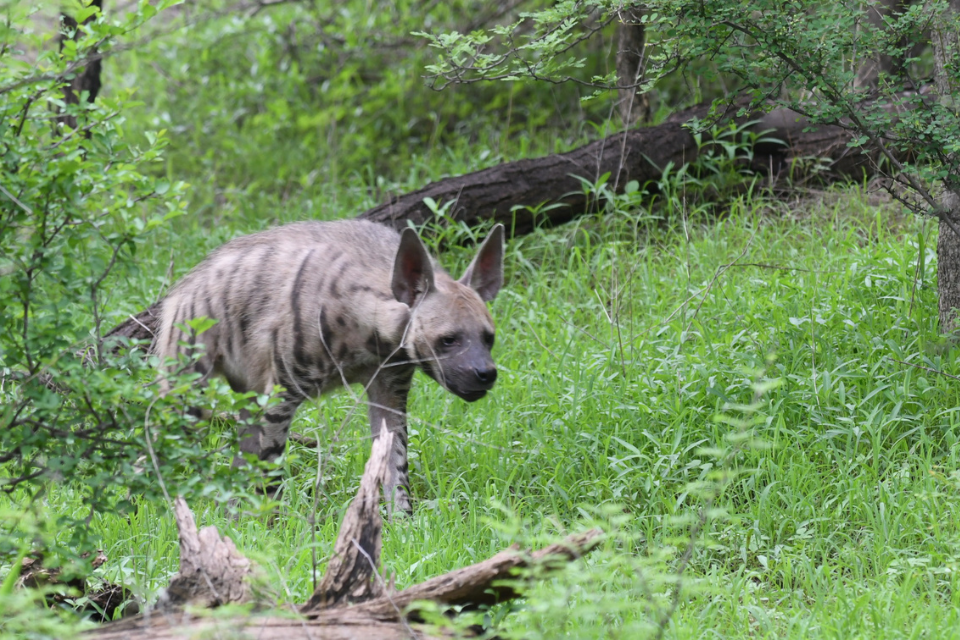
Jhalana is one of the few places where you can easily spot the elusive Striped Hyena. Other predators and scavengers include:
- Desert Fox: often seen trotting near the boundary walls.
- Golden Jackal: frequently heard howling at dusk.
- Indian Civet & Jungle Cat: smaller, stealthy hunters.
3. Herbivores
The prey base is healthy, supporting the predator population. You will frequently encounter:
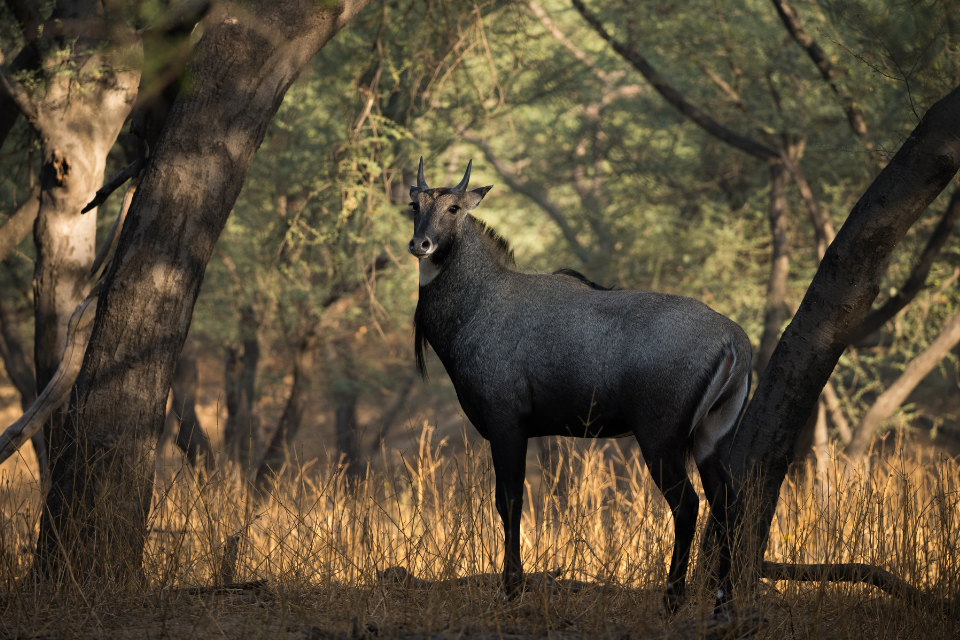
- Blue Bulls (Nilgai): Asia’s largest antelope.
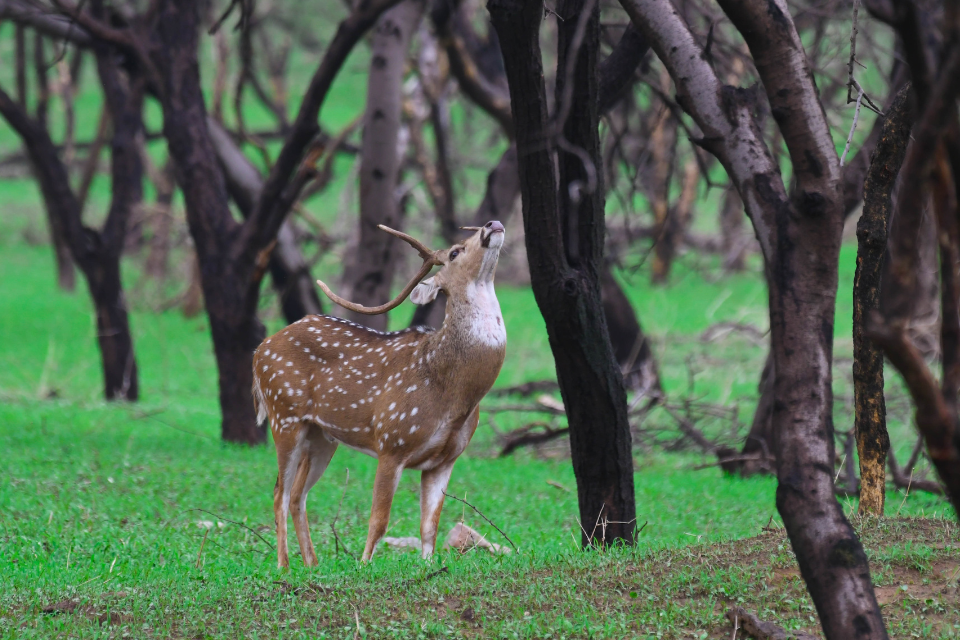
- Spotted Deer (Chital): The favorite snack of the leopard.
- Sambar Deer: Larger and more elusive.
- Indian Porcupine: Nocturnal but occasionally spotted.
4. A Birdwatcher’s Paradise
For birders, Jhalana is a hidden gem with over 150 species recorded. Keep your binoculars ready for:
- Indian Pitta (in summer)
- Dusky Eagle Owl
- Spotted Owlet
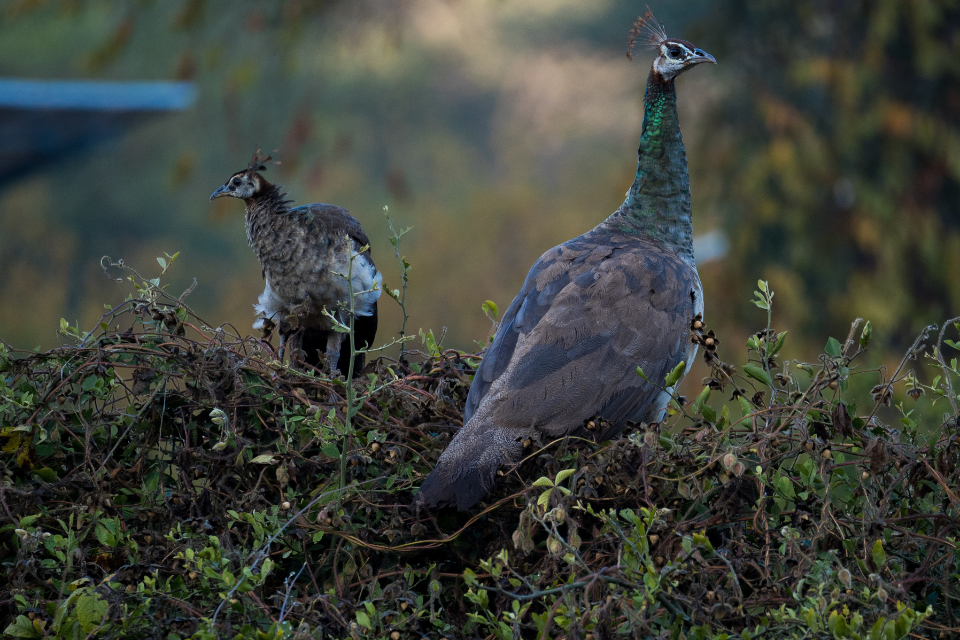
- Peacocks (abundant everywhere)
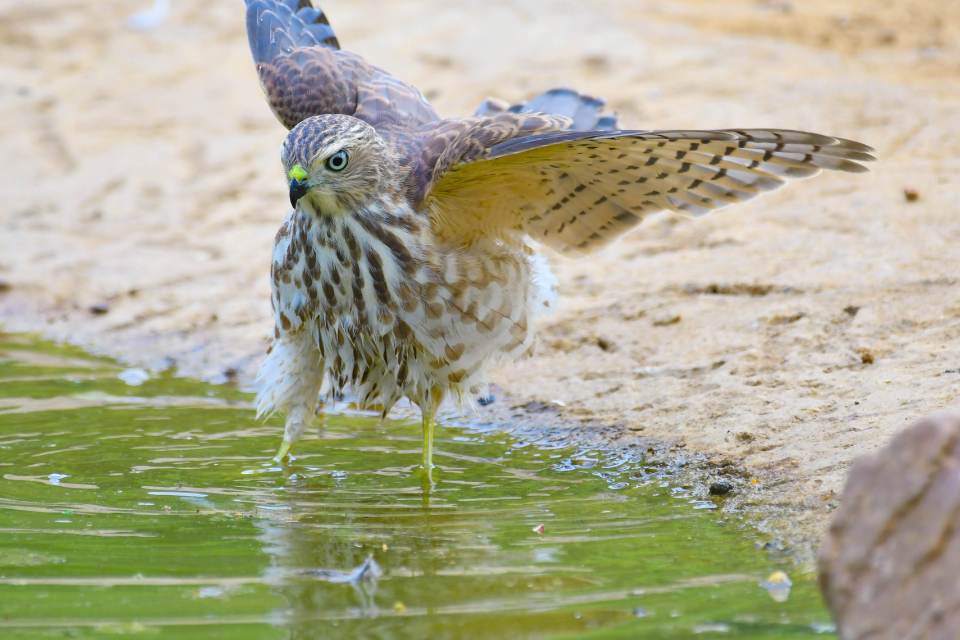
- Shikra and Honey Buzzards
Jhalana Safari Zones & Topography
The reserve is divided into distinct zones to manage tourist traffic, though the terrain is similar across the park—rugged Aravalli hills, deep valleys, and dry scrubland.
- Zone 1: often considered the premium zone with a high frequency of sightings near waterholes.
- Zone 2: offers beautiful landscapes and is equally good for spotting hyenas and leopards on the prowl.
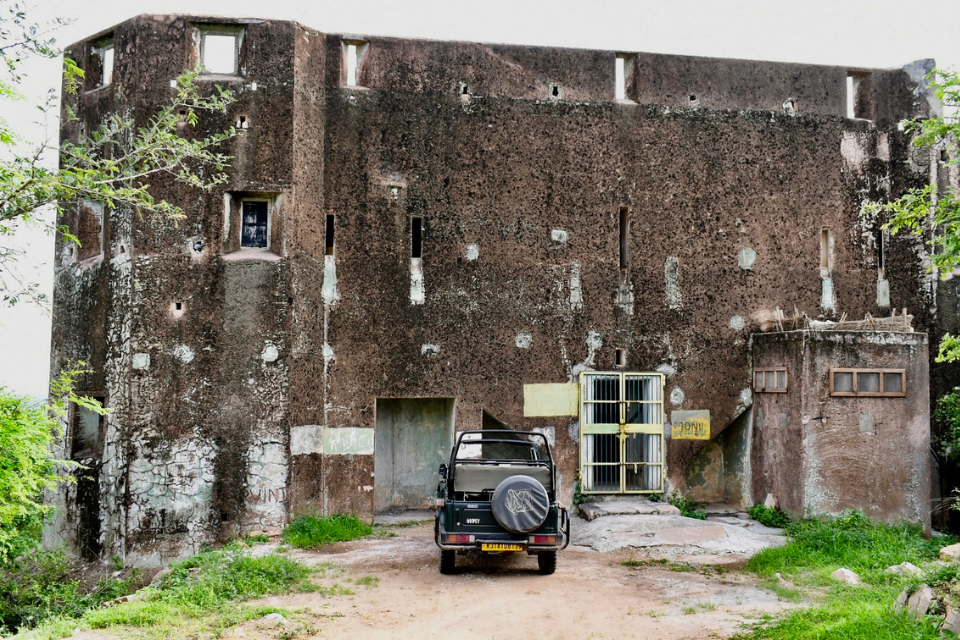
The narrow valleys and rocky outcrops provide the perfect camouflage for leopards, while the Shikar Audhi (an old hunting lodge) offers panoramic views of the park and the Jaipur skyline—a surreal contrast of nature and urbanization.
Jhalana Safari Timings
Jhalana Leopard Safari remains open throughout the year, even during the monsoon (unlike Ranthambore). However, timings change slightly with the seasons to align with sunrise and sunset.
| Season | Morning Safari | Evening Safari |
| Aug 1 – Oct 31 | 06:45 AM – 09:15 AM | 03:45 PM – 06:15 PM |
| Nov 1 – Jan 31 | 07:00 AM – 09:30 AM | 03:15 PM – 05:45 PM |
| Feb 1 – Mar 31 | 06:15 AM – 08:45 AM | 03:45 PM – 06:15 PM |
| Apr 1 – May 31 | 05:45 AM – 08:15 AM | 04:15 PM – 06:45 PM |
| May 1 – Jul 31 | 05:45 AM – 08:15 AM | 04:45 PM – 07:15 PM |
> Note: It is strictly advised to reach the gate 15-20 minutes before the scheduled time for ID checks and vehicle allotment.
Safari Booking & Vehicle Options
Exploring Jhalana Leopard Safari is done exclusively via 4×4 Open Gypsy Safaris. Private vehicles are not allowed inside the core zones.
Types of Booking:
- Gypsy (6-Seater): The standard vehicle. You can book a single seat (shared with others) or the entire gypsy for privacy.
- Half-Day/Full-Day Safari: For serious photographers, special permits allow you to stay in the park for longer hours, unrestricted by zone boundaries.
Current Price Estimates (2025):
- Indian Nationals: ₹1,400 – ₹1,800 per person (Sharing).
- Foreign Nationals: ₹2,800 – ₹3,500 per person (Sharing).
- Prices are subject to change by the forest department. Please check our website for the latest real-time pricing.
Why Book With Us? Government quotas fill up weeks in advance. By booking through our website, you get hassle-free processing, expert driver/guide allocation (crucial for tracking leopards), and 24/7 support.
Best Time to Visit Jhalana
- Winter (Nov – Feb): The most pleasant weather. Mornings are chilly (approx 5-10°C), but the animals love basking in the winter sun on the rocks.
- Summer (Mar – June): The “photographer’s season.” As water sources dry up, leopards frequent the man-made waterholes, providing predictable and incredible sighting opportunities.
- Monsoon (July – Sept): The jungle turns lush green. It’s beautiful, though spotting camouflaged cats becomes slightly harder.
How to Reach Jhalana Leopard Reserve
One of Jhalana’s biggest advantages is its location.
- By Air: The park entrance is just 6 km (15 mins) from Jaipur International Airport (JAI). You can literally land and be on a safari within an hour.
- By Train: Jaipur Junction is approximately 12 km
- By Road: Located in the Malviya Nagar industrial area, it is easily accessible by cab (Uber/Ola) or auto-rickshaw from anywhere in Jaipur.
Essential Tips for Visitors
To ensure you have the best experience, keep these tips in mind:
- Book in Advance: Jhalana has limited entry slots (approx. 10-15 jeeps per shift). Tickets often sell out weeks ahead.
- Clothing: Wear earth tones (browns, greens, beige). Avoid bright colors like red or neon, which can disturb wildlife. In winter, dress in layers—open jeeps get very cold!
- Dust Protection: The track is dusty. Carry a scarf or mask, and cover your camera gear.
- Silence is Golden: Loud noises scare animals away. Keep your voice down to increase your chances of a sighting.
- No Food: Eating inside the park is strictly prohibited to prevent littering and animal habituation.
Frequently Asked Questions (FAQ)
- Is a leopard sighting guaranteed in Jhalana? While no wildlife sighting is 100% guaranteed, Jhalana Leopard Safari has one of the highest success rates in India. It is rare for a visitor to leave without seeing a leopard, especially if you take multiple drives.
- Can we book a private vehicle? Yes, you can book a “Full Gypsy” to have the vehicle to yourself, your family, and the guide. This is highly recommended for photographers.
- Are kids allowed on the safari? Yes, children are allowed. Kids under 5 years are usually free, while those between 5-12 years may have discounted rates.
- How far is Jhalana from the city center (Hawa Mahal/City Palace)? It is very close—about 20-30 minutes by car, making it easy to combine a morning safari with afternoon sightseeing.
- Which is better: Morning or Evening safari? Both are excellent. In summer, mornings are cooler and pleasant. In winter, evenings are great as leopards come out early to soak up the fading sun.
- Is it safe? Yes, absolutely. The open gypsies are safe, and leopards here are accustomed to vehicles. A trained driver and nature guide accompanies you. However, you must never step out of the vehicle.
- Can I bring my own car? No, private vehicles are not permitted inside the reserve. You must use the registered safari gypsies.
- What ID proof is required? All guests must carry the original ID used for booking (Aadhar, Driving License, etc.). Foreign nationals must carry their Passport.
- Is the park open in the rain? Yes, unlike many national parks in India that close for the monsoon, Jhalana remains open year-round.
- How long does the safari last? A standard safari shift lasts approximately 2.5 to 3 hours.
Conclusion
Jhalana Leopard Safari offers a thrill that is hard to match. It breaks the myth that you need to travel to remote corners of the world to see big cats. Here, on the edge of a royal city, nature thrives in all its glory. Whether it’s the piercing gaze of a leopard, the laugh of a hyena, or the calm of the Aravalli hills, Jhalana promises memories that will last a lifetime.
Ready to spot the Phantom of the Forest? Don’t leave your adventure to chance. Safari permits are limited and fill up fast.
Disclaimer
This blog is for informational purposes. Safari rules, timings, and pricing are subject to change by the Rajasthan Forest Department. We act as a booking facilitator to ensure you get the best experience, but we do not control wildlife sightings, which are a matter of nature. Please book responsibly and respect the jungle.