What to Pack for an Indian Leopard Safari? Clothing, Gear & Cultural Etiquette
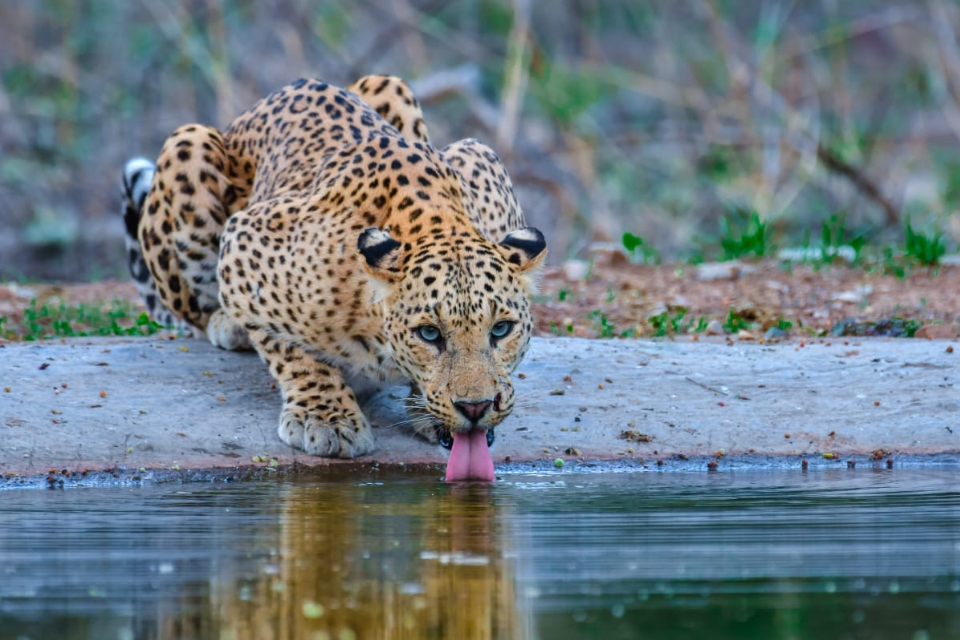
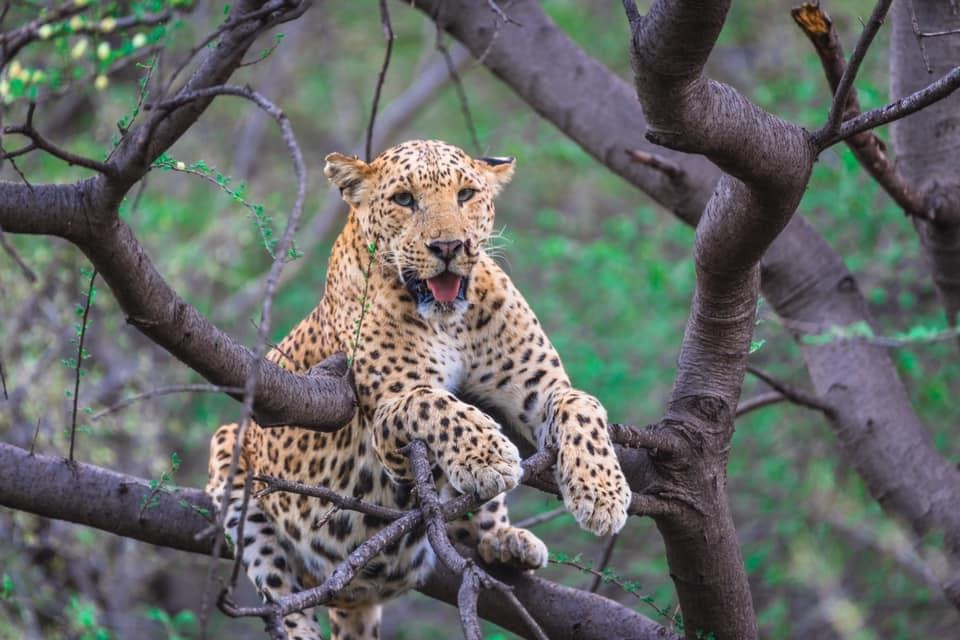
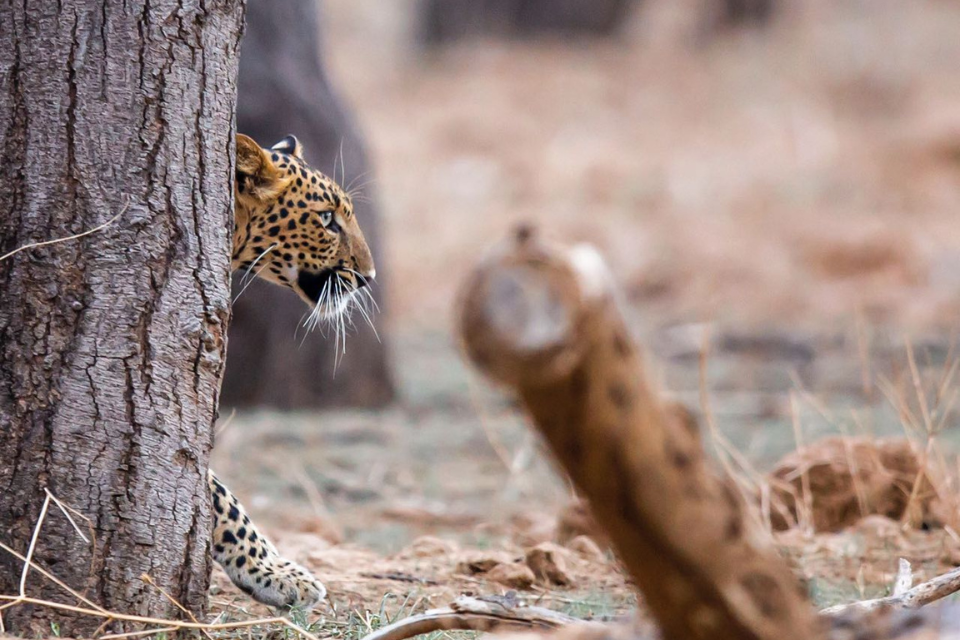
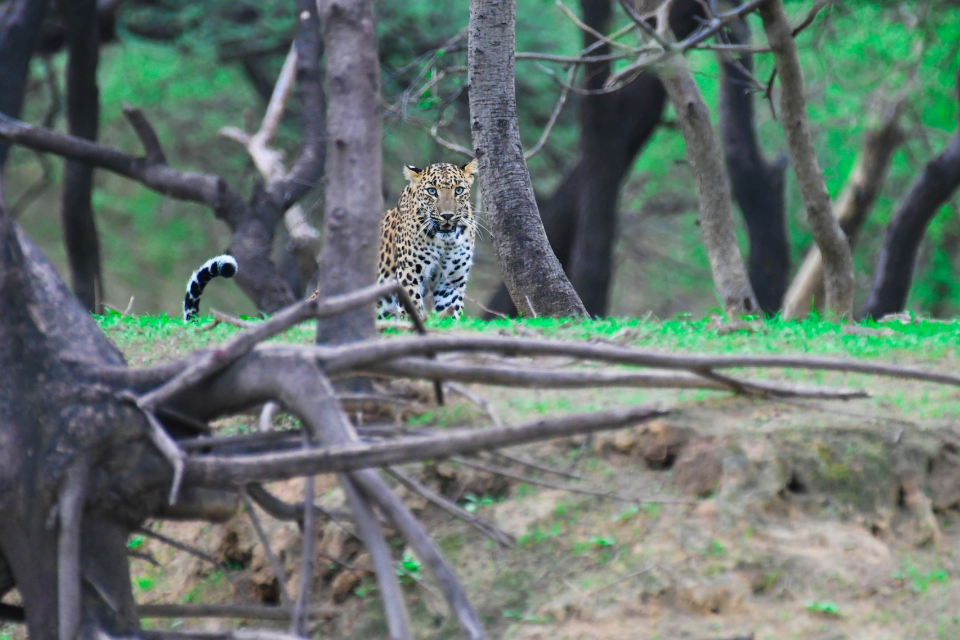
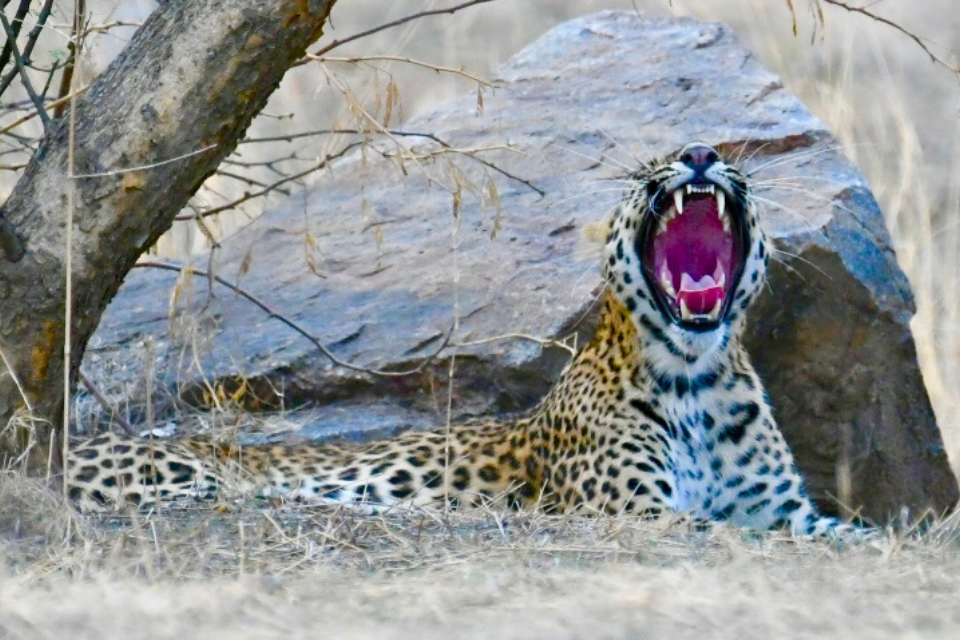
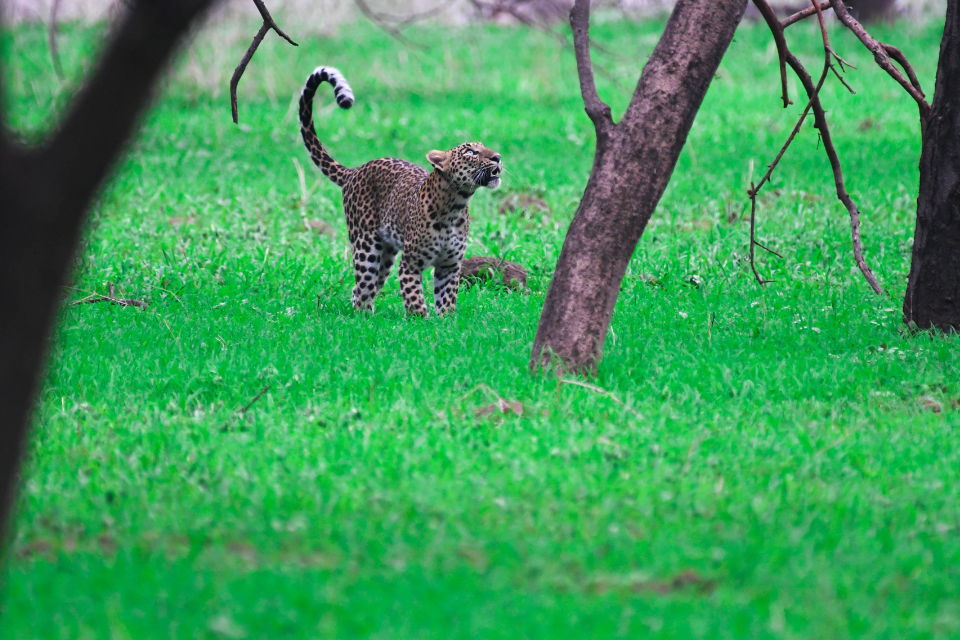
The golden hour in Rajasthan is unlike any other. As the sun dips behind the Aravalli hills, the dry deciduous scrub forest transforms into a theater of shadows. Suddenly, a flick of a rosette-patterned tail gives it away—a leopard, the ghost of the forest, is perched on a rocky outcrop. It’s a moment of pure adrenaline, but if you’re shivering in the wrong clothes or struggling with a dead camera battery, the magic fades quickly.
Preparing for a wildlife expedition in India requires more than just enthusiasm; it requires a strategic safari packing list that travelers to India can rely on. Whether you are heading to the dense jungles of Central India or the rocky terrains of the Jhalana Panther Safari, being prepared is the difference between a frustrating trip and a life-changing encounter.
In this comprehensive guide, we’ll break down exactly what to wear for a Jaipur-style safari, the essential wildlife gear India’s terrain demands, and the cultural etiquette you must respect while exploring the heart of the wild.
The Golden Rule of Safari Clothing: Layers and Earth Tones
When deciding what to wear on safari in Jaipur or any other Indian reserve, think like the animal you are trying to spot. Leopards are masters of camouflage; your goal is to blend in, not stand out.
Why Colors Matter
Bright colors like red, neon yellow, or bright white are seen as “danger signals” or “distractions” by wild animals. They can alert a leopard to your presence long before your vehicle gets close, causing the cat to retreat into the undergrowth.
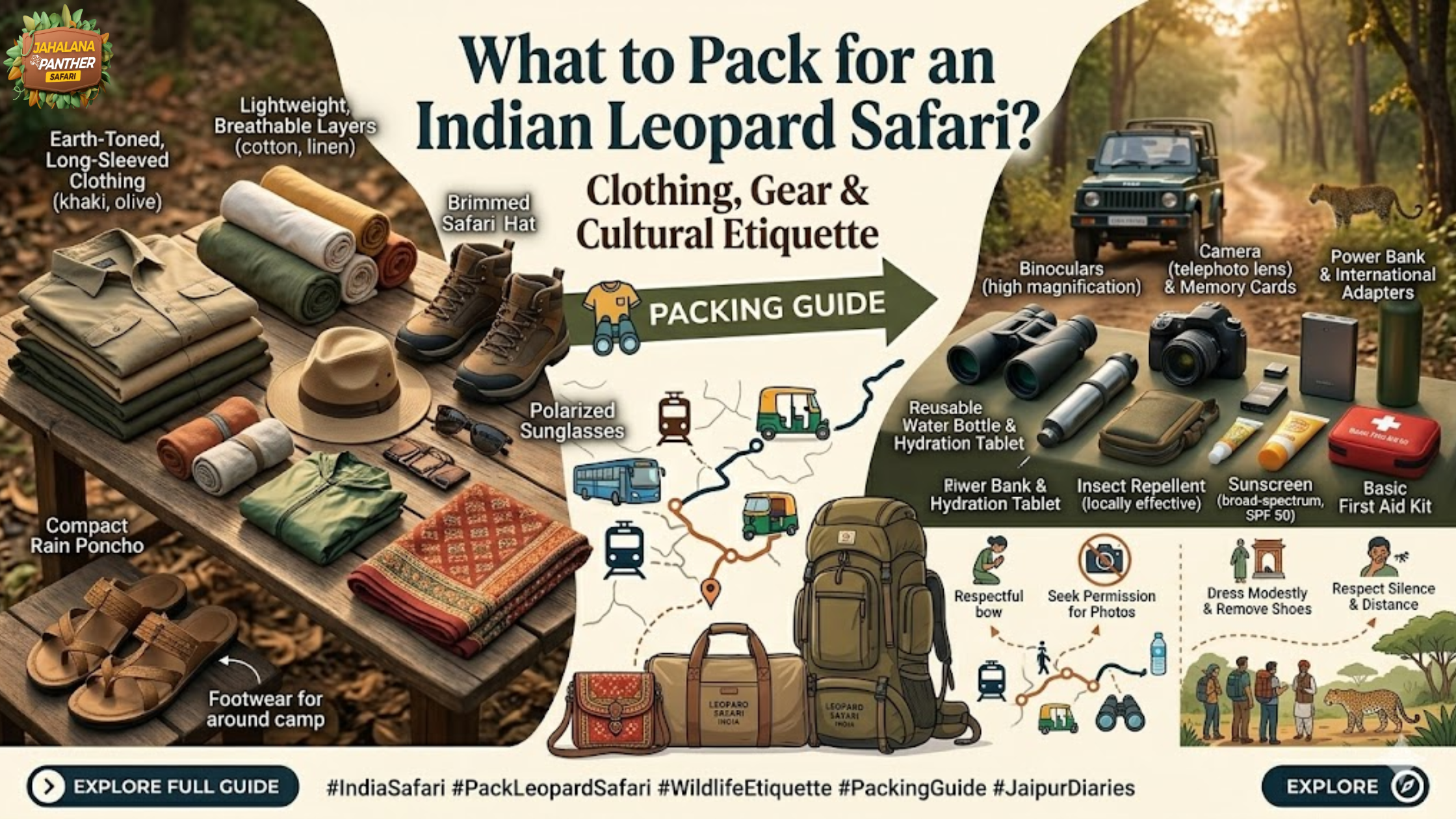
- Best Colors: Khaki, olive green, tan, beige, and dull grey.
- Colors to Avoid: Black and dark blue (they attract Tsetse flies and mosquitoes), and anything neon.
The Power of Layering
Indian weather is notoriously unpredictable. A morning safari might start at a chilly 10°C (50°F) and soar to 35°C (95°F) by noon.
- Base Layer: A moisture-wicking t-shirt or a lightweight cotton shirt.
- Middle Layer: A fleece or a light sweater for the early morning breeze.
- Outer Layer: A windbreaker or a heavy jacket (if traveling between November and February).
Footwear Essentials
You aren’t hiking on a treadmill. Safari tracks are dusty and uneven.
- Shoes: Closed-toe hiking boots or sturdy sneakers are non-negotiable. Avoid flip-flops as they offer no protection against thorns or insects.
- Socks: Breathable cotton socks will prevent blisters during long hours in the gypsy.
Essential Wildlife Gear India: Capturing the Moment
Packing the right wildlife gear in India requires a balance between being high-tech and staying lightweight. You don’t want to be fumbling with heavy bags when a leopard is crossing the road.
Optics: Seeing the Unseen
A leopard’s camouflage is nearly perfect. To spot one sitting in a tree or hidden in a bush, a good pair of binoculars is your best friend.
- Recommendation: 8×42 or 10×42 binoculars are the industry standard for clarity and light intake.
Photography Gear
- Lenses: Leopards are often spotted at a distance. A telephoto lens (at least 300mm to 600mm) is ideal.
- Bean Bags over Tripods: In a moving safari vehicle (Gypsy), tripods are bulky and useless. Many photographers use bean bags to steady their cameras on the vehicle’s railing.
- Protection: The dust in Indian parks is relentless. Bring a “rain cover” or a simple dust wrap for your camera body and lenses.
Power and Storage
There is nothing worse than seeing a “Memory Full” message during a kill sequence.
- Extra Batteries: The cold morning air drains batteries faster than usual.
- High-Speed SD Cards: Ensure you have at least two 64GB cards with high write speeds.
Travel Essentials Safari: Beyond the Basics
Your travel essentials safari kit should focus on health, hydration, and protection from the elements.
Sun and Dust Protection
The Indian sun is unforgiving, and the open-top vehicles offer no shade.
- Wide-Brimmed Hat: Protects your neck and face. Ensure it has a chin strap so it doesn’t fly off when the Gypsy speeds up.
- Buff or Scarf: This is a lifesaver. Use it to cover your nose and mouth when driving on dusty tracks to avoid “Safari Cough.”
- Sunscreen and Lip Balm: Use a high SPF (50+) and reapply every few hours.
Health and Hygiene
- Insect Repellent: Especially important for evening safaris near water bodies.
- Personal Medkit: Include antihistamines, motion sickness pills (the tracks are bumpy!), and basic first aid.
- Hand Sanitizer: Water is scarce in the forest; keep your hands clean before snacking.
Cultural Etiquette: Respecting the Land and the People
A safari in India isn’t just about animals; it’s about the ecosystem and the communities that protect it.
Silence is Golden
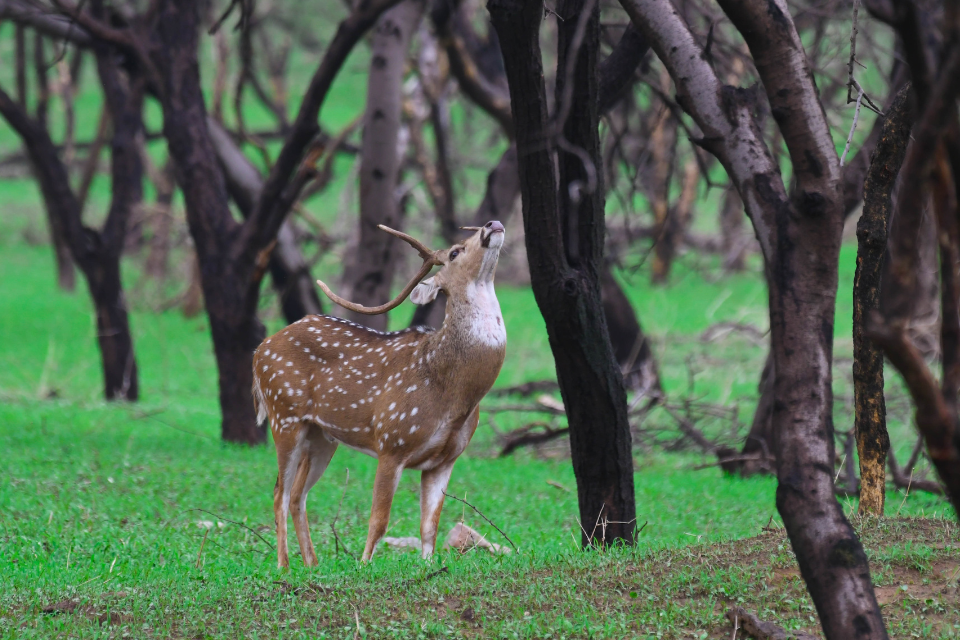
The forest has its own language. Alarm calls of deer and monkeys tell the guide where the leopard is. If you are talking loudly or playing music, you miss these vital clues and disturb the wildlife. Keep your voice to a whisper at all times.
No Littering
It sounds obvious, but even an orange peel can disrupt the local ecosystem. Whatever you bring into the park must leave the park in your bag.
Respect Your Guide and Driver
These individuals spend their lives in the forest. Their knowledge is superior to any GPS. Trust their judgment if they decide to move away from a crowded spot or if they tell you to stay inside the vehicle. Never encourage your driver to go off-road or chase an animal for a better photo.
Sample Safari Packing List India (Quick Checklist)
Clothing:
- [ ] 2-3 Neutral colored cotton shirts (long-sleeved for sun protection)
- [ ] 1 Lightweight fleece or windbreaker
- [ ] 1 Pair of sturdy hiking shoes
- [ ] Wide-brimmed hat and polarized sunglasses
- [ ] Buff/Scarf for dust
Gear:
- [ ] Binoculars (8×42)
- [ ] DSLR/Mirrorless Camera with Telephoto Lens
- [ ] Extra batteries and 2x SD Cards
- [ ] Universal power adapter
- [ ] Portable power bank
Health & Wellness:
- [ ] High SPF Sunscreen
- [ ] DEET-based insect repellent
- [ ] Reusable water bottle (Avoid single-use plastic)
- [ ] Basic first-aid kit
Planning for Different Seasons
The safari packing list for the India guide changes slightly depending on when you visit:
The Winter (November – February)
This is peak leopard-spotting season. The air is crisp, but the early mornings are freezing. You will need heavy woolens, gloves, and perhaps even a small blanket for your lap while in the open Gypsy.
The Summer (March – June)
The vegetation thins out, making it easier to spot leopards near water holes. However, temperatures can hit 40°C+. Focus on linen and light cotton. Hydration becomes your #1 priority.
Conclusion: Ready for the Roar?
Packing for a leopard safari is an exercise in mindfulness. By selecting the right wildlife gear India requires and understanding what to wear safari Jaipur style, you set yourself up for a seamless adventure. Remember, a safari is a privilege, not a right. When you pack with respect for the environment and the culture, the forest rewards you in ways words cannot describe.
Takeaway: Prioritize comfort, camouflage, and conservation. Whether you are a seasoned photographer or a first-time traveler, your preparation is the bridge to an unforgettable wildlife encounter.
Frequently Asked Questions ( FAQ )
What is the best time for a leopard safari in India?
The best time is between October and April. During winter, the weather is pleasant, while in the early summer (March-April), leopards are frequently spotted near water bodies as vegetation thins out.
Can I wear bright colors like white or red on a safari?
No, it is strictly advised to avoid bright colors. They act as a distraction for wildlife. Stick to earth tones like khaki, olive green, and beige to blend in with the natural surroundings.
Is it safe to carry a mobile phone on a leopard safari?
Yes, but it must be kept on silent mode. Using mobile phones for loud music or calls is prohibited as it disturbs the animals and interferes with the forest’s natural alarm calls.
Do I need a heavy professional camera to enjoy the safari?
While a DSLR with a telephoto lens (300mm+) is ideal for photography, a good pair of binoculars (8×42) is actually more important for general viewing and spotting camouflaged leopards.
Is there a specific dress code for the Jhalana Panther Safari in Jaipur?
There is no official uniform, but following the “What to Wear Safari Jaipur” guide (neutral colors and sturdy closed-toe shoes) is highly recommended for safety and better sightings.
Should I carry a dust mask or a scarf?
Yes, a buff or a scarf is a travel essential. Safari tracks in India are very dusty, and covering your face while the vehicle is moving will protect you from “Safari Cough” and sun exposure.
Are children allowed on leopard safaris?
Yes, children are usually allowed, but parents must ensure they remain quiet and seated inside the vehicle at all times for their own safety and the comfort of the animals.