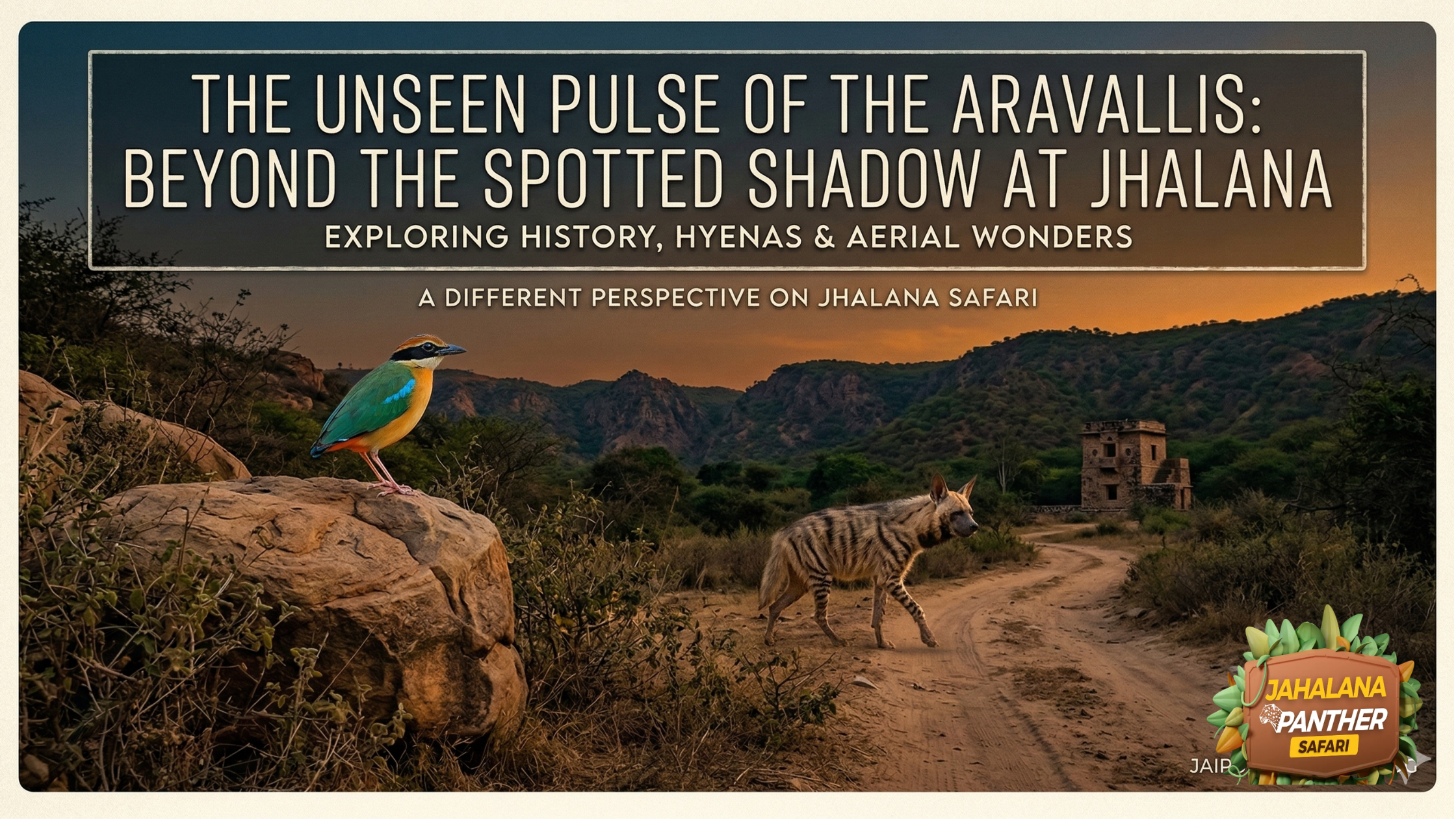
The Unseen Pulse of the Aravallis: Beyond the Spotted Shadow at Jhalana Safari
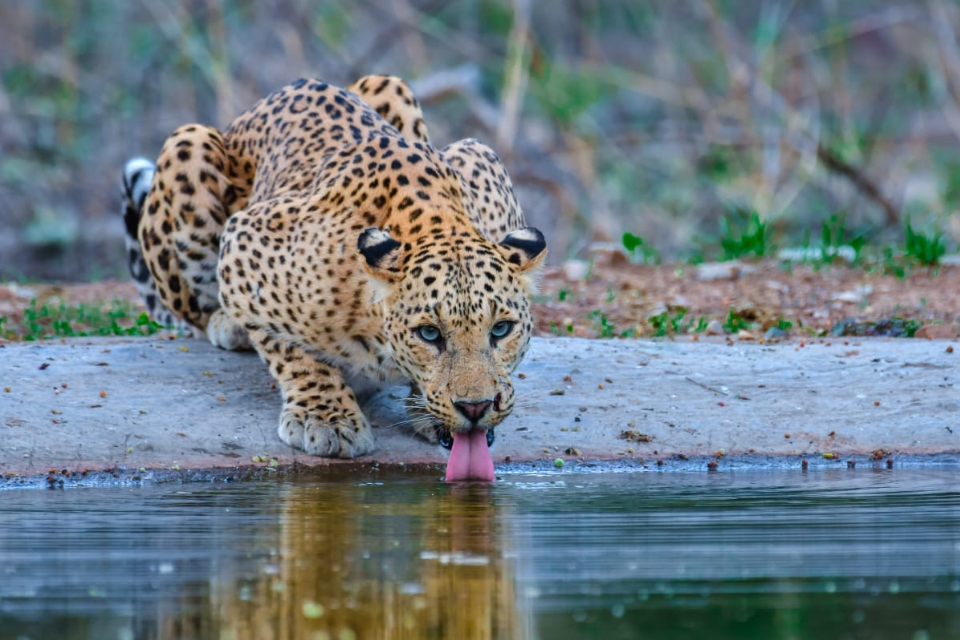
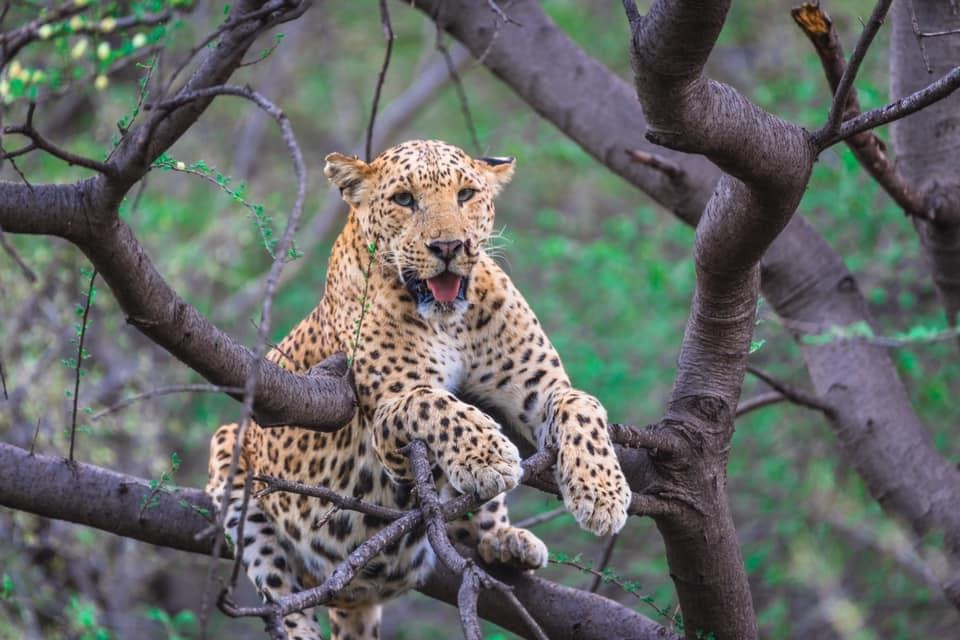
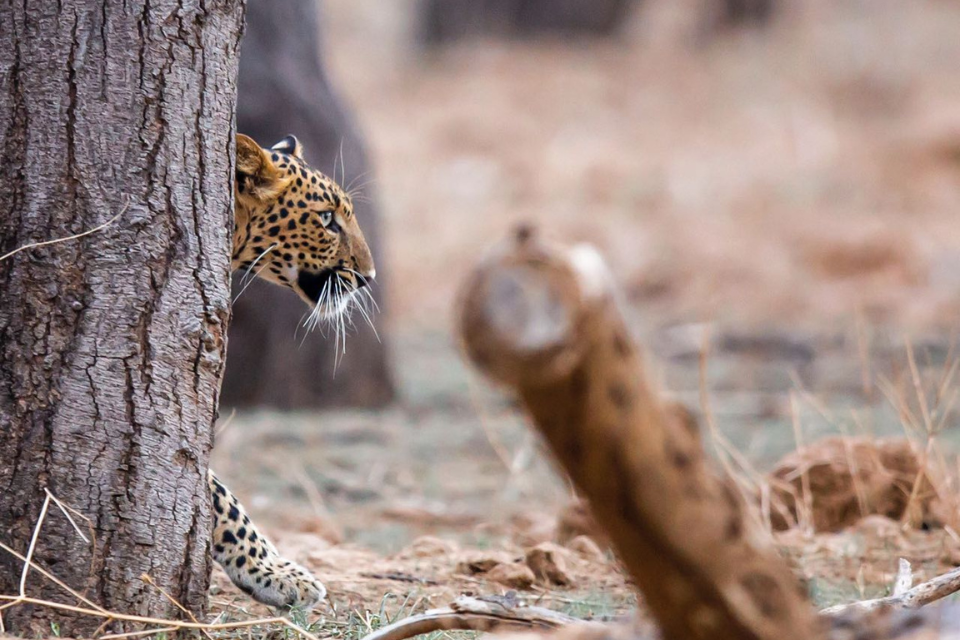
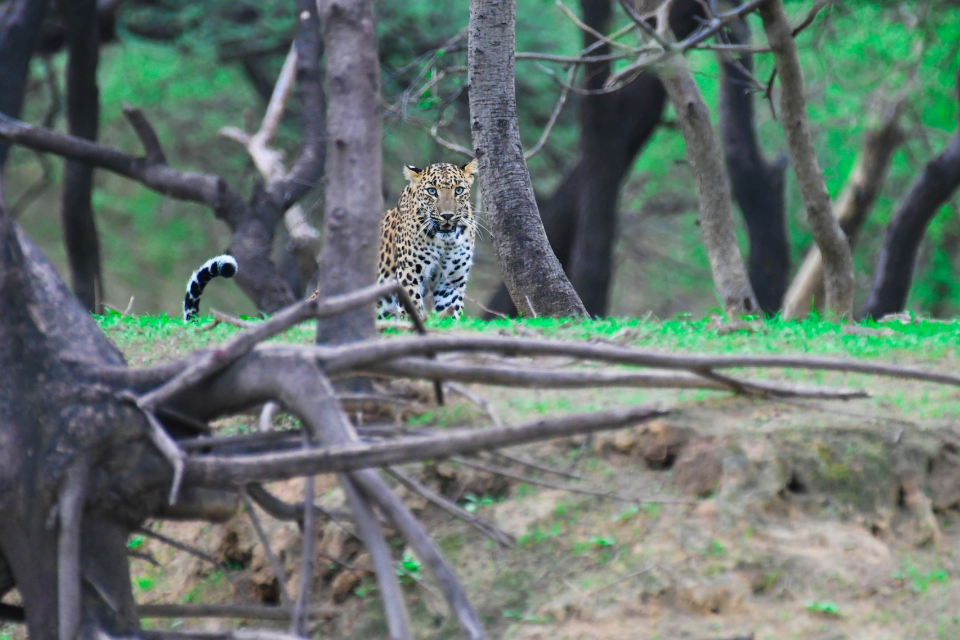
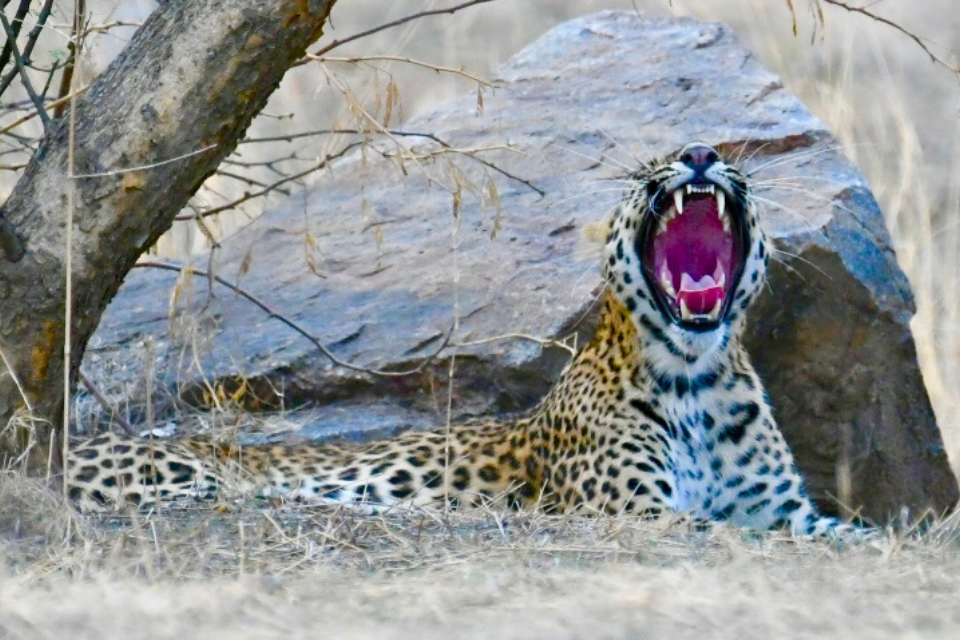
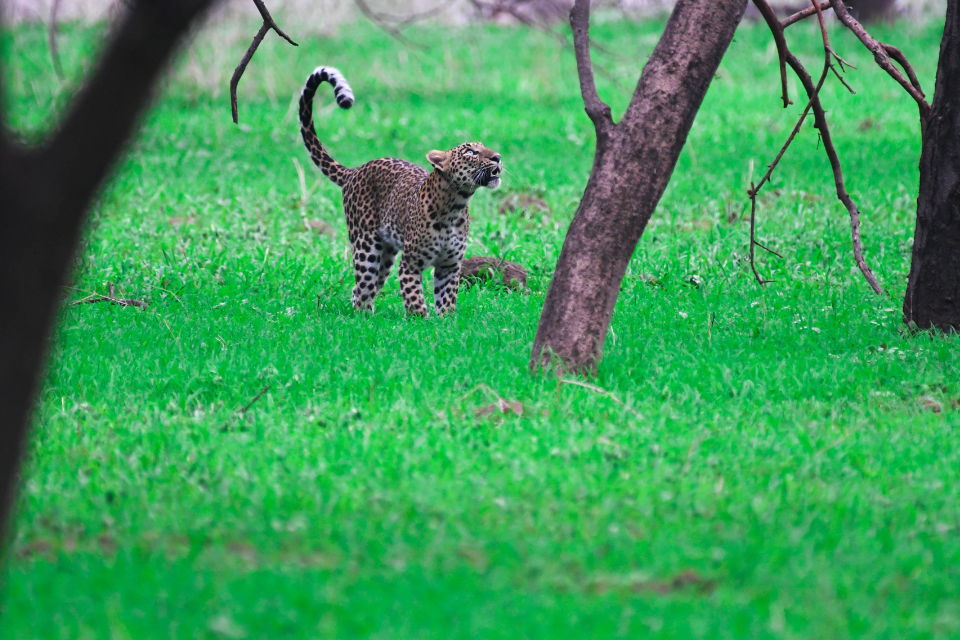
When you think of a Jhalana Safari, your mind likely flashes to the golden eyes of a leopard peering through the Dhok leaves. It’s the headline act, the “Spotted King” of Jaipur. But if you only look for the big cat during your Jhalana Safari, you miss the forest for the trees—literally. The Safari experience takes place in a 23-square-kilometer living laboratory of urban conservation, a historical hunting ground turned sanctuary, and a complex ecosystem where the desert meets the ancient hills.
This is not just another guide about booking tips or standard itineraries. This is a comprehensive journey into the unseen pulse of a Jhalana Safari—the royal history of the Shikaar Audi, the mysterious scavengers of the night, the avian paradise hidden in the canopy, and the silent botanical sentinels holding this urban wild together.
1. The Shikaar Audi: A Silent Witness to Royal History
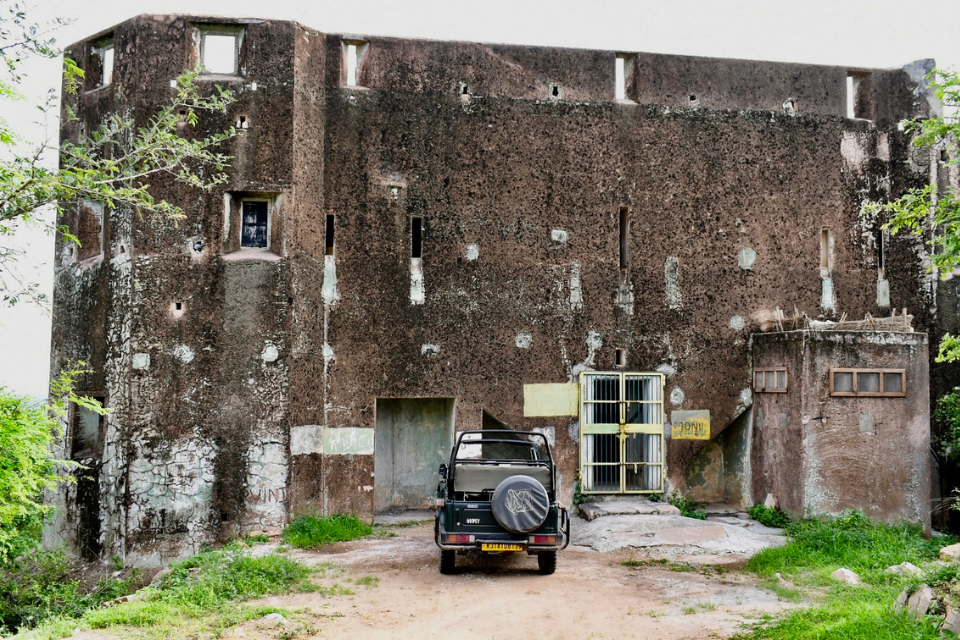
Deep within the Safari routes stands a three-story stone structure that whispers tales of a bygone era. The Shikaar Audi (Hunting Lodge) was once the vantage point for the Maharajas of Jaipur. In 1876, the Prince of Wales famously visited these very hills, and records indicate a tigress was shot right here during that royal visit.
The Architecture of the Hunt
The Audi is strategically perched on a hill, providing a 360-degree view of the valley below. In the 19th century, this wasn’t for photography; it was for “Shikaar” (hunting). The structure is built with local Aravalli stone, designed to blend into the hillside. It features an animal-spotting platform that today serves as the ultimate sunrise and sunset viewpoint for travelers on a Jhalana Safari. The architecture itself is a marvel, using thick walls to keep the interior cool during the blistering Rajasthan summers, a design feature that modern architects still study today.
From Rifles to Radiance: The Great Transition
The transition of the Shikaar Audi from a site of bloodsport to a conservation center is the heart of the Jhalana Safari story. It serves as a reminder that this area was once a tiger habitat—the last tiger was recorded here in 1948. When the tigers vanished due to hunting and habitat loss, the leopards didn’t just survive; they claimed the throne of the Jhalana park. Standing atop the Audi today, you aren’t just looking at a forest; you are looking at a 150-year-old transition in human consciousness. The guns have been replaced by high-end telephoto lenses, and the thrill of the kill has been replaced by the thrill of the “click.”
2. The Scavenger’s Symphony: The Indian Striped Hyena
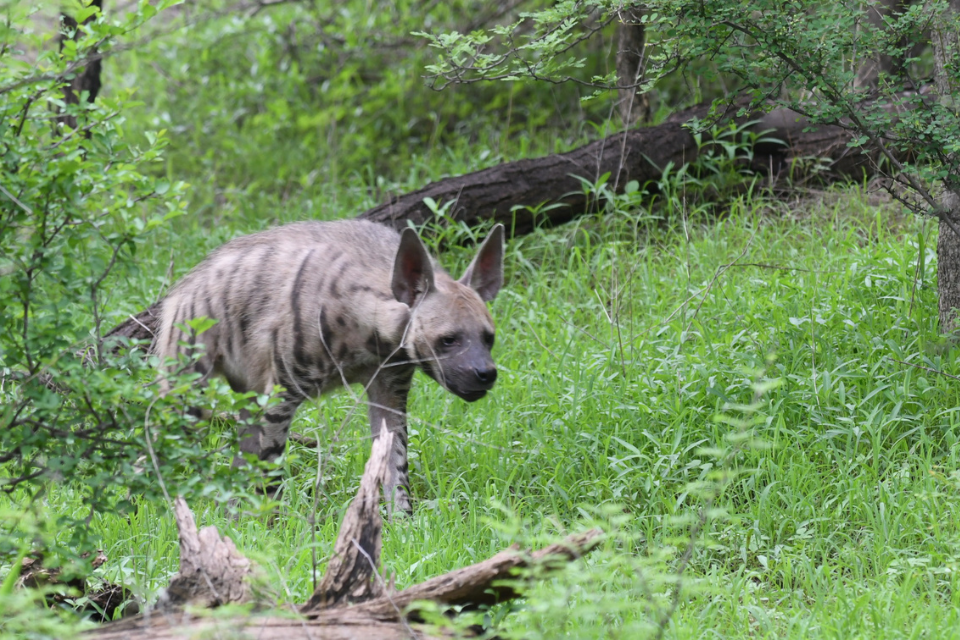
While every tourist on a Jhalana Safari scans the acacia branches for leopards, the real “ghost of the forest” is often moving silently on the ground. A Jhalana Safari is one of the premier ways in India to spot the Indian Striped Hyena (Hyaena hyaena).
The Underdog of the Aravallis
Unlike their spotted African cousins, Striped Hyenas are solitary, shy, and largely nocturnal. However, the Jhalana Safari environment is unique. Because the leopards here have become diurnal (active during the day), the hyenas have followed suit to some extent, occasionally being spotted during the “golden hours” of an early morning Jhalana Safari. They are scavengers, but they are also highly efficient hunters of smaller prey, filling a vital niche in the Jhalana Safari food chain.
Ecological Importance: The Bone-Crushers
With their sloping backs and impressive “mohawk” manes that bristle when threatened, hyenas are the unsung janitors of the Jhalana Safari ecosystem. They possess the strongest jaws in the animal kingdom relative to their size, capable of crushing bones that even leopards leave behind. Watching a hyena emerge from a rocky cleft during your Jhalana Safari is a hauntingly beautiful experience. They represent the “darker” side of the forest—mysterious, misunderstood, and vital for a healthy, disease-free environment. Without them, the Jhalana Safari park would struggle to process organic waste, leading to the spread of illness among other species.
3. An Avian Paradise: 150+ Reasons to Look Up
A Jhalana Safari is a premier destination for birdwatching. Because the reserve is a dry deciduous scrub forest, it attracts species you won’t easily find in the lush wetlands of Bharatpur. Your Jhalana Safari can yield a checklist of over 150 resident and migratory species.
The “Nine-Colored” Jewel: Indian Pitta
The Indian Pitta is the star of the monsoon Jhalana Safari. This small, stubby-tailed bird is famous for its vibrant plumage—a mix of green, blue, yellow, and red. It’s a summer visitor that breeds in the thick underbrush, and its distinct two-note whistle is the soundtrack of a rainy day Jhalana Safari. Birders from across the country book a Jhalana Safari specifically during July and August just to catch a glimpse of this “Jewel of the Forest.”
Raptors and Owls: The Aerial Predators
-
The Dusky Eagle-Owl: A massive, silent predator of the night often seen perched on high rocky ledges during a late evening Jhalana Safari.
-
White-bellied Minivet: A rare find for any birder on a Jhalana Safari, often seen flitting through the canopy like a spark of orange and white.
-
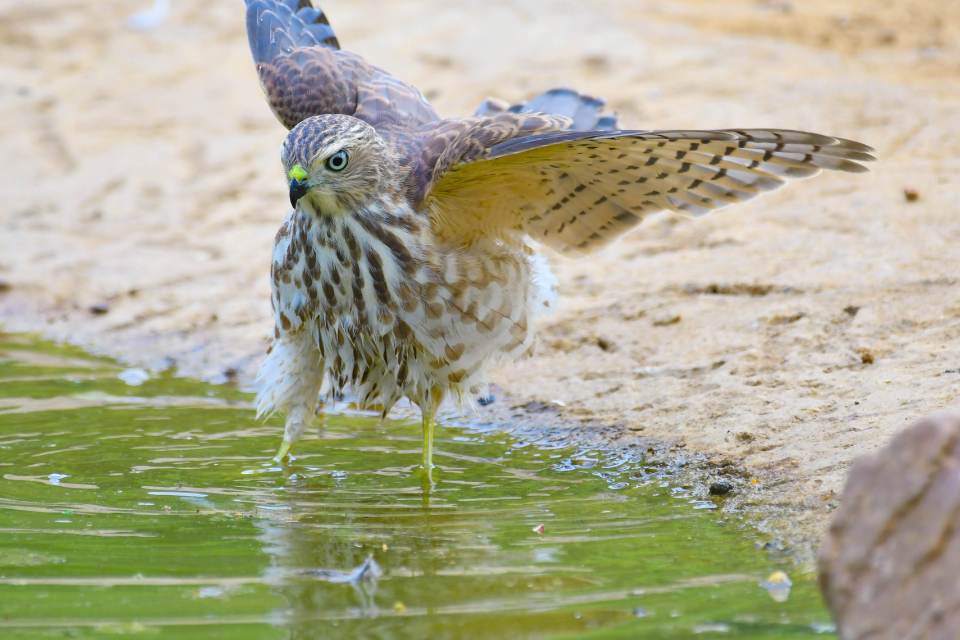
The Shikra: Often called the “Little Bandit,” this small hawk is a master of camouflage and a common sight on the lower branches during a Jhalana Safari.
-
Spotted Owlet: These charismatic little owls are often found huddling in the hollows of ancient trees near the Jhalana Safari park entrance, seemingly indifferent to the passing Gypsys.
4. The Botanical Backbone: A Masterclass in Survival
The flora seen on a Jhalana Safari isn’t just a backdrop; it’s a living infrastructure. The landscape of the Safari park is a “Dry Deciduous Scrub Forest,” which means the plants here have evolved to survive extreme heat and minimal water.
The Dominant Duo: Dhok and Khejri
-
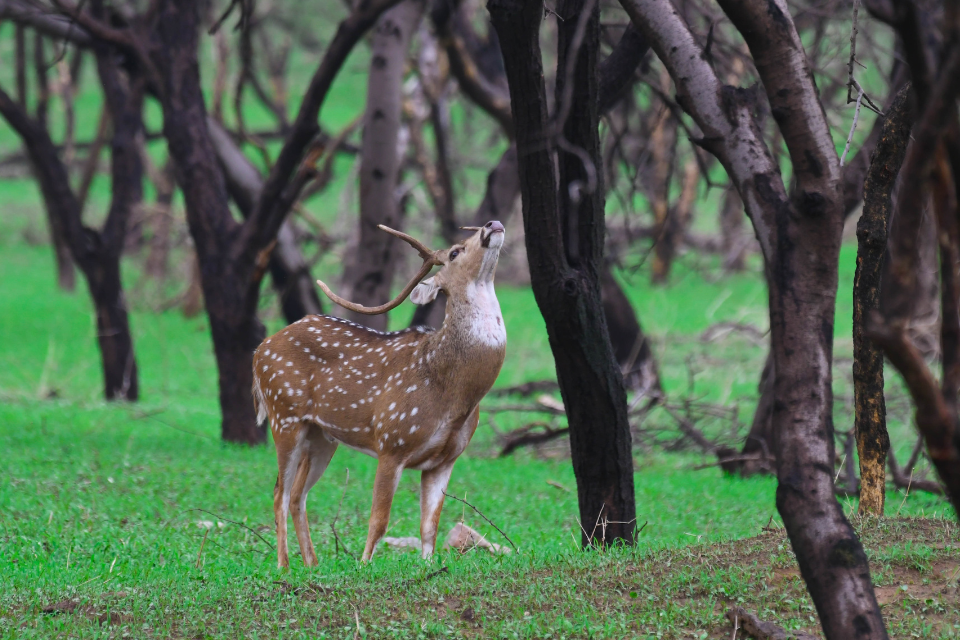
Anogeissus pendula (Dhok): This is the soul of the Jhalana Safari hills. In the peak of summer, these trees look like grey, lifeless skeletons. But with the first drop of rain, the entire Jhalana Safari reserve turns a neon, emerald green almost overnight. The wood is incredibly dense, historically used for making agricultural tools, and the leaves provide essential fodder for the Sambar and Chital deer.
-
Prosopis cineraria (Khejri): Known as the “Life Tree of the Desert,” the Khejri is the state tree of Rajasthan. It stays green even in the harshest droughts because its roots can reach depths of up to 30 meters to find groundwater. During your Safari, you will notice that the Khejri is often the only green spot in an otherwise brown landscape.
The “Invader” Problem: Prosopis juliflora
A critical part of the modern Jhalana Safari story is the fight against Prosopis juliflora (locally known as Vilayati Babul). Introduced decades ago for firewood, this invasive species began choking out native plants and preventing the growth of grasslands. The Rajasthan Forest Department is now actively removing it from the Safari area to restore the natural balance and create better grazing grounds for herbivores.
5. The Geology of the Aravallis: Mountains Older Than Time
When you drive through the Jhalana Safari tracks, you are driving over the Aravalli Range, one of the oldest geological features on Earth. These mountains were formed nearly 2 billion years ago, long before the Himalayas even existed.
A Fortress of Quartzite
The sharp cliffs and narrow valleys seen on a Jhalana Safari are composed of quartzite and metamorphic rocks. This rugged terrain is exactly why the leopards thrive here. The “nullahs” (dry watercourses) and rocky ledges provide perfect ambush points and cool shelters during the Rajasthan summer. The pink and grey hues of the rocks at sunset create a “glow” that is unique to the Jaipur landscape, making Safari a dream for landscape photographers seeking to capture the intersection of geology and biology.
6. Urban Coexistence: A Global Case Study
What makes a Jhalana Safari truly “different” from any other wildlife experience is its location. It is a “pocket forest” surrounded by a city of 4.3 million people. The Jhalana wall is the only thing separating a wild apex predator from a bustling metro station and luxury apartments.
The Wall of Peace
A 2-meter-high stone wall is the only thing separating a wild apex predator from the city. This is a global case study in human-leopard coexistence. Because there are no tigers or wolves to compete with, and because they have become accustomed to the non-threatening presence of Safari vehicles, the leopards of Jhalana are remarkably relaxed. They have adapted their behavior to live on the edge of the urban world, proving that nature and humanity can coexist if we respect the boundaries. This is the ultimate takeaway from a Jhalana Safari: the resilience of nature in the face of urban sprawl.
Frequently Asked Questions (FAQs)
-
Is Jhalana Safari open during the monsoon season? Yes, unlike many national parks in India (like Ranthambore or Kanha), Jhalana Safari remains open throughout the year, including the monsoon months (July to September).
-
Can I visit the Shikaar Audi during my Safari? Most Jhalana Safari routes include a stop at the Shikaar Audi. It’s a great place to stretch your legs, use the binoculars, and take in the panoramic views of the Aravallis.
-
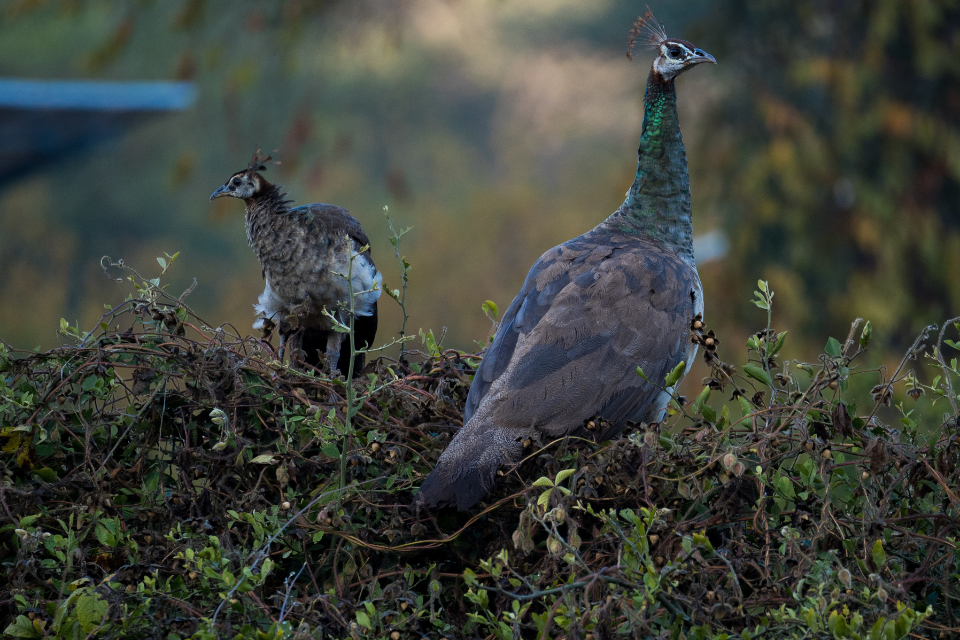
What is the best time for birdwatching on a Jhalana Safari? While residents like the Peafowl are always present, the winter months (November to February) bring migratory raptors, and the monsoon is the best time for the Indian Pitta on your Safari.
-
Are there any other predators on a Jhalana Safari? Yes, a Jhalana Safari can reveal the Striped Hyena, Desert Fox, Golden Jackal, Jungle Cat, and even the rare Rusty-spotted Cat.
-
How many safari zones are in a Jhalana Safari? The Jhalana Safari park is managed with multiple routes, primarily Zone 1 and Zone 2. You can explore different terrains in each.
-
Can I see a Hyena in the morning on a Jhalana Safari? While primarily nocturnal, hyenas are occasionally spotted on early morning Jhalana Safari tours before they retreat to their rocky dens.
-
Why are the leopards in Jhalana seen during the day? Leopards on a Safari are diurnal because they are the apex predators here and are comfortable with the regulated presence of vehicles.
-
What should I carry on a Safari? Binoculars are a must. Carry a dust cover for your camera, wear neutral-colored clothing, and always bring a reusable water bottle on your Safari.
-
How do I book a Jhalana Safari? Bookings for a Jhalana Safari can be made through the official Rajasthan Forest Department website or via authorized local tour operators.
-
Is Jhalana Safari suitable for a half-day trip? Absolutely. Its proximity to the city center makes a Safari the most accessible wildlife experience in India for those with limited time.
Disclaimer
This blog is for informational and educational purposes only. Wildlife sightings on a Jhalana Safari are subject to nature, weather, and luck; no sighting is ever guaranteed. We advocate for responsible tourism—please maintain silence, do not litter, and respect the animals’ space during your Jhalana Safari.