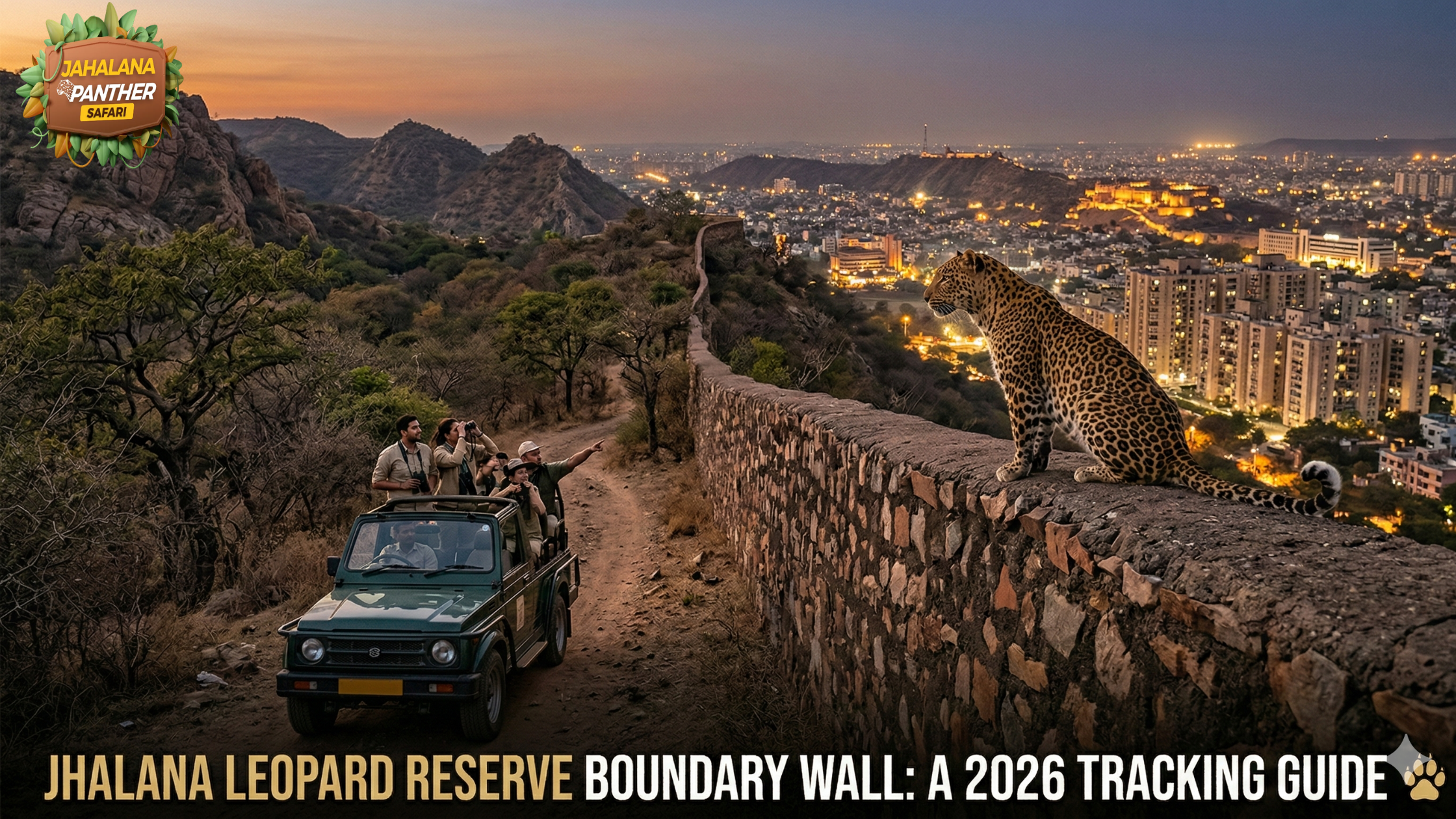
In the heart of Rajasthan’s bustling capital, where the amber glow of the Pink City meets the ancient, rugged slopes of the Aravalli hills, lies a geographical paradox that defies modern ecology. Jhalana Reserve is a mere 20 square kilometers of scrub forest, an emerald island entirely surrounded by a sea of four million people. As we navigate the complex landscape of wildlife conservation in 2026, the most fascinating story isn’t just about the apex predator; it is about the physical structure that dictates its existence: the Jhalana Reserve boundary wall.
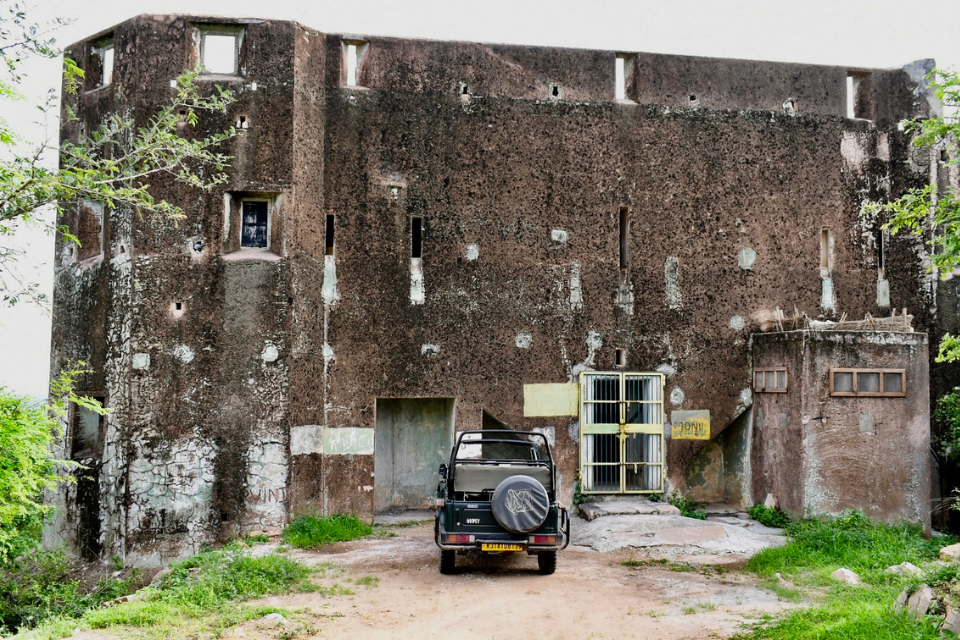
This 10-foot-high structure of stone and mortar isn’t just a perimeter; it is a frontier. On one side are luxury high-rises, universities, and industrial hubs; on the other, one of the highest densities of leopards on Earth. This 1500-word guide takes you on a journey to the very edge of the wild, exploring how the Jhalana Reserve boundary wall has shaped the behavior, hunting patterns, and very survival of Jaipur’s famous “City Cats.”
1. The Urban Jungle: Defining the 2026 Dynamic
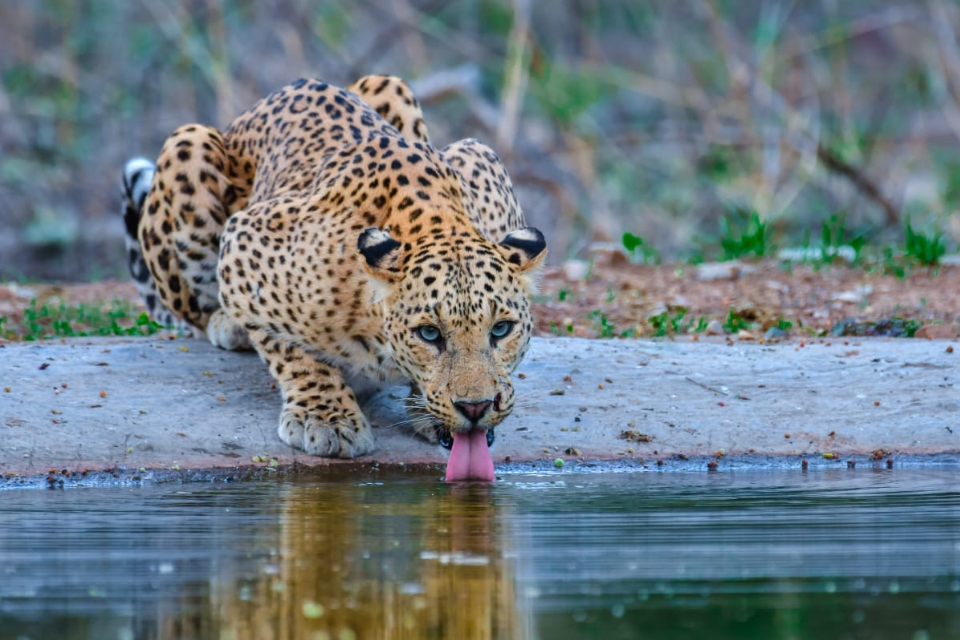
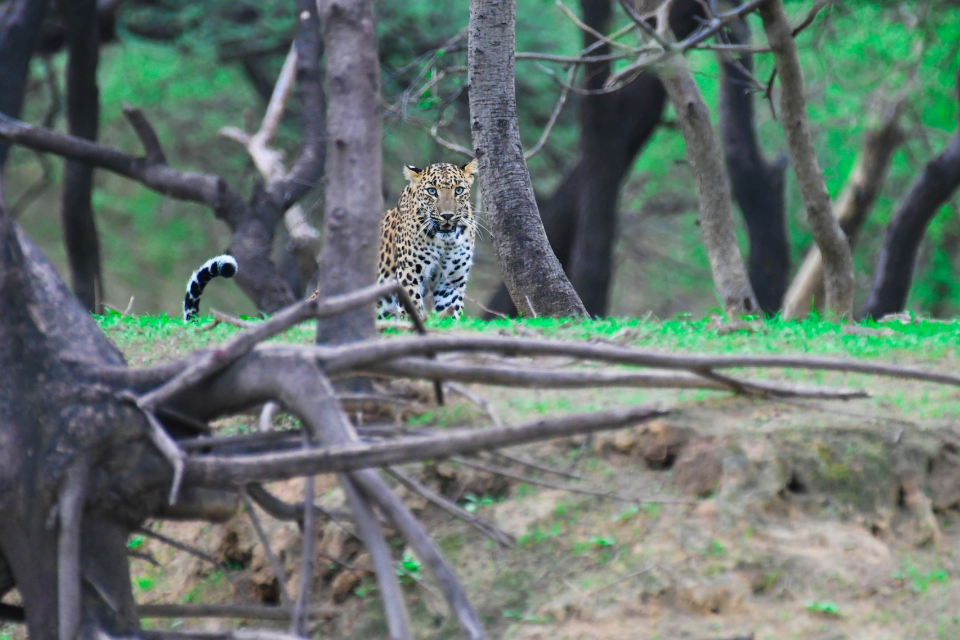
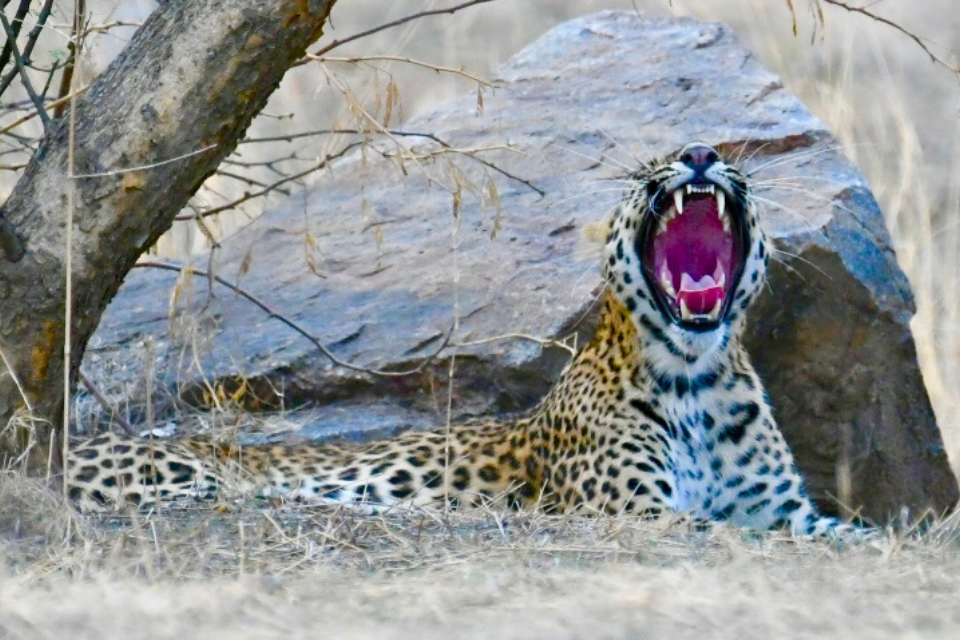
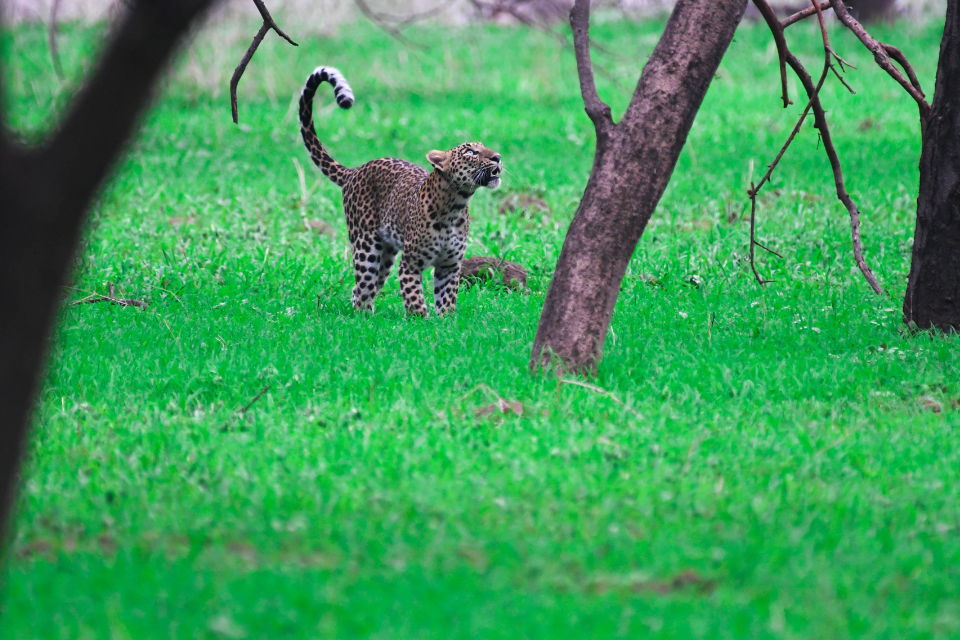
By 2026, the global conservation community has recognized Jhalana as a primary case study for urban wildlife coexistence. The reserve hosts over 35 resident leopards—a staggering number for such a small area. This density means that territories are compact, and every leopard, at some point in its life, must confront the Jhalana Reserve boundary wall.
In the early days of the reserve, this wall was seen purely as a containment measure. Today, trackers and naturalists view it as an active part of the ecosystem. The “City Cats” of Jhalana don’t just exist near the wall; they have integrated it into their cognitive maps of the forest. Understanding this boundary is key to mastering the art of the Jhalana safari.
2. The Predator’s Highway: Why Leopards Love the Wall
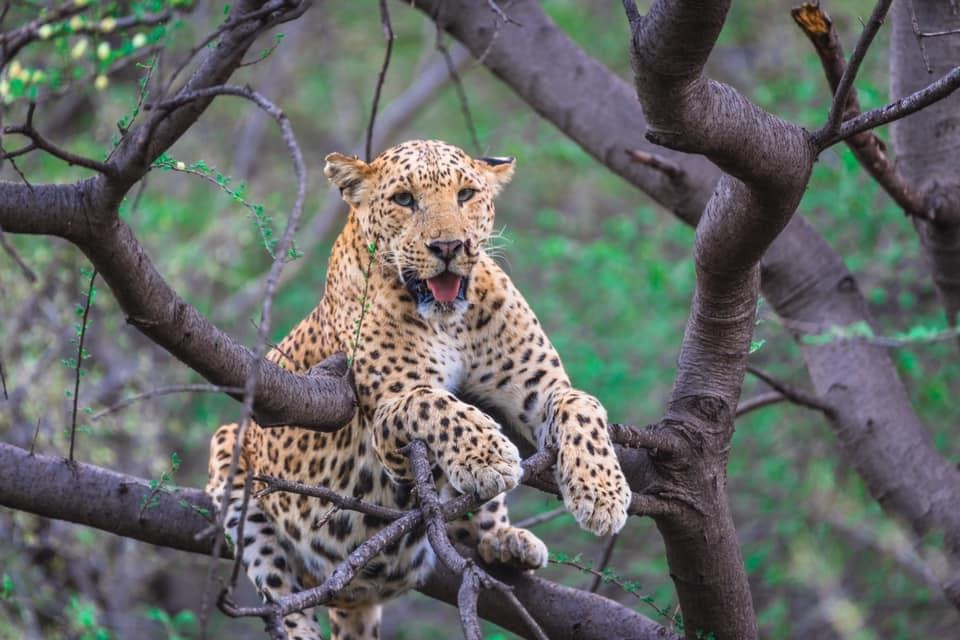
One of the most surprising behavioral adaptations observed by 2026 trackers is that the leopards frequently use the top of the Jhalana Reserve boundary wall as a preferred pathway.
Leopards are naturally averse to moving through thick, thorny undergrowth, such as the Prosopis juliflora (Vilayati Babool) that dominates parts of Jhalana. The flat, stable surface of the boundary wall offers:
-
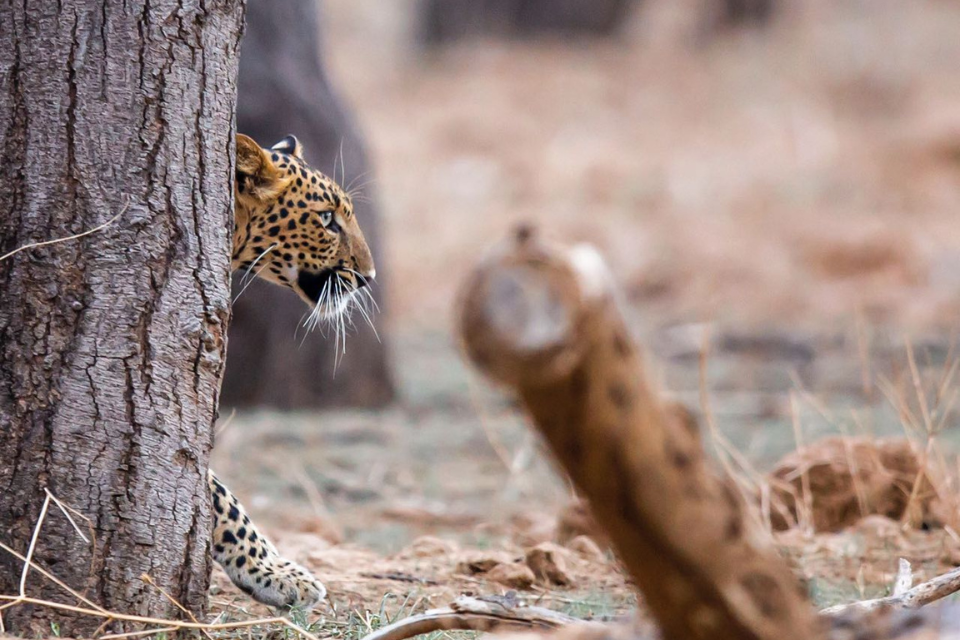
Silvery Movement: It allows them to traverse large distances silently, without snapping twigs or rusting dry leaves, giving them a massive advantage when stalking prey inside the reserve.
-
Thermal Advantage: The stone wall retains heat from the Rajasthan sun. On cool winter mornings, leopards often patrol the wall to keep their paws warm.
-
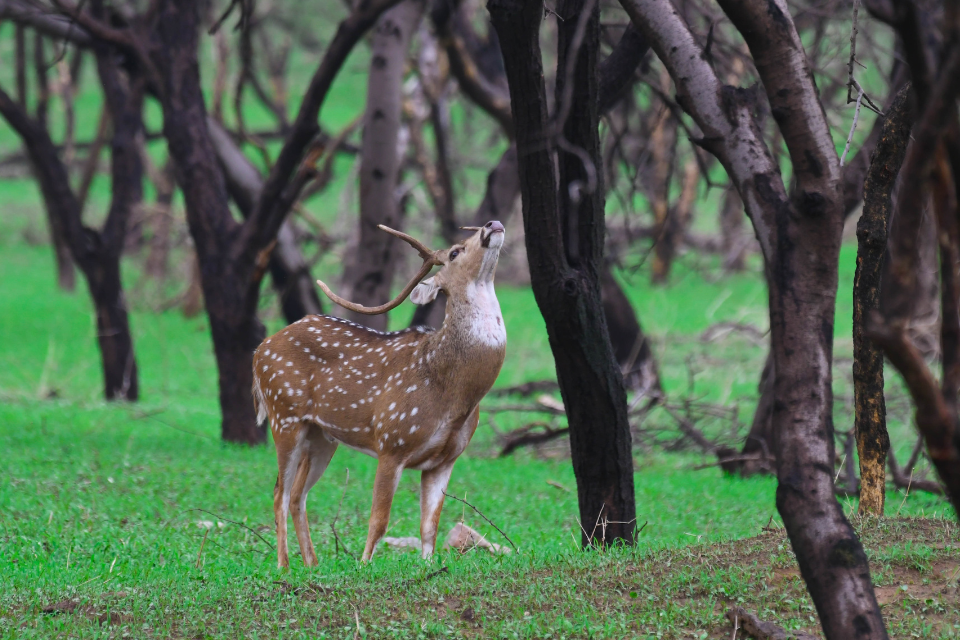
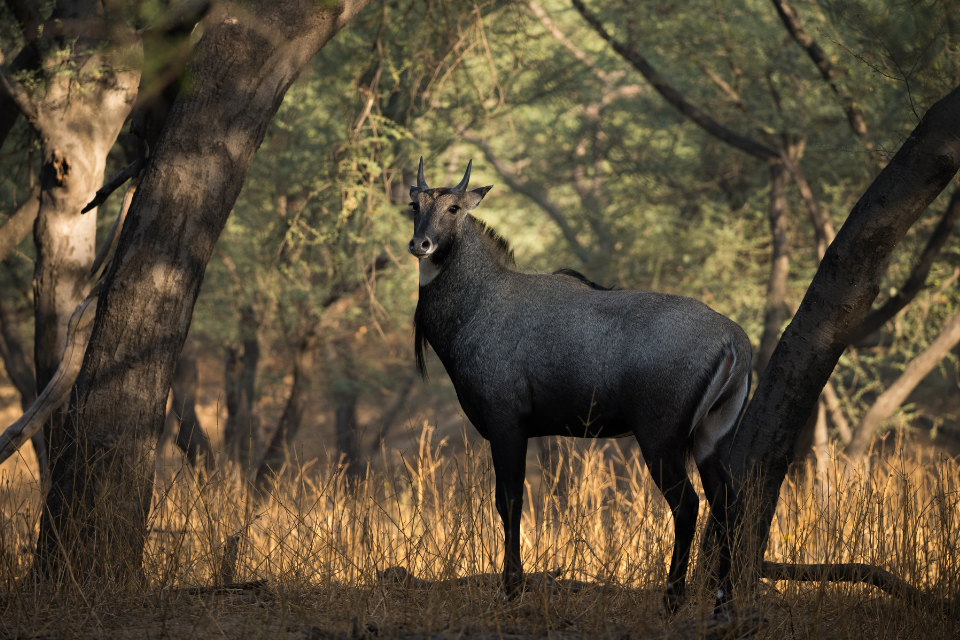
High Vantage: It provides a slightly elevated perspective, allowing them to scan for Chital (Spotted Deer) or Blue Bulls (Nilgai) resting in the valley below.
3. Life on the Edge: The Surreal Spectacle of Coexistence
The most defining experience of a Jhalana safari in 2026 is the visual contrast. Tourists booking evening shifts often witness a leopard like Rana or Flora walking casually along the Jhalana Reserve boundary wall, illuminated by the twinkling lights of Malviya Nagar just meters away.
This proximity creates situations that are both surreal and standard for Jaipur residents.
-
The School Run: In areas bordering Jawahar Nagar, leopards on the wall sometimes watch children walking to school.
-
The Evening Stroll: Residents in high-rise apartments often spot leopards on the wall from their balconies.
This isn’t “tame” behavior; it is calculated tolerance. The leopards know that the wall is a social contract: humans stay on one side, and the wild stays on the other. This unique dynamic is why the Jhalana Reserve boundary wall is central to any discussion about the park’s future.
4. Hunting on the Fringe: The Impact of Urban Light
The city’s “Skyglow”—the ambient light from streetlamps and buildings—has fundamentally altered the leopards’ hunting strategies along the Jhalana Reserve boundary wall.
Traditionally, leopards are nocturnal or crepuscular hunters, relying on pitch darkness to ambush their prey. However, along the perimeter, the city lights create a “Twilight Zone” where visibility is improved even at midnight.
Research published in 2025 indicated that leopards utilize the shadow cast by the Jhalana Reserve boundary wall itself to move unseen, emerging only when their prey is silhouetted against the city glow. This adaptation has made them exceptionally successful hunters of stray dogs and feral pigs that wander near the perimeter.
5. Tracking the Perimeter: A Safari Inside Strategy
If you want to experience the true essence of Jhalana in 2026, you must tell your guide you want to “Track the Boundary.”
While everyone rushes to the central waterholes like Choti Chaupar, the most experienced trackers know that the perimeter roads offer unique opportunities.
Morning Perimeter (6:00 AM – 8:30 AM)
In the winter, scan the Jhalana Reserve boundary wall near the Malviya Nagar industrial area. Leopards often sit on the wall to absorb the first rays of sunlight. This is an excellent time for behavior shots of them grooming or watching the city “wake up.”
Evening Perimeter (4:00 PM – 6:30 PM)
This is the “Golden Hour” for urban contrast photography. The sunset creates dramatic lighting, and as the city lights activate, you can capture the “Wild vs. Urban” contrast. The best locations are the roads running parallel to Jawahar Nagar.
6. Technology and the Frontier: Monitoring the Edge in 2026
Maintaining the balance requires sophisticated technology. In 2026, the Rajasthan Forest Department has implemented a “Tech-Fortress” approach along the Jhalana Reserve boundary wall.
-
Thermal Surveillance: High-definition thermal cameras monitor the entire 20-kilometer perimeter 24/7. These cameras are programmed to identify “crossing events” (when a leopard jumps over the wall) and alert rapid response teams instantly.
-
Acoustic Sensors: New acoustic sensors detect the specific “Sawing” vocalization of male leopards. This helps naturalists map male territories, which often follow the linear path of the Jhalan Reserve boundary wall.
This technology isn’t just about preventing conflict; it’s about understanding how the cats use the structure.
7. The “Wall Jump”: Conflict, Mitigation, and Tolerance
Despite its height, a healthy adult leopard can easily clear the 10-foot Jhalana Reserve boundary wall. When they do cross into residential areas (usually looking for easier domestic prey), the city response is calm.
This level of tolerance is Jhalana’s greatest success. Residents understand that a crossing event is usually brief. Rapid response teams utilize the thermal tracking data to gently “shepherd” the animal back over the wall, often within the same night. The existence of the Jhalana Reserve boundary wall makes these mitigation efforts possible and safe for both humans and leopards.
8. Photography Guide: Mastering the Urban Contrast
The Jhalana Leopard Reserve boundary wall creates one-of-a-kind photographic opportunities that cannot be found elsewhere.
-
Lens Selection: A 70-200mm f/2.8 lens is often superior to a heavy 600mm telephoto when shooting along the wall. You need the wider angle to include the cityscape element that gives the shot its narrative power.
-
The “Double Exposure” Shot: The ultimate goal is to capture a leopard (in sharp focus) with the iconic, colorful lights of a Jaipur wedding venue blurred (bokeh) in the background.
-
Rule of Thirds: Place the leopard on the wall in one vertical third of the frame, and fill the other two-thirds with the dense urban landscape.
9. Frequently Asked Questions (FAQs)
Q1: Does a boundary wall entirely enclose Jhalana Reserve?
A. By 2026, over 95% of the perimeter is fortified by the stone boundary wall. A small section near the Amagarh biological park remains open to allow for genetic exchange with the adjacent Amagarh Leopard Reserve.
Q2: Are the leopards on the boundary wall safe for tourists?
A. Yes. All safaris are conducted in specialized, open-top 4×4 vehicles (Gypsys), which provide an elevated and safe viewpoint. The leopards are habituated to the vehicles and generally ignore them.
Q3: Can I walk along the Jhalana Reserve boundary wall from the city side?
A. Walking right next to the wall on the city side is generally discouraged, especially after sunset, as this is when leopards are most active near the perimeter.
Q4: Which zone is best for boundary wall sightings?
A. Perimeter roads run through Zones 1 and 2. Tell your driver you specifically want to track near the Jawahar Nagar or Malviya Nagar boundary for the best urban contrast opportunities.
Q5: What is the height of the boundary wall?
A. The primary Jhalana Reserve boundary wall is approximately 10 feet (3 meters) high. Some sensitive sections near schools or busy roads have been raised to 12 feet.
10. Conclusion: Jhalana’s Wall as a Hope for the Future
The story of the Jhalana Reserve boundary wall is not a story of division; it is a story of defined coexistence. In 2026, as habitat loss threatens species globally, Jhalana proves that wild animals can thrive, even within our cities, provided the boundaries are clear and respected.
The wall doesn’t just protect the leopards from human encroachment; it protects the vital psychological connection that the people of Jaipur have with their wild neighbors. To visit Jhalana is to witness a future where the roar of the wild is part of the urban symphony.
Disclaimer
This blog is for informational purposes only. Wildlife sightings, including those along the Jhalana Leopard Reserve boundary wall, are natural occurrences and are not guaranteed. Safari timings, permit regulations, and boundary protocols are subject to change by the Rajasthan Forest Department. Please follow all rules to ensure your safety and the welfare of the animals.