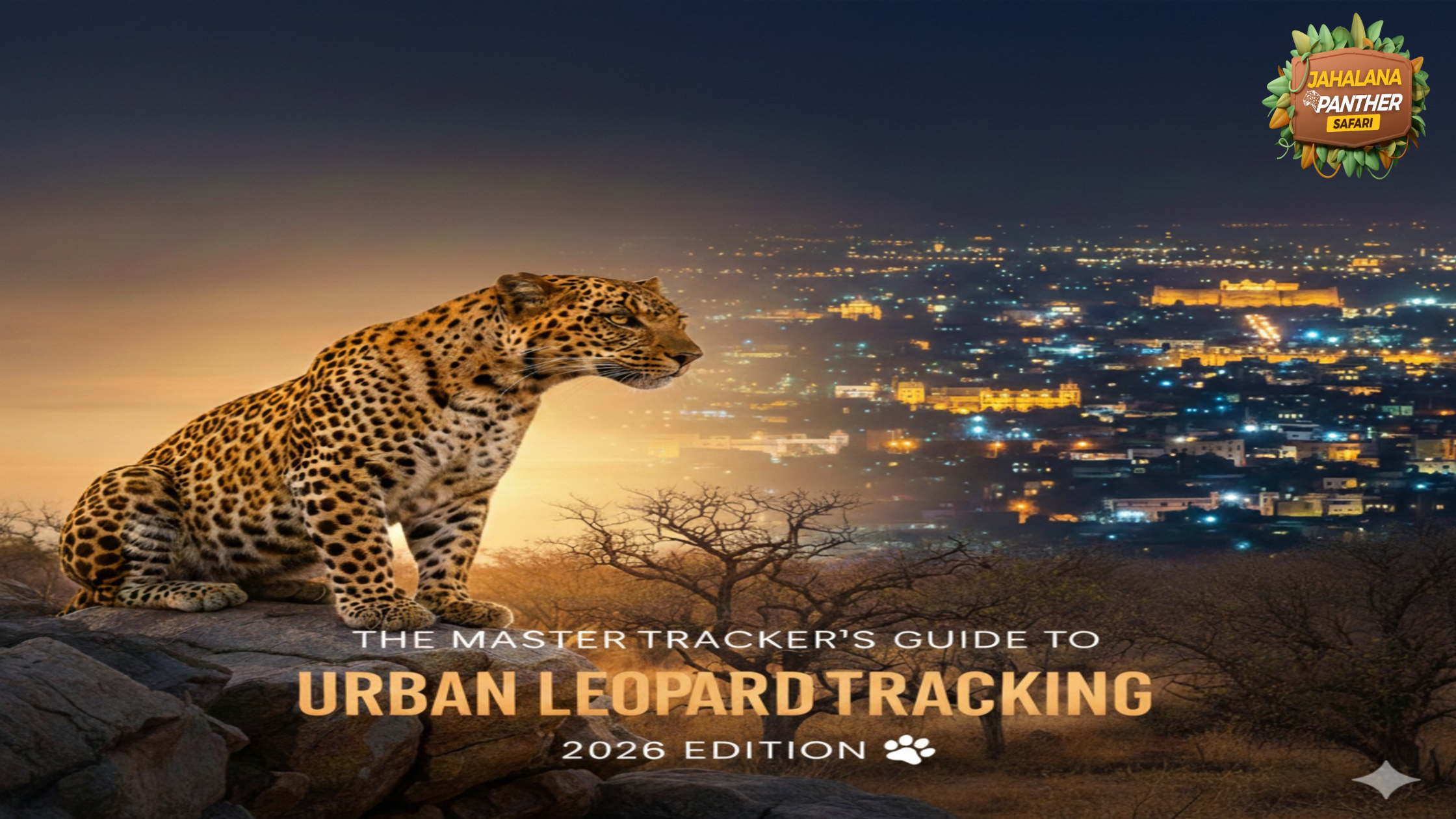
The Master Tracker’s Guide to Urban Leopard Tracking in Jaipur
In the quiet periphery of Jaipur, where the sandstone architecture of the “Pink City” meets the jagged quartzite of the Aravallis, a silent evolution has reached its peak. As of 2026, Jhalana Leopard Reserve has officially become the world’s most successful “Urban Jungle.” While most visitors enter the gate hoping for a lucky glimpse of a leopard, the most successful sightings are not born of luck—they are born of consistent Urban Leopard Tracking Jaipur.
Tracking a predator that lives within earshot of a metropolitan airport and a busy industrial area requires a unique set of skills. This deep dive explores the secrets of the Jhalana naturalists, the science of urban adaptation, and how you can experience the thrill of the hunt in the heart of the city.
-
The 2026 Shift: Why “Urban Tracking” is a Science
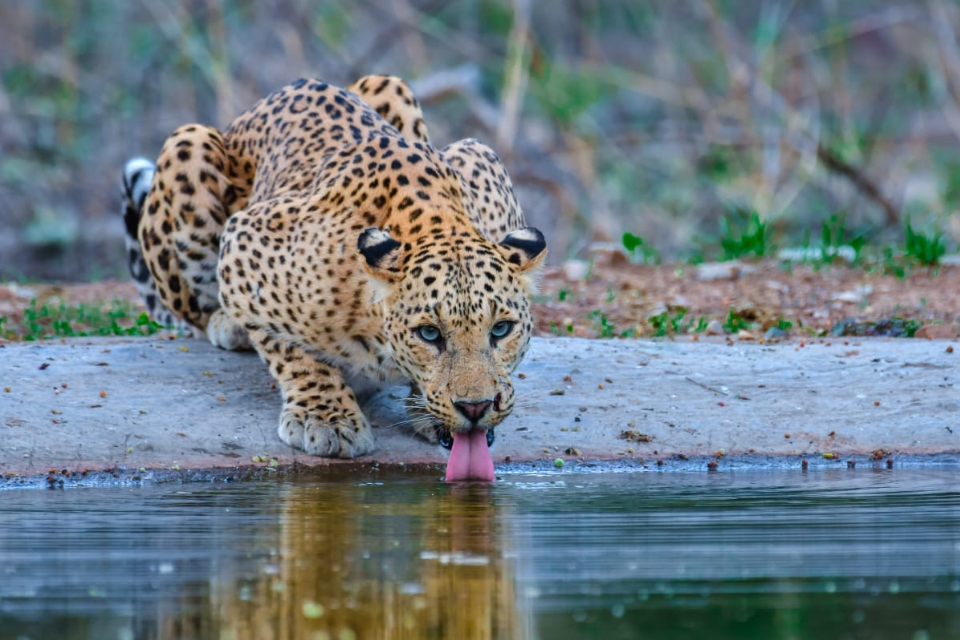
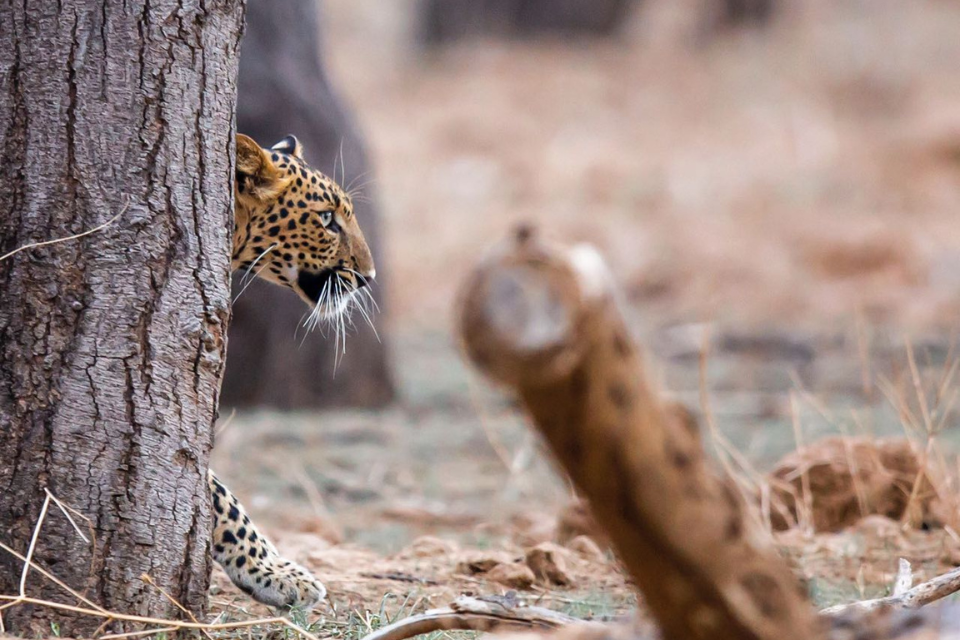
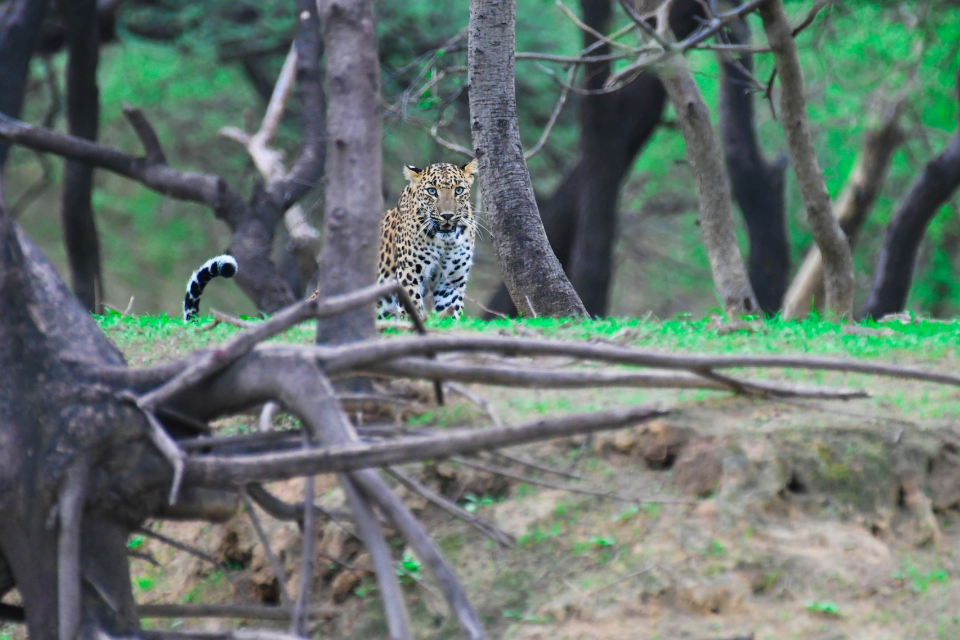
In 2026, Jhalana’s leopard population has stabilized at an incredible density. Unlike the shy, nomadic leopards of Ranthambore or the African savanna, Jhalana’s cats are “City Cats.” They have adapted to the sounds of human life—the distant drone of airplanes and the hum of traffic—but they remain masters of camouflage.
Understanding Urban Leopard Tracking Jaipur is about mastering the “Intermittent Zone”—the space where the forest wall meets the city. In Jhalana, tracking involves more than just pugmarks; it involves understanding thermal patterns, high-ground surveillance, and the specific “City-Grit” behavior of leopards like Flora and Rana. These leopards don’t just survive; they have mapped the human world into their own hunting strategies.
-
Decoding the “Jungle Telegraph”: Reading Alarm Calls
The first rule of successful Urban Leopard Tracking Jaipur is: Stop looking, and start listening. The forest is never silent; it is a broadcast system.
The Langur’s Bark
The Grey Langur is your primary informant. When a leopard is on the move, the Langur’s alarm call is a guttural, repetitive bark. In Jhalana, pay attention to the direction of the Langur’s gaze. If the monkey is looking fixedly at a specific Dhok tree, the leopard is likely resting in the shade.
The Peacock’s Metallic Scream
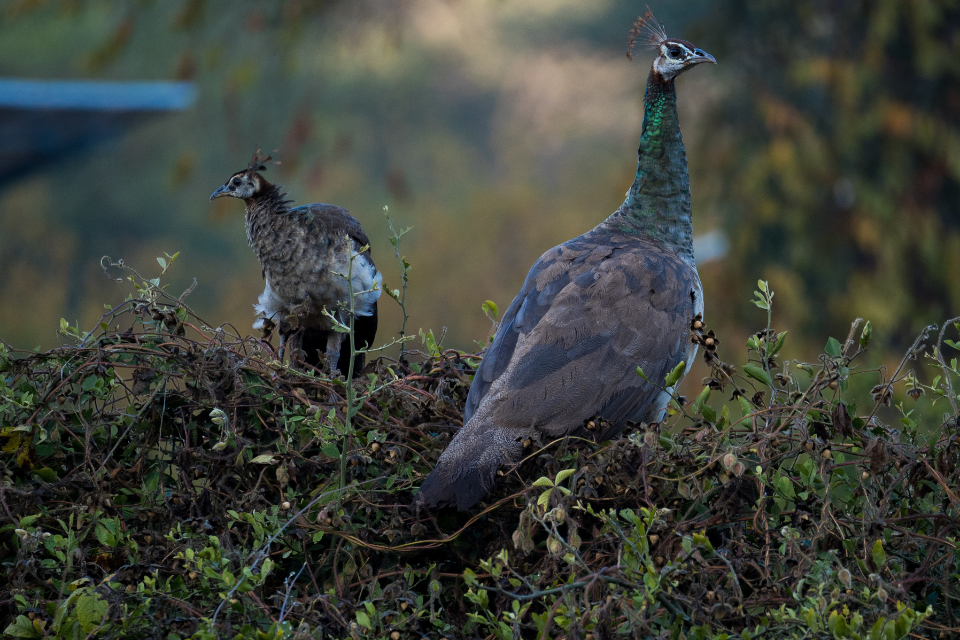
The Indian Peafowl is often the first to spot a leopard in the tall grass. A “Pee-awk” call that sounds rhythmic and urgent usually signals a predator in motion. In 2026, seasoned trackers have noted that Peacocks in Jhalana are particularly vocal during the evening shift as leopards move toward the waterholes.
-
The “Dust Diary”: Secrets of the Jhalana Soil
Because Jhalana is a dry, deciduous scrub forest, the sandy tracks act as a daily newspaper. This is what trackers call the “Dust Diary.”
- Freshness: A pugmark with sharp edges and no wind-blown sand inside it means the leopard passed by within the last 30 minutes.
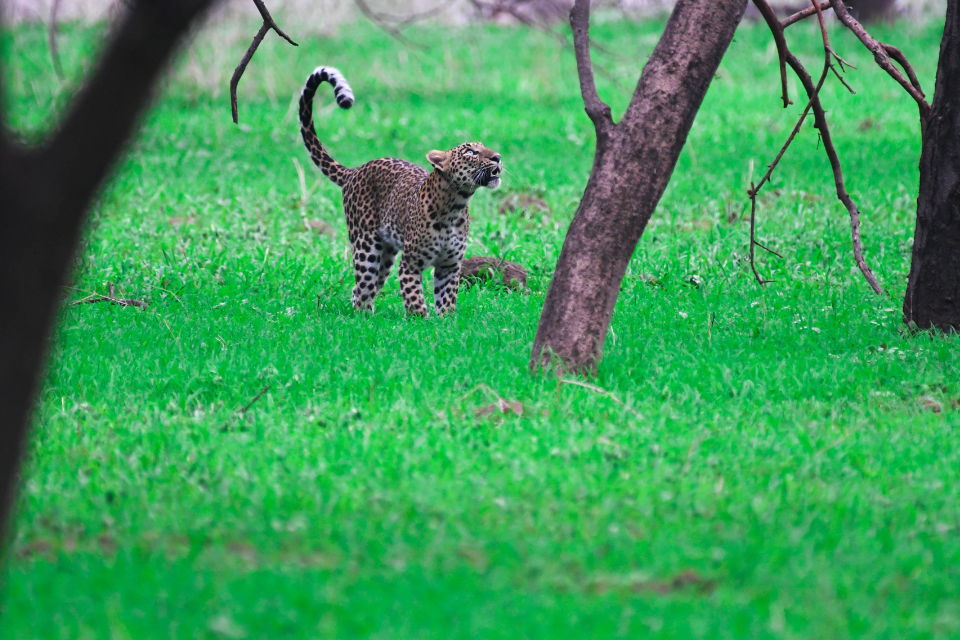
- The Drag Mark: If you see a pugmark accompanied by a slight “brush” mark in the sand, it’s a sign of a leopard dragging its tail—a classic indicator of a relaxed, non-hunting gait.
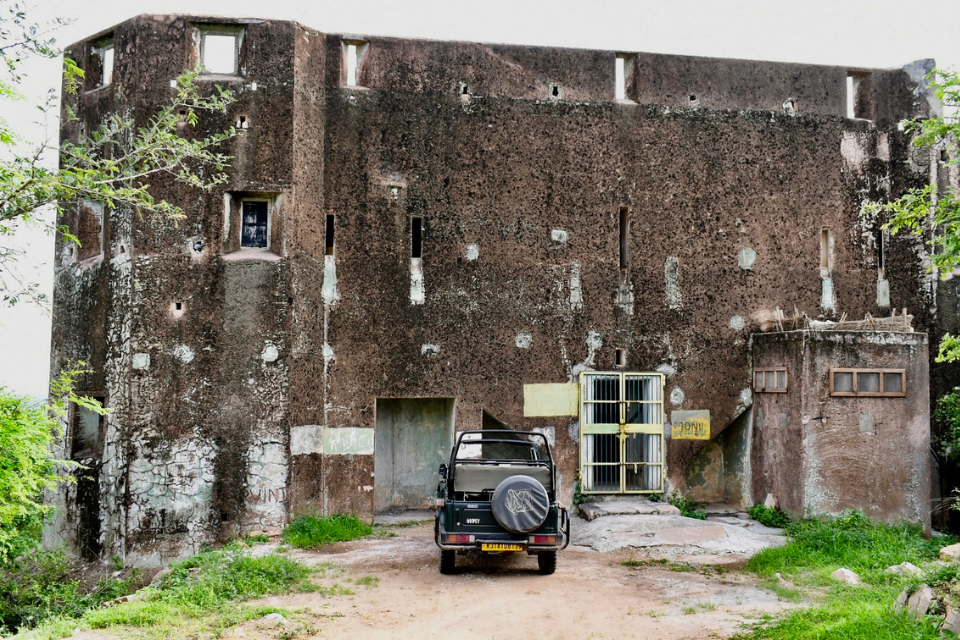
- Territorial Scrape: Leopards often scrape the ground with their hind legs to leave scent markers. Finding a fresh scrape near the Shikar Oudi (Hunting Lodge) is a guaranteed sign of a resident male patrolling his territory.
-
The Quartzite Vantage: Topography as a Tracking Tool
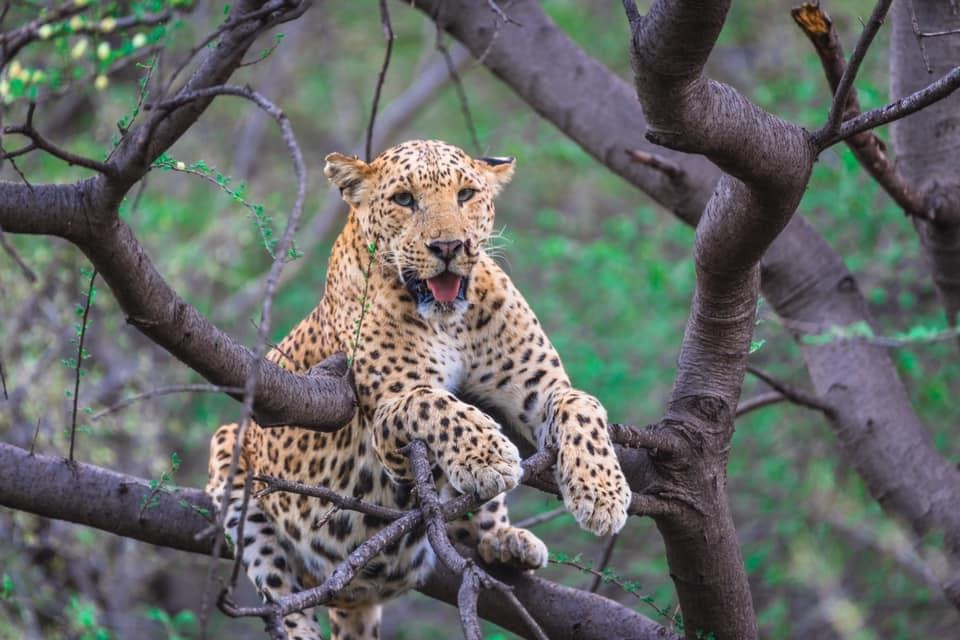
Jhalana’s geography is dominated by the Aravalli ridges. In 2026, the success of Urban Leopard Tracking Jaipur relies heavily on “Scanning the Skyline.”
Leopards love the ridges for two reasons:
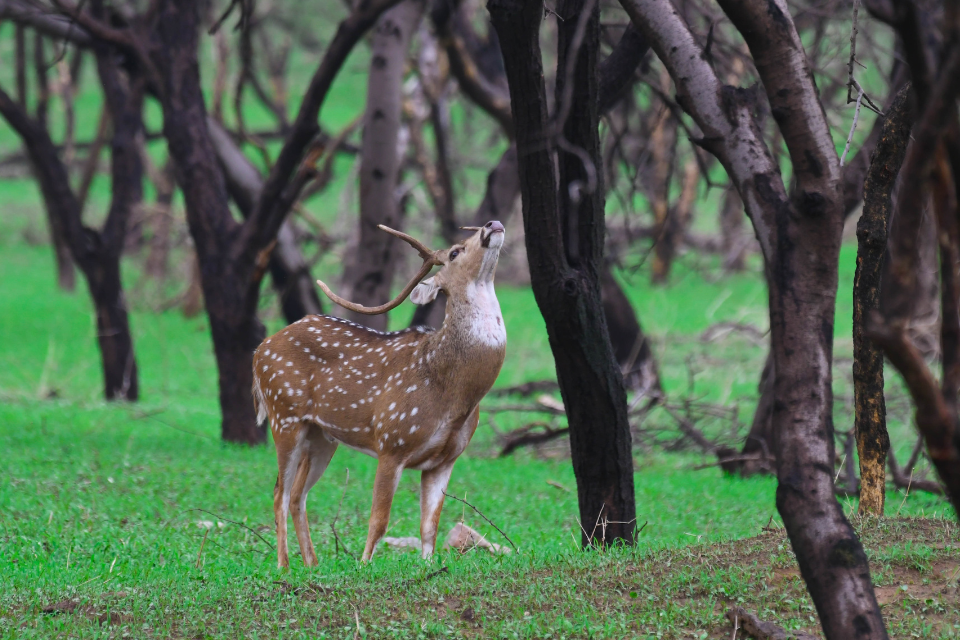
- Surveillance: They can watch the movement of Chital (Spotted Deer) in the valley below.
- Safety: It keeps them away from the noise of the safari vehicles during high-traffic hours.
Master Tip: When your Gypsy stops at a “Ghati” (valley entrance), don’t just look into the bushes. Look at the silhouettes on the highest rocks. A leopard’s camouflage is nearly perfect against the brown quartzite, but its tail flick or the glint of an eye in the sun will give it away.
-
Seasonality and Sightings: When to Track?
While Jhalana is open year-round, your tracking strategy must change with the Rajasthan calendar:
The Summer Strategy (April – June)
As temperatures soar to 45°C, Urban Leopard Tracking Jaipur become predictable. They stick to the Artificial Waterholes like Jhalana Pond or Naila Lake. Tracking becomes a game of “Stakeout.” You park your vehicle near a water body and wait. The “City Cats” often visit these spots between 4:30 PM and 6:00 PM.
The Winter Strategy (November – February)
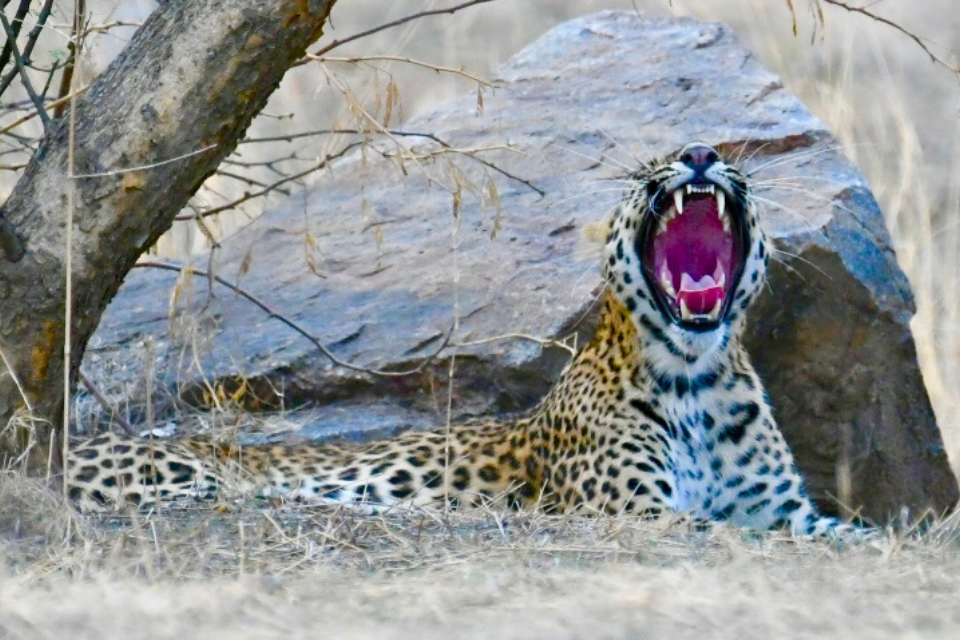
In the cool winters, leopards sunbathe. They move to the rocky slopes that face the sun in the morning. Urban Leopard Tracking Jaipur in winter requires scanning the “Southern Slopes” where the rocks retain heat.
The Monsoon Magic (July – September)
Unlike many national parks, Jhalana remains open during the monsoon. The forest turns a brilliant emerald green. While the foliage is thick, the leopards often walk directly on the sandy safari tracks to avoid getting their paws wet in the tall, damp grass.
-
Advanced Gear for the 2026 Urban Safari
To master Urban Leopard Tracking Jaipur, your gear must match the environment. This is not a traditional deep-jungle safari; the lighting and distances are unique.
- Lenses: A 100-400mm lens is the gold standard for Jhalana. Because the leopards are habituated, they often come within 10–20 feet of the Gypsy, making massive 600mm prime lenses difficult to use and restrictive in the narrow forest lanes.
- The “Dust Defense”: Always carry a “Buff” or a scarf. The tracks are incredibly dusty, and a passing vehicle can create a “grit cloud” that can damage both your lungs and your camera sensor.
- Polarized Optics: In the harsh Rajasthan sun, polarized sunglasses are essential to spot movement through the glare of the scrub forest.
-
Ethical Tracking: The Code of Coexistence
In 2026, conservation is as important as the sighting. Responsible Urban Leopard Tracking Jaipur means:
- Engine Cuts: When a leopard is spotted, the driver must cut the engine. Silence allows the animal to behave naturally.
- Zero-Plastic: Jhalana is a strictly plastic-free zone.
- Distance: Never pressure an animal. If a leopard is crossing the track, give it at least 20 feet of space.
-
The “City Lights” Backdrop: A Photography Masterclass
One of the most unique aspects of Jhalana is the “Urban Contrast.” In the evening shift, as the sun sets, you can often photograph a wild leopard with the shimmering lights of Malviya Nagar or the Jaipur Airport in the background. This “Wild vs. Urban” frame is the ultimate goal of any photographer visiting Jhalana in 2026. This specific juxtaposition is what makes Urban Leopard Tracking Jaipur a world-class experience for wildlife documentarians.
-
The Social Structure of Jhalana’s Leopards
For successful Urban Leopard Tracking Jaipur, you must know the “who’s who” of the forest.
- The Dominant Males: Usually hold the largest territories covering several waterholes.
- The Mothers of Jhalana: In 2026, several females were spotted with cubs. Tracking a mother requires extreme caution; she will likely lead her cubs into the thick Juliflora bushes if she feels the safari vehicles are too close.
Frequently Asked Questions (FAQs)
Q1: Why is Jhalana called an “Urban” Leopard Reserve?
A. Jhalana is located within the city limits of Jaipur. It is surrounded by residential colonies, schools, and hospitals, yet it maintains one of the highest leopard densities in the world. The leopards have adapted to the presence of 4 million people.
Q2: Is Urban Leopard Tracking Jaipur safe for tourists?
A. Yes. While the leopards are wild and powerful, they are habituated to the safari vehicles (Gypsys). There has never been an incident of an attack on a tourist inside the reserve. The cats view the vehicles as neutral objects, not prey or threats.
Q3: What is the best zone for sightings in 2026?
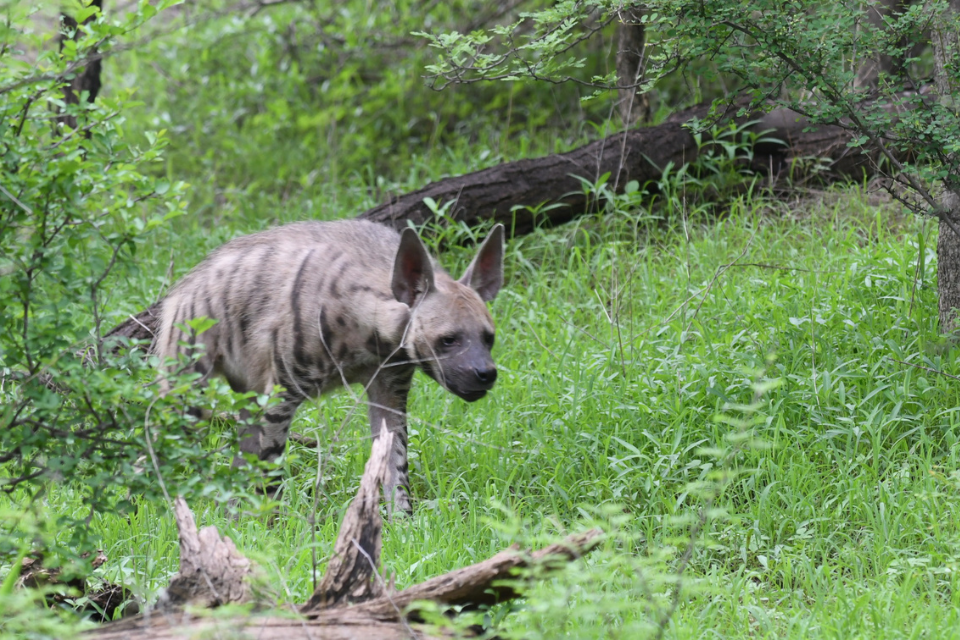
A. While zones are assigned randomly, Zone 1 is traditionally the most popular due to the presence of established waterholes and the famous “Shikar Oudi” vantage point. However, Zone 2 offers more rugged terrain and excellent hyena sightings.
Q4: How far in advance should I book my safari?
A. In 2026, due to the global popularity of the “City Cats,” it is recommended to book your permit at least 30 to 45 days in advance via the official Rajasthan SSO portal.
Q5: Can I see other animals besides leopards?
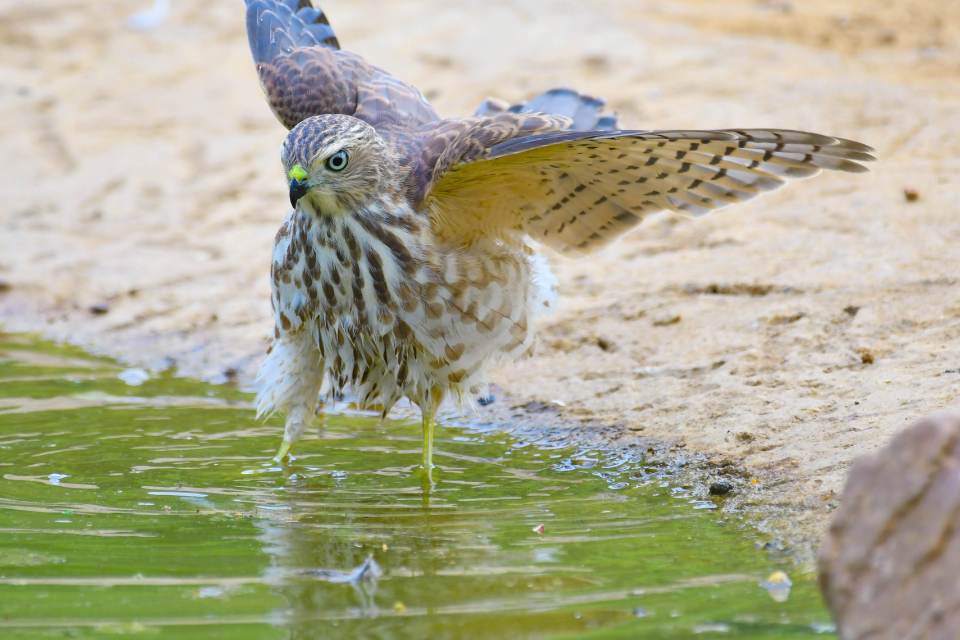
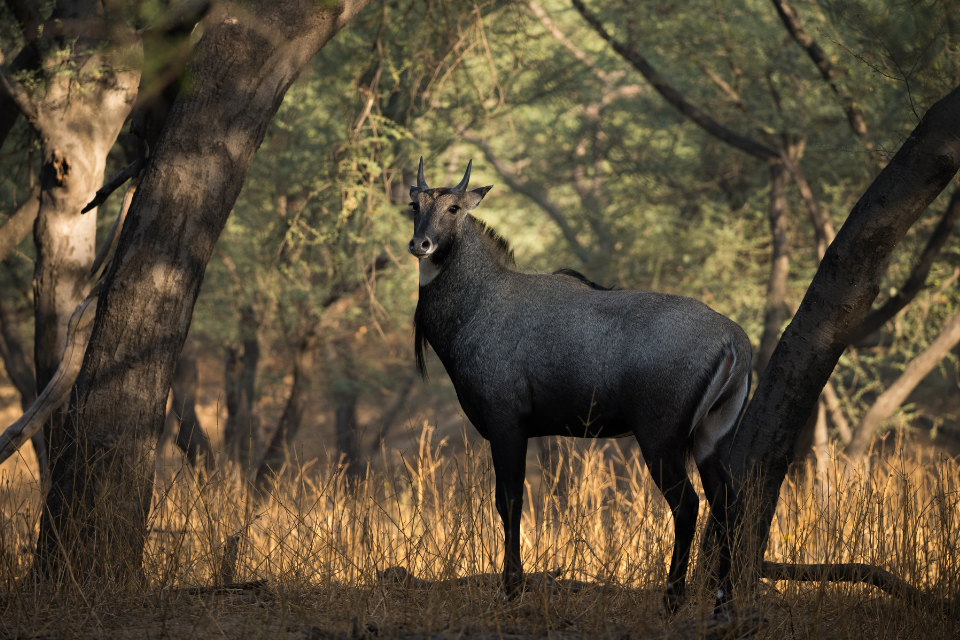
A. Absolutely. Jhalana is a great place to spot Striped Hyenas, Desert Foxes, Golden Jackals, Blue Bulls (Nilgai), and over 200 species of birds, including the Indian Pitta and the Spotted Owlet.
-
Final Thoughts: The Future of Jhalana
Jhalana Leopard Reserve is more than just a tourist spot; it is a global blueprint for wildlife conservation. It proves that with the right management and a culture of tolerance, we don’t need to choose between urban growth and wild spaces. When you engage in Urban Leopard Tracking Jaipur, you are witnessing a miracle of modern ecology—a place where the roar of the wild meets the rhythm of the city.
Disclaimer
This blog is for informational and educational purposes. Wildlife sightings are subject to nature and are never guaranteed. All safaris are regulated by the Rajasthan Forest Department, and rules regarding entry fees, timings, and photography are subject to change without notice. Please travel responsibly and respect the silence of the forest.