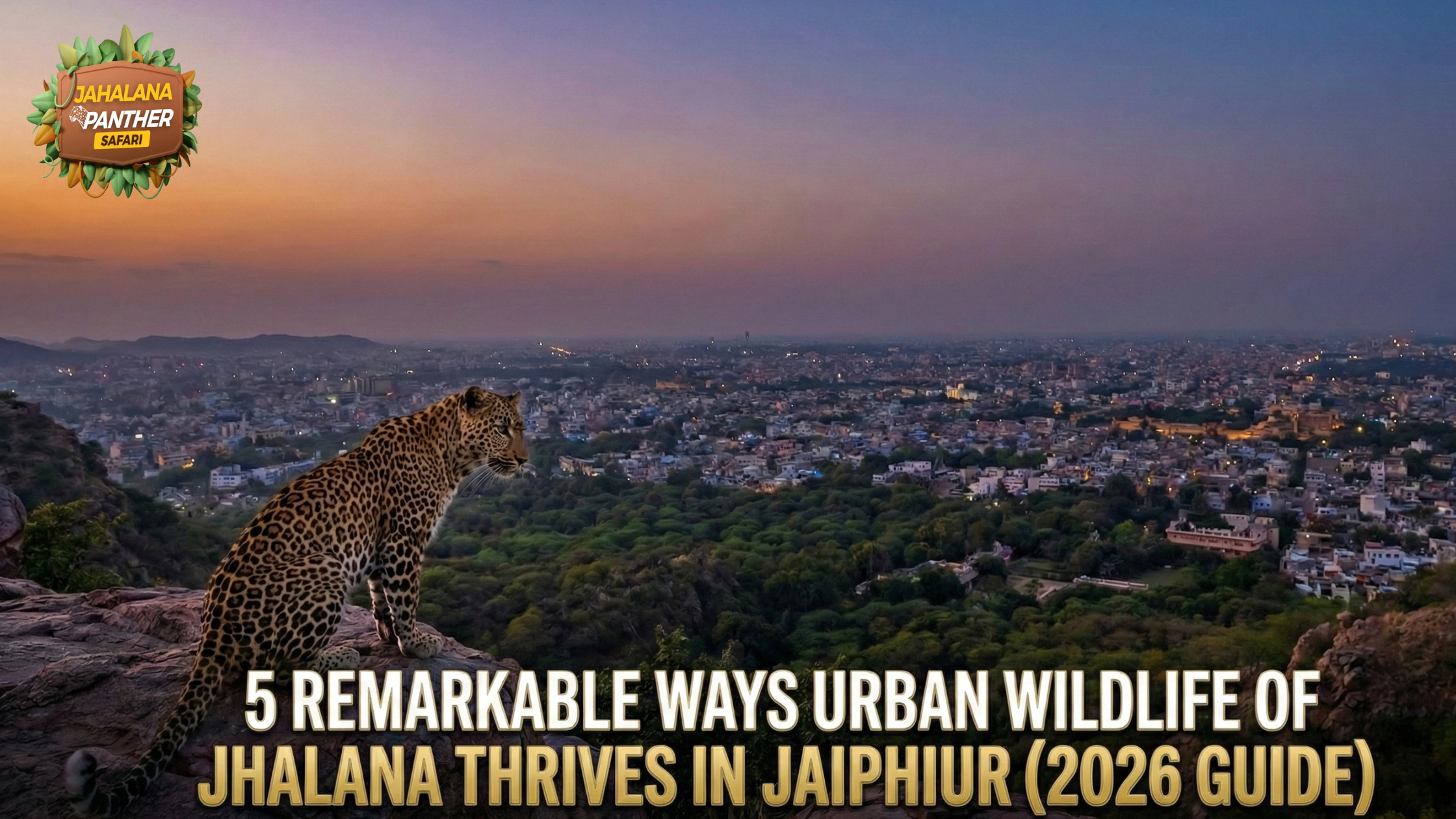
5 Incredible Ways the Urban Wildlife of Jhalana Thrives in Jaipur City (2026 Guide)
Imagine landing at Jaipur International Airport. The sights and sounds of a bustling Indian metropolis surround you—honking taxis, modern infrastructure, and the distant hum of millions of residents. It seems inconceivable that just fifteen minutes away, in the very heart of this urban sprawl, an apex predator is silently stalking its prey through prehistoric scrubland.
This is the paradox of Jhalana. It is not a distant wilderness tucked away in a remote corner of Rajasthan. It is an urban oasis, a 29-square-kilometer island of ancient Aravalli hills completely surrounded by the relentless expansion of Jaipur city.
For ecologists and wildlife enthusiasts worldwide, Jhalana is a living laboratory. It presents a fascinating case study: How does a thriving population of leopards, hyenas, and diverse herbivores coexist with a dense human population virtually on their doorstep? The survival of the urban wildlife of Jhalana is not just a stroke of luck; it is a complex story of adaptation, geological fortitude, and active conservation management.
In this in-depth guide, we delve into the “urban jungle conflict” to understand the remarkable resilience of this ecosystem.
1. The Geological Fortress: An Island in the City
To understand how the urban wildlife of Jhalana survives, you must first understand the terrain. Jhalana is not a park that was created; it is a remnant of a landscape that is billions of years old, which the modern city has grown around.
The Aravalli Walls
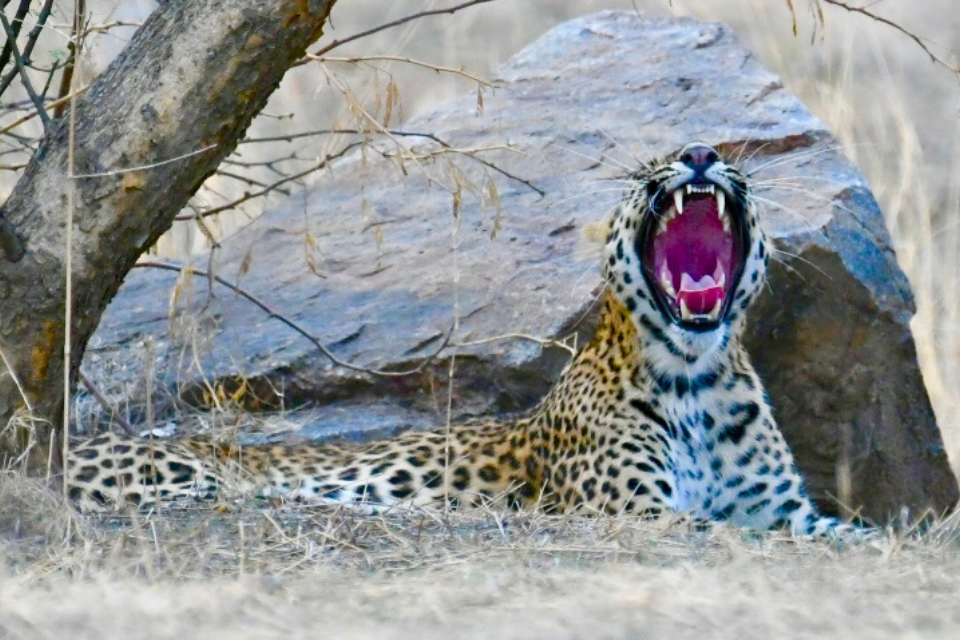
The reserve is defined by the steep, rugged ridges of the Aravalli range. These hills act as natural fortress walls. Unlike flat forested areas where animals can easily wander out, the geography of Jhalana naturally contains its inhabitants within the valley. The hard quartzite rocks, forming deep crevices and high vantage points, provide the perfect habitat for stealthy predators, allowing them to live their lives largely unseen by the city below.
The Pressure of Proximity
Yet, the pressure is immense. Jhalana is bordered by busy roads, industrial areas, and residential colonies. The sounds of the city are never truly gone; they are merely muffled by the hills. This proximity means the ecosystem is not isolated. It is an “urban forest” in the truest sense, influenced by the lights, sounds, and activities of its human neighbors. The survival of the urban wildlife of Jhalana depends on their ability to navigate this delicate boundary.
2. The Invisible Neighbors: Leopards in the Metro
The most striking aspect of Jhalana is its high density of leopards living in such a confined, urban-locked space. How do these large cats manage to avoid constant conflict with humans?
Masters of Stealth and Timing
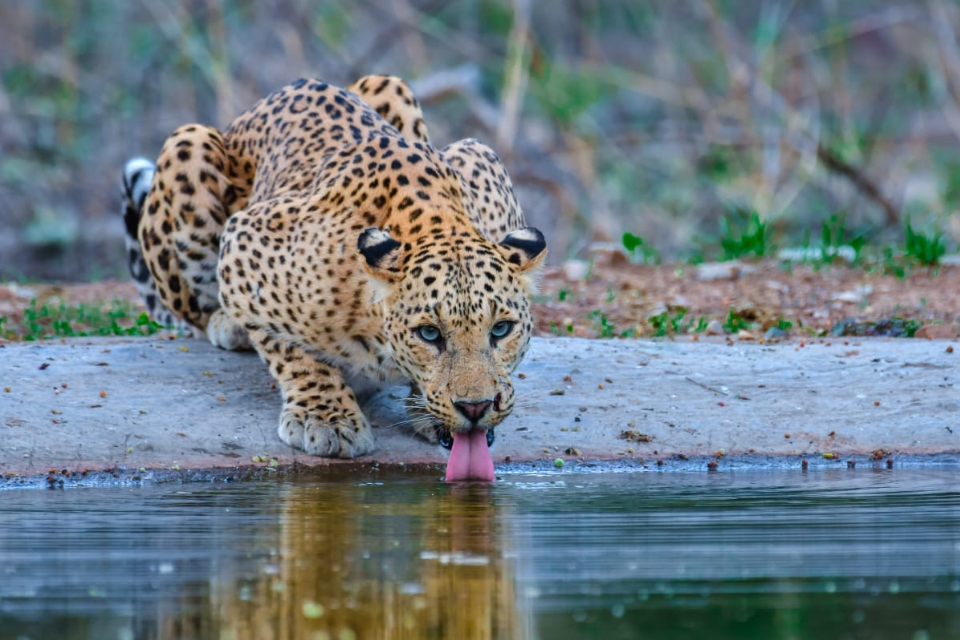
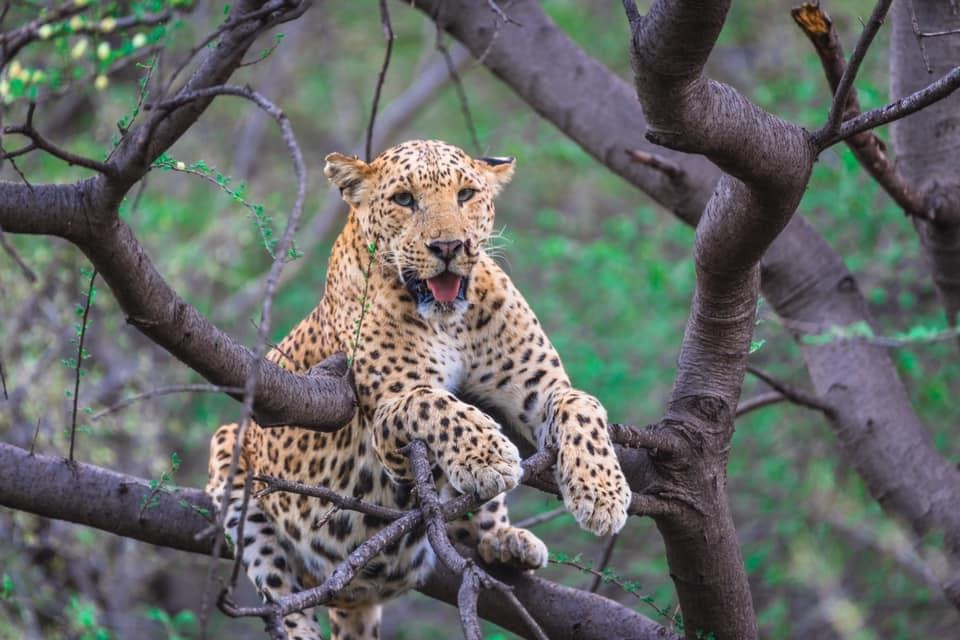
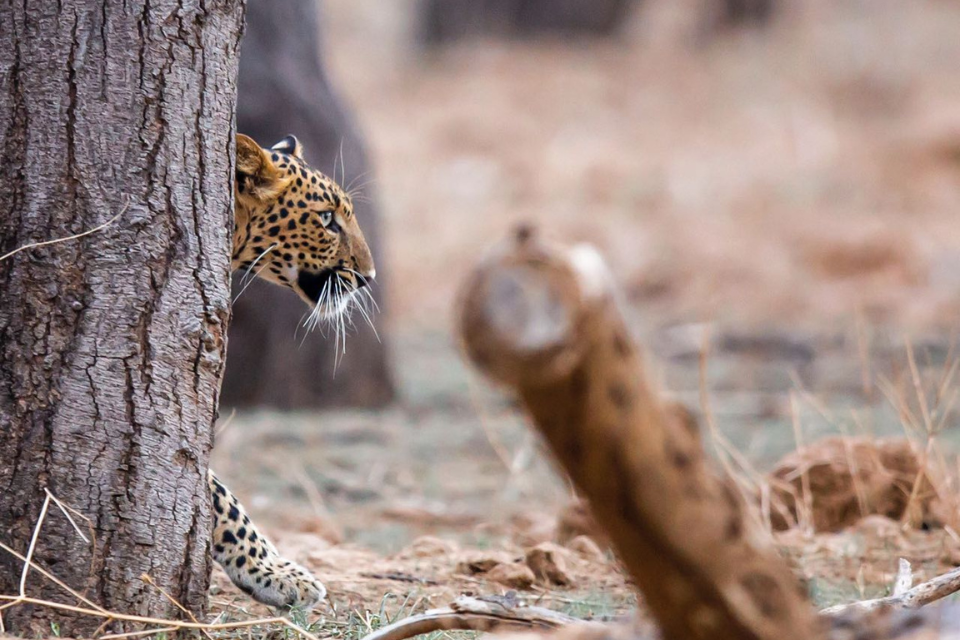
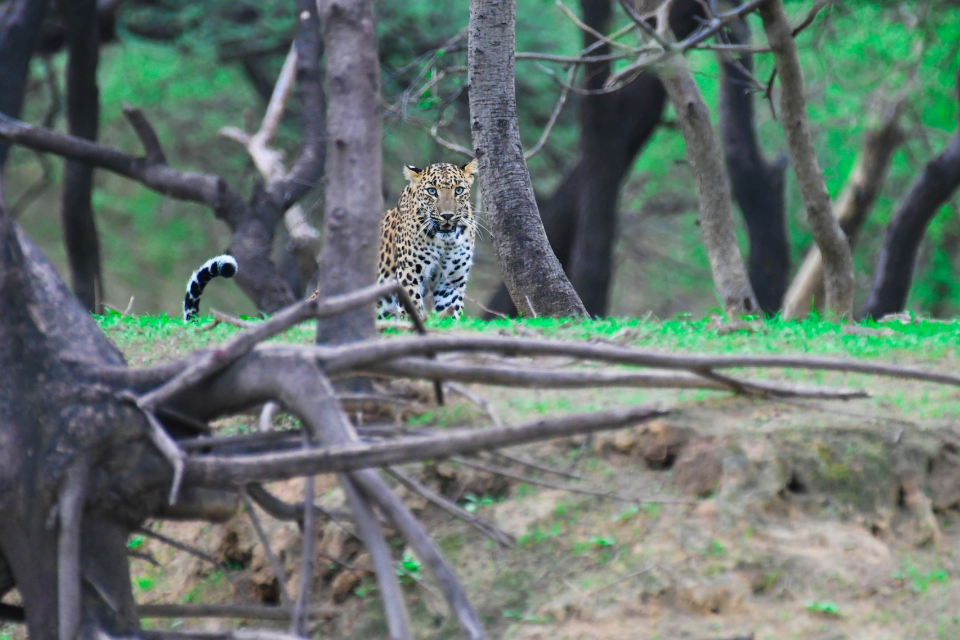
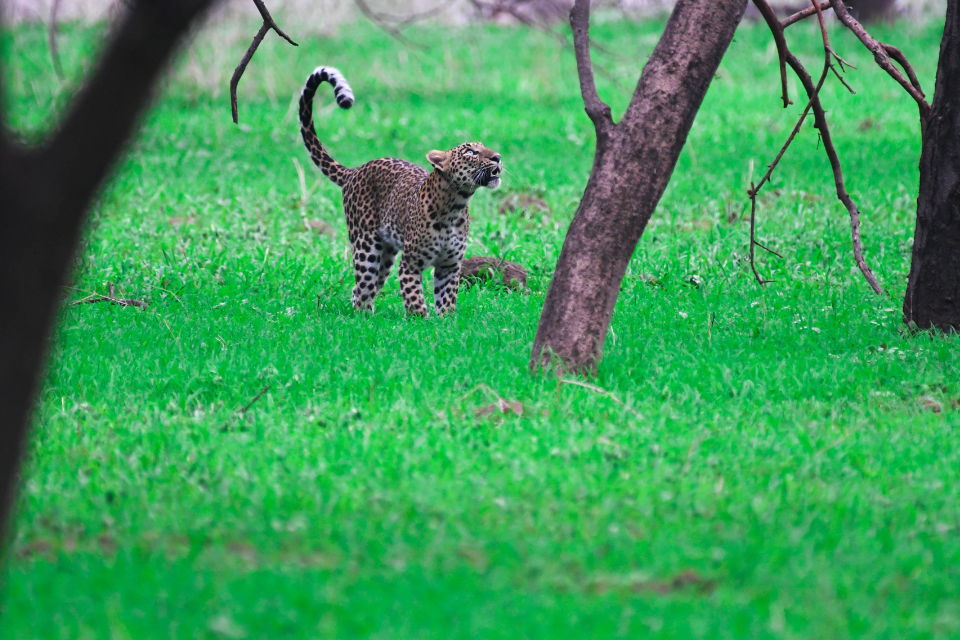
Leopards are naturally elusive, but the urban wildlife of Jhalana has taken this to another level. They have adapted their behavior to the rhythms of the city. They are primarily nocturnal, doing most of their hunting and moving when the human world outside their gates is asleep. Their spotted coats, evolved to mimic the dappled light on Quartzite rocks and dry Dhok leaves, make them nearly invisible even in broad daylight.
The “Ghost” Factor
Many residents living in the colonies bordering Jhalana may spend their entire lives without ever seeing a leopard, despite living just a few hundred meters from them. The leopards have learned that survival means avoidance. They patrol the ridges, using the high ground to monitor both their natural prey inside the reserve and the potential threats outside it. This incredible ability to remain “invisible” while living in plain sight is the key to the leopard’s success as the apex of the urban wildlife of Jhalana.
3. The Soundscape: Jungle Alarms vs. City Noise
A safari in a typical wilderness is often defined by silence. In Jhalana, the soundscape is a bizarre and fascinating mix of the ancient and the modern.
The Jungle Telegraph
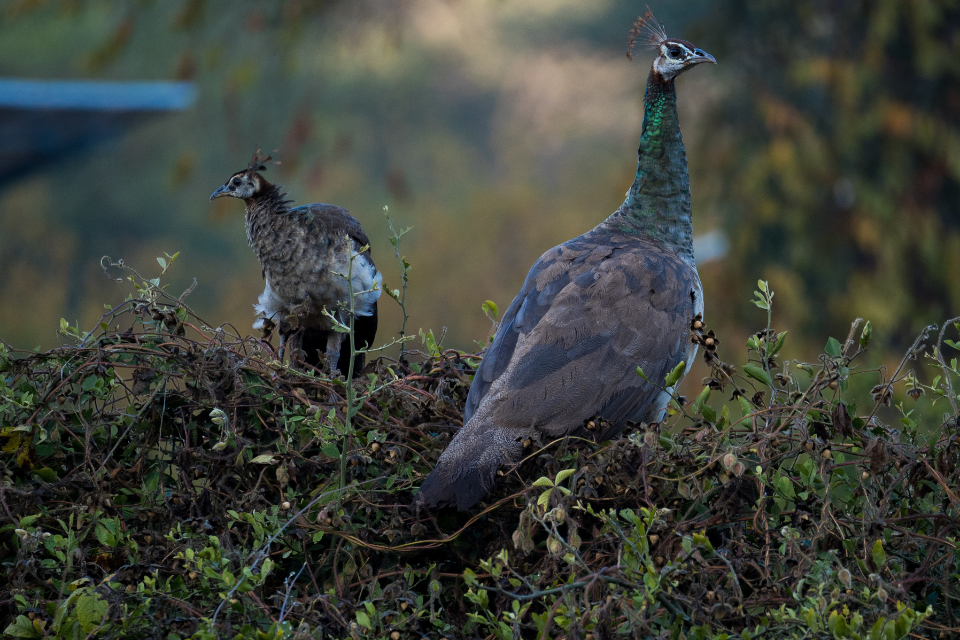
Inside the valley, the ancient rules of the forest still apply. The air is filled with the sounds of the urban wildlife of Jhalana communicating danger. The guttural, coughing alarm call of the Gray Langur from the treetops or the frantic squawk of a peacock on the ground are immediate indicators that a predator is on the move. Naturalists and trackers rely on these auditory cues to locate leopards.
The Urban Hum
However, these natural sounds are constantly underpinned by the hum of the city. The distant roar of a jet taking off from the airport, the faint sound of temple bells during evening aarti, or the rumble of heavy traffic on the bordering highway are ever-present. The remarkable thing is that the animals have desensitized themselves to these city noises. A leopard that would bolt at the snap of a twig inside the forest will calmly ignore the sound of a truck horn just outside the boundary wall. This selective hearing is a crucial adaptation for the urban wildlife of Jhalana.
4. A Resilient Ecosystem: Thriving Under Pressure
It is not just the leopards that have adapted. The entire food web of the urban wildlife of Jhalana has found ways to thrive in this compressed environment.
The Scavengers at the Edge
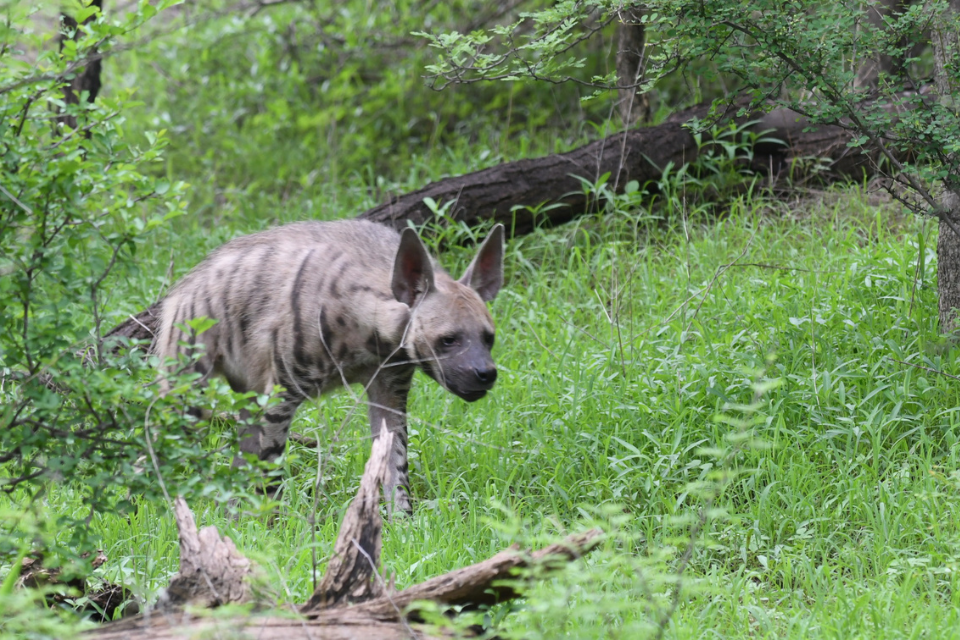
The Striped Hyena, nature’s efficient cleanup crew, plays a vital role here. These hardy scavengers often have their dens in the rocky outcrops near the forest fringes. In an urban setting, their role is even more critical, ensuring that carcasses are disposed of quickly, preventing disease in a contained area.
The Herbivore Balancing Act
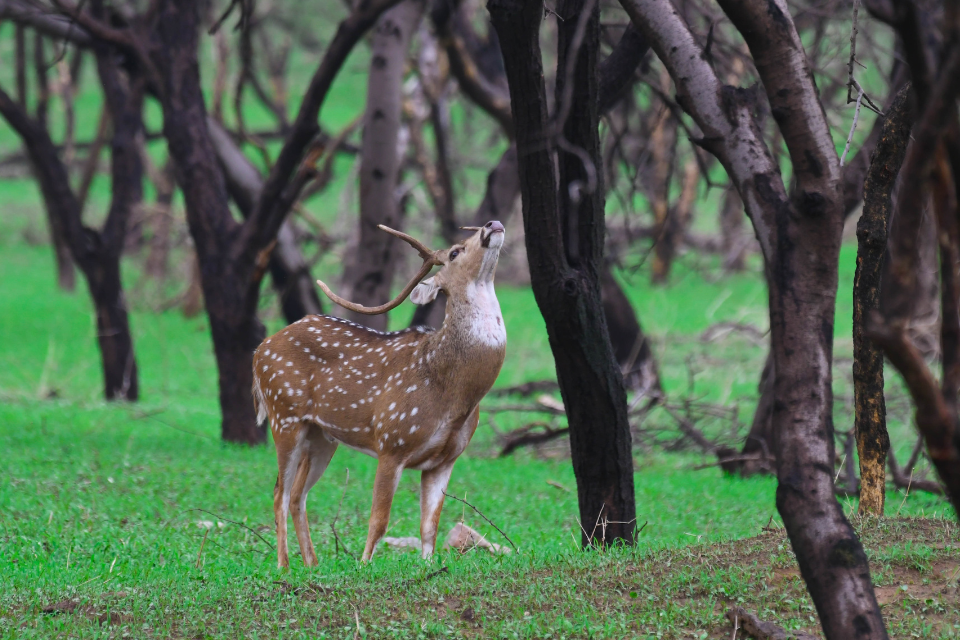
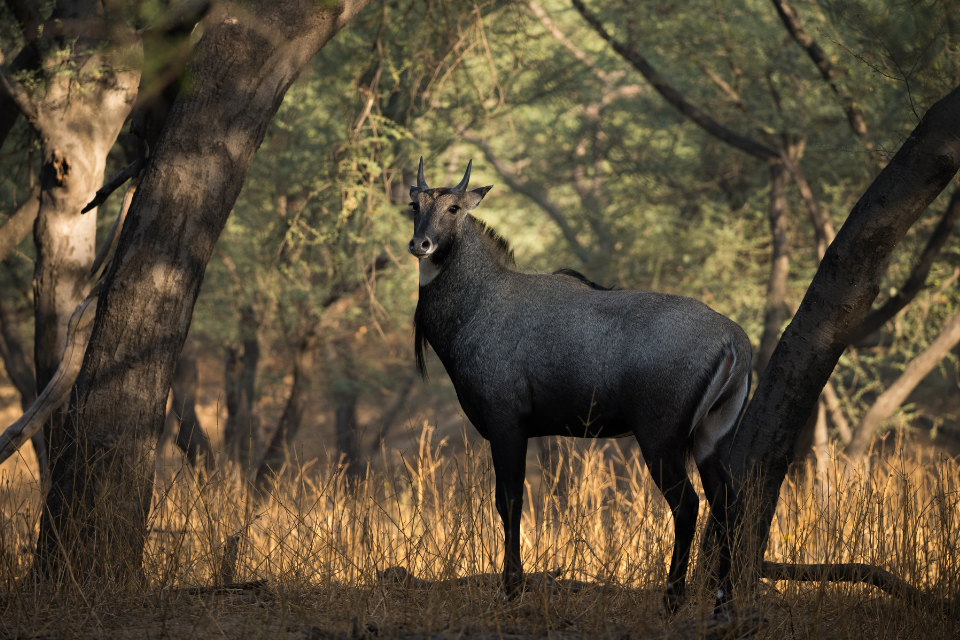
For a predator population to survive, it needs an ample food source. Jhalana supports a surprisingly large population of herbivores, including the massive Blue Bull (Nilgai) and herds of Spotted Deer (Chital). The availability of water within the reserve, through natural rocky depressions that trap rainwater, ensures these animals don’t need to stray into the city looking for resources, keeping the entire food chain contained within the park boundaries.
5. The Human Element: Managed Coexistence
The survival of the urban wildlife of Jhalana is not just a happy accident of nature; it is also the result of active, sometimes intensive, human management.
The Boundary Walls
Unlike open sanctuaries, Jhalana is fenced. The Forest Department maintains boundary walls and fences to physically separate the “jungle” from the “urban.” While animals like leopards are capable of climbing these obstacles, the fences act as a psychological barrier and a clear demarcation line, significantly reducing accidental encounters between wildlife and domestic livestock or people.
Monitoring and Tourism
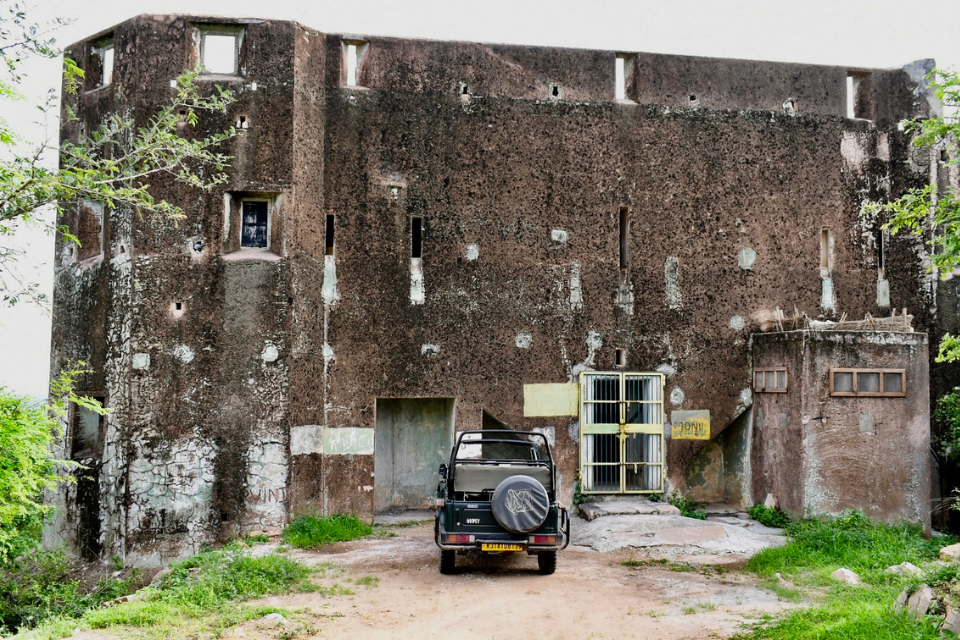
The introduction of regulated Jhalana Leopard Safari tourism has turned the animals into economic assets. The constant presence of safari gypsies, naturalists, and forest guards acts as a monitoring system. Every leopard is known, tracked, and its health is observed. This intense scrutiny means that any potential issue—an injured animal or one straying too close to the edge—can be addressed immediately. Tourism has fostered a sense of pride among Jaipur residents, transforming the leopard from a potential threat into a beloved icon of the city.
Conclusion: A Fragile but Fierce Miracle
The urban wildlife of Jhalana is a modern ecological miracle. It challenges our perceptions of where “nature” belongs. It proves that even apex predators can coexist with dense human populations given the right mix of geological protection, behavioral adaptation, and proactive conservation management.
A visit to Jhalana is more than just a safari; it is a glimpse into the future of conservation in an increasingly urbanized world. Seeing a wild leopard sits regally on a billion-year-old rock, with the lights of a modern city twinkling just over the ridge behind it, is an experience that stays with you forever. It is a powerful reminder of nature’s incredible resilience.
FAQ: Understanding the Urban Wildlife of Jhalana
1. Are the leopards in Jhalana dangerous to tourists?
A. No. The leopards are habituated to the safari vehicles and view them as a non-threatening part of their environment. Tourists are perfectly safe as long as they remain inside the official safari gypsy and follow all guidelines.
2. Do leopards ever enter Jaipur city?
A. While rare, straying incidents can occur around the fringes. However, the Forest Department has rapid response teams to manage such situations, and the boundary fences are designed to minimize these occurrences.
3. How many leopards live in this small urban forest?
A. Jhalana has a notoriously high density of leopards. While numbers fluctuate, the reserve supports a healthy, breeding population that is remarkably high for its small geographical area.
4. What is the biggest threat to the urban wildlife of Jhalana?
A. The primary threats are habitat isolation and the constant pressure of urban encroachment around its borders. Maintaining the integrity of the park boundaries is crucial.
5. Can I see other urban-adapted animals besides leopards?
A. Absolutely. You are likely to see Striped Hyenas, Desert Foxes, Golden Jackals, and various herbivores like Nilgai, all of which have adapted to this unique urban-fringe ecosystem.
6. Is the park noisy because of the city?
A. You will hear city sounds in the background, but the immediate sounds of the forest—bird calls and monkey alarms—are usually dominant during a safari.