5 Jungle Alarms: Master the Art of Tracking on a Jhalana Panther Safari (2026 Guide)
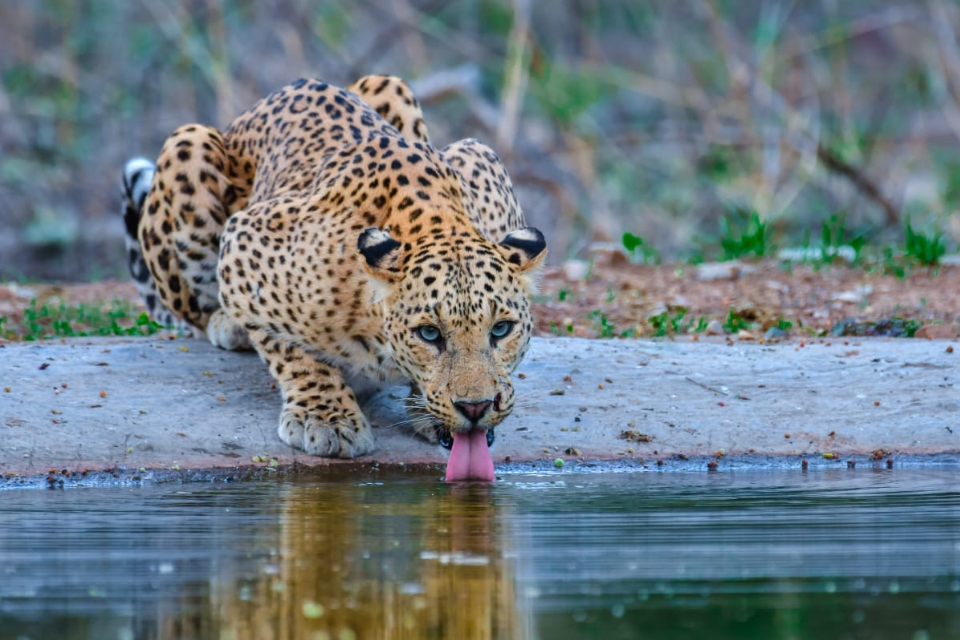
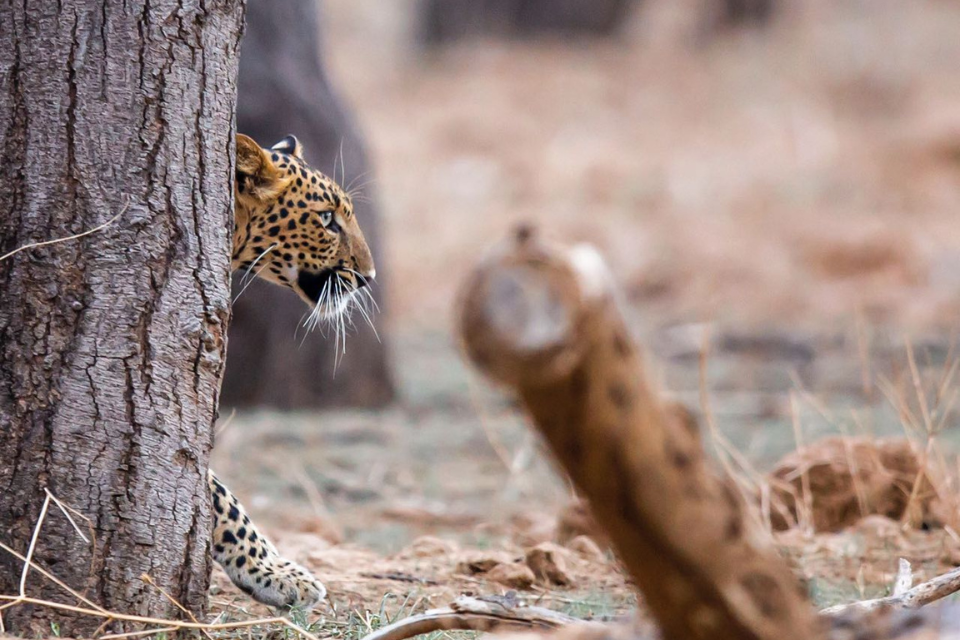
The dense, dry deciduous forest of the Aravallis is a place of secrets. In the thick undergrowth of Prosopis juliflora, a leopard can disappear like a phantom. For the average tourist, a Jhalana Panther Safari is a game of visual hide-and-seek. But for the expert tracker, the jungle is never hidden—because the jungle is never silent.
This is the “Jungle Telegraph”—a sophisticated network of audio signals passed from species to species, warning of a predator’s movement. To truly master the Jhalana Panther Safari experience, you must stop just looking and start listening. In this comprehensive guide, we teach you how to decode the sounds of the forest to predict the movement of the “Ghost of the Forest” before he even steps into the light.
The Biology of Fear: Why Animals Call
To understand alarm calls, you must understand the biology behind them. An alarm call is an evolutionary gamble. By making a loud noise, a prey animal (like a deer or monkey) reveals its own location to the predator. So, why do they do it?
The “Perception of Risk”
Animals in Jhalana have evolved to gauge the exact threat level of a predator.
- The “Ambush Breaker”: Leopards rely on stealth. If a Langur spots a leopard and calls out, the element of surprise is lost. The leopard knows it has been seen and often abandons the hunt.
- Altruism vs. Selfishness: While protecting their kin, the caller is also telling the predator, “I see you, don’t bother chasing me.” This biological signal is the tracker’s greatest tool on a Jhalana Panther Safari.
The “Big Three” Sentinels of Jhalana
Not all calls are created equal. On your safari, you will hear a symphony of sounds, but only three matter when you are hunting for a leopard.
1. The Northern Plains Gray Langur (The Reliable Scout)
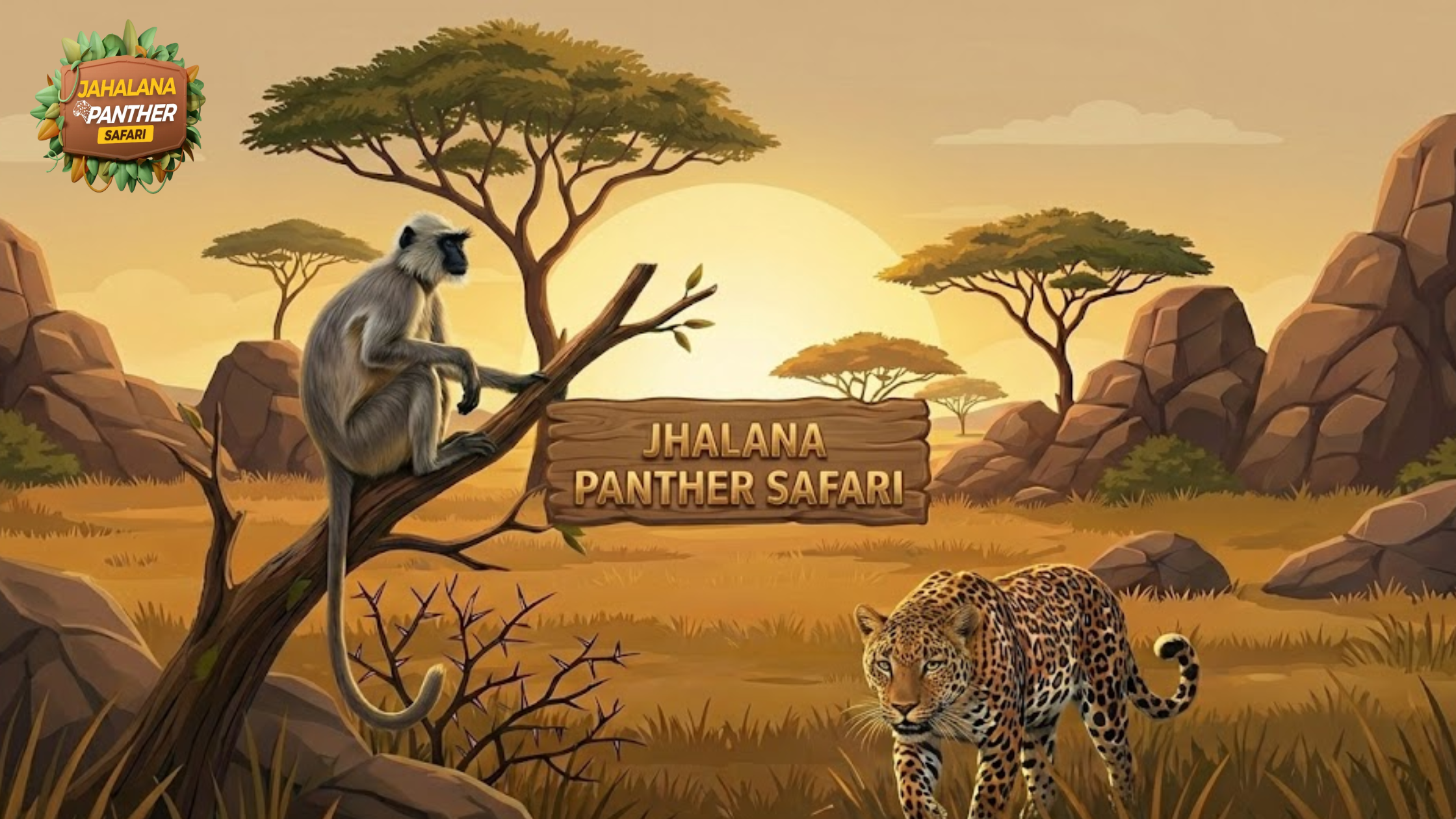
The Langur is the most trusted sentry in Jhalana. Sitting high in the canopy, they have a vantage point that humans in jeeps do not.
- The Sound: A harsh, rhythmic “Khok-Khok-Khok” or “Kaon-Kaon” that sounds like a machine gun firing slowly.
- The Meaning: A Langur rarely lies. If a Langur is calling persistently and looking down, a leopard is definitely passing beneath the tree.
- The Direction: Watch the Langur’s head. They will physically point their faces toward the predator. If the monkey turns its head, the leopard is moving.
2. The Indian Peafowl (The Ground Radar)
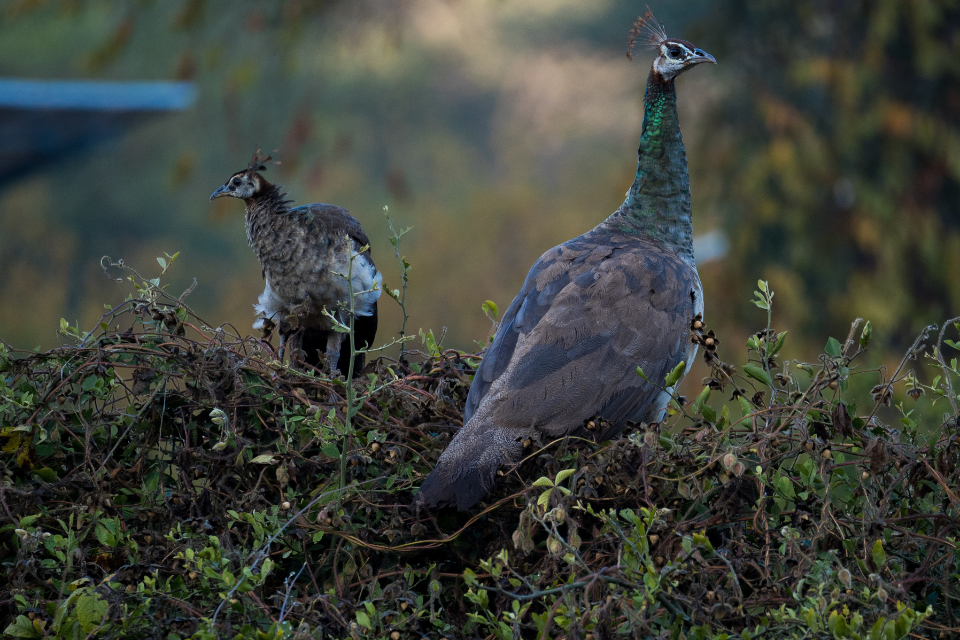
Peacocks are everywhere in Jhalana, roosting in the lower bushes.
- The Sound: Do not confuse their mating call (Me-ow) with their alarm call. The alarm is a frantic, high-pitched “Kok-Kok-Kok-Ka!” usually accompanied by the bird flying up into a tree.
- The Meaning: Peacocks have exceptional eyesight for movement. They are often the first to spot a leopard emerging from the tall grass where Langurs cannot see.
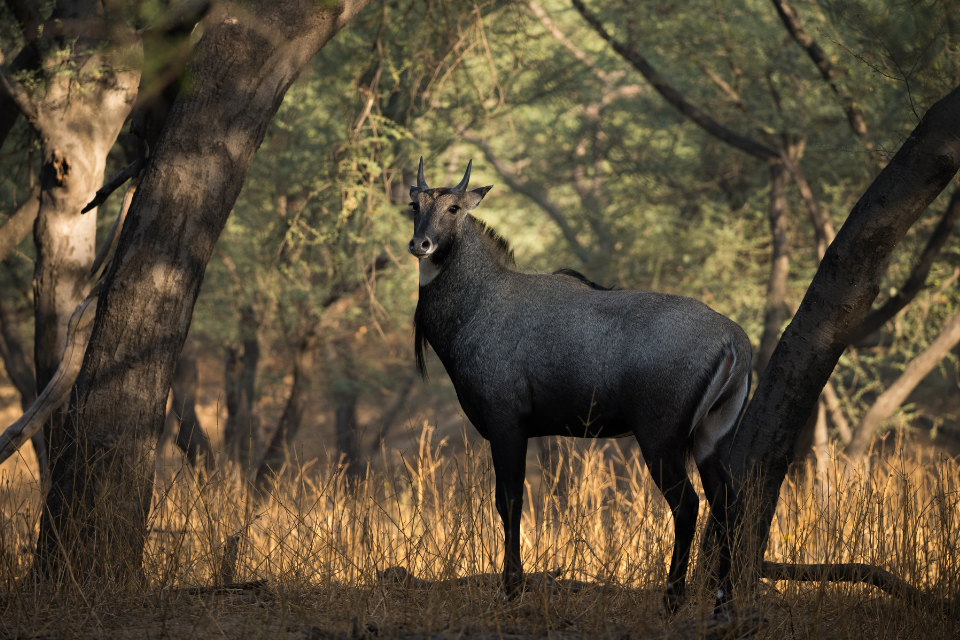
3. The Blue Bull or Nilgai (The Heavy Artillery)
The largest antelope in Jhalana, the Nilgai, is usually silent.
- The Sound: A deep, guttural roar or bellow that sounds like a lion’s grunt.
- The Meaning: This is a “Level 10” emergency. A Nilgai only calls when the danger is immediate and close. If you hear this deep bellow during your Jhalana Panther Safari, get your camera ready—the leopard is likely in attack mode.
Differentiating Predator Calls: Leopard vs. Hyena vs. Jackal
A common mistake made by rookie tourists is assuming every alarm call is for a leopard. However, the “Jungle Telegraph” uses different codes for different enemies.
The “Urgency” Factor
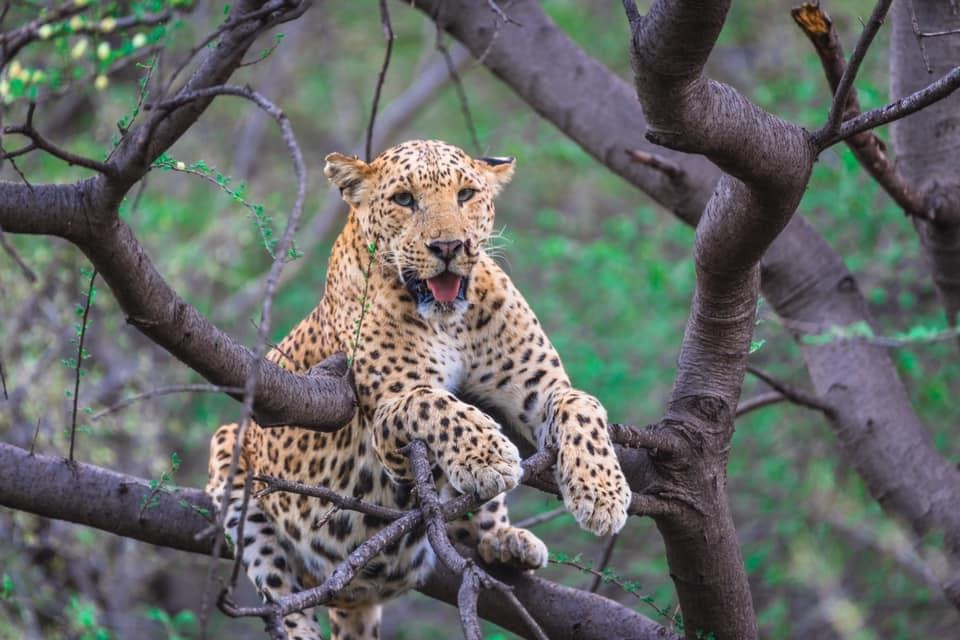
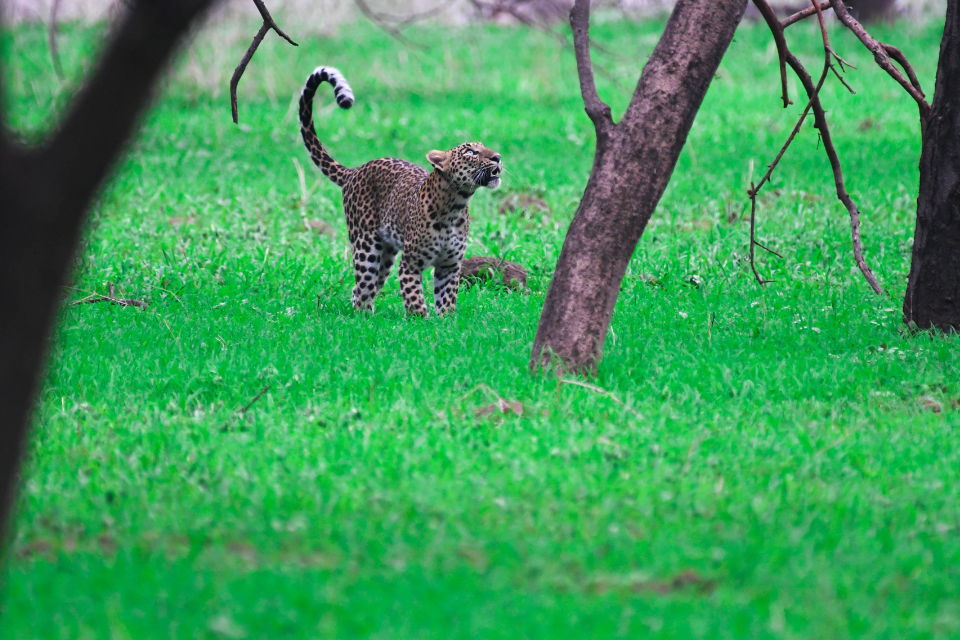
- For Leopards: The calls are frantic, continuous, and spread rapidly from tree to tree. The panic is palpable because leopards can climb trees and kill monkeys.
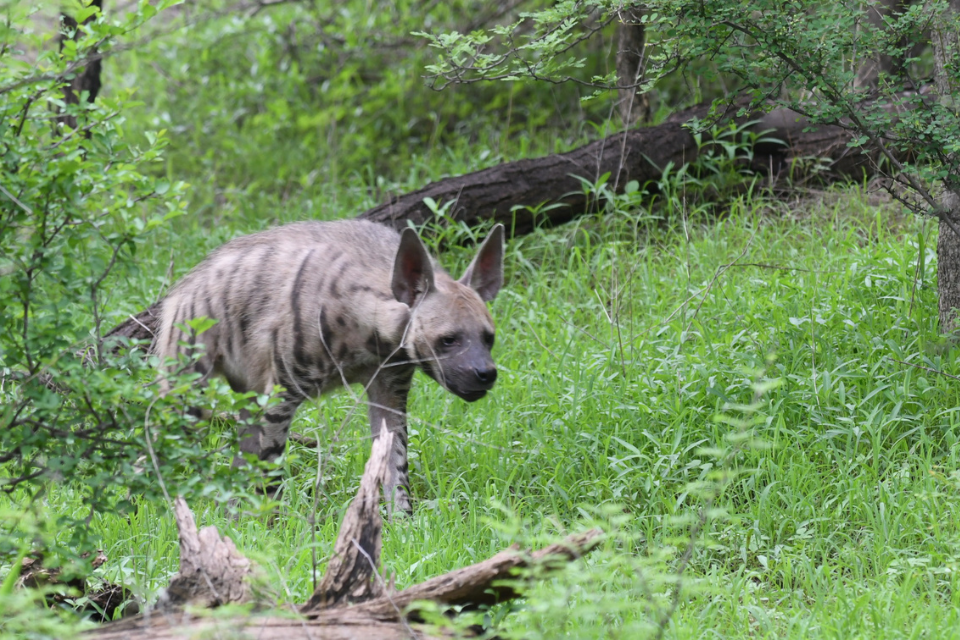
- For Hyenas: The calls are sporadic and less intense. Langurs know that hyenas cannot climb trees, so while they will bark to announce a hyena’s presence, they do not display the same level of terror.
- For Birds of Prey: Squirrels and smaller birds will chirp for eagles, but Langurs will generally ignore them. Knowing this difference prevents false alarms during your Jhalana Panther Safari.
How to Use “Auditory Tracking” on Your Safari
You don’t need to be a naturalist to use these skills. Here is a step-by-step protocol for tourists to increase their sighting chances.
- The “Engine Off” Rule
When your driver stops the vehicle at a junction, do not ask, “Why did we stop?” He is stopping to listen. Absolute silence is required. This moment of silence is often when the magic happens on a Jhalana Panther Safari, revealing sounds that the engine noise was masking. The faint crackle of dry leaves or a distant “Khok” can be missed if passengers are chatting.
- Triangulation
If you hear a Langur calling from the left and a Peacock calling from the right, draw an imaginary line between them. The leopard is likely at the intersection point, moving through the cover. This simple geometry is often the difference between a successful sighting and an empty Jhalana Panther Safari.
- The “Blind Spot” Strategy
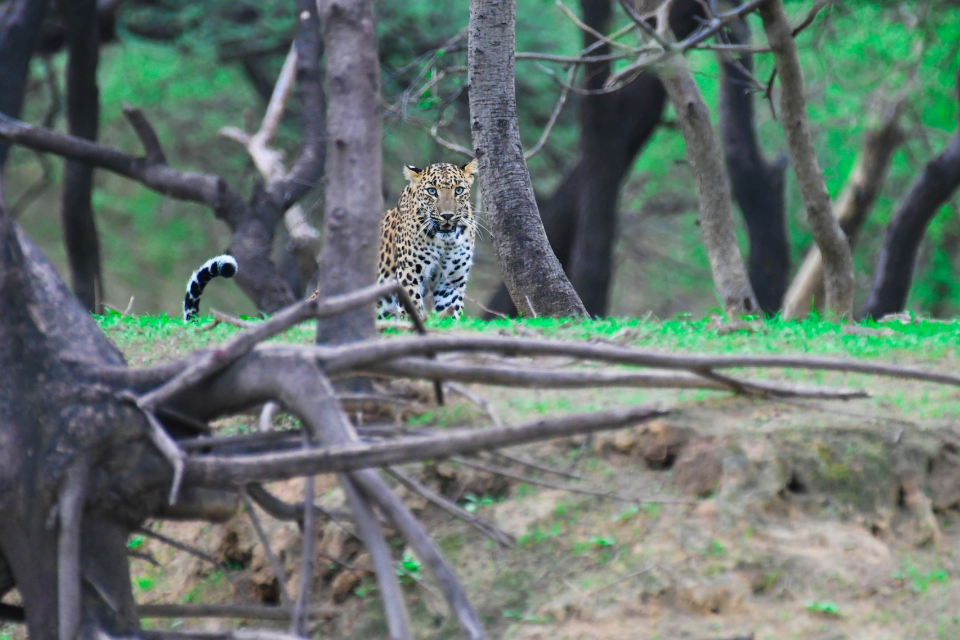
Leopards are masters of using the terrain. If the alarm calls suddenly stop, it doesn’t mean the leopard is gone. It usually means the cat has sat down or moved into a deep ravine where it is no longer visible to the sentries. This is when patience pays off—wait for the movement to restart.
Photography Tips: Capturing the “Caller”
While everyone wants a photo of the leopard, capturing the alarm caller is a prize in itself for serious wildlife photographers.
- The “Open Mouth” Shot: A Langur calls with its mouth wide open, teeth bared, and eyes focused intensely. This makes for a dramatic, action-packed portrait.
- Shutter Speed: These animals are often jumping or shaking branches while calling. Keep your shutter speed above 1/1000th to freeze the action.
- Context: Zoom out slightly to show where the animal is looking. This adds a storytelling element—the viewer knows something is hiding in the frame, even if they can’t see it.
Conservation Impact: The Stress Factor
Understanding alarm calls also teaches us about the stress we place on these animals.
- Chronic Stress: Constant presence of tourists can sometimes desensitize animals to alarm calls, or conversely, make them hyper-sensitive.
- Ethical Safari: On a responsible Jhalana Panther Safari, drivers respect the alarm calls but do not chase the animals aggressively. We listen, we wait, and we let the leopard come to us. This reduces the stress on the prey base, ensuring the ecosystem remains healthy.
FAQ: Decoding the Sounds of Jhalana
1. Do leopards make sounds themselves?
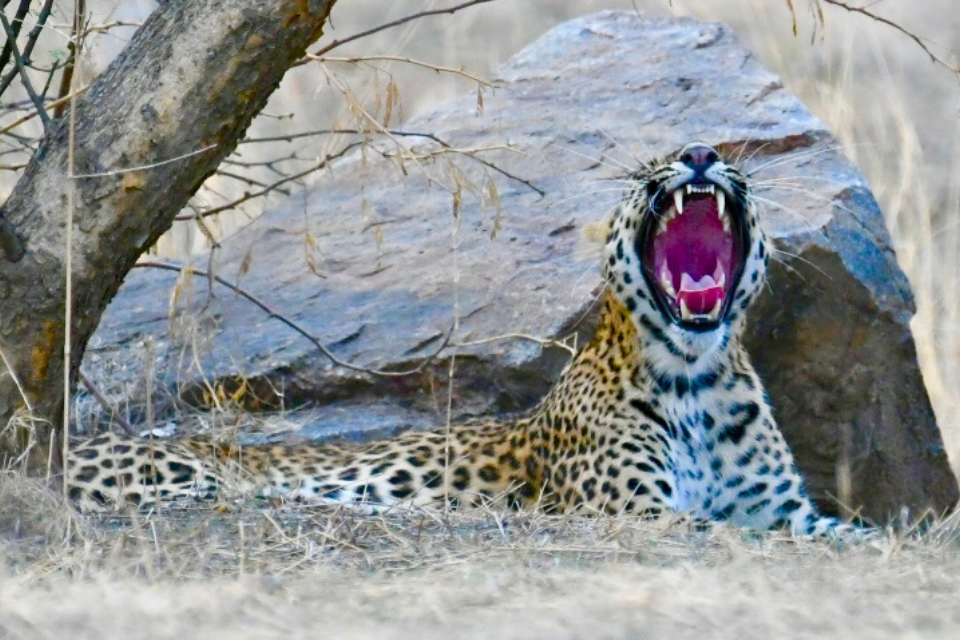
A. Yes, leopards “saw”—a sound like sawing wood—to mark territory. However, they are silent when hunting.
2. Can I use a phone app to play sounds and attract leopards?
A. Absolutely Not. This is strictly illegal under the Wildlife Protection Act and disrupts the natural behavior of the animals.
3. Why do the monkeys sometimes call when nothing is there?
A. False alarms happen. A falling branch or a sudden gust of wind can startle a young monkey. Experienced trackers wait for the “Alpha Male” to confirm the call before moving.
4. Is the Jhalana Panther Safari better in the morning or evening for sounds?
A. Mornings are generally better. The air is still, carrying sound farther, and animals are more active at night.
5. What does a Sambar deer call sound like?
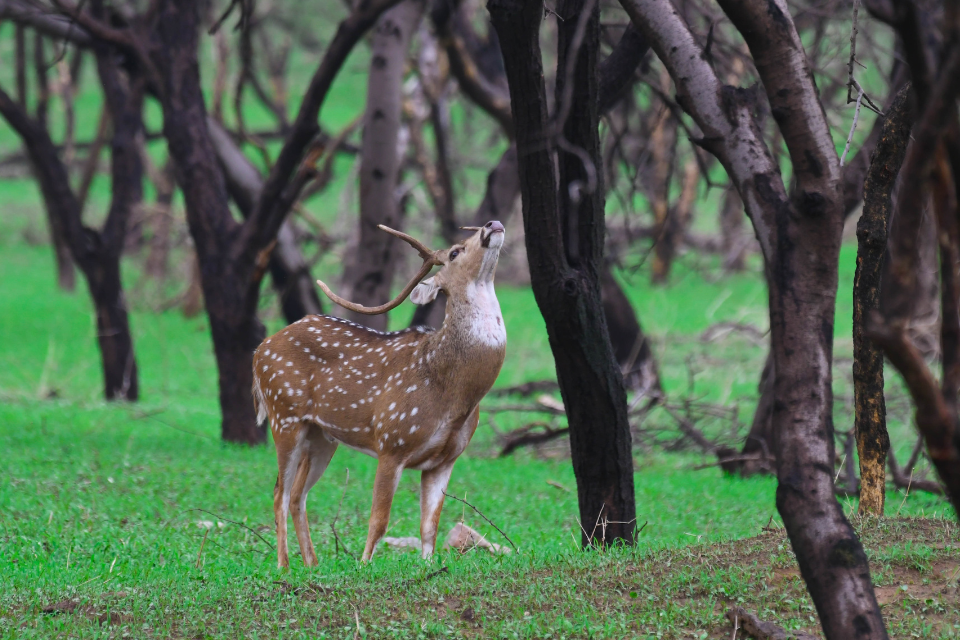
A. It is a sharp, high-pitched “Pook!” or whistle. While Sambar are fewer in Jhalana than Nilgai, their call is very distinct.
6. Do birds other than peacocks give warnings?
A. Yes, the Red-Wattled Lapwing (the “Did-You-Do-It” bird) often screams when a predator walks near its ground nest.
7. How far away can I hear an alarm call?
A. In the quiet of the Jhalana valley, a Langur’s call can travel over 1 kilometer.
Conclusion: Listen to the Story
The jungle is constantly telling a story. Every snap of a twig, every frantic screech, and every sudden silence is a sentence in the narrative of survival. When you book your Jhalana Panther Safari, you are buying a ticket to this auditory theater. The next time you are in the Gypsy, close your eyes for a moment. Let the sounds paint the picture. You might just “see” the leopard before anyone else does.
Important Disclaimer
To ensure a safe and successful tracking experience, please note:
- Respect the Silence: Loud talking or playing music is strictly prohibited inside the reserve.
- No Guarantees: Alarm calls indicate the presence of a predator, but they do not guarantee a sighting of it. The leopard may be deep inside a bush where it cannot be seen.
- Follow the Guide: Your naturalist and driver are experts in decoding these sounds. Trust their judgment on where to position the vehicle.