Essential Hindi & Rajasthani Phrases for Your Safari in Jaipur
Jaipur, the regal capital of Rajasthan, is world-renowned for its pink-hued architecture and royal history. However, for the modern adventurer, the city’s wilder side—the Jhalana and Amagarh Leopard Reserves—is becoming the star attraction. While most guides and naturalists in these parks speak English, there is a certain magic in connecting with the locals in their own tongue.
Whether you are tracking a leopard through the scrub forest or sharing a cup of masala chai with your driver, knowing a few Hindi phrases for safari and traditional Rajasthani phrases for tourists can transform your trip. It turns a standard tour into a deep cultural exchange. This safari communication guide will equip you with the linguistic tools to navigate the Pink City’s wilderness like a seasoned traveler.
Why Learn Local Language for Jaipur Travel?
India is a land of diverse languages, and Rajasthan is home to a soulful dialect that reflects the bravery and hospitality of its people. Learning the local language for Jaipur travel serves three major purposes:
- Building Rapport: Naturalists and trackers spend their lives in the forest. When you use their language, they often share deeper insights and “secret” spots they might not mention otherwise.
- Respecting Culture: Using a traditional Rajasthani greeting shows that you value the local heritage, instantly earning you the “Atithi Devo Bhava” (The Guest is God) treatment.
- Better Coordination: In the heat of a leopard sighting, quick communication in local terms can help you position your camera or binoculars faster.
The Golden Greetings: Starting Your Day
Before you even board your 4×4 Gypsy, your interaction begins with your driver and guide. Use these to start on a high note.
Traditional Rajasthani Greetings
- Khamma Ghani: This is the most iconic Rajasthani greeting. It is similar to “Namaste” but carries a deeper sense of respect.
- Ghani Khamma: The appropriate response to “Khamma Ghani.”
- Padharo Mhare Des: Literally meaning “Welcome to my land.” You will see this on signs, but saying it to your host is a great way to show you’ve done your homework.
Essential Hindi Basics
- Namaste / Namaskar: The universal Indian greeting.
- Aap kaise hain? (How are you?)
- Main theek hoon. (I am fine.)
- Dhanyawad: (Thank you.)
Inside the Reserve: Hindi Phrases for Safari
When the engine starts and you enter the gates of Jhalana or Amagarh, the atmosphere changes. Silence is key, but these phrases will help you communicate effectively with your naturalist.
Wildlife Identification
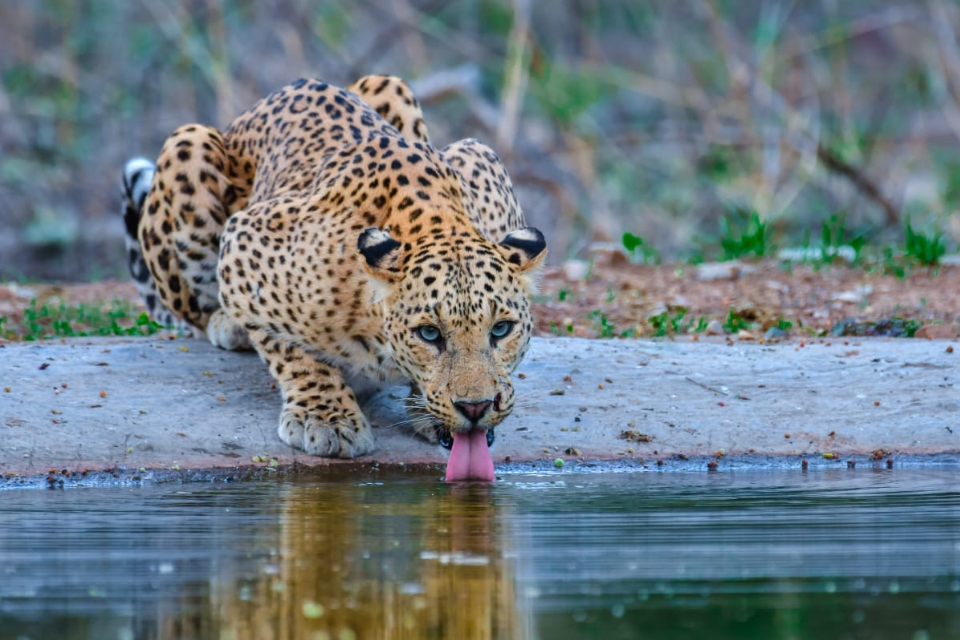
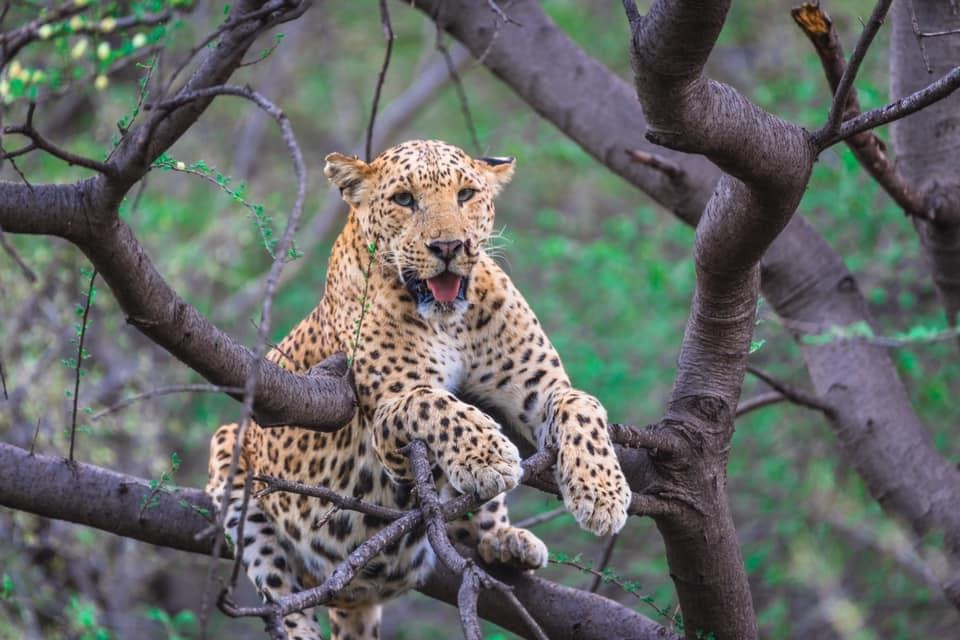
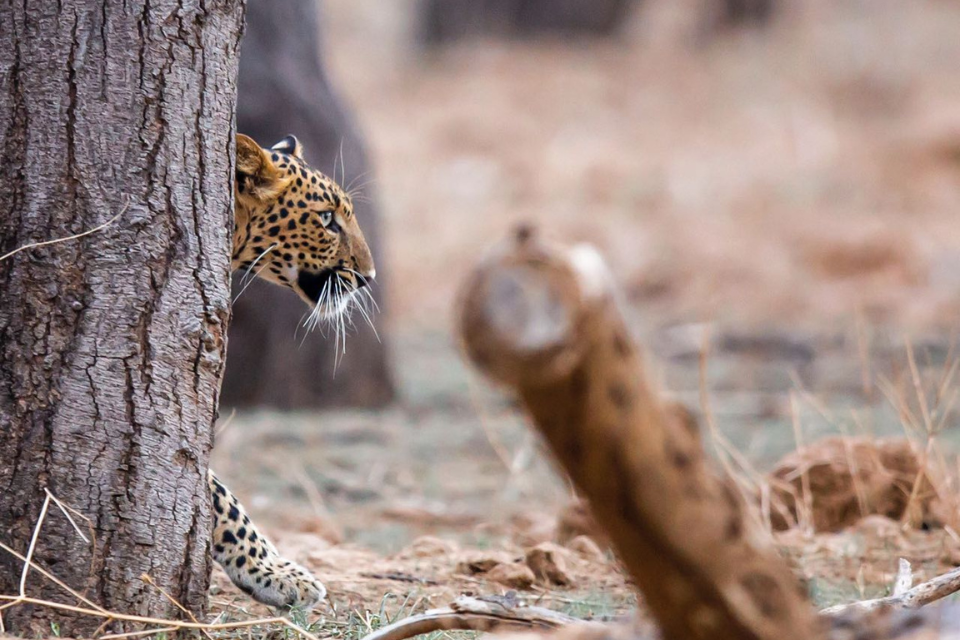
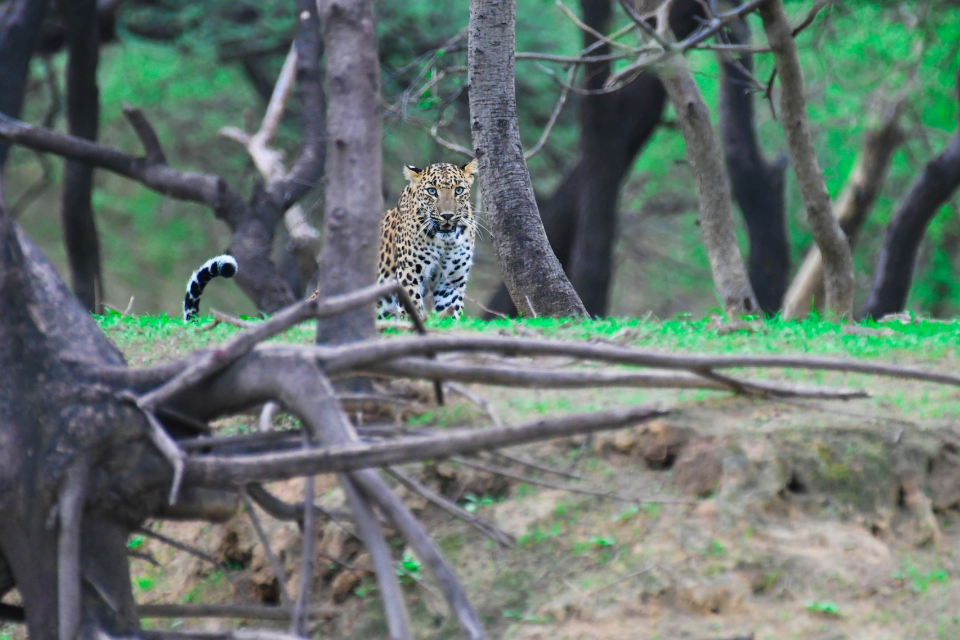
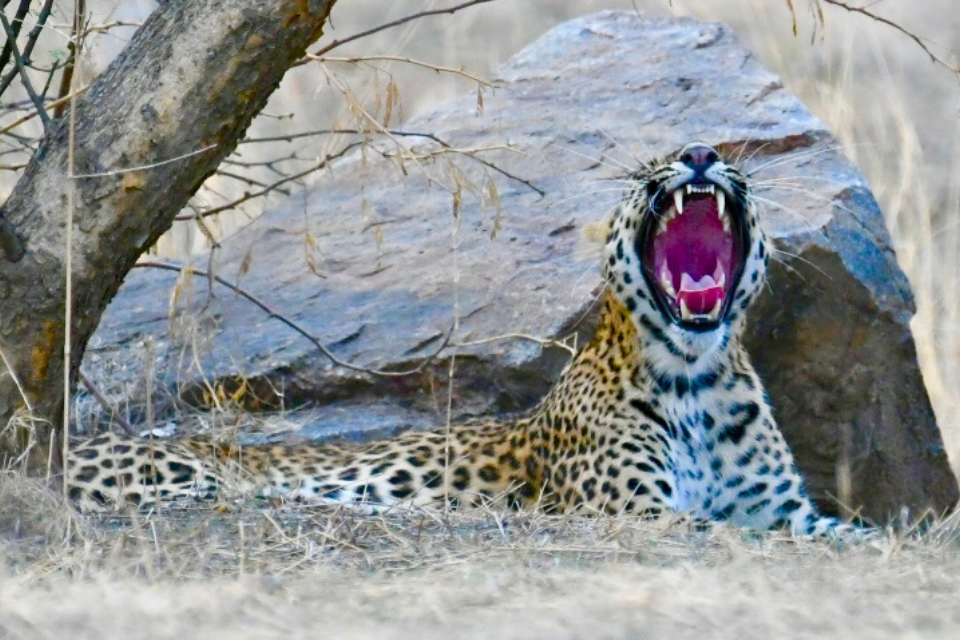
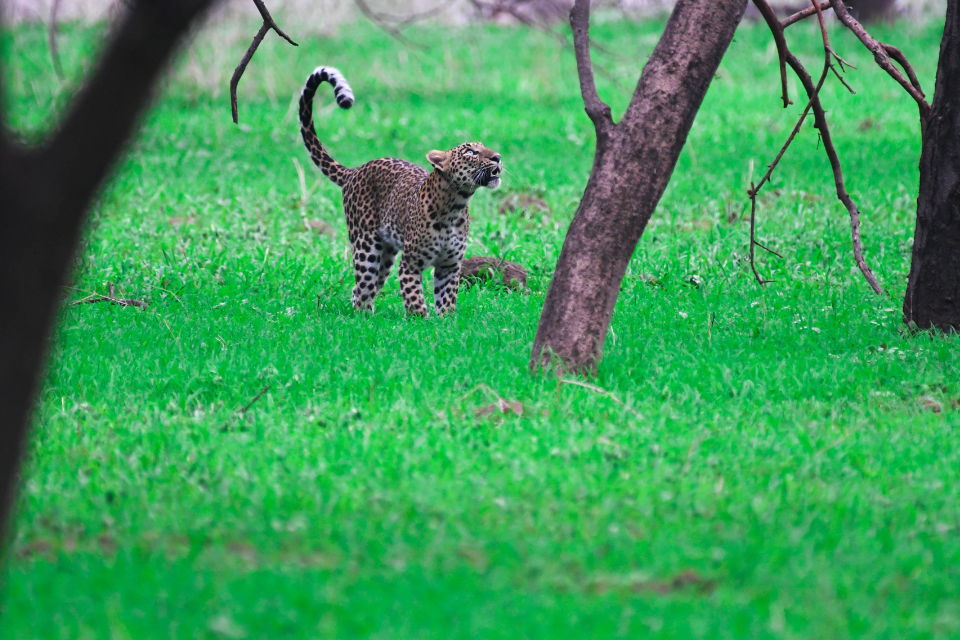
- Baghera: The local Rajasthani word for Leopard. While “Tendua” is the Hindi word, saying “Baghera” will instantly impress your guide.
- Zameen par: On the ground.
- Ped ke upar: On top of the tree.
- Piche dekho: Look behind.
- Saanp: Snake.
- Chidiya: Bird.
Directional & Action Commands
- Rukiye: Stop (Essential when you spot movement and need the driver to kill the engine).
- Dhire chaliye: Drive slowly.
- Wahan dekho: Look there.
- Chaliye: Let’s go.
- Shanti rakhiye: Please keep quiet (Useful if other vehicles nearby are being loud).
Essential Rajasthani Phrases for Tourists (The Hospitality Dialect)
Rajasthanis are famous for their warmth. If you stop at a local stall or interact with the forest guards, these phrases are gold:
- Bana / Hukum: These are titles of respect. Calling your guide “Hukum” is like calling them “Sir” in a very royal, respectful way.
- Ghado Chokho: This means “Very good” or “Beautiful.” Use this when you see a stunning sunset over the Aravalli hills.
- Mane pyaas lagi hai: I am thirsty.
- Jhalana ghano sundar hai: Jhalana is very beautiful.
Practical Insights: How to Use These Phrases Effectively
- Don’t Worry About the Accent: Locals appreciate the effort more than perfect pronunciation. Speak with a smile, and they will understand.
- Use Body Language: In a quiet safari environment, use hand gestures alongside your safari communication guide phrases to avoid scaring the animals.
- The Power of “Bhaiya”: In India, calling a male driver or guide “Bhaiya” (Brother) creates an instant friendly bond. It signals that you trust them.
The “Chai” Break: Socializing Post-Safari
After the safari, it’s common to discuss the sightings over tea.
- Chai bahut acchi hai: The tea is very good.
- Aaj ka din bahut accha tha: Today was a very good day.
- Kya humein leopard dikha? Did we see a leopard?
- Maza aa gaya! I really enjoyed it! (A very common Hindi expression for pure joy).
Conclusion: Bridging the Gap
A safari in Jaipur is more than just a wildlife sighting; it’s an immersion into the rugged soul of Rajasthan. By integrating Hindi phrases for safari and Rajasthani phrases for tourists into your journey, you break down the barrier between “tourist” and “traveler.” You aren’t just observing the forest; you are participating in its story.
Next time you head to the Jhalana Leopard Reserve, remember to say “Khamma Ghani” to your guide. You’ll be surprised at how much wider their smile gets and how much more effort they put into finding that elusive “Baghera” for you.
Frequently Asked Questions (FAQs)
- Do I really need to learn Hindi for a safari in Jaipur?
Not strictly “need,” as most professional guides speak English. However, knowing basic Hindi phrases for safari significantly enhances the experience and helps in emergencies or quick coordination during sightings. - What is the difference between Hindi and Rajasthani?
Hindi is the national language, while Rajasthani is a collection of dialects (like Marwari or Mewari) spoken in the state. In Jaipur, people speak a mix. Using Rajasthani words like “Khamma Ghani” shows a higher level of cultural appreciation. - Is it offensive if I mispronounce a word?
Not at all! Indians are generally very forgiving and appreciative when foreigners try to speak the local language. It is seen as a gesture of friendship. - What is the most important phrase to know during a leopard sighting?
“Rukiye” (Stop). It is vital to tell the driver to stop immediately without making too much noise if you spot movement in the bushes. - How do I say “I want to take a photo” in Hindi?
You can say, “Photo leni hai.” Your guide will usually position the vehicle to give you the best light and angle. - Is “Namaste” used in Rajasthan?
Yes, Namaste is understood everywhere. But if you want to sound like a local in Jaipur, try “Khamma Ghani.” - How can I ask my guide if we will see a leopard today?
You can ask: “Kya aaj baghera dikhega?” (Will the leopard be seen today?).