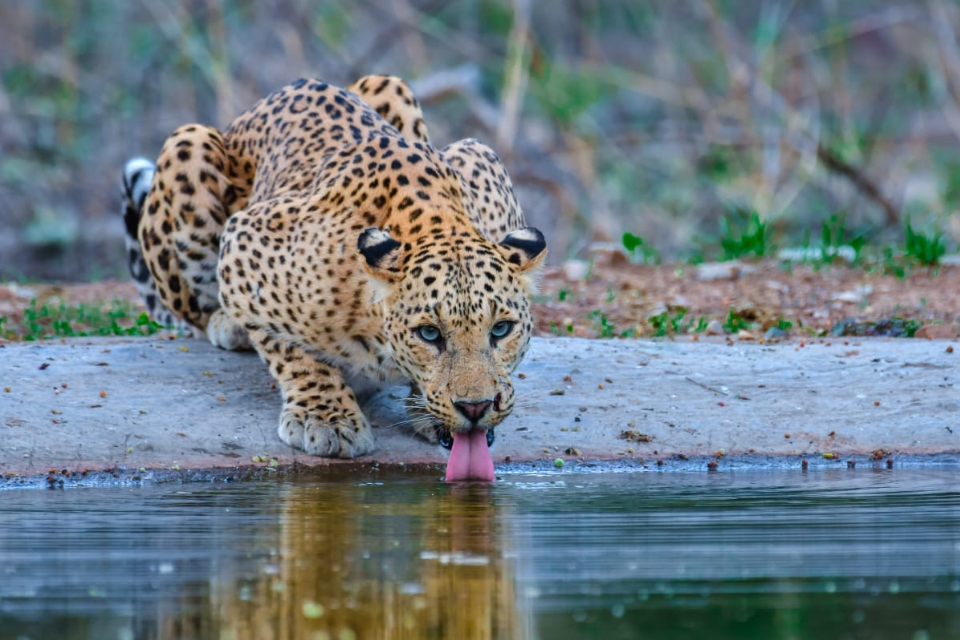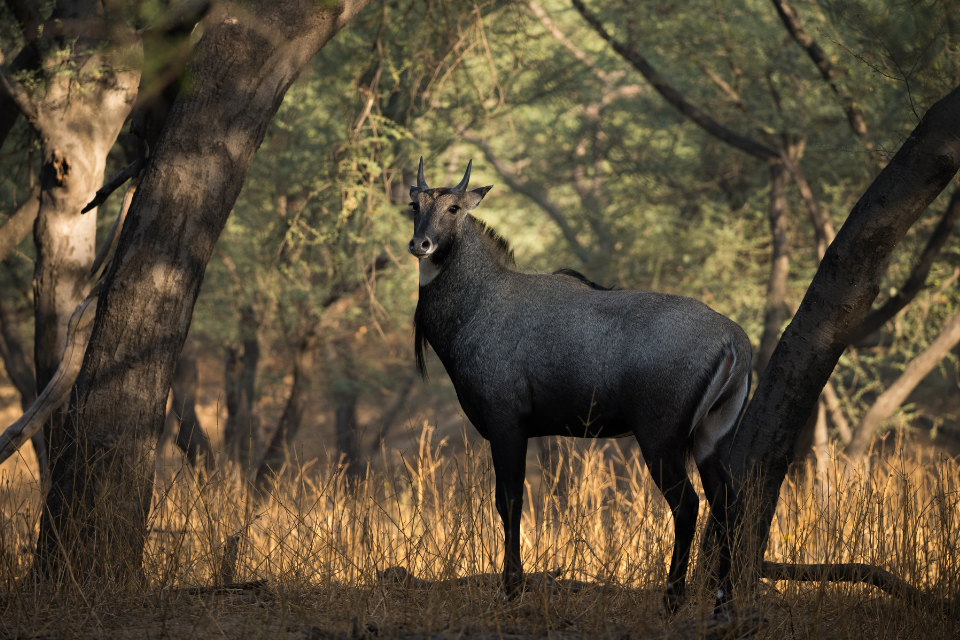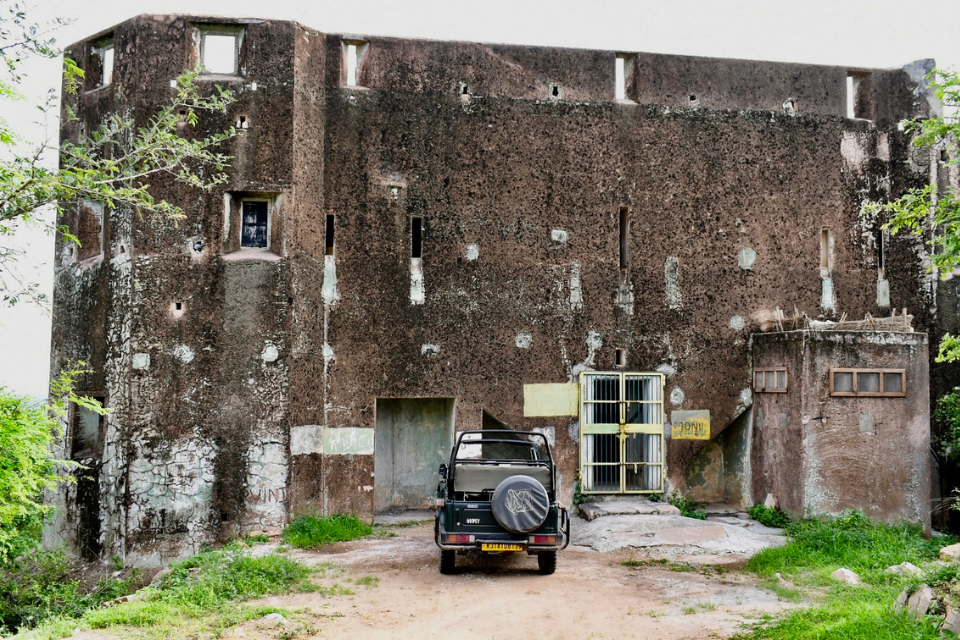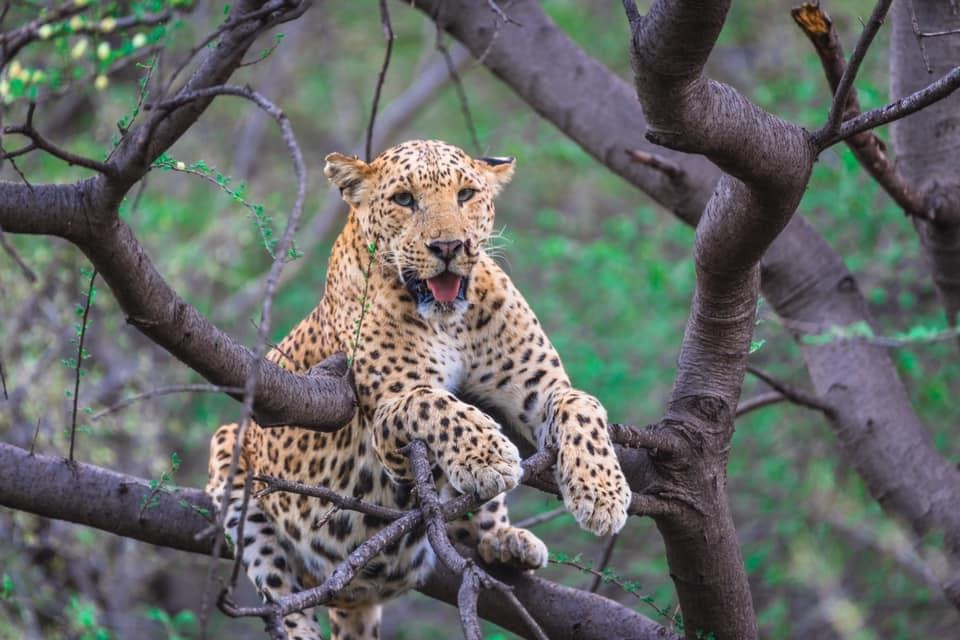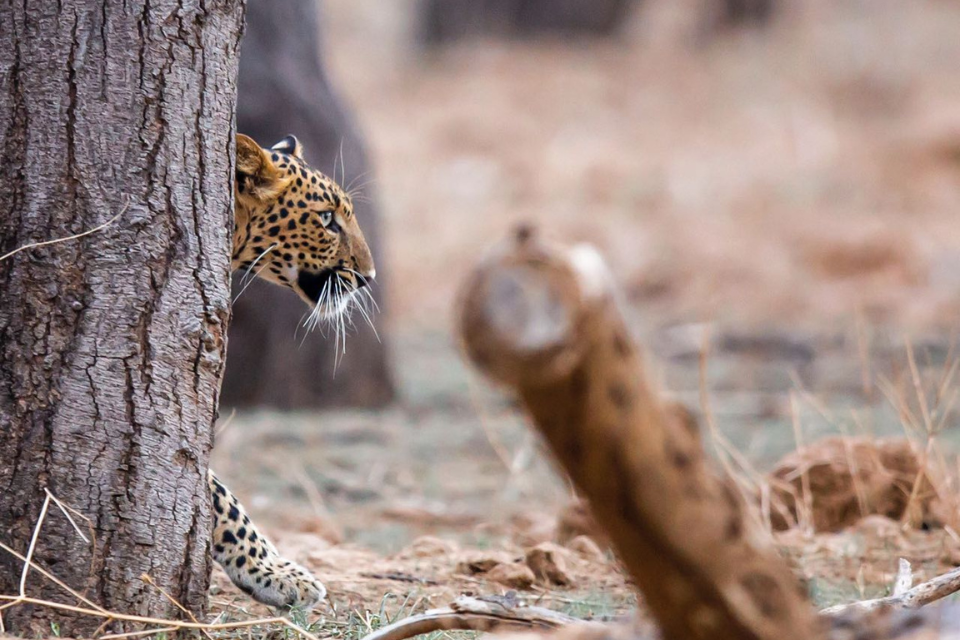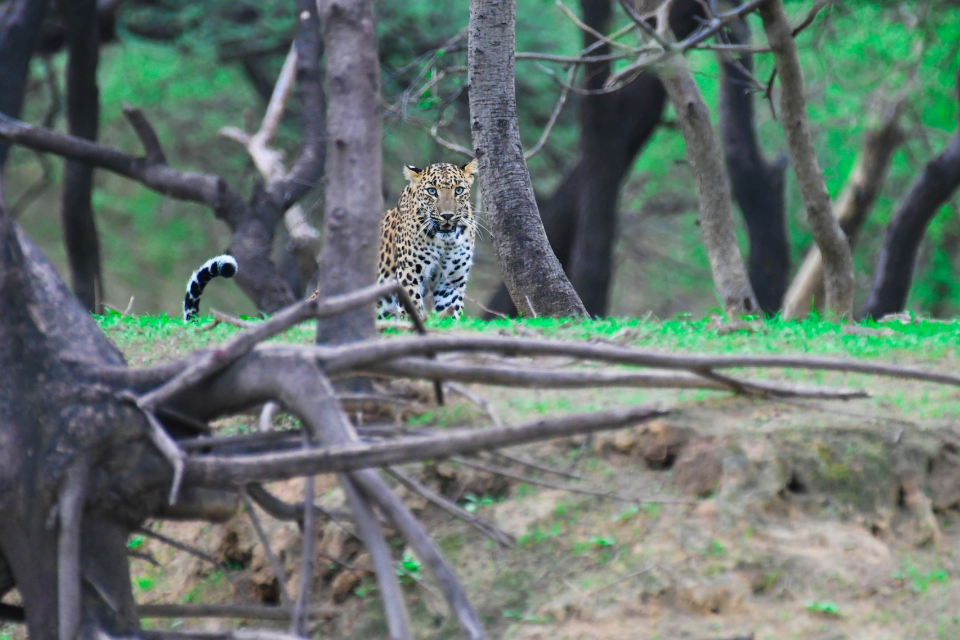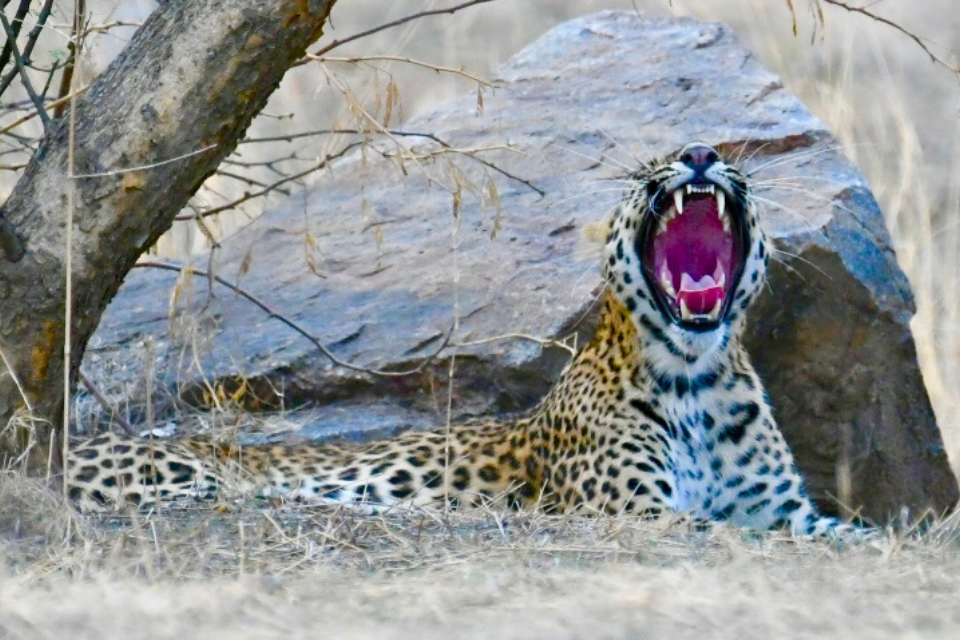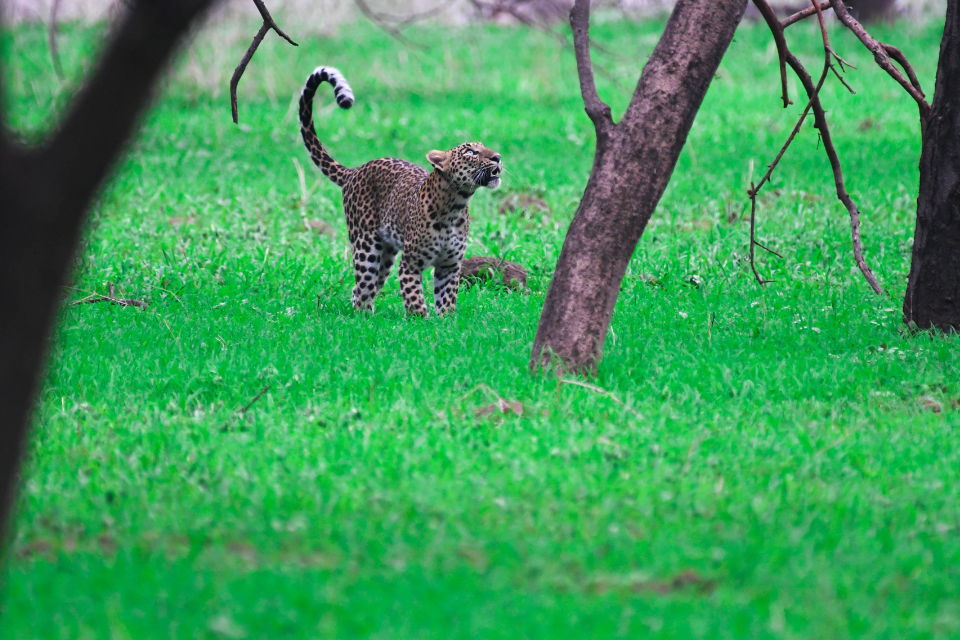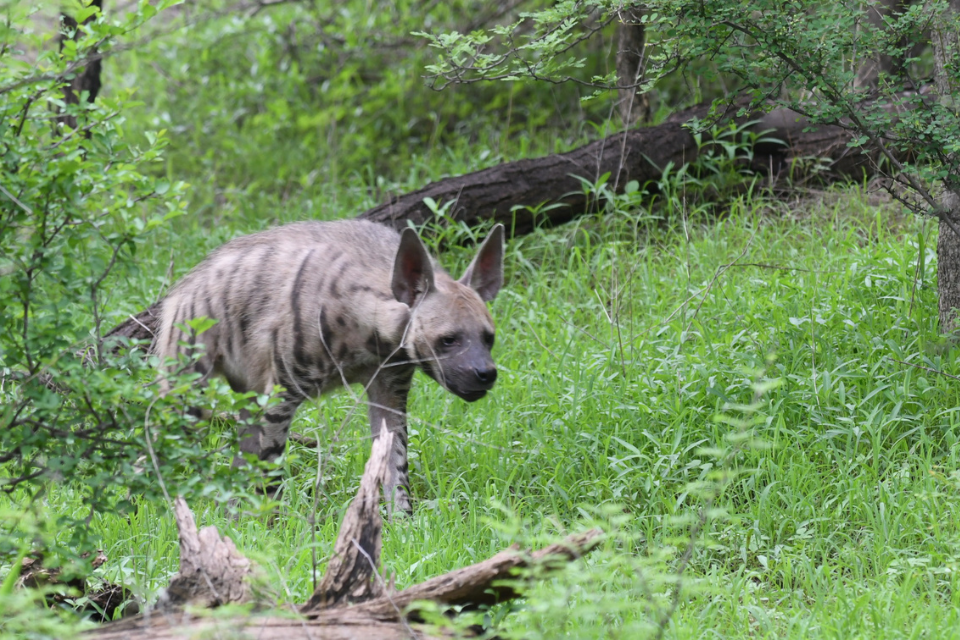
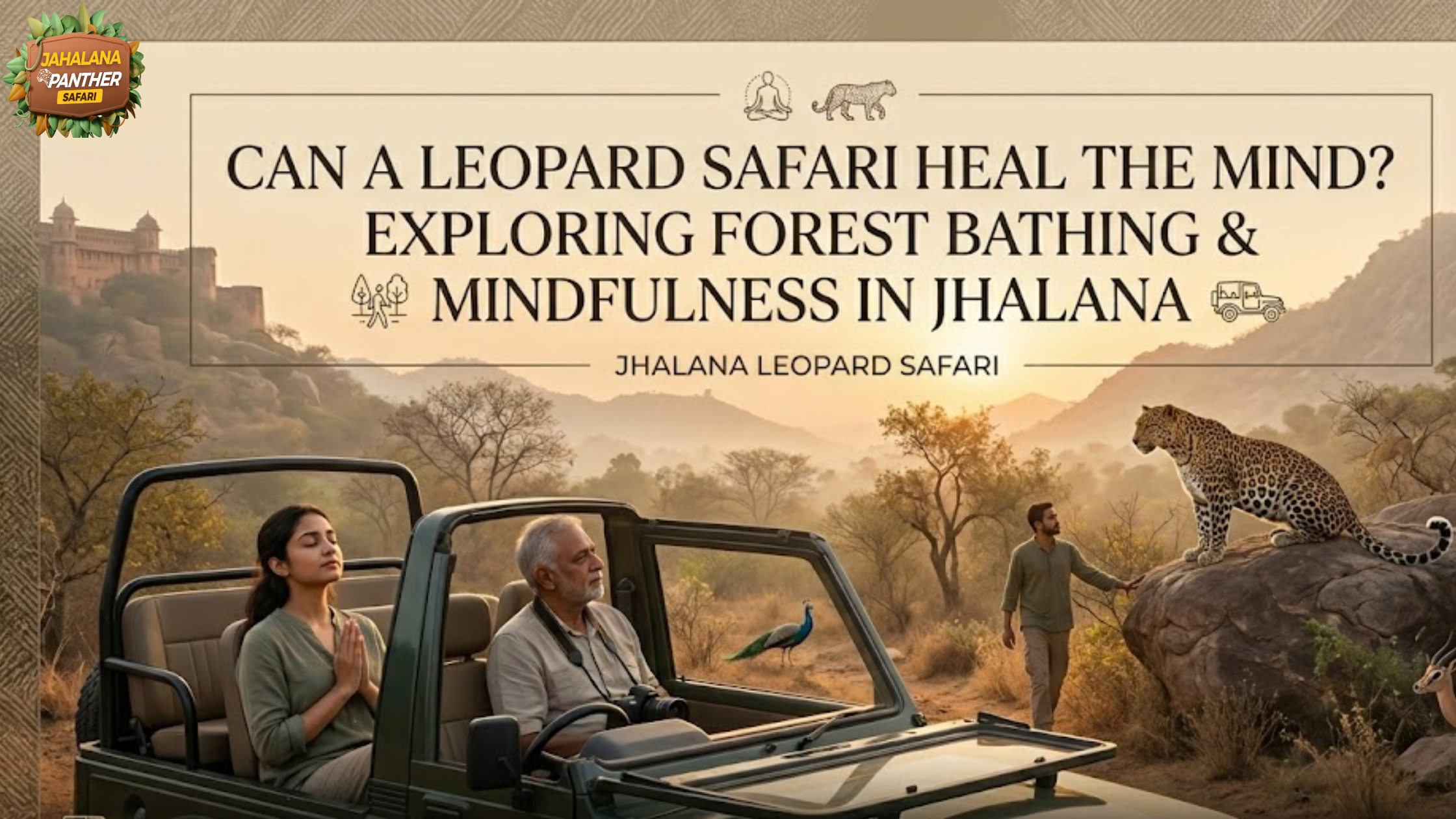
In the heart of Rajasthan’s bustling capital, where the rhythmic honking of rickshaws and the vibrant chaos of the bazaars usually define the day, lies a silent, emerald sanctuary. Most visitors enter the Jhalana Reserve with a singular, high-octane goal: to spot the elusive “Spotted King” of the Aravallis. But as we move into 2026, a new wave of travelers is discovering that the true treasure of these ancient hills isn’t just the apex predator—it’s the profound sense of peace found in the silence between the sightings.
Can a leopard safari in Jaipur actually heal the mind? Science and ancient wisdom both say yes. By blending the Japanese art of Shinrin-yoku (forest bathing) with the thrill of a wildlife expedition, Jhalana is emerging as a premier destination for nature therapy in Jaipur.
The Science of the “Green Reset”: Forest Bathing India
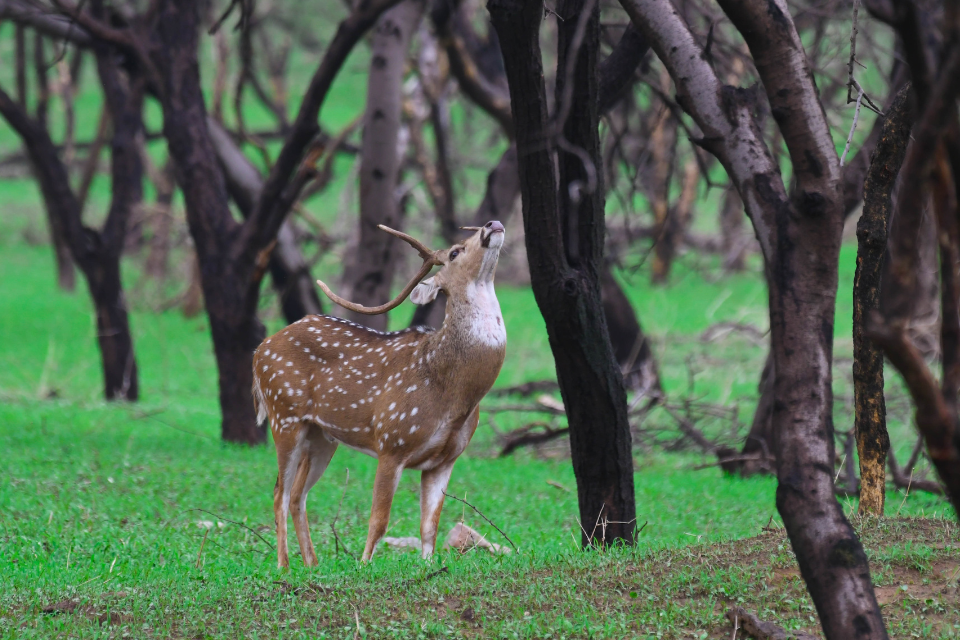
The concept of forest bathing in India is more than just a walk in the woods; it is a deliberate, sensory immersion. When you enter the dry deciduous scrublands of Jhalana, you aren’t just looking at trees—you are breathing in phytoncides. These are airborne chemicals emitted by plants like the Anogeissus pendula (Dhonk) and Boswellia serrata (Salar) to protect themselves from insects.
When humans inhale these compounds, our bodies respond by increasing the count of natural killer (NK) cells, which boost our immune system and lower cortisol—the primary stress hormone. In the high-velocity world of 2026, where digital burnout is a global epidemic, a mindfulness safari in Jhalana acts as a biological “reset button.” The rugged terrain, the earthy scent of the sun-baked soil, and the rhythmic swaying of the jeep create a meditative state that slows the heart rate and quiets the “monkey mind.”
The Art of the Mindfulness Safari
A traditional safari is often a race against time to find a predator. A mindfulness safari, however, is about the journey. In Jhalana, this means shifting your focus from the “result” to the “presence” of the forest.
Sensory Grounding Techniques
To turn your leopard panther safari in Jaipur into a healing session, try these grounding techniques:
- The 5-4-3-2-1 Method: Identify 5 things you see (the texture of a Dhonk tree’s bark), 4 things you hear (the rustle of dry leaves), 3 things you can touch (the cool metal of the jeep’s frame), 2 things you smell (the rain-kissed earth or dry grass), and 1 thing you can taste (the crisp, morning air).
- Active Listening: Instead of chatting, spend ten minutes in total silence. Listen for the “alarm calls” of the Hanuman Langur. This requires a level of focus that naturally induces a “flow state,” similar to deep meditation.
Nature Therapy Jaipur: Why Jhalana is Unique
While India has vast national parks like Kanha or Jim Corbett, Jhalana offers a unique psychological advantage: Accessibility without Overwhelm.
- Urban Proximity: You can transition from a stressful boardroom or a crowded flight into the wild in less than 20 minutes. This “instant immersion” is a key component of mental wellness travel.
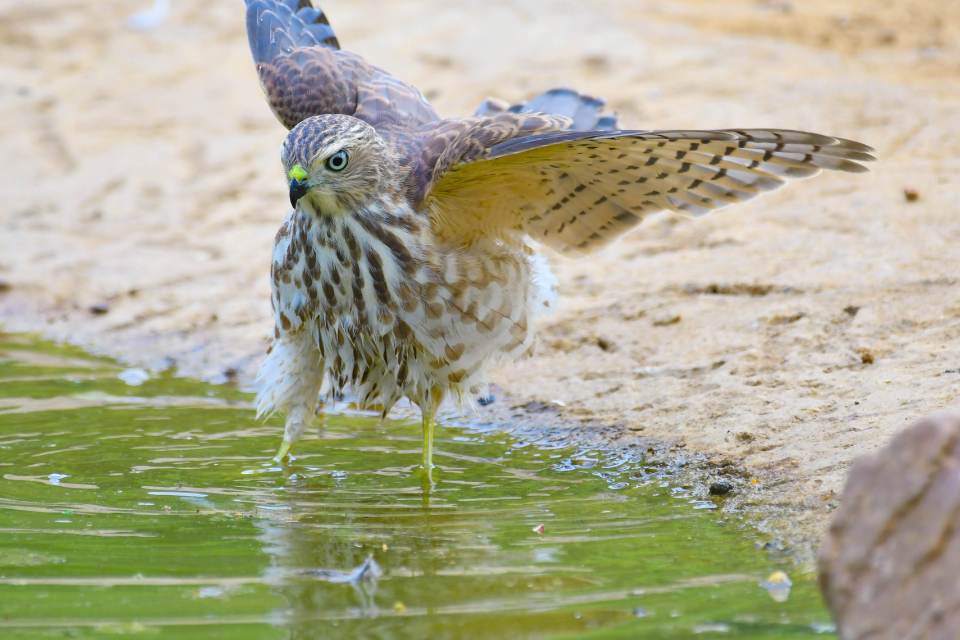
- Intimate Scale: Jhalana is a compact reserve of roughly 20 square kilometers. This provides constant micro-stimuli—a desert fox darting by, a monitor lizard basking, or a rare Indian Pitta—which keeps the brain gently engaged in the present moment.
- The Power of Awe: Seeing a leopard in its natural habitat triggers a psychological state of “Awe.” This feeling has been proven to “shrink the self,” making our personal worries feel smaller and reconnecting us to the vastness of the natural world.
Practical Tips for Mental Wellness Travel in the Wild
If you are planning a trip to Jaipur specifically for healing and rejuvenation, consider these protocols:
- Go Offline: Put your phone on airplane mode. Use it only for photography, but spend at least half the safari without looking through a lens.
- Book the First Slot: The 6:00 AM safari offers the “Blue Hour”—a time of soft light and profound silence that is most conducive to nature therapy in Jaipur.
- Box Breathing: Practice inhaling for 4 seconds, holding for 4, exhaling for 4, and holding for 4 while the jeep is stationary. The oxygen-rich air of the reserve makes this incredibly effective for nervous system regulation.
Understanding the Physiological Shift
When you engage in forest bathing in India, your body undergoes a measurable shift from the sympathetic nervous system (fight or flight) to the parasympathetic nervous system (rest and digest).
- Lowered Heart Rate: Looking at the specific shades of green found in the Aravalli forest has been shown to reduce heart rate and blood pressure within minutes.
- Reduced Rumination: Nature walks reduce neural activity in the area of the brain linked to repetitive negative thinking.
- Boosted Serotonin: The combination of natural light and physical presence in a green space increases serotonin levels, effectively acting as a natural antidepressant.
The Lasting Impact of an Urban Wilderness Encounter
The benefits of a focused wildlife visit don’t end when you exit the park gates. Studies on mental wellness travel show that the “nature high” from a concentrated forest immersion can last for up to 30 days. Travelers often report:
- Improved Sleep Quality: Exposure to natural light cycles helps regulate the circadian rhythm.
- Enhanced Creativity: Nature acts as a “soft fascination” that allows the brain’s “Directed Attention” to recover.
- Emotional Resilience: The slow pace of the wild teaches patience and emotional balance.
Frequently Asked Questions
Q 1: What is the concept of “Forest Bathing India” in the context of Jaipur?
Forest bathing, or Shinrin-yoku, at Jhalana involves immersing yourself in the sensory experiences of the Aravalli forest. Instead of just “sighting” animals, it focuses on breathing in natural phytoncides and using the silence of the wild to lower cortisol levels and boost the immune system.
Q 2: How does a leopard safari in Jaipur contribute to mental wellness?
A leopard safari in jaipur triggers a state of “Awe,” which psychologists say helps “shrink the self” and makes personal worries feel smaller. The rhythmic sounds of the forest and the requirement of intense focus to spot wildlife naturally induce a meditative “flow state.”
Q 3: Where can I experience professional nature therapy Jaipur?
While many parks offer greenery, Jhalana is unique for nature therapy Jaipur due to its urban proximity and intimate scale. It allows travelers to transition from city chaos to deep wilderness in under 20 minutes, making it an ideal “biological reset button.”
Q 4: What are the best grounding techniques to use during a mindfulness safari?
One of the most effective techniques is the 5-4-3-2-1 method: identifying 5 things you see, 4 you hear, 3 you can touch, 2 you smell, and 1 you can taste. This anchors your mind in the present moment and stops repetitive negative thinking.
Q 5: Why is Jhalana called a “Green Reset” for digital burnout?
In 2026, digital burnout is a global issue. Jhalana provides a screen-free environment where the specific shades of green and the oxygen-rich air help shift the nervous system from “fight or flight” mode to “rest and digest” mode.
Q 6: Is there a specific time for a healing leopard panther safari in jaipur?
The 6:00 AM morning slot is highly recommended for wellness. Known as the “Blue Hour,” the soft light and profound silence during this time are most conducive to meditation and deep breathing exercises.
Q 7: Can visiting Hathi Gaon complement my nature therapy journey?
Absolutely. After the high-focus environment of a leopard panther safari in jaipur, visiting Hathi Gaon provides a grounding, compassionate experience. Observing the gentle bond between elephants and mahouts fosters emotional resilience and a deeper connection to sentient life.
Conclusion: From the Wild to the Heart
Healing the mind in the 21st century requires us to return to our oldest home: the wilderness. Whether you are tracking a predator through the rocky outcrops or simply watching the sunset paint the Aravallis in shades of ochre, Jhalana offers a sanctuary for the soul. Choosing a mindful approach to your travel is not just a checkbox on an itinerary; it is a profound opportunity to reclaim your mental clarity.
As you finish your day of deep reflection and wildlife wonder, why not continue the journey of connection? For an experience that blends cultural heritage with ethical animal companionship, head over to Hathi Gaon. There, you can witness the gentle bond between elephants and their caretakers, further grounding yourself in the compassionate and mindful spirit that defines the true heart of Rajasthan.