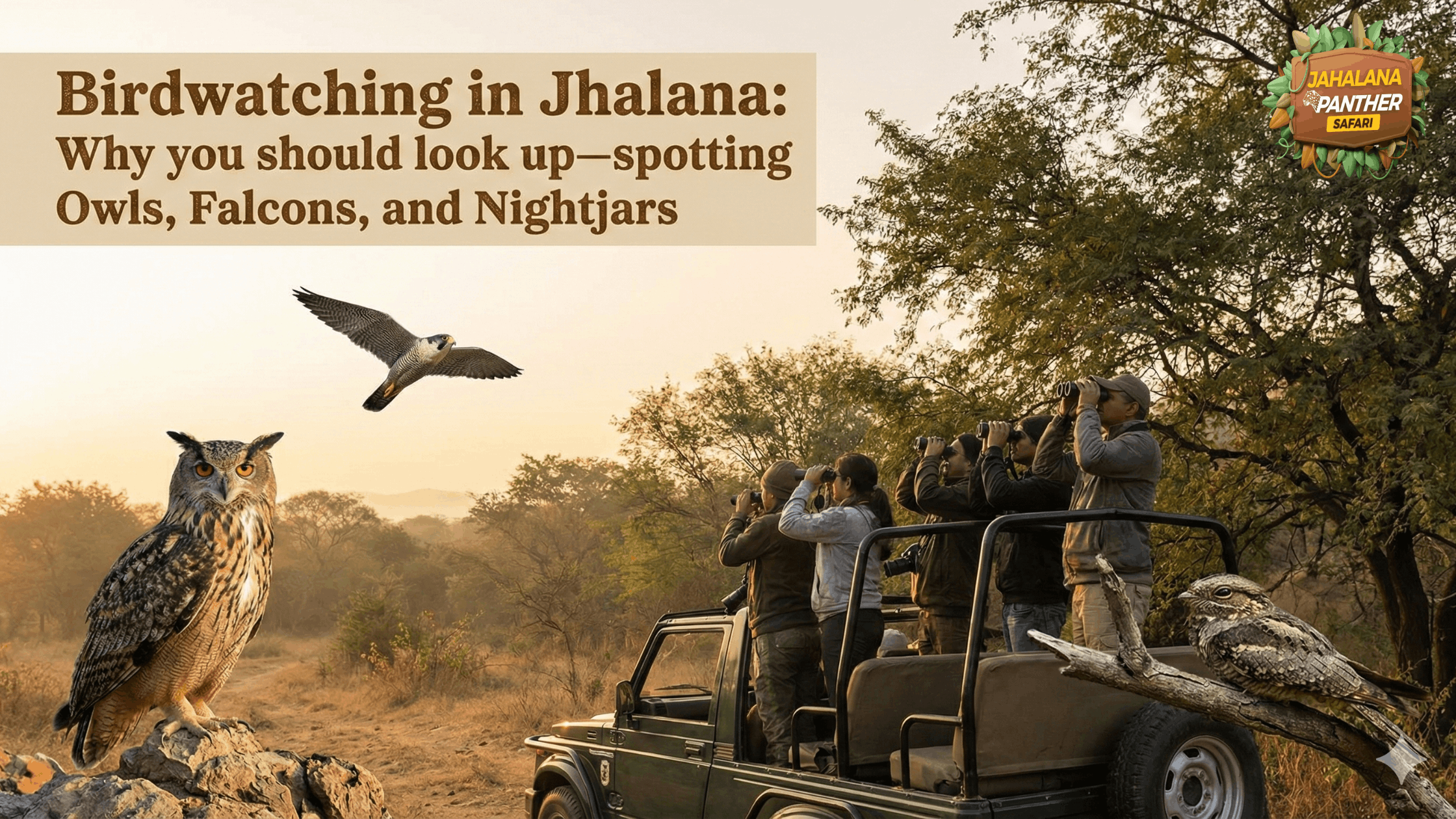
While the sleek rosettes of the “urban leopard” often steal the spotlight, a second, equally dramatic world exists in Jhalana Leopard Reserve—one that is found entirely in the skies and the rocky ridgelines. For the modern traveler in 2026, Jhalana has emerged as Jaipur’s premier “urban-wild bird classroom,” hosting over 200 species of resident and migratory birds.
If you only scan the ground for tracks, you miss the haunting silhouette of an Eagle Owl on a cliff, the high-speed dive of a Peregrine Falcon, or the perfectly camouflaged Nightjar resting on the scrub floor. This guide explains why Jhalana is a birdwatcher’s paradise and which “stars of the sky” you should be searching for.
Jhalana: More Than Just a Panther’s Palace
Spanning approximately 29 sq. km of dry deciduous scrub and rocky Aravalli hills, Jhalana acts as an “island of green” in the heart of Jaipur. This unique topography—comprising deep gullies (kho), steep slopes, and seasonal waterholes—creates specialized niches for diverse avian life.
- Woodland Birds: Thrive in the dense Dhok stands.
- Raptors: Rule the thermals above the Aravalli ridges.
- Nocturnal Specialists: Use the old ruins, shrines, and rocky outcrops as daylight retreats.
The Nocturnal Nobles: Owls and Nightjars
Jhalana is legendary among ornithologists for its high density of owls. Because the reserve is compact and guides are expertly trained, sightings of these elusive birds are surprisingly consistent.
The Indian Eagle Owl (Bubo bengalensis)
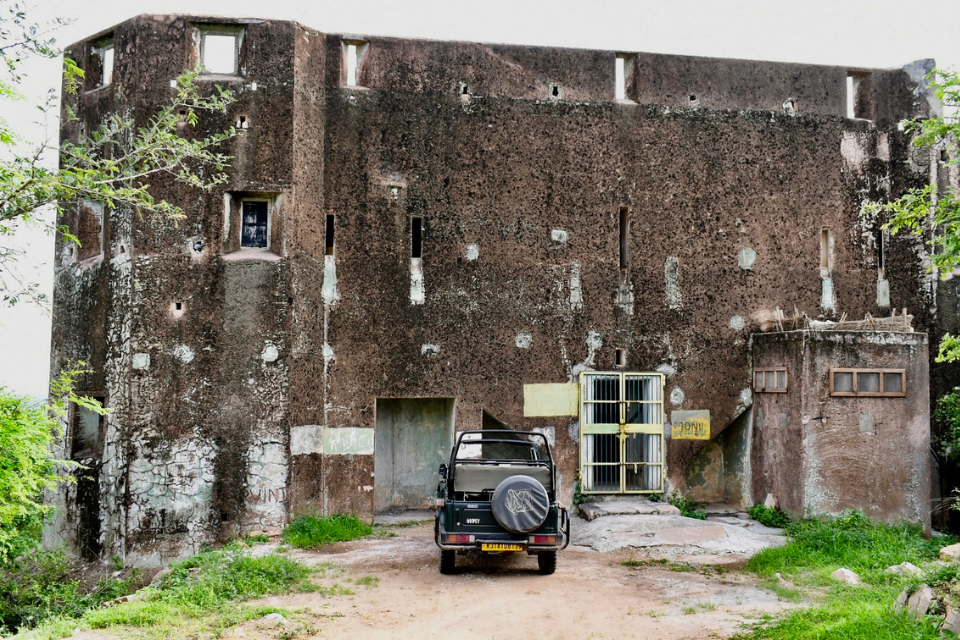
The “Prince of the Aravallis.” This massive owl is often found on the rocky ledges or near the old Shikar Audi (hunting lodge).
- The Shot: Look for them at twilight when they begin their deep, resonant “tu-whoo” call. Their orange eyes and prominent ear-tufts are unmistakable.
The Spotted Owlet & Indian Scops Owl
Commonly seen in the hollows of ancient Peepal or Acacia trees near the park entrance and waterholes.
- The Shot: They are often active in the late afternoon, peering out of tree cavities with wide, curious eyes.
The Savanna & Jungle Nightjar
The masters of invisibility. Nightjars are nocturnal insectivores that rest on the leaf litter or rocky ground during the day.
- The Shot: You will only see them if they blink or move. They look exactly like a pile of dry twigs or stones.
- Pro Tip: Listen for the “chwip” or “chirrup” calls during your evening safari exit.
The Speed Demons: Falcons and Hawks
Jhalana’s open scrub and thermal-heavy ridges make it a prime hunting ground for birds of prey.
- Peregrine Falcon: The fastest animal on earth. During winter, these high-speed hunters are often seen scanning for prey from the highest rocky peaks of Jhalana.
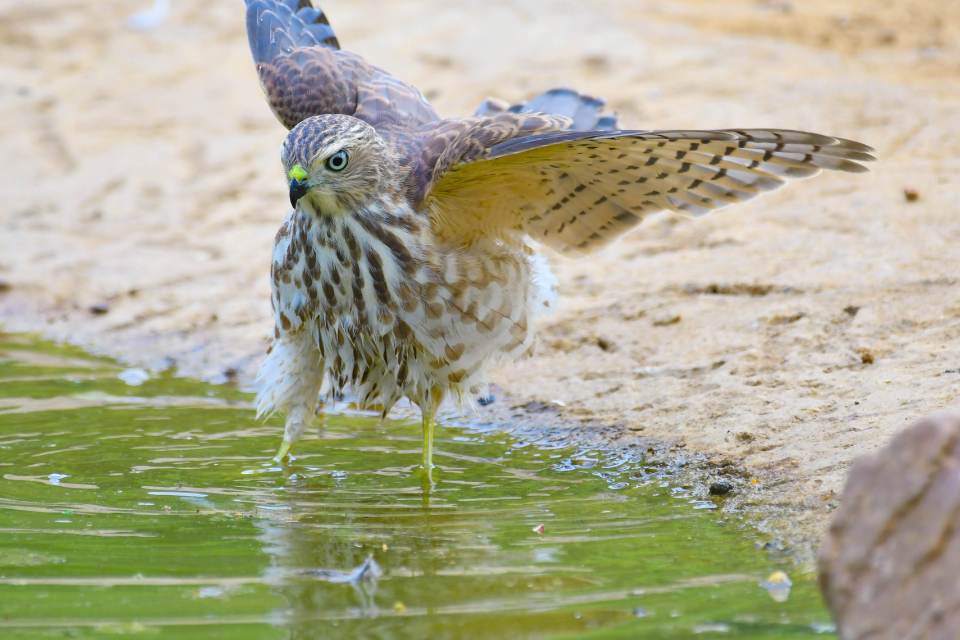
- Shikra: The “Little Hunter.” This resident hawk is a frequent sight, darting through the trees with incredible agility to ambush smaller birds and lizards.
- Eurasian Sparrowhawk: A winter visitor that adds a touch of mystery to the scrub. Look for them near the denser foliage where they prefer to hunt.
Seasonal Birding Calendar (2026 Guide)
| Season | Best For | Marquee Species |
| Winter (Oct–Feb) | Migratory Raptors & Owls | Indian Eagle Owl, Peregrine Falcon, Steppe Eagle |
| Monsoon (July–Sept) | Vocal Breeders | Indian Pitta (9-colored bird), Paradise Flycatcher |
| Summer (Mar–June) | Waterhole Activity | Sandgrouse, Thick-knees, Peafowl |
Best Trails for Birdwatching in Jhalana
- Bajrang Kund Route: Best for shade-loving birds like Barbets and Woodpeckers due to the denser canopy.
- Shikar Audi Waterhole: At first light, this is the hotspot for Peafowl, Francolins, and various Babbler flocks.
- Zone 1 Ridges: The best vantage points to scan for Eagles, Vultures, and Falcons patrolling the heights.
❓ Frequently Asked Questions (FAQ)
Q1: Do I need a separate permit for birdwatching in Jhalana?
A: No. Your standard Jhalana Leopard Safari permit covers your entry. Just inform your guide that you are interested in birds so they can adjust the pace.
Q2: Is Jhalana better for birding in the morning or evening?
A: Mornings (6:00 AM – 9:00 AM) are best for activity and light. Evenings (4:30 PM – 6:30 PM) are best for spotting nocturnal birds like owls and nightjars as they wake up.
Q3: Can I see the Indian Pitta year-round?
A: No. The Indian Pitta is a monsoon visitor, usually seen between June and August.
Q4: Are there many peacocks in Jhalana?
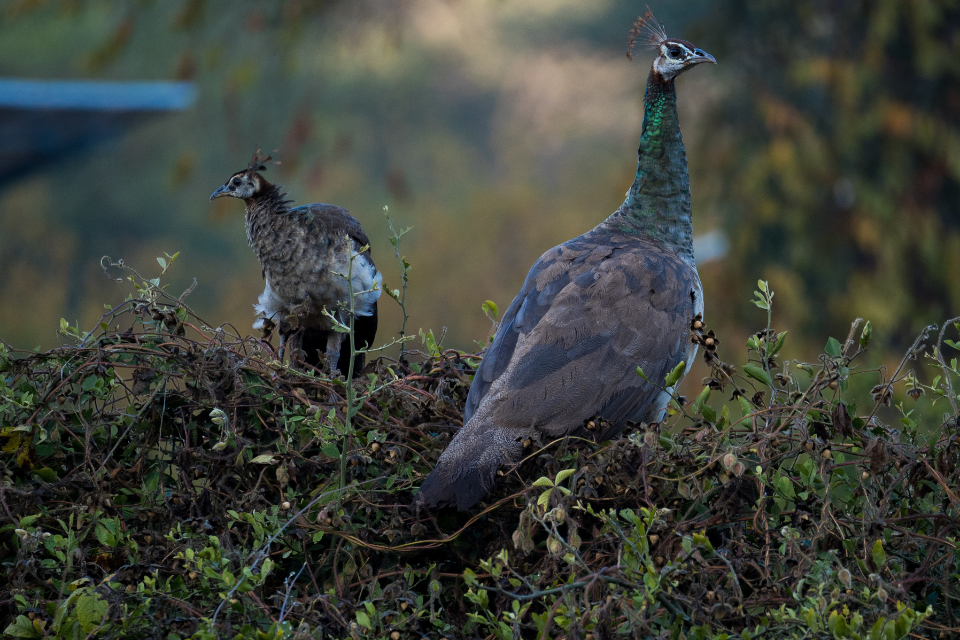
A: Yes! Jhalana has a massive population of Indian Peafowl. Seeing a peacock “dancing” against the backdrop of the Aravallis is a highlight of every safari.
Q5: What equipment should I bring?
A: At least an 8×42 or 10×42 binocular. For photography, a 400mm+ lens is recommended to capture the distant raptors on the cliffs.
Q6: Are the guides trained in bird identification?
A: Many Jhalana guides are excellent birders. When booking with The Golden Memories or DialMeNow, you can specifically request a birding-enthusiast guide.
Q7: Can I walk on the “Bird Trail”?
A: Yes, there is a designated Jhalana Bird Trail near the entrance where walking is permitted (with a ticket). However, the deep reserve areas must be explored by jeep only.
Q8: What is the most rare bird in Jhalana?
A: Sighting a White-bellied Minivet or a Crested Bunting is considered a treat for experienced birders.
Q9: Why is it called “Looking Up”?
A: Most leopard tourists scan the tracks; birders scan the canopy and the sky. Raptors use the high ridges, while owls hide in the topmost hollows of the trees.
Q10: Can children enjoy birdwatching here?
A: Absolutely. Spotting a “hidden” owl or a colorful kingfisher is a great way to engage children with nature during a safari.
Q11: Are there water birds in Jhalana?
A: Jhalana is a dry scrub forest. Water birds like Lapwings and Thick-knees are found near seasonal waterholes, but for waders and ducks, Man Sagar Lake nearby is better.
Q12: How many species are there in total?
A: Over 200 species have been recorded in the Jhalana and Amagarh region.
Q13: Is photography difficult in the scrub?
A: The dry scrub provides “clean” backgrounds, which photographers love. However, dappled light can be tricky; use a fast shutter speed for birds in flight.
Q14: Are there vultures in Jhalana?
A: Yes, you can occasionally see Egyptian Vultures and White-rumped Vultures circling the thermals over the hills.
Q15: Can I use bird call playbacks?
A: No. Using recorded bird calls is strictly prohibited as it disturbs the birds and disrupts their natural behavior.
Disclaimer
Wildlife and bird sightings are natural events and cannot be guaranteed. Jhalana is a protected area; please maintain silence and do not litter. All safaris are subject to Forest Department regulations and weather conditions.
Conclusion
Jhalana is a sanctuary that rewards the observant. When you stop focusing solely on the ground and start “looking up,” the forest reveals its true musicality and color. From the haunting eyes of the Eagle Owl to the lightning-fast dive of the Falcon, the birds of Jhalana are the true architects of the Aravalli skies.