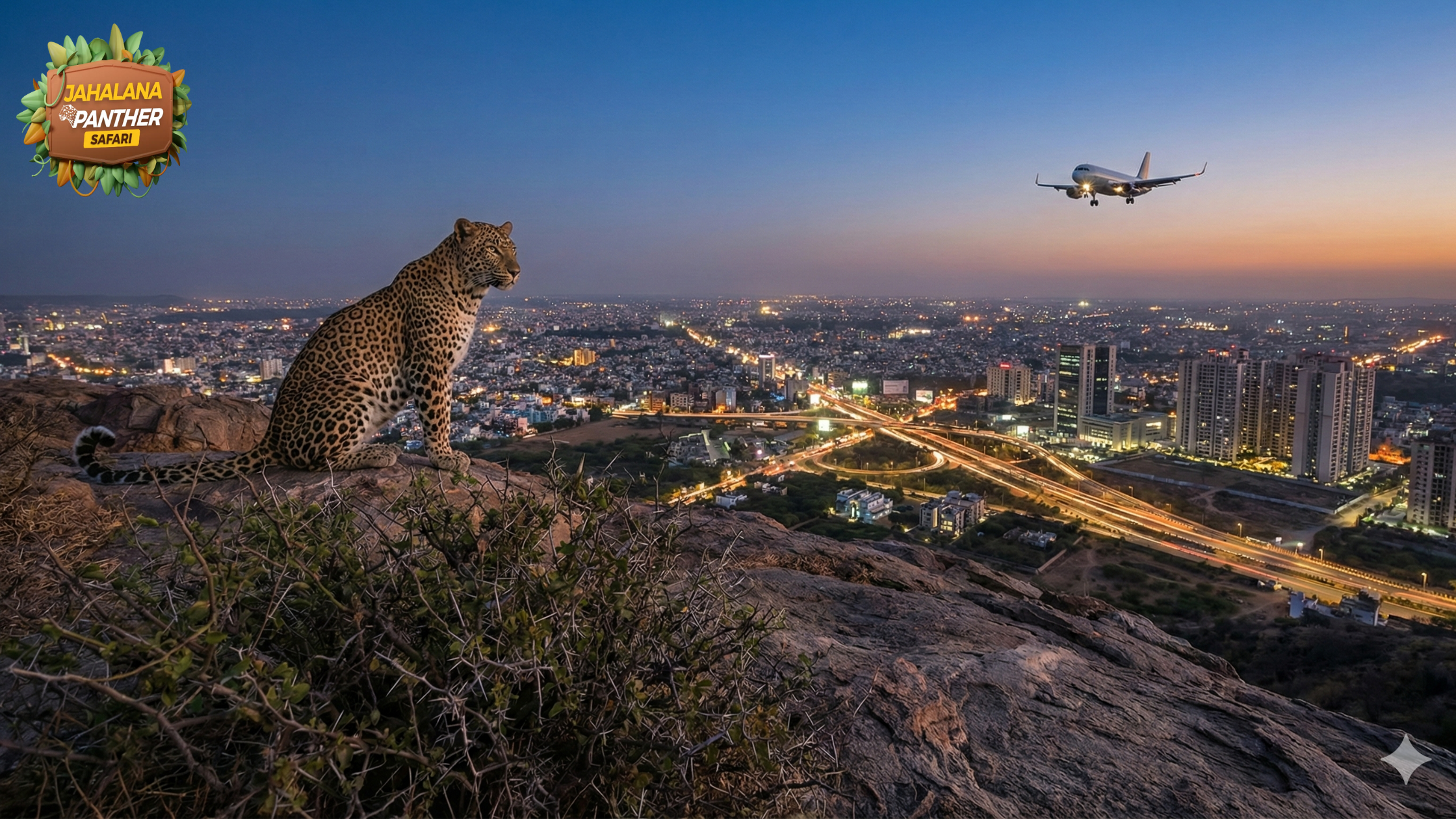
World’s Most Unique Urban Leopard Safari
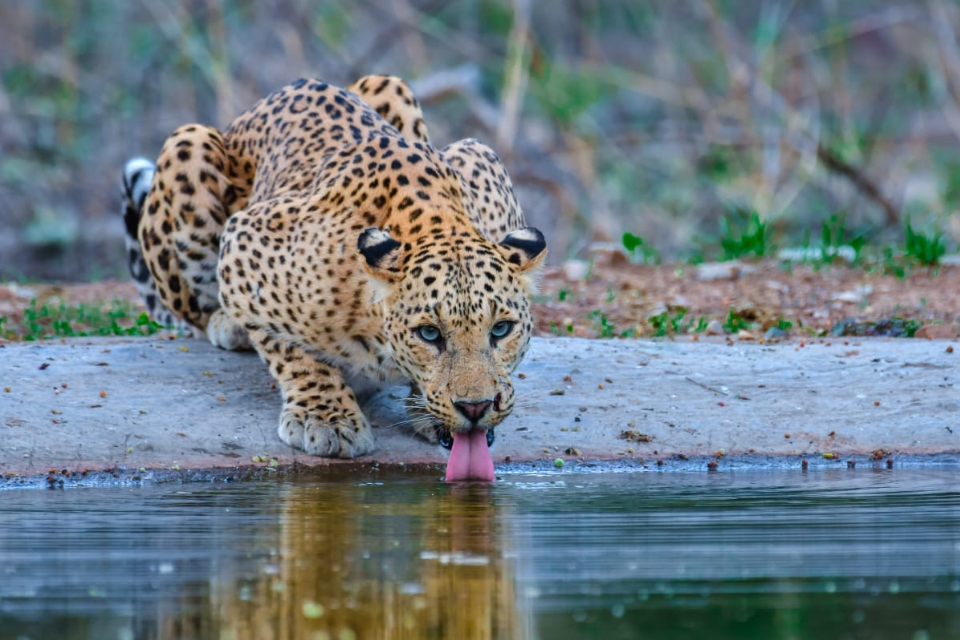
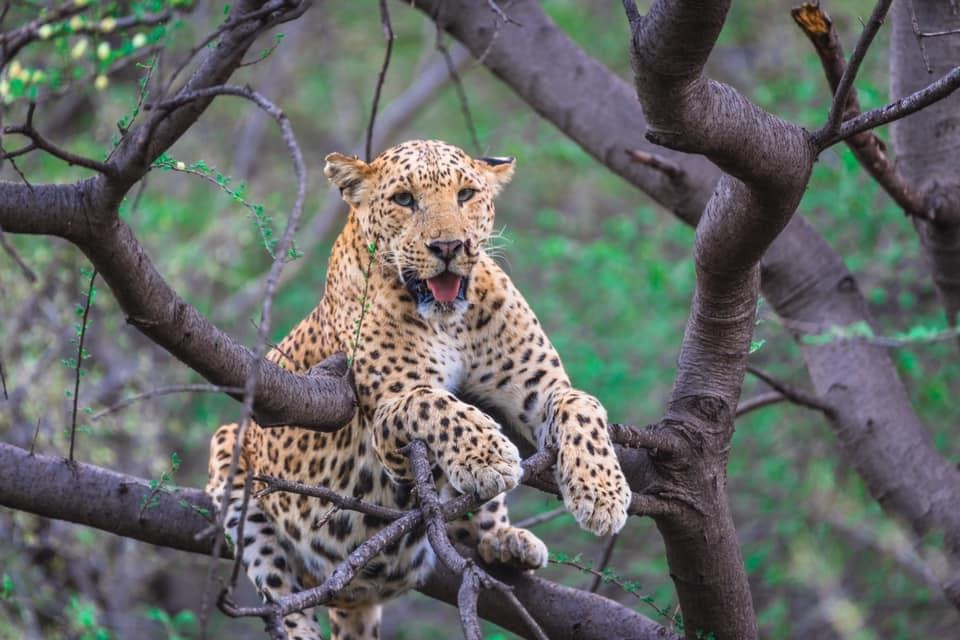
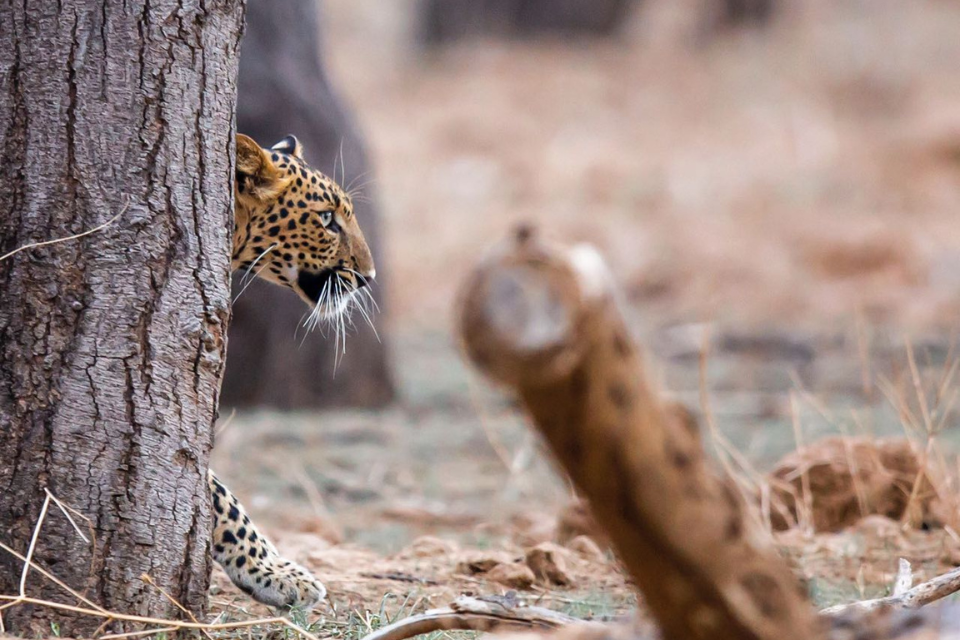
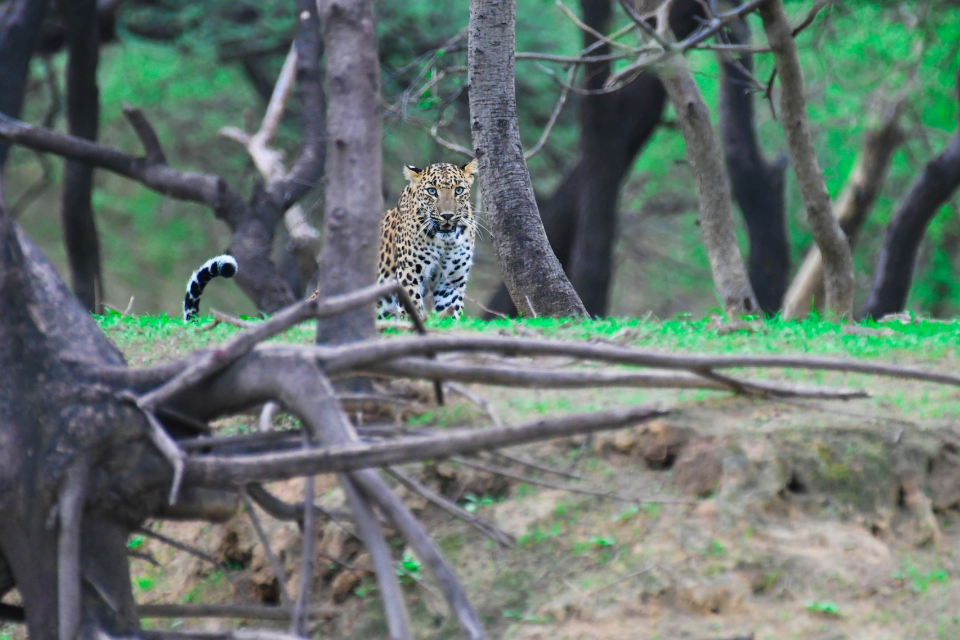
Imagine this scene: You are sitting in an open-top gypsy. In front of you, a magnificent male leopard is stalking a peacock. It is a primal, raw moment of nature.
Then, you lift your gaze by five degrees.
Behind the leopard, past the boundary wall of the forest, you see the towering residential apartments of Malviya Nagar. You hear the faint honking of traffic on the JLN Marg. You see a Boeing 737 descending toward Jaipur International Airport, its landing gear deploying right over the leopard’s head.
The leopard doesn’t even flinch.
Welcome to the urban leopard safari in Jaipur, the most surreal wildlife experience on the planet. It is not a distant wilderness; it is an island of forest surrounded by a sea of concrete, home to over 4 million people and more than 40 wild predators.
While most blogs focus on how to book tickets or which zone is best, they miss the bigger picture. The real story of Jhalana in 2026 is the story of an impossible coexistence. This is why an Urban Leopard Safari in Jaipur is unlike anything else in the world.
The Island Effect: How Jhalana Survived
To understand Jhalana, you need to refer to a satellite map of Jaipur. The city looks like a grey cancer spreading outwards, devouring the landscape. But right in the southeast corner, there is a stubborn, triangular patch of green that the city couldn’t swallow.
Historically, this was the hunting ground of the Maharajas. It survived because it was protected royal property. As Jaipur exploded in size post-independence, the Aravalli hills here were too steep for easy construction, and the forest became hemmed in on all sides by industrial areas, universities, and luxury housing societies.
By all logic of conservation, the wildlife here should have died out. Isolated populations usually succumb to inbreeding, disease, or poaching.
Instead, Jhalana became a petri dish for a fascinating natural experiment. Trapped, the leopards didn’t just survive; they adapted. They evolved into “City Cats.”
The “City Cats”: Adaptation in Real-Time
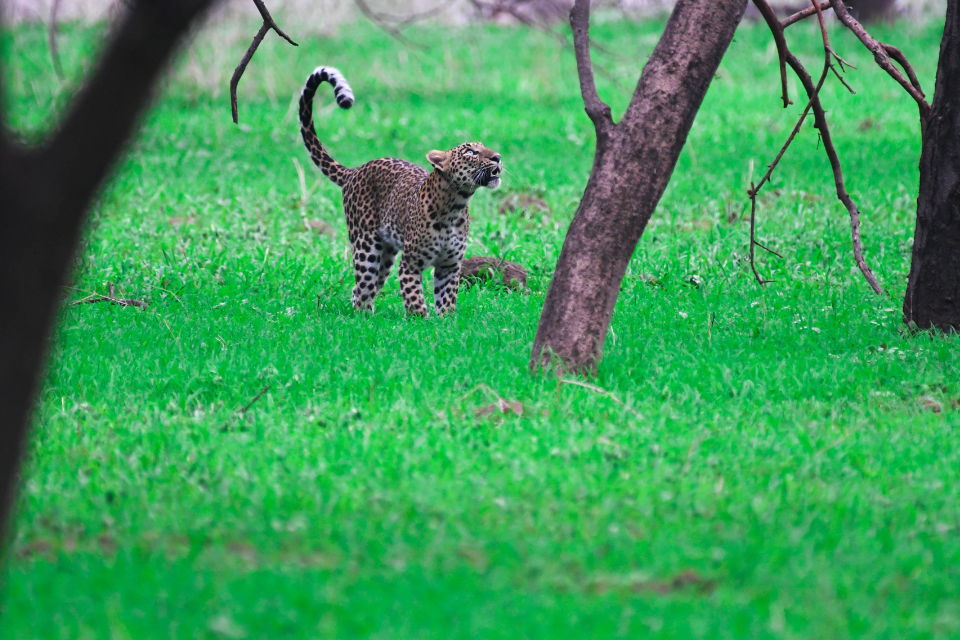
The leopards you see on an urban leopard safari in Jaipur are behaviorally distinct from their cousins in deep jungles like Satpura or Kabini.
-
Noise Tolerance
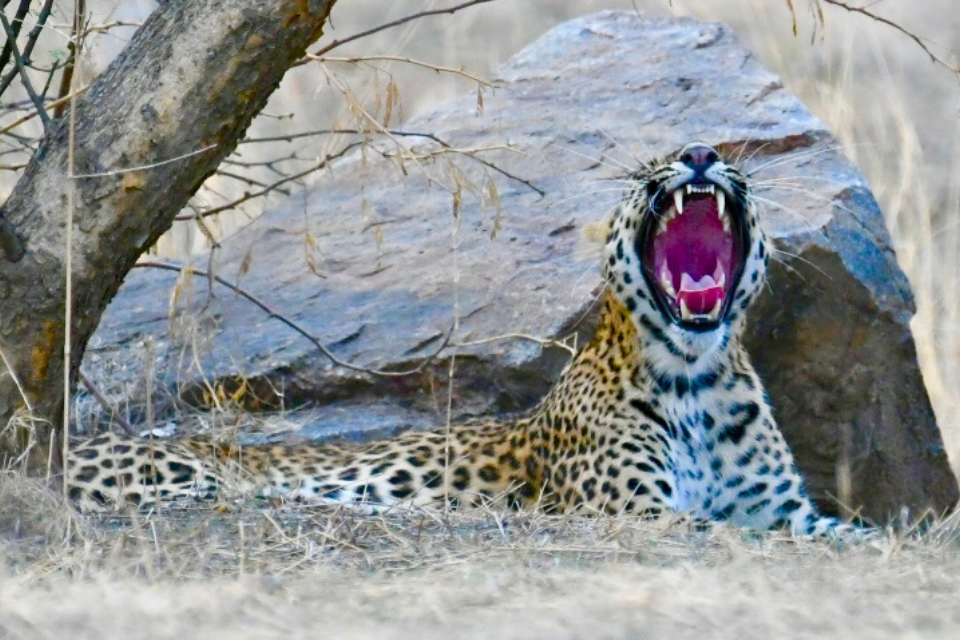
A forest leopard flees at the snap of a twig. An urban leopard safari in Jaipur can nap through the sound of a heavy goods train passing on the nearby tracks. They have learned that mechanical noise—cars, planes, factories—is just background static, not a threat.
-
The Boundary Wall Economy
The peripheral boundary wall of Jhalana isn’t just a barrier; it’s an ecosystem. If you take an evening safari, ask your guide to drive near the boundary. You might see a leopard sitting on top of the 10-foot wall, looking down into the backyards of houses. They aren’t looking to attack humans; they are hunting the “urban prey base”—stray dogs, feral pigs, and rodents that thrive on the city’s garbage near the walls.
-
The Shift in Hours
While Jhalana leopards are surprisingly diurnal (active in the day) inside the core zones, the ones living near the edges have become hyper-nocturnal ghosts. They slip out into the city fringes at 2 AM and are back before the first milk truck arrives at 5 AM.
The Human Element: A Culture of Coexistence
The most remarkable part of this story isn’t the animals; it’s the people.
In most parts of the world, having a large carnivore in your backyard leads to panic, calls for culling, or retaliatory killing. If a mountain lion is seen near Los Angeles, it makes national news.
In Jaipur, if a leopard is seen near the university campus, it’s Tuesday.
The local communities surrounding Jhalana, particularly the villagers and the old residents, have a deep-rooted cultural reverence for wildlife. They view the leopard not as a bloodthirsty monster, but as a neighbor—albeit a grumpy, dangerous one that you respect from a distance.
The 2026 Management Model
By 2026, the Rajasthan Forest Department will have perfected the art of managing this proximity.
- Rapid Response Teams: If a leopard strays too far into the city and gets confused, teams are deployed within minutes to tranquilize and bring it back. It happens so smoothly it rarely makes the headlines anymore.
- Tech Surveillance: The boundary is monitored by a sophisticated network of thermal cameras and drone patrols to track movement patterns and prevent conflict before it happens.
What This Means For Your Safari Experience
Why should you, the tourist, care about this “urban” angle? Because it dramatically shapes the visuals and the vibe of your safari.
-
The Surreal Photography
The holy grail shot in Jhalana isn’t just a close-up of a leopard’s face. It’s the “environmental juxtaposition.”
- A leopard on a ridge with the twinkling city lights of Jaipur in the background at dusk.
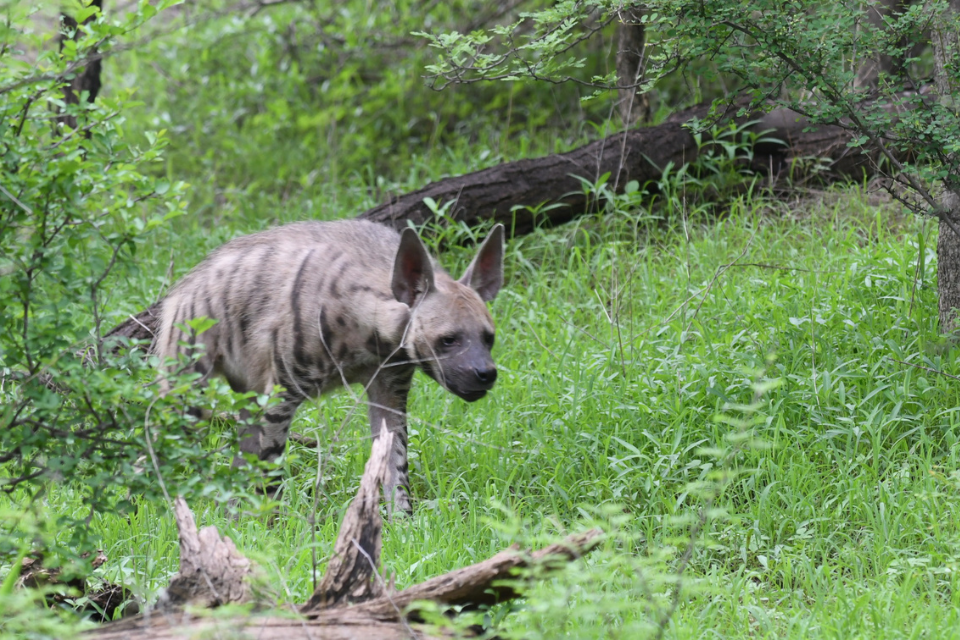
- A hyena walking past an ancient temple with a modern cell phone tower behind it.
- These photos tell a powerful story of nature’s resilience in the Anthropocene age.
-
The Intimacy
Because these leopards have grown up watching humans in jeeps, their “flight distance” is almost zero. They do not perceive tourists as threats. This allows for an intimacy in sightings that feels almost unnatural. You aren’t hunting them; you are visiting their living room.
Conclusion: The Global Case Study
Jhalana is more than a tourist destination. It is a living laboratory. As cities globally expand into wild spaces, the human-wildlife conflict will define 21st-century conservation.
Jhalana provides a blueprint. It proves that fences aren’t always the answer. It proves that with the right management, cultural tolerance, and adaptability of the species, a metropolis and an apex predator can share the same pin code.
When you book an Urban Leopard Safari in Jaipur in 2026, you aren’t just going to see a cat with spots. You are going to witness a miracle of modern ecology.
FAQ: The Urban Safari Aspect
Q1: Is it safe, considering they are so close to the city?
A: Yes. In the history of Jhalana tourism, there has never been an attack on a tourist. The leopards are habituated to the Gypsies and view them as non-threatening metal objects.
Q2: Do the leopards ever escape into the city?
A: “Escape” is the wrong word, as the reserve isn’t fully caged. They sometimes stray into fringe areas at night following prey. However, they almost always return to the safety of the forest cover by dawn.
Q3: Doesn’t the city noise bother them?
A: Surprisingly, no. Studies have shown that the Jhalana leopards have adapted to the decibel levels. They are far more bothered by the alarm calls of a Langur monkey than the sound of a jet engine.
Q4: Does the “urban” feel ruin the wilderness vibe?
A: It depends on your perspective. If you want pristine, untouched silence, go to remote parts of Ranthambore or Corbett. If you want a unique, dramatic contrast that highlights nature’s fight for survival, Jhalana is unmatched. Once you drop into the valley floor, the city mostly disappears, and it feels very wild.
Q5: Are there other places like this in the world?
A: Very few. Sanjay Gandhi National Park in Mumbai has leopards near the city, but sightings are incredibly rare due to dense vegetation. Nairobi National Park has lions near the city, but it is a much larger savanna ecosystem. Jhalana’s combination of high leopard density, small area, and intense urban surroundings is unique globally.
Disclaimer
- While the urban leopard safari in Jaipur is a success story, these are still wild, powerful predators. Tourists must strictly adhere to safari rules: stay in the vehicle, keep quiet, and never attempt to attract the animal’s attention.
- Information regarding conservation methods (drones/teams) reflects the operational status as of 2026 and is managed solely by the Rajasthan Forest Department.