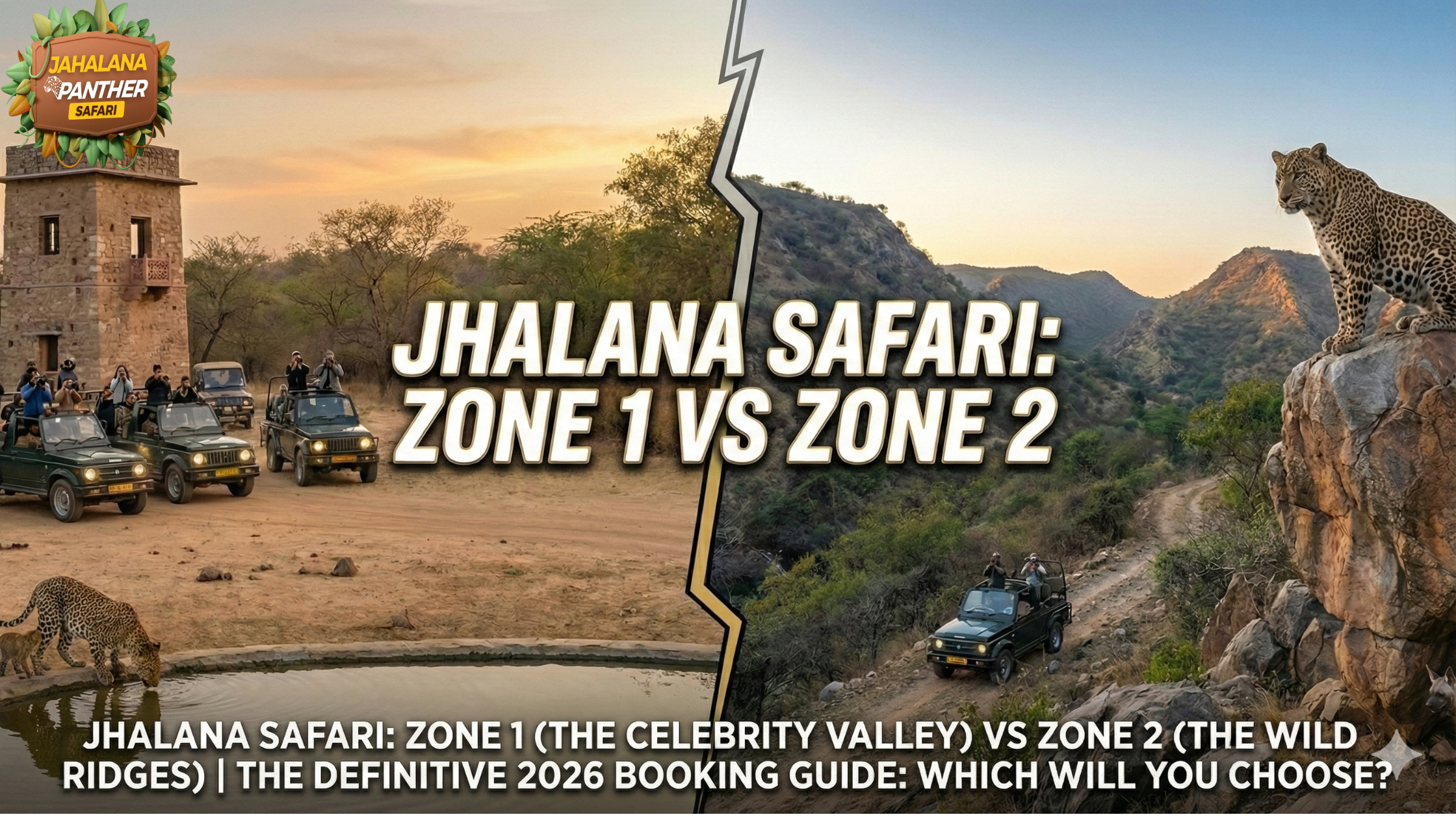
Jhalana Safari Zone 1 vs Zone 2: The Definitive 2026 Booking Guide
You have finalized your dates. You have logged into the Rajasthan Government’s SSO portal. You have entered your passenger details. You are inches away from confirming your trip to the “Leopard Capital of the World.”
And then, the system throws a curveball.
It asks you to select a “Route/Zone”: Zone 1 or Zone 2.
For the uninitiated traveler, this is a moment of panic. Is one zone “better” than the other? Will picking Zone 2 mean missing out on the famous leopards? Is Zone 1 just a tourist trap? These are the questions that define the Jhalana Safari Zone 1 vs Zone 2 dilemma.
In 2026, the dynamic of Jhalana has shifted. What was true five years ago—that Zone 1 was the only “good” zone—is no longer the case. The leopards have moved, the tracks have evolved, and the experiences are now distinct.
In this comprehensive 1,500-word guide, we dissect the Jhalana Safari Zone 1 vs Zone 2 debate from every angle—topography, photography, crowd density, and sighting probability—to help you make the smartest choice for your money.
The Core Concept: The Myth of “Separation”
Before we analyze the differences, we must debunk the biggest myth in the Jhalana Safari Zone 1 vs Zone 2 discussion.
There is no physical wall between the zones.
Jhalana is a compact reserve, spanning roughly 20 square kilometers. A leopard can—and does—cross from Zone 1 to Zone 2 in a matter of minutes. The “zones” are administrative boundaries created by the Forest Department to manage the flow of tourist vehicles, not the flow of animals.
However, while the animals are the same, the stage is different. The terrain you drive on, the backdrops you photograph, and the specific “resident” leopards you are likely to encounter will vary significantly depending on which side of the Jhalana Safari Zone 1 vs Zone 2 choice you pick.
Deep Dive: Zone 1 (The “Celebrity” Zone)
For years, Zone 1 has held the reputation as the “Premium” zone. In the hierarchy of the Jhalana Safari Zone 1 vs Zone 2 comparison, this is often the first choice for VIPs and first-time visitors.
-
The Topography: Valley of the Kings
Zone 1 occupies the central valley floor of the reserve.
- The Drive: The tracks here are largely flat and sandy, winding through dry riverbeds (nullahs). This makes for a smoother, less bumpy ride compared to the rugged incline of Zone 2.
- Vegetation: The forest here is slightly more open, dominated by Khejri and Acacia trees. This openness is crucial for beginners because spotting a camouflaged cat is significantly easier when the undergrowth isn’t swallowing the view.
-
The Landmark: Shikar Audi
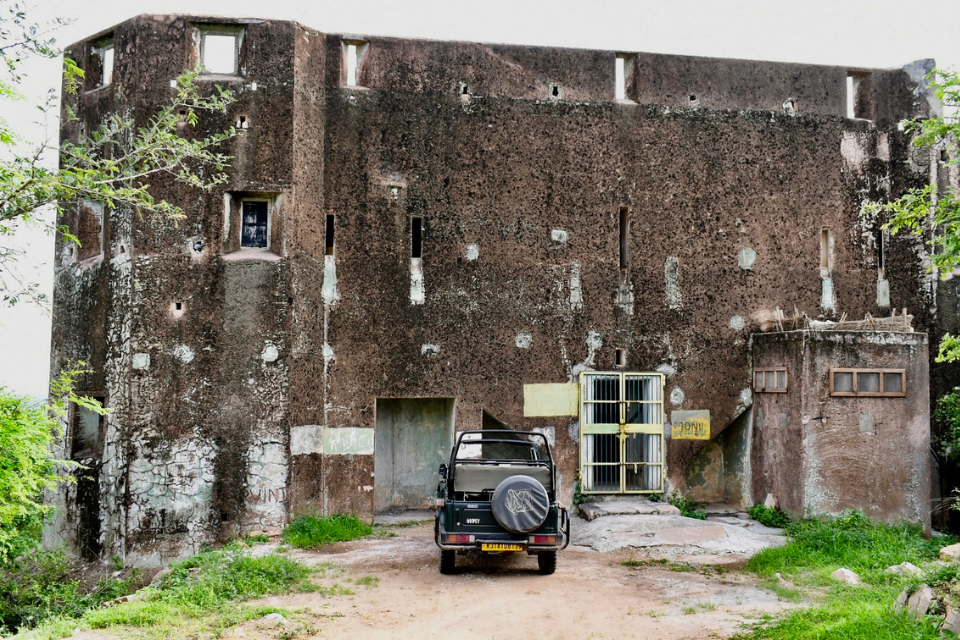
The crown jewel of Zone 1 is the Shikar Audi.
This two-story hunting lodge, built by the Maharajas of Jaipur, stands like a sentinel in the middle of the valley.
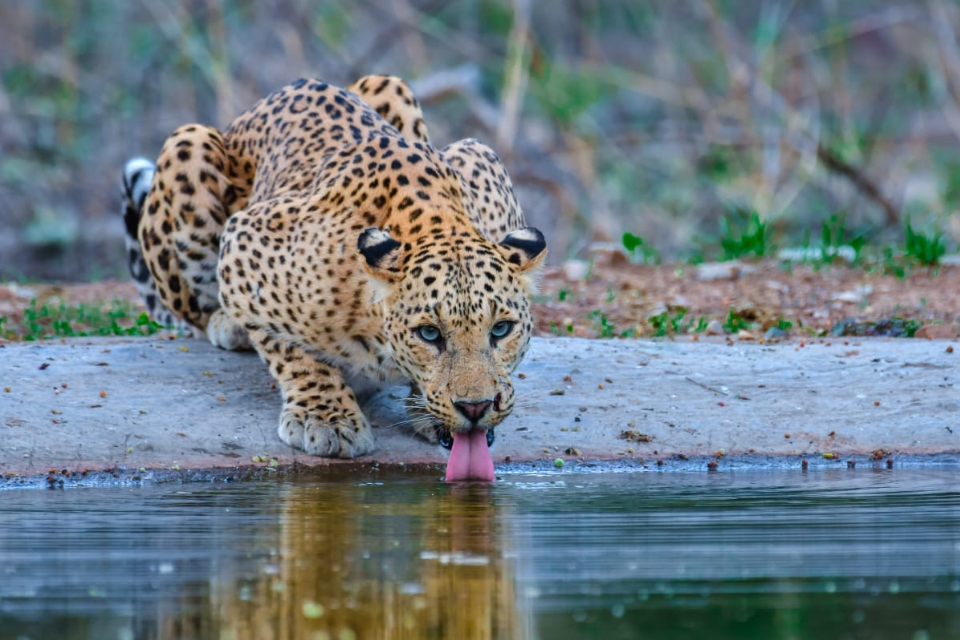
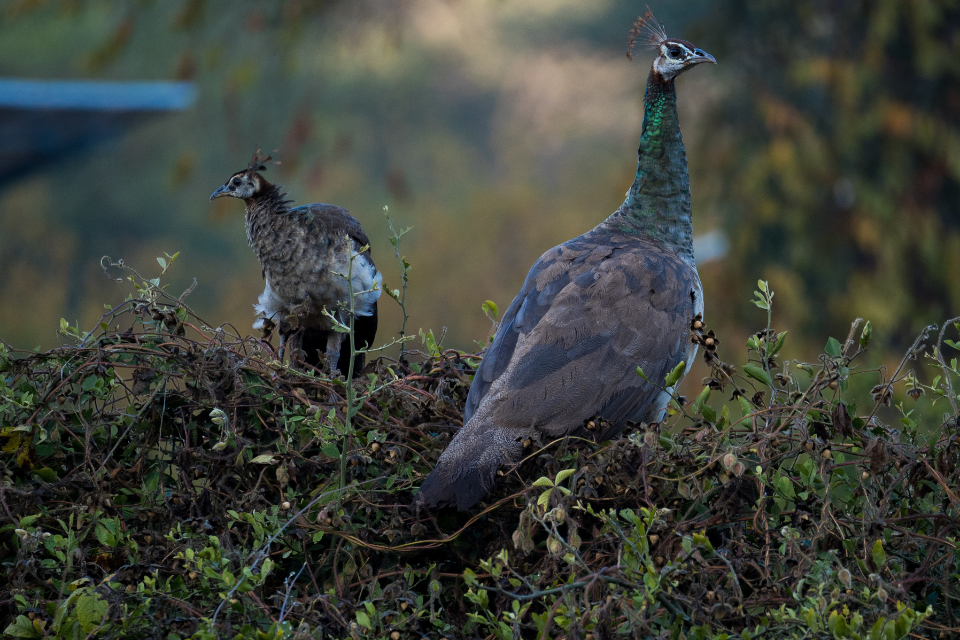
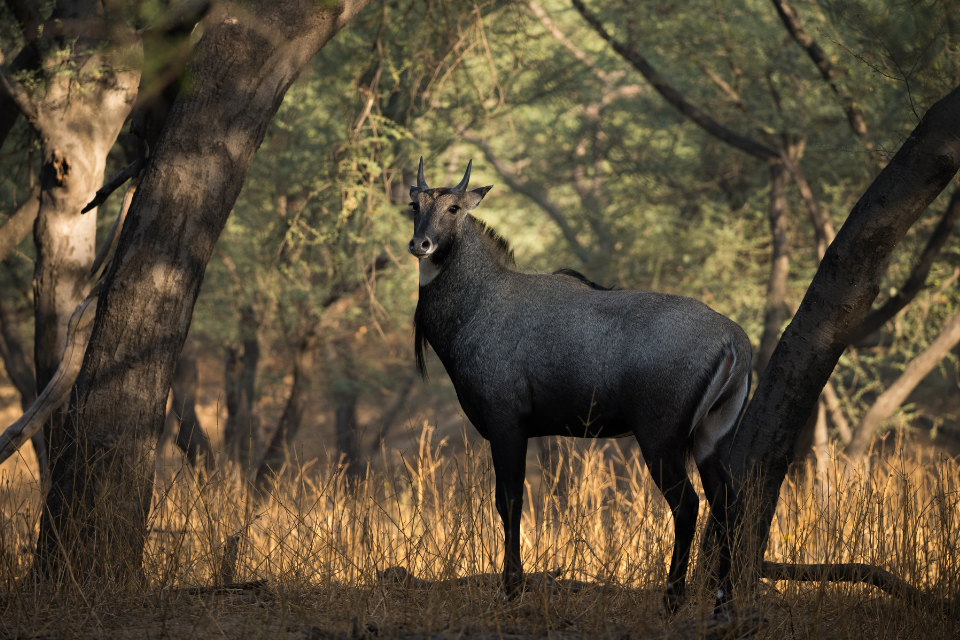
- Why it matters in 2026: The Forest Department maintains a large, artificial waterhole right at the base of the lodge. In the summer months (April–June), this is the “Times Square” of Jhalana. Leopards, Blue Bulls, and Peacocks congregate here at sunset. If you win the Jhalana Safari Zone 1 vs Zone 2 coin toss and pick Zone 1, your driver will almost certainly park here for 20 minutes to wait for the “Magic Hour” sighting.
-
The Resident Leopards (2026 Status)
Zone 1 is traditionally the nursery of Jhalana.
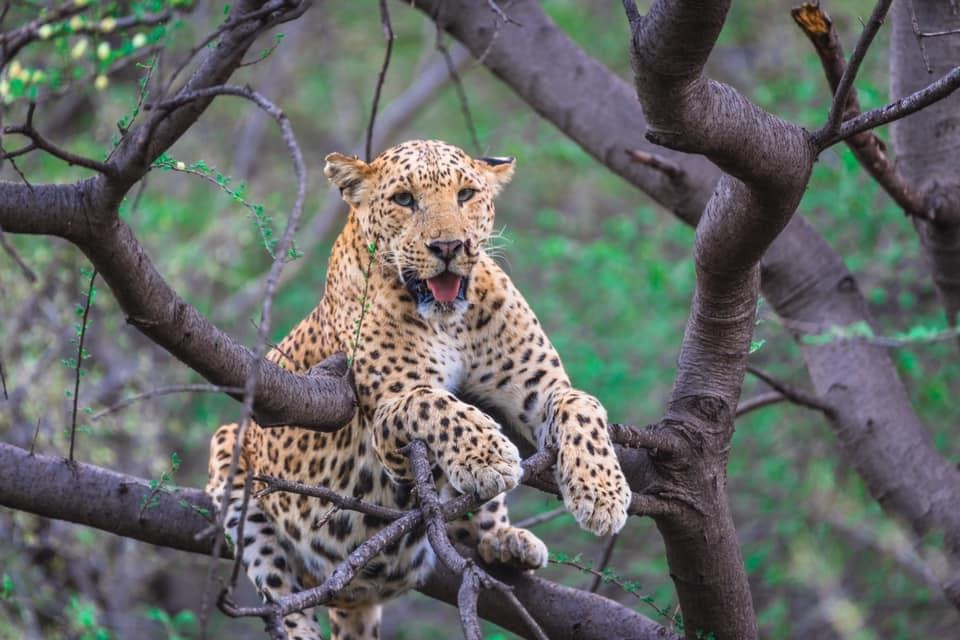
- The “Flora” Dynasty: The famous female leopard Flora, who is currently raising her 9th litter (as of early 2026), uses the dense thickets near the Zone 1 administrative block as her den.
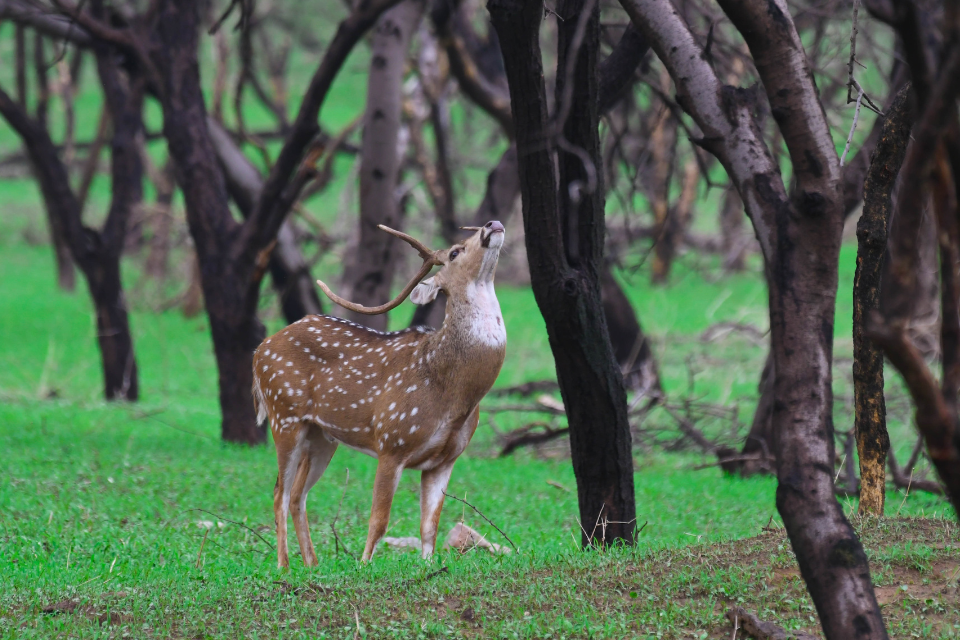
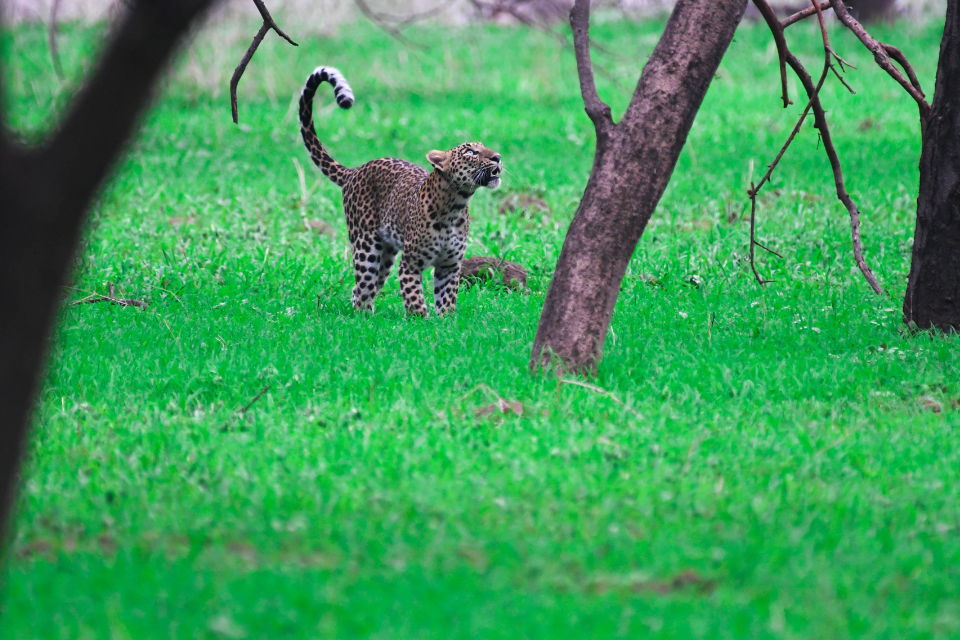
- The Cub Factor: Mothers prefer Zone 1 because the valley floor has a higher density of prey (Spotted Deer and Peacocks) and offers better cover for cubs than the exposed ridges of Zone 2. If seeing a mother and cub is your dream, Zone 1 is your statistical winner in the Jhalana Safari Zone 1 vs Zone 2 analysis.
Deep Dive: Zone 2 (The “Wild” Zone)
If Zone 1 is the “Commercial Hit,” Zone 2 is the “Cult Classic.” In the evolving narrative of Jhalana Safari Zone 1 vs Zone 2, this zone has emerged as the favorite for serious photographers and repeat visitors.
-
The Topography: The High Ridges
Zone 2 covers the hilly, peripheral areas of the reserve.
- The Drive: Prepare for a “Jeep Safari” in the truest sense. The tracks here climb steep inclines and navigate rocky plateaus. It is a rougher, more adventurous ride.
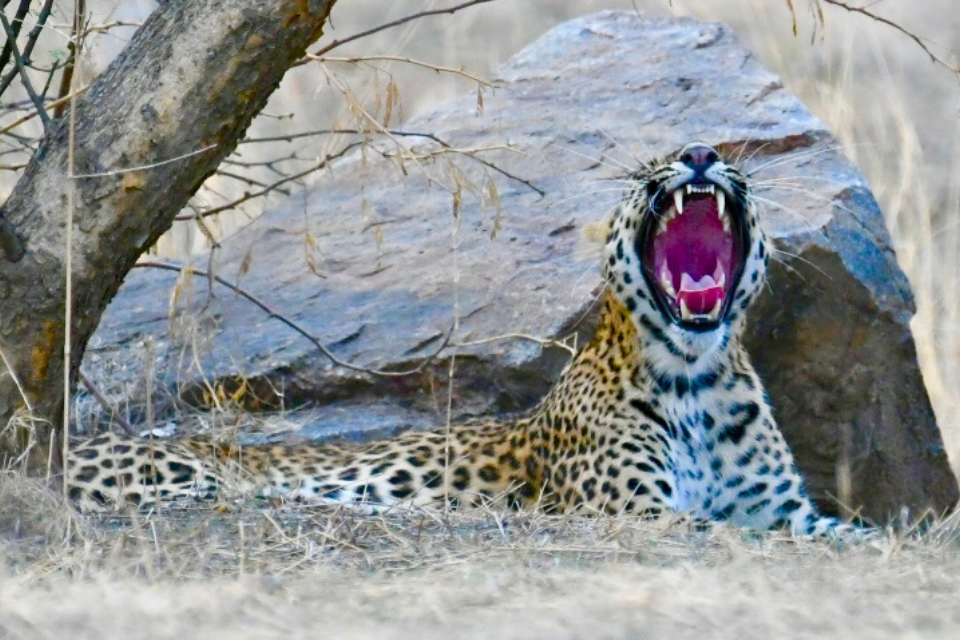
- The “Clean” Shot: Because you are often driving on ridges, you get opportunities for eye-level or even low-angle shots of leopards sitting on high rocks. In Zone 1, you are often looking down into a nullah; in Zone 2, you are looking up at the King.
-
The Atmosphere: Silence
The biggest complaint about Jhalana is the crowd. In Zone 1, a sighting can attract a “conga line” of 15 Gypsies.
- The Zone 2 Advantage: Fewer tourists book this zone because of the old misconception that it has fewer leopards. This means you can often enjoy a sighting with just 2 or 3 other vehicles. The silence allows you to hear the subtle alarm calls—the “Sawing” of the leopard or the ‘Khar-Khar’ of the Langur monkey—much clearer. This acoustic advantage is often overlooked in the Jhalana Safari Zone 1 vs Zone 2 debate.
-
The Resident Leopards (2026 Status)
Zone 2 is the arena of the gladiators.
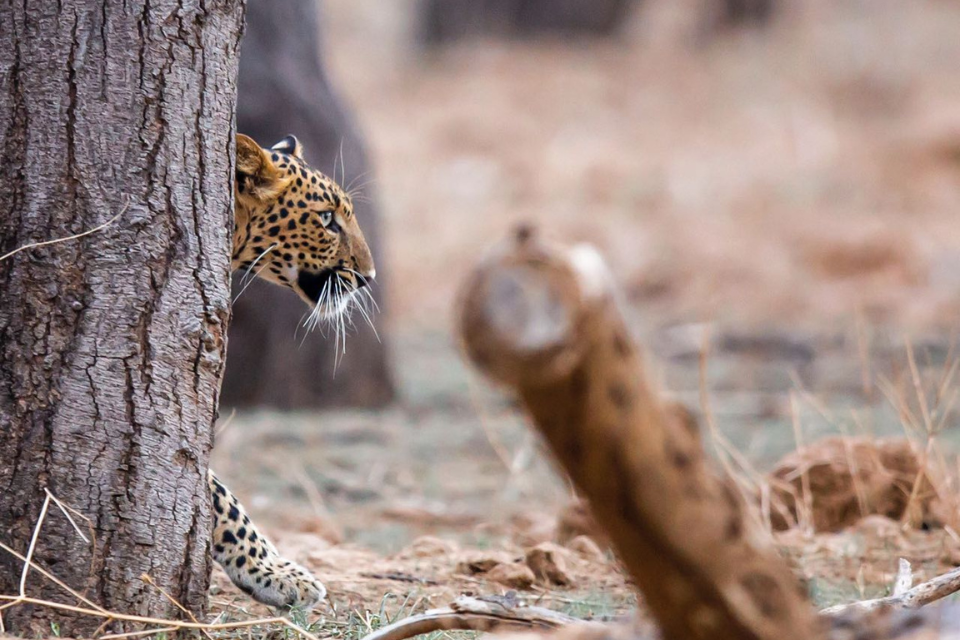
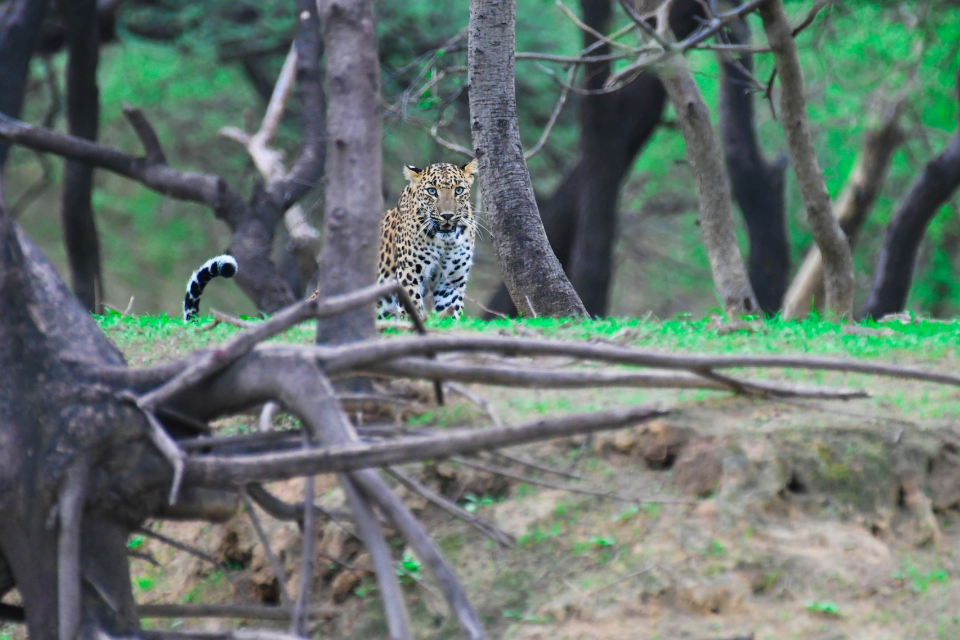
- The “Bahubali” Territory: Large, dominant males like Bahubali (and his rivals) prefer the high vantage points of Zone 2 to patrol their territory. They sit on the quartzite rocks to scan for intruders.
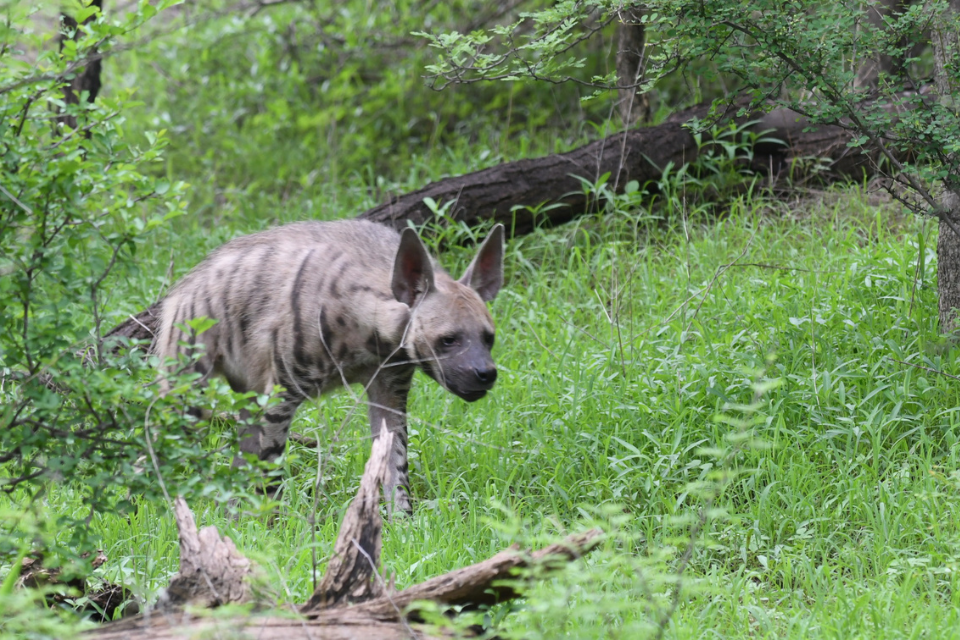
- The Hyena Factor: The rugged, rocky outcrops of Zone 2 are full of natural caves. This makes it the prime habitat for the Striped Hyena. While rare in Zone 1, Hyena sightings are surprisingly frequent in Zone 2, especially near the twilight hours.
Head-to-Head Comparison: The 2026 Scorecard
To help you resolve the Jhalana Safari Zone 1 vs Zone 2 dilemma, we have graded them on the metrics that matter most to travelers.
| Metric | Zone 1 | Zone 2 | Winner |
| Sighting Frequency | Very High (90%) | High (80%) | Zone 1 (Marginal) |
| Crowd Density | High (Traffic Jams) | Low to Medium | Zone 2 |
| Photographic Backgrounds | Valley/Waterhole | Rocks/Ridges | Zone 2 |
| Comfort of Drive | Smooth/Flat | Bumpy/Steep | Zone 1 |
| Best for Cubs | Excellent | Moderate | Zone 1 |
| Best for Big Males | Good | Excellent | Zone 2 |
| Sunrise/Sunset Views | Good | Spectacular | Zone 2 |
The “Insider” Secrets of 2026
There are nuances to the Jhalana Safari Zone 1 vs Zone 2 system that aren’t written on the government website. Here is what the local guides know.
-
The “Border” Trick
The tracks of Zone 1 and Zone 2 run parallel to each other for long stretches.
- Scenario: A leopard is sleeping on a boundary wall.
- Reality: Vehicles from both zones can view it. The driver in Zone 1 might park on the left side of the track, and the driver in Zone 2 might park on the right. You effectively share the sighting. This renders the Jhalana Safari Zone 1 vs Zone 2 choice irrelevant for about 30% of sightings.
-
The “Route Swap” (Rare)
On days when tourist traffic is exceptionally low (like a Tuesday morning in July), the Forest Department sometimes (unofficially) allows drivers to cross zones to ensure guests get a sighting. However, do not bank on this—it is an exception, not the rule, and it doesn’t change the official Jhalana Safari Zone 1 vs Zone 2 booking rules.
Strategic Booking: How to Hack the System
If you are flying all the way to Jaipur, don’t leave your experience to a coin toss. Here is the pro strategy for mastering the Jhalana Safari Zone 1 vs Zone 2 choice.
The “Combo” Strategy
The best way to experience Jhalana is to book two safaris.
- Morning: Book Zone 2.
- Why: Leopards love to sunbathe on the high rocks of Zone 2 to warm up after a cold night. The morning light hitting the Aravalli ridges creates golden photography opportunities that Zone 1’s shaded valley cannot match.
- Evening: Book Zone 1.
- Why: As the day heats up, leopards move towards water. The Shikar Audi waterhole in Zone 1 is the ultimate sunset spot. You end your day watching the jungle come to the water to drink. This “Combo” approach is the ultimate solution to the Jhalana Safari Zone 1 vs Zone 2 puzzle.
The “Tatkal” (Current) Option
If you forgot to book in advance, you can try for “Current Booking” (Tatkal) tickets released 1 hour before the safari.
- Reality Check: Zone 1 Tatkal tickets vanish in seconds. Zone 2 tickets often remain available for 10-15 minutes longer. If you are desperate for a ticket, forget the Jhalana Safari Zone 1 vs Zone 2 debate and aim for Zone 2 immediately—a safari in Zone 2 is infinitely better than no safari at all.
Seasonal Considerations
The Jhalana Safari Zone 1 vs Zone 2 decision should also change based on the month you visit.
- Summer (April – June): Go for Zone 1.
- Water is scarce. The active maintenance of the Zone 1 waterholes makes them magnets for wildlife. The probability gap between the zones widens in favor of Zone 1 during these months.
- Monsoon (July – Sept): Go for Zone 2.
- The valley floor of Zone 1 can get waterlogged and muddy. The rocky, elevated tracks of Zone 2 drain better and remain accessible. Plus, the lush green grass on the Zone 2 hills looks stunning.
- Winter (Nov – Feb): It’s a Tie.
- Both zones perform well. Follow the “Combo Strategy” mentioned above.
Conclusion
So, is there a definitive winner in the Jhalana Safari Zone 1 vs Zone 2 battle?
If you are a first-time visitor with only one slot, Zone 1 remains the safe bet. The reliability of the Shikar Audi waterhole and the high density of prey ensures you are constantly engaged, even if the leopard is hiding.
However, if you are a photographer or a traveler who hates noise, Zone 2 is the sophisticated choice. The thrill of tracking a male leopard up a rocky ridge, away from the chaos of the main valley, is a purer wildlife experience.
In 2026, Jhalana is no longer just about “seeing a leopard.” It is about how you see it. When making your Jhalana Safari Zone 1 vs Zone 2 decision, choose your zone not just by the statistics, but by the kind of story you want to tell when you get home.
FAQ: Common Questions About Jhalana Safari Zones
1. Is Jhalana Safari Zone 1 better than Zone 2 for sightings?
A. Statistically, Zone 1 has a slightly higher sighting rate (approx. 90%) due to the prominent Shikar Audi waterhole which attracts wildlife. However, Zone 2 is close behind (80%) and often offers better quality, less crowded sightings. The Jhalana Safari Zone 1 vs Zone 2 choice often comes down to crowds vs consistency.
2. Can I enter both zones with one ticket?
A. No. A single safari permit is valid only for the specific zone selected at the time of booking. You cannot switch zones mid-safari unless there is an emergency or specific administrative exception. To see both, you must book two separate safaris.
3. Which zone is better for photography?
A. Most professional photographers prefer Zone 2. The Jhalana Safari Zone 1 vs Zone 2 photography debate favors Zone 2 because of the elevated ridges, cleaner backgrounds (fewer buildings/poles), and the ability to shoot at eye level with leopards perched on rocks.
4. Is the ticket price different for Zone 1 and Zone 2?
A. No. The government pricing is identical for both zones (Approx ₹1,350 for Indian nationals per seat). The “value” in the Jhalana Safari Zone 1 vs Zone 2 decision is based on experience, not cost.
5. Can I see the Shikar Audi from Zone 2?
A. No. The Shikar Audi hunting lodge is exclusively located in Zone 1. If seeing this historic structure is a priority for you, Zone 1 is the mandatory choice in the Jhalana Safari Zone 1 vs Zone 2 selection.
Disclaimer: Navigating the Wild
- Sightings: Wildlife is unpredictable; sightings in Jhalana Safari Jaipur 2026 are frequent but never guaranteed.
- Safety: Visitors enter at their own risk; you must remain in the vehicle and follow all forest department rules.
- Environment: We operate a strict “Zero-Waste” policy. Littering or disturbing the peace will lead to immediate expulsion from the reserve.