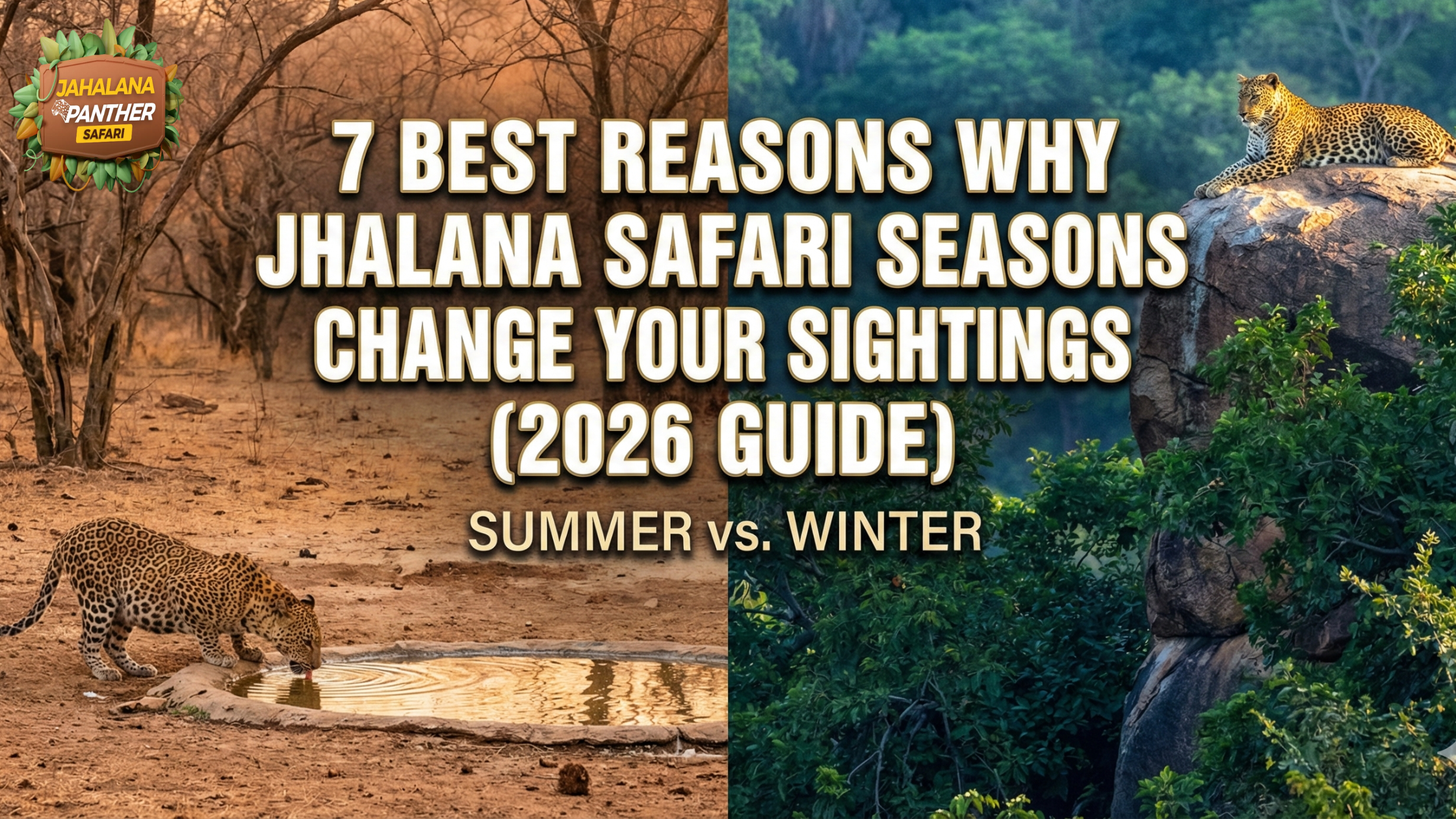
7 Best Reasons Why Jhalana Safari Seasons Change Your Sightings (2026 Guide)
If you think a leopard safari is the same experience every time you enter the gate, you haven’t truly met the Aravallis. In the heart of Jaipur, the Jhalana Leopard Reserve undergoes a dramatic, soul-stirring transformation as the calendar turns. The best time for Jhalana safari isn’t a single date on a calendar; it is a choice between two entirely different worlds of wildlife behavior, light, and forest energy.
In this exhaustive 2026 guide, we break down the “Secret Calendar” of Jhalana. Whether you are chasing the high-contrast drama of a Jaipur summer or the golden, ethereal light of a desert winter, understanding these seasonal shifts is the key to an unforgettable sighting. Let’s explore why the rhythm of the seasons is the most important factor in your safari success.
1. The Summer Strategy: The “Wait at the Waterhole.”
From March to June, Jhalana sheds its green skin. As temperatures in Jaipur soar, the forest becomes a landscape of bone-dry Dhok trees and exposed grey quartzite. For many, the heat may seem daunting, but for the seasoned tracker, this is undoubtedly the best time for a Jhalana safari if the goal is a guaranteed sighting.
Water as the Great Unifier
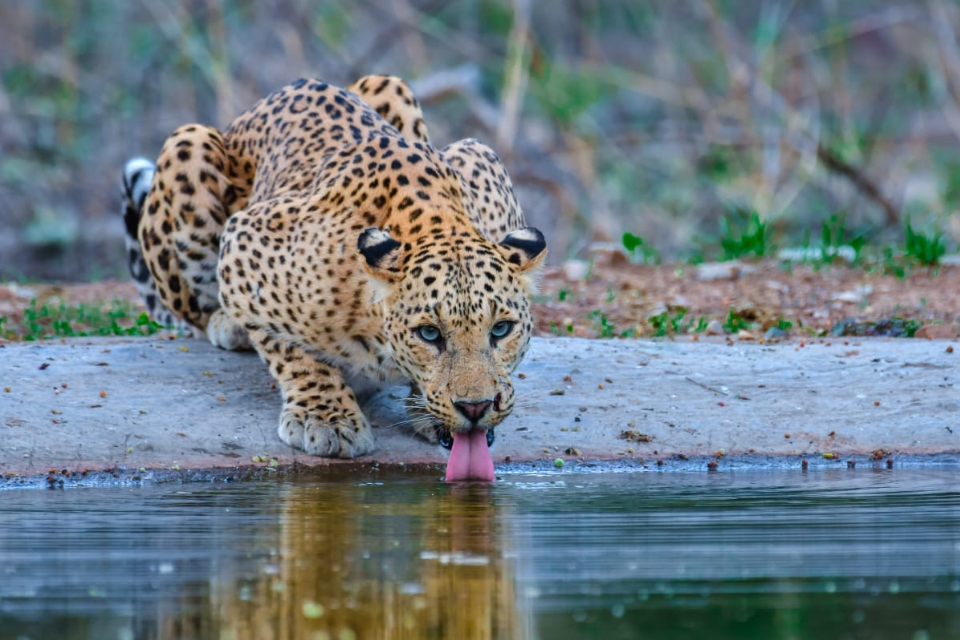
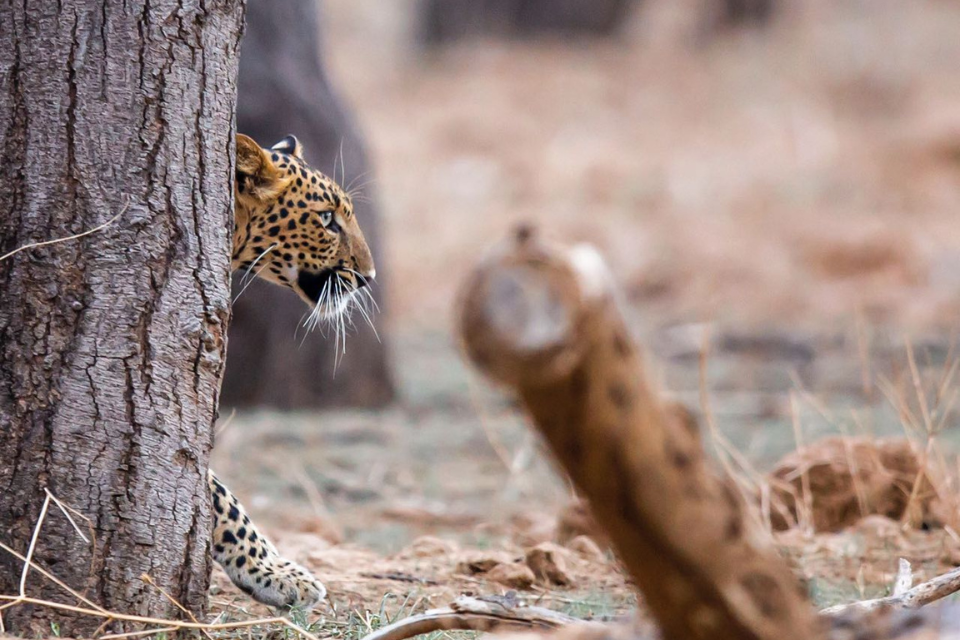
When the natural pools in the high ridges dry up, the laws of biology take over. Leopards, despite being masters of the shadows, cannot escape the basic need for hydration. The forest department maintains several “Saucers” (artificial water holes) throughout the valley. During a summer safari, a naturalist’s strategy is simple: find the water, and you find the cat.
Leopards, such as Bahubali or Flora, are often seen lounging near these saucers for hours. Because they need to stay hydrated and cool their core body temperature, they become remarkably predictable. They don’t just drink and leave; they often lie in the damp mud surrounding the water hole to lower their body temperature. For a traveler with limited time, this predictability makes summer the best time for Jhalana safari.
The Advantage of Thin Canopy Visibility
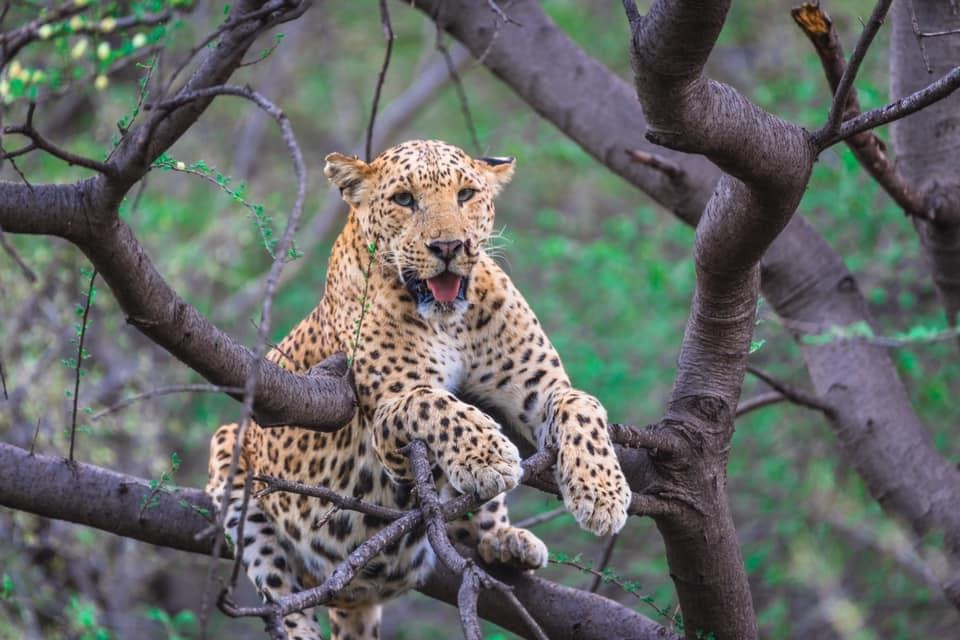
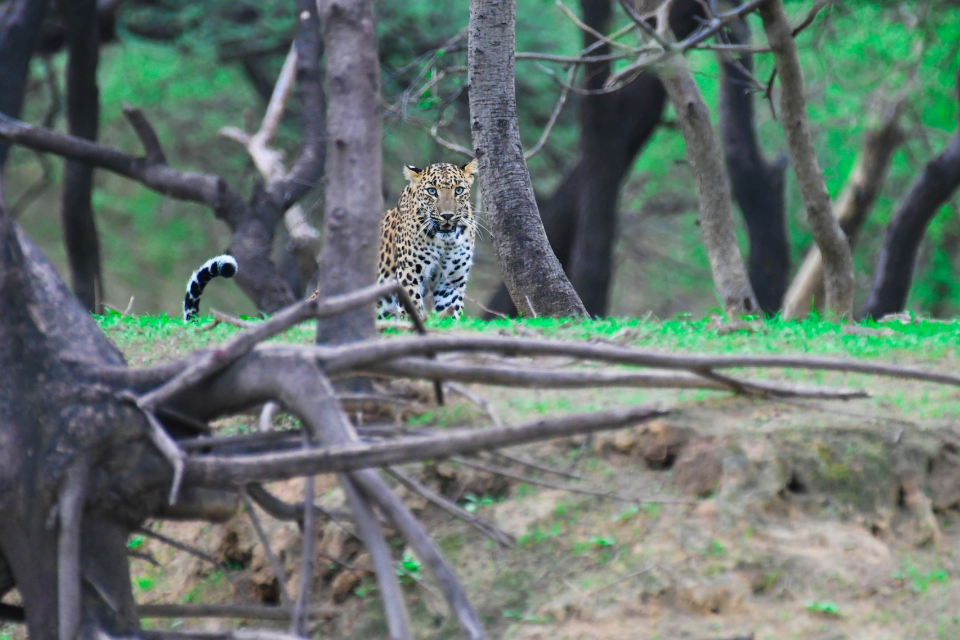
In the summer, the Anogeissus pendula (Dhok) trees lose their leaves, turning the forest into a skeletal, transparent landscape. The “Ghost of the Aravallis” suddenly has fewer places to hide. You can see through the scrub for hundreds of meters, making it much easier to spot a tail flicking in the shade or a leopard draped over a low-hanging branch. This high visibility is a primary reason why wildlife enthusiasts consider the peak of heat to be the best time for Jhalana safari.
2. The Winter Magic: “Rock-Basking” and Golden Hours
When November arrives, Jhalana transforms into a crisp, cool sanctuary. The air is sharp, the dust settles, and the sun feels like a warm blanket. This is the best time for Jhalana safari for photographers and those who enjoy the “romance” of the jungle without the blistering heat of the Rajasthan desert.
The Quartzite Sun-Bathers
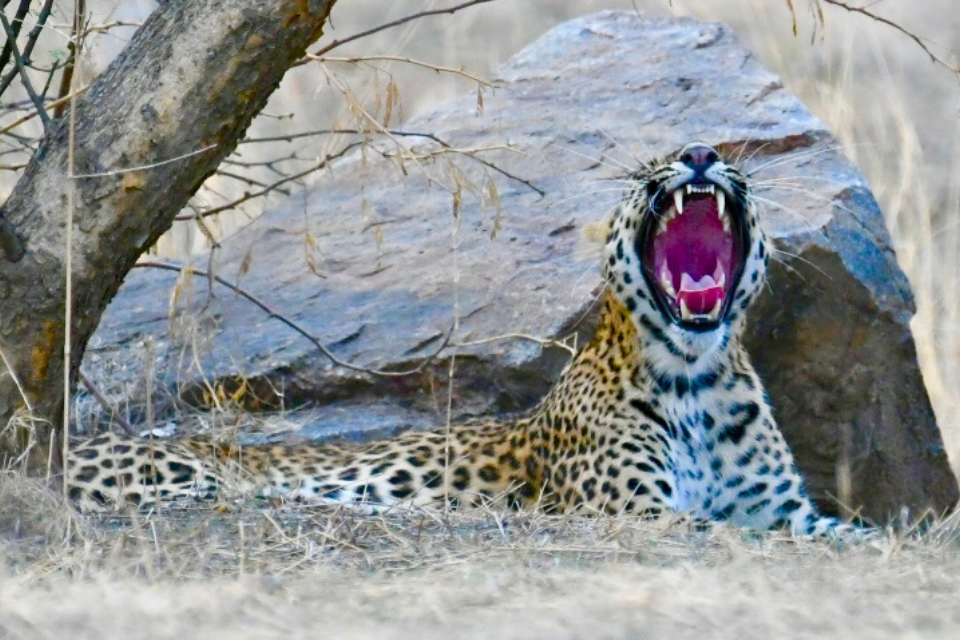
Leopards are cold-blooded in their morning habits. In winter, they spend hours on the eastern faces of the Aravalli ridges, soaking up the first rays of the sun to kickstart their metabolism. Seeing a leopard perched on a prehistoric rock, backlit by the soft morning sun, is the quintessential Jhalana experience. These “rock-basking” sessions can last until 10:30 AM, providing ample time for observation that you simply don’t get during the sweltering summer months.
Extended Activity Cycles
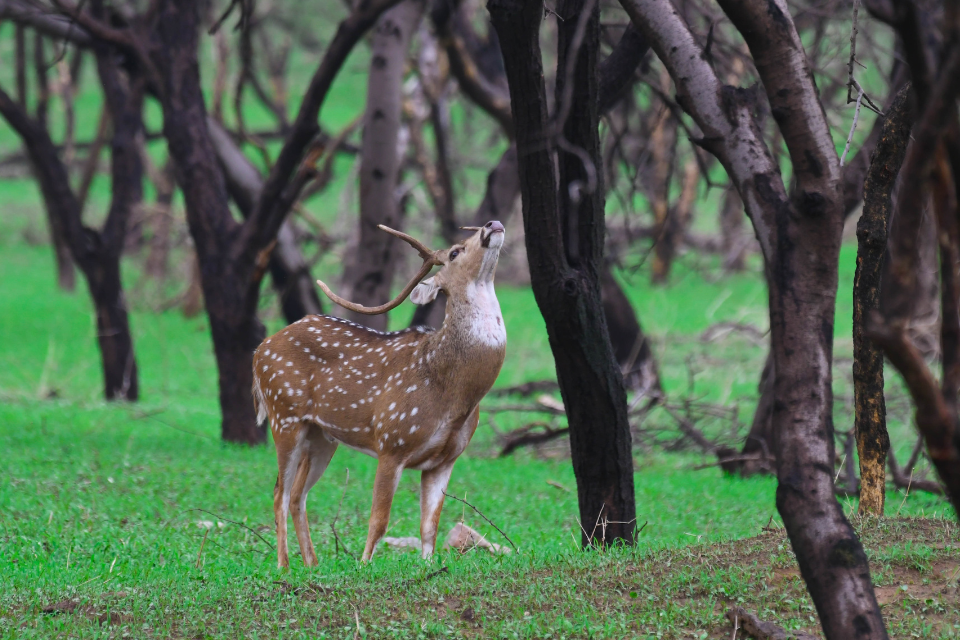
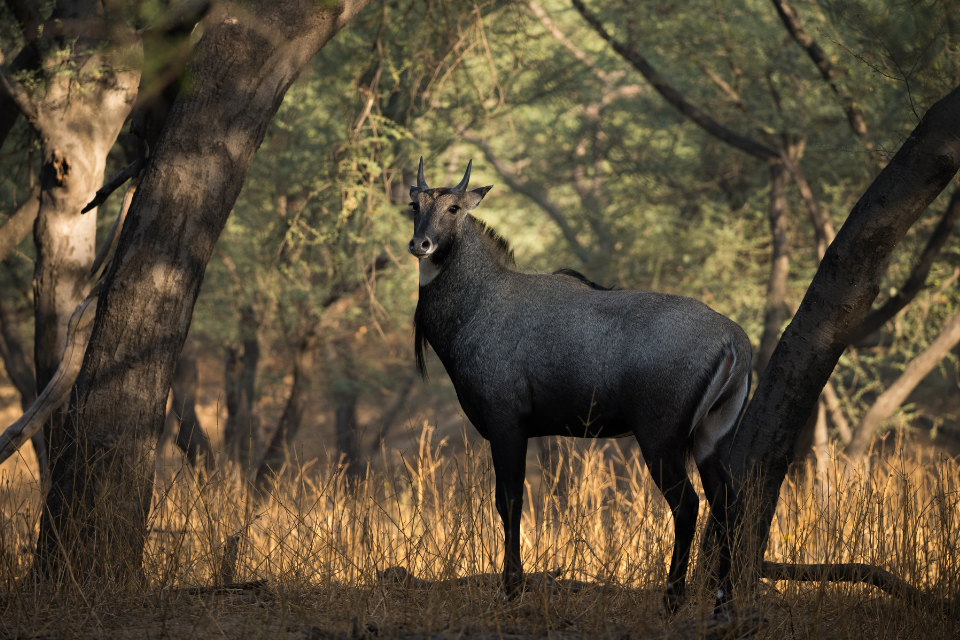
Unlike the summer, when leopards become lethargic and strictly nocturnal to avoid the sun, winter leopards are active for longer periods during the day. You might see them patrolling their territory or even hunting Nilgai and Chital in the late morning. The cool air allows them to move without the risk of overheating, making winter the best time for Jhalana safari to witness actual movement, social interaction, and territorial marking.
3. The Birdwatcher’s Bonus: Winter Migrations
A common oversight when choosing the best time for Jhalana safari is ignoring the avian life. Jhalana is a vital transition zone for several migratory birds traveling along the Central Asian Flyway.
Visitors from the North
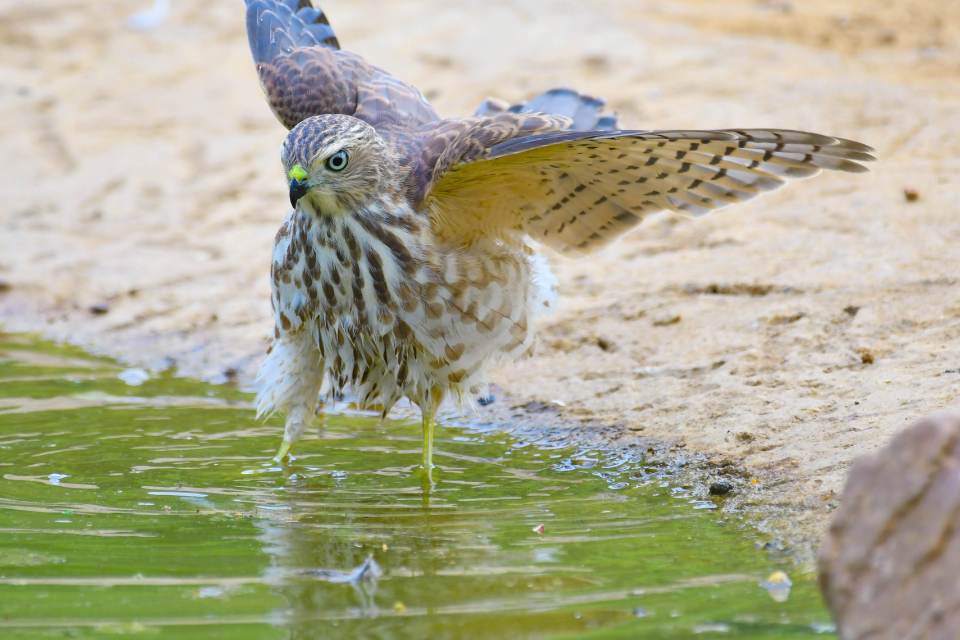
From late October to February, the skies of Jhalana fill with winter visitors. You can spot the Steppe Eagle, the Eurasian Sparrowhawk, and various species of Warblers. These birds add a layer of sound and movement to the forest that is missing in the summer. For those who enjoy a “multi-species” safari, winter is the best time for Jhalana safari.
The Resident Display
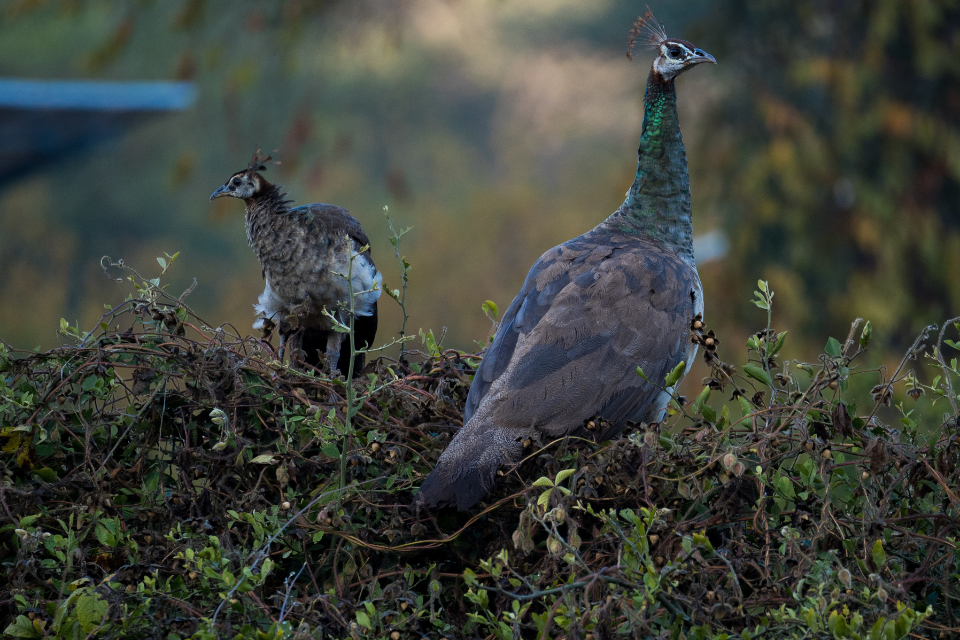
Even the resident birds like the Indian Pitta and the White-naped Woodpecker are more vocal during the cooler months. Watching a Peacock—the nervous sentry of the forest—display its plumage against the golden winter grass is a sight that rivals any leopard encounter. The interplay between the “Jungle Telegraph” (alarm calls) and these migratory visitors creates a fascinating auditory experience.
4. The Monsoon Mystery: A Green Rebirth (July – September)
While many national parks in India close during the monsoon, Jhalana’s unique rocky terrain allows it to remain partially open. Is it the best time for Jhalana safari? It depends on your appetite for adventure.
The Emerald Transformation
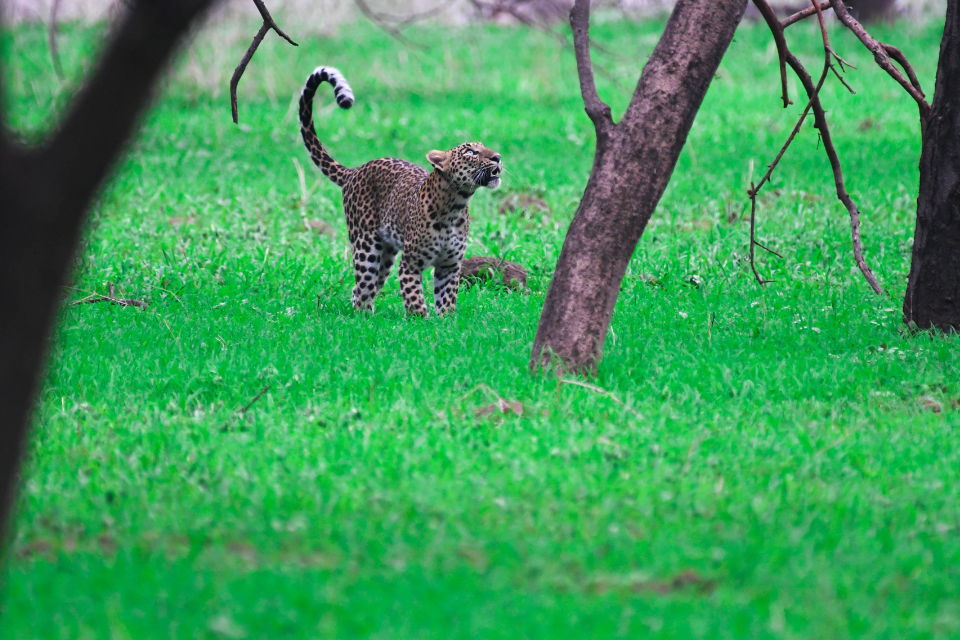
Within a few days of the first rain, the grey hills of the Aravallis turn a vibrant, neon green. The dust is washed away, and the air is the cleanest you will ever breathe in Jaipur. For landscape lovers, this is the best time for Jhalana safari. The contrast of a golden leopard against deep green foliage is a rare photographic trophy.
The Challenge of the “Invisible” Predator
However, the monsoon brings challenges. The grass grows tall, and the leopards—masters of camouflage—can hide in plain sight just five feet from the track. Furthermore, with water available in every rocky depression on the ridges, the leopards don’t need to visit the valley floor. You have to work twice as hard for a sighting, but the reward of seeing a leopard sitting in the rain is incomparable.
5. Seasonal Photography: Mastering the Light
Your camera settings and your creative output will vary wildly depending on your chosen best time for Jhalana safari.
- The Summer “High-Key” Look: Summer light is harsh. Between 9:00 AM and 4:00 PM, photography is nearly impossible due to heat haze and “flat” light. However, the dust kicked up by the wind can create a “Sahara-style” orange glow in the evening. If you want dramatic, dusty silhouettes, summer is the best time for Jhalana safari.
- The Winter “Golden Glow”: Winter light is soft, directional, and forgiving. You can shoot comfortably with lower ISOs for almost three hours after sunrise. The lack of heat haze means your long-range telephoto shots of leopards on distant ridges will be much sharper. For technical perfection, winter is the best time for Jhalana safari.
6. A Naturalist’s Month-by-Month Journal
To help you decide the absolute best time for Jhalana safari for your 2026 trip, here is a detailed look at the seasonal lifecycle of the reserve:
The “Golden” Window (November – February)
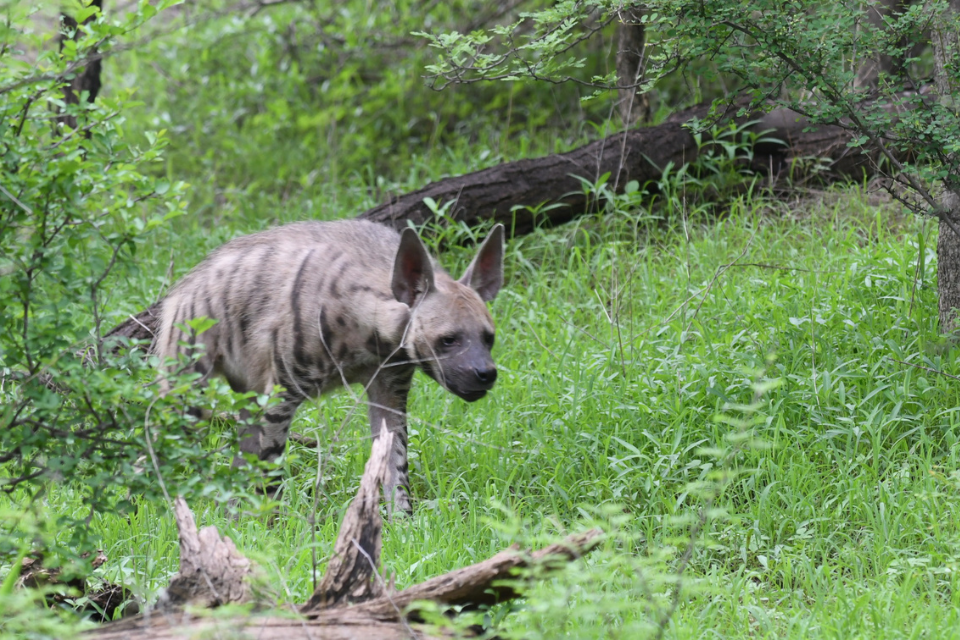
This is the peak tourist season. The weather is perfect (though morning shifts require heavy jackets). Leopards are seen basking on rocks, and hyena activity increases as they emerge from dens to enjoy the cool air. Verdict: Best for comfort and photography.
The “Transition” (March – April)
The forest begins to dry out. The flowers of the Flame of the Forest (Butea monosperma) add splashes of bright orange to the hills. Sightings begin to move from the ridges to the valley floor. Verdict: Best for seeing the forest in bloom.
The “Peak Action” (May – June)
The heat is intense, often exceeding 40°C. However, the “saucer” action is at its maximum. Every safari has a high probability of a leopard sighting near water. Verdict: The best time for Jhalana safari for serious wildlife enthusiasts.
The “Rejuvenation” (July – October)
The rains bring a lushness that hides the animals but heals the forest. The herbivores like Nilgai and Chital are at their healthiest, with many fawns being born. Verdict: Best for those who have seen Jhalana before and want to see its “wilder,” greener side.
7. The Evolutionary Edge: Why Timing Matters
Leopards in Jhalana have evolved to handle the extreme Rajasthan weather. Understanding this biology helps you choose the best time for Jhalana safari. During the summer, their heart rates actually slow down during the day to conserve energy, leading to “sleepy” sightings. In the winter, their metabolism speeds up to generate heat, leading to more “stalking” and “territorial patrol” sightings.
If you want to see the “Ghost” in action—climbing, jumping, or patrolling—the cooler months are your best bet. If you want to see the “Ghost” relaxed and posing, the summer is your window.
8. Strategic Gear for Every Season
Your comfort level will directly impact your patience, and patience is the key to tracking.
- Winter Essentials: Jaipur winters are surprisingly cold. You will be in an open-top vehicle moving at 20km/h. Windchill is real. Bring a heavy jacket, a muffler, and gloves for the first hour of the morning shift.
- Summer Essentials: Heatstroke is a risk. Bring a wet scarf to wrap around your neck—this is a local “naturalist secret” to keep cool. Wear a wide-brimmed hat and use high-SPF sunscreen.
Choosing the best time for Jhalana safari means preparing your body for the elements as much as your camera for the light.
Conclusion: The Aravallis are Calling
There is no “bad” time to visit Jhalana, but there is a “right” time for your specific soul. Whether you are drawn to the high-stakes, thirsty drama of the summer waterholes or the regal, sun-soaked quartzite ridges of winter, the best time for Jhalana safari is whenever you are ready to listen to the forest’s story.
In 2026, Jhalana remains a testament to nature’s resilience. It is a place where time slows down, and every changing leaf brings a new perspective on the life of the leopard. Book your permit, trust your naturalist, and prepare to see the “Ghost” in the light that suits you best.
FAQ: Best Time for Jhalana Safari
- Is there a month where leopard sightings are 100% guaranteed?
A. In the wild, nothing is 100%. However, May and June come the closest. Because the water sources are so few, the leopards must visit the saucers. This predictability makes it the best time for Jhalana safari for those on a tight schedule.
- I am a professional photographer; which month should I choose?
A. Choose December or January. The “Golden Hour” lasts longer, the air is clear of summer dust, and the leopards bask on the ridges, providing a clean “horizon” shot that is much harder to get on the valley floor during summer.
- Are the morning or evening shifts better?
A. In winter, the morning shift is superior for rock-basking. In summer, the evening shift is often better as the leopards become active as soon as the sun begins to set and the temperature drops slightly.
- Can I see the Striped Hyena in any season?
A. Yes, but they are more visible in winter. Being nocturnal and hairy, they find the summer heat difficult. In winter, they often emerge from their rocky dens while there is still a bit of light left in the evening.
- How far in advance should I book my 2026 safari?
A. For the peak winter months (November-February), you should book at least 45 days in advance. For the summer months, 15–20 days is usually sufficient, though weekends always sell out fast.
Important Disclaimer: Navigating the Wild
- Official Oversight: All activities and sightings are governed by the Rajasthan Forest Department.
- Wildlife Ethics: Never encourage your driver to chase an animal or get too close during a standoff.
- No Sightings Guaranteed: These are wild animals. Sightings depend on luck and the skill of your guide.